

There is no single best robot mower for the Carolinas, because the right choice depends on the grass type, the cutting height it needs, and how much shade the lawn gets. North Carolina and South Carolina cover the Coastal Plain, the Piedmont, and the mountains, and the lawn types vary across them. Warm-season grasses such as bermudagrass, zoysiagrass, centipedegrass, and St. Augustinegrass are the main options in the lower part of the region. This guide explains what to match before you buy, using NC State and Clemson extension guidance as the reference points.
The short answer
- Check the grass first: the cutting height your grass needs decides whether a given mower can do the job.
- Low-cut grasses need a low-capable mower: bermudagrass and zoysiagrass can be kept between about 0.75 and 2 inches, depending on type.
- Shade changes the answer: St. Augustinegrass tolerates shade best, while bermudagrass does poorly in it.
- Drainage and compaction matter: Clemson guidance says compaction affects sandy, clay, and intermediate soils alike.
Grass type comes before brand
NC State Extension says warm-season grasses such as bermudagrass, zoysiagrass, centipedegrass, and St. Augustinegrass are the main recommended lawn grasses in the Piedmont and Coastal Plain. Tall fescue is the most reliable cool-season choice in the Piedmont, and cool-season grasses generally struggle more in summer. In the Coastal Plain, the same guidance says warm-season grasses generally perform better because the region is farther east and south. The Carolinas sit squarely in the Southeast, so the Southeast robot mower recommendations give a broader regional frame. For a state-level look at grass and weather, see the North Carolina robot mower picks.
That matters for a robot mower because each grass has its own cutting range. The NC State table lists bermudagrass at 0.75 to 2 inches, zoysiagrass at 0.75 to 2 inches, centipedegrass at about 1 to 1.5 inches, and St. Augustinegrass at 2.5 to 4 inches. A mower that cannot set a low enough height will keep a bermuda or zoysia lawn too long, and a mower that is set too low will scalp a St. Augustine lawn.
How shade and heat change the mower choice
Shade is the second filter. NC State’s shade ratings place St. Augustinegrass at the top, with a score of 5 out of 6, while bermudagrass scores 1 and does not tolerate shade. Zoysia, centipede, bahia, and tall fescue score 4. That makes bermudagrass a poor fit for a heavily shaded back yard, even with a good mower, and a more shade-tolerant grass may suit that part of the lawn better. Georgia lawns share a similar mix of shade and heat, which the Georgia robot mower picks cover. Shade under trees changes how the mower tracks, so see robot mowers for lawns with trees.
Heat and humidity are less straightforward. The NC State handbook rates bermudagrass, zoysiagrass, and St. Augustinegrass at 5 for heat, which is why they dominate summer lawns in the region. The source does not give humidity-specific mowing advice, so treat humidity as a reason to check drainage and watering rather than a reason to choose a particular mower.
Drainage, compaction, and aeration in the Carolinas
Clemson HGIC’s South Carolina guidance says compaction can occur on sandy, clay, or intermediate soils, and that compacted soil sheds water and drains poorly. Foot traffic, vehicles, and repeated mowing over the same paths are the main causes. Aeration is described as the most beneficial cultivation practice, especially on hard soils. For the northern edge of the region, the Virginia robot mower picks add another comparison. Compaction and drainage are easier to address with a lawn aerator for robot-mowed lawns.
Timing depends on the grass. Clemson says warm-season turfgrass can be aerified from late spring through late summer, while cool-season grasses are best aerified in early fall or early spring. Because a robot mower runs the same paths again and again, it is worth checking for ruts along those paths after a wet spell, and setting a no-go zone over any wet corner until it dries out.
Heads up
Clemson notes that once thatch reaches a quarter to a half inch, dethatching may be needed. Over-fertilizing and over-watering are the main causes of excess thatch, so a mower does not solve that problem on its own.
What to check on the spec sheet
Once you know your grass, compare the mower’s cutting range with the table above. Many robot mowers have a higher minimum height than a reel mower, so a lawn that needs to be kept near 1 inch may not suit every model. The same goes for slope. The Carolinas have hilly sections in the Piedmont and mountains, so check the slope rating against your steepest area, not the average. On the spec sheet, the ipx6-rated robot mowers page explains what the water rating does and does not cover.
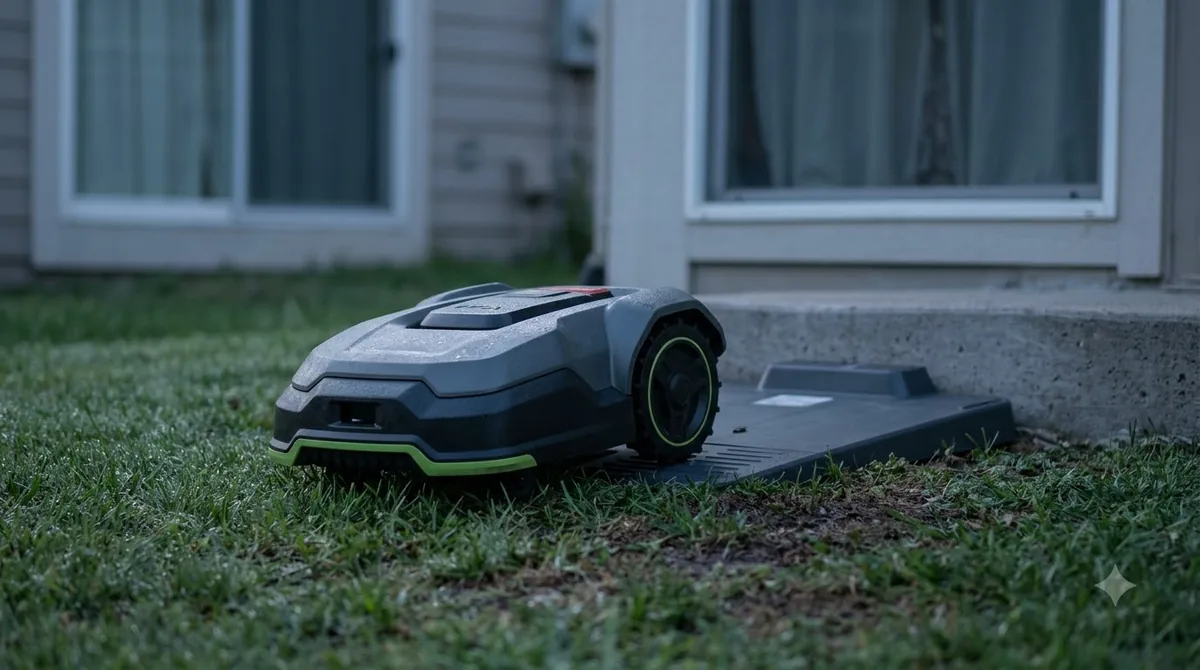
Lawn size also shapes the choice. A small yard with one bed of bermudagrass may run well on a modest mower, while a larger lawn spread across sloped Piedmont ground needs a unit with a higher slope rating and a larger battery. Our reading is that a homeowner with a large, sloped, partly shaded lot should check all three limits at once rather than optimize for only one. Place the charging station on firm, level ground that stays dry after storms, so the mower does not spin when it returns to dock.
- Minimum cutting height: confirm the lowest setting matches your grass range.
- Shade capability: a mower with good sensors and boundary tracking helps under trees.
- Traction on wet ground: useful for the frequent rain of a Carolina summer.
- No-go zones: handy for wet corners, flower beds, and areas you want to rest.
Frequently asked questions
What is the best robot mower for a North Carolina lawn?
The answer depends on the grass and where you live. NC State lists bermudagrass, zoysiagrass, centipedegrass, and St. Augustinegrass as the main lawn options, and each needs a different cutting range. Match the mower’s lowest height to your grass before you compare brands.
What height should bermudagrass be cut at in the Carolinas?
NC State gives a range of 0.75 to 2 inches for bermudagrass, with rotary mowers cut at 1 to 2 inches. The best results with a reel mower come at about 0.75 to 1 inch.
Which grass tolerates shade best in the Carolinas?
St. Augustinegrass is the most shade tolerant warm-season grass in the NC State ratings, scoring 5 out of 6. Bermudagrass scores 1 and does not tolerate shade well.
When should I aerate a lawn in South Carolina?
Clemson HGIC says warm-season turf can be aerified from late spring through late summer, and cool-season grasses are best aerated in early fall or early spring.
Sources
- Lawns (NC State Extension Gardener Handbook): regional grass fit, shade and heat ratings, and mowing height ranges.
- Bermudagrass Lawn Maintenance Calendar (NC State Extension, AG-431): bermudagrass height guidance and seasonal mowing.
- Turfgrass cultivation (Clemson HGIC, South Carolina): compaction, aeration timing, and thatch thresholds.
 Up next8 min readBest Robot MowersBest Robot Lawn Mower for North Carolina Lawns: What to Check FirstUpdated Nov 13, 2026
 9 min readBest Robot MowersBest Robot Mower for Oklahoma Lawns: Grass and Heat GuideUpdated Nov 18, 2026
 8 min readBest Robot MowersBest Robot Mower for Idaho Lawns: Cool-Season Grass GuideUpdated Nov 18, 2026
 7 min readBest Robot MowersBest Robot Mower for Alabama Lawns: Grass and Height GuideUpdated Nov 13, 2026
 9 min readBest Robot MowersBest Robot Lawn Mower for Thin Patchy Grass: What to Check FirstUpdated Nov 16, 2026
 8 min readBest Robot MowersWhat Is the Best Robot Lawn Mower for St. Augustine Grass?Updated Nov 13, 2026