
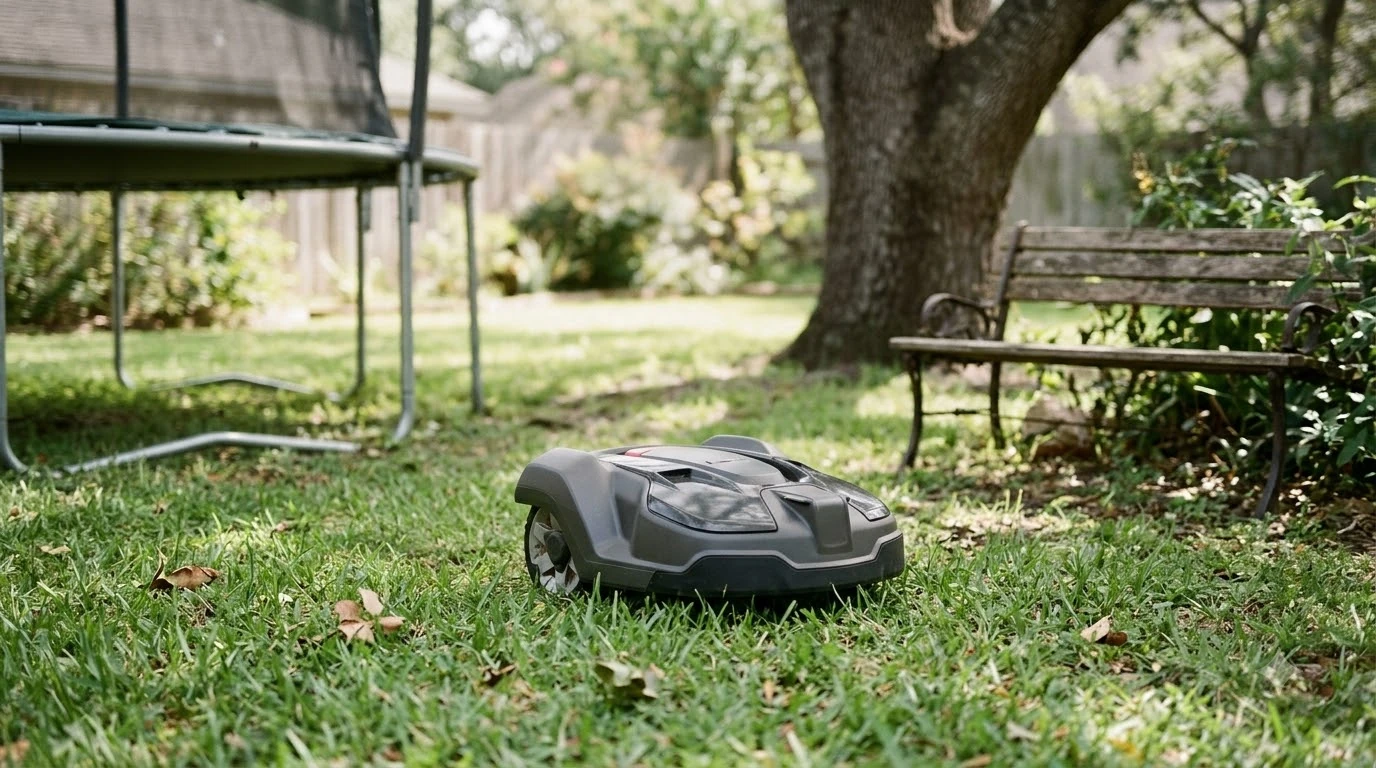

Asking what is the best robot mower for a lawn with trees has no single brand answer, but three factors narrow the choice fast. Trees change how a robot mower finds its position, how much light reaches the grass, and how much of the yard it can actually cover. A model that works well in an open lawn may struggle under a dense canopy.
The short answer
- Navigation: check the manufacturer’s documentation for how the mower positions itself under canopy, not only the headline feature list.
- Size: compare the lawn size rating against the usable grass area, after trees, beds and paths are subtracted.
- Grass: shaded turf needs a higher mowing height and may not suit every species.
Why trees make a robot mower choice harder
Tree cover affects two things at once: the mower’s ability to know where it is, and the health of the grass it cuts. Trees also take up mowing area, so the usable lawn is smaller than the total yard. Each factor can change which model fits your property.
Mowrator, a vendor blog that sells remote-control mowers, says trees can block, weaken and reflect the satellite signals used by RTK positioning. The same article says reflected signals can arrive late alongside the direct signal, which makes position harder to judge. Treat this as the seller’s view, since the article gives no test data or measurements to back it.
How robot mowers navigate under a canopy
Navigation is the first filter when you ask what is the best robot mower for a lawn with trees. Satellite-based positioning needs a clear view of the sky, so a dense canopy is the main risk for RTK-based models, as covered in our guide to how an RTK robot mower works. Mowers that rely on other sensors do not depend on satellites in the same way, but the sensor type alone does not settle the question. What matters is what the manufacturer documents for your use case.
- Satellite positioning: depends on sky view, and canopy can weaken or block it.
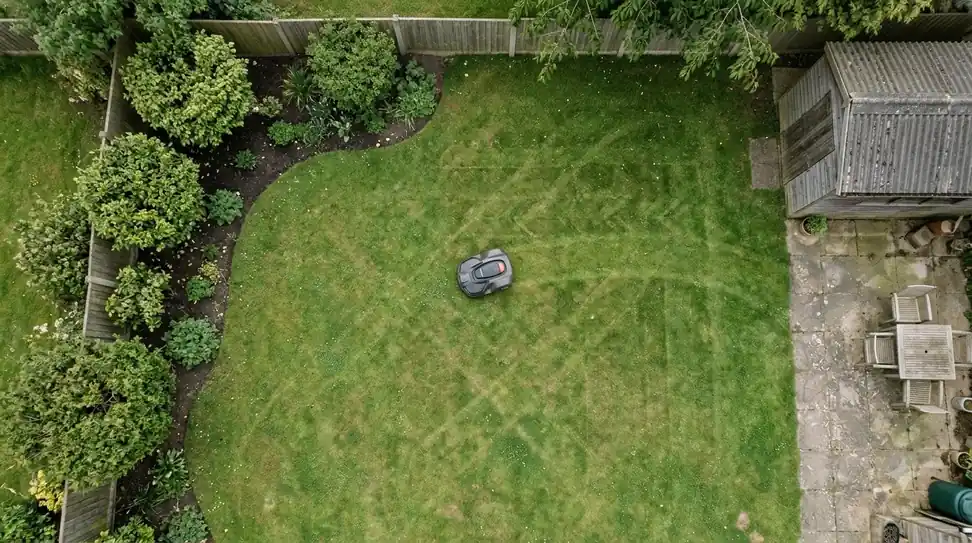
- Boundary wire: defines the mowing area physically, so tree cover does not change where the wire runs.
- Virtual boundary: is drawn in an app, so it needs a reliable position signal to follow the zone.
The base station matters too. Mowrator also notes that a base station placed too close to overhead branches or tall structures can be affected, which is worth checking before you set up an RTK system. Our reading is that a base placed in a clear spot, away from the canopy, gives the mower the best chance of a steady position, and this guide to where to mount an RTK base station covers the options.

How tree shade changes the grass you mow
Turf that gets too little light grows thin, and mowing will not fix that by itself. UF/IFAS Extension explains that shaded grass stretches its blades and stems to reach light, which uses up its energy reserves. The result can be bare spots that invite weeds.
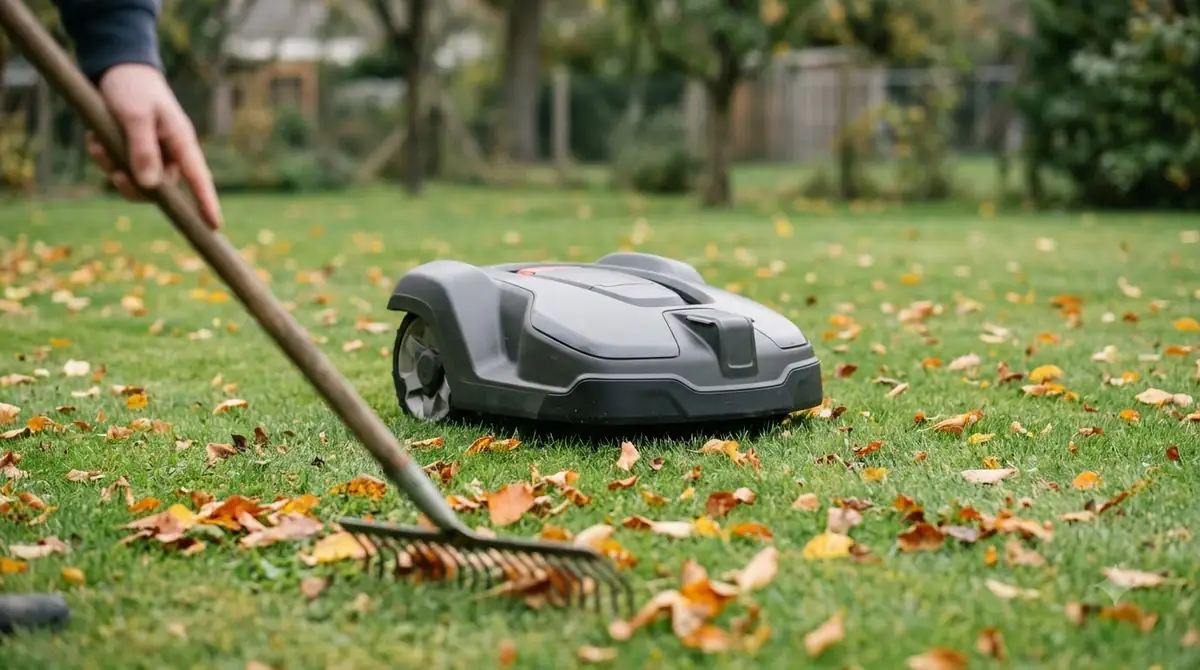
UF/IFAS advises mowing at the highest recommended height for the species, because a taller leaf area absorbs more light and supports deeper roots. The same publication warns against heavy traffic in shaded areas, since that can also damage tree roots. In heavily shaded spots, UF/IFAS says turfgrass is generally not recommended, and ground covers, shade-tolerant plants or mulch are the alternatives. For height settings by species, see our notes on mowing height for shade grass.
Species matter as much as height. UF/IFAS lists bahiagrass, bermudagrass and seashore paspalum as not recommended for shady landscapes, and says centipedegrass has fair shade tolerance. Zoysia matrella cultivars are listed with excellent shade tolerance, and most St. Augustinegrass cultivars have very good shade tolerance, though ‘Floratam’ is significantly less shade tolerant than the others.
How lawn size ratings work for a treed yard
Lawn size ratings are the manufacturer’s estimate of how much area a model can cover, and they are a starting point for a treed yard. Our explainer on robot mower coverage ratings shows how to read them. Husqvarna’s US category page marks its ratings with a plus or minus 20 percent tolerance, so a 1-acre rating could mean roughly 0.8 to 1.2 acres in practice.
Trees and garden beds reduce the area the mower can use, so the rating should be compared with the grass you can actually mow. The table below lists Husqvarna’s published ratings as an example of how the numbers are set out.
| Husqvarna model (US page) | Lawn size rating | Boundary options listed |
|---|---|---|
| 410 iQ | 0.5 acre | Physical and virtual |
| 420 iQ | 1 acre | Physical and virtual |
| 435 iQ AWD | 1.3 acres | Physical and virtual |
| 435X AWD | 0.9 acre | Physical |
| 560 EPOS | 1.5 acres | Virtual |
| 580 EPOS | 2 acres | Virtual |
Use the table as a format reference, not a shortlist. Ratings change by model and year, so confirm the current figure on the manufacturer’s page before you compare.
What is the best robot mower for a lawn with trees? Check the spec sheet
Before you buy, confirm the navigation method, the size rating, the slope rating and the boundary type against your yard, using our guide to reading robot mower specs if needed. The spec sheet is the fastest way to see whether a model fits, but the manual should answer the tree questions the sheet leaves open.
- Navigation. Find out whether the manual says the mower works under canopy, and which sensors it uses.
- Size. Measure the grass area after subtracting trees, beds and paths, then compare it with the rating.
- Slope. Check the slope rating on any sloped section, because Husqvarna lists 70 percent for its 435 iQ AWD.
- Boundary. Decide between physical wire and virtual boundary, based on how often the canopy shifts the mower’s position.
- Support. Ask the dealer whether the model has been installed in treed yards, and what the return policy covers.
The Husqvarna category page does not mention trees, shade, canopy, GPS or RTK, so the manual is the place to look for those details.
Setup choices that help under trees
Setup is where you have the most control. A clear boundary, a base station in an open spot and a mowing height suited to shade all reduce the problems trees create. None of these steps depends on the brand you choose.
- Map the shady zones. Walk the yard at different times of day and note where the grass thins or the canopy is densest.
- Place the base station in the open. Keep it away from overhead branches and tall structures, as Mowrator’s article advises for RTK systems.
- Raise the cutting height in shade. Use the highest recommended height for your grass species, as UF/IFAS advises.
- Keep foot traffic off shaded turf. Foot traffic thins the grass and can damage tree roots.
Our reading on what is the best robot mower for a lawn with trees is that a yard with heavy canopy suits a model with a physical boundary and a documented fallback, rather than one that depends on a single satellite signal. Check the current manual before you rely on any of this.
Frequently asked questions
Does a robot mower work under trees?
Some models do, but how well they work depends on the navigation method and how dense the canopy is. Mowrator says trees can block, weaken and reflect satellite signals. The manufacturer’s manual states the conditions a specific model is designed for.
Is there one best robot mower for a lawn with trees?
No single model fits every treed yard, so the question of what is the best robot mower for a lawn with trees has no universal answer. The right choice depends on the navigation method, the usable lawn area, the slope and the boundary type. Compare those factors against your yard before choosing a brand.
Should I raise the mowing height under trees?
UF/IFAS Extension advises mowing shaded turf at the highest recommended height for the grass species. Taller leaf area absorbs more light and supports deeper roots. Check the recommended range for your species before changing the setting.
Do I need a boundary wire under trees?
Not every model needs one, since some use virtual boundaries drawn in an app. Physical wire defines the zone regardless of tree cover. Husqvarna lists physical and virtual options on several models, so check the boundary type for the specific model you consider.
Sources
- Growing Turfgrass in the Shade, EDIS EP072 (UF/IFAS Extension): shade effects on turf, mowing height, species shade tolerance.
- Husqvarna US robotic lawn mowers (manufacturer): lawn size ratings with plus or minus 20 percent, boundary options, slope rating for 435 iQ AWD.
- Mowrator, RTK robot mower signal loss and trees (vendor blog): vendor view on canopy and base station placement, no test data.
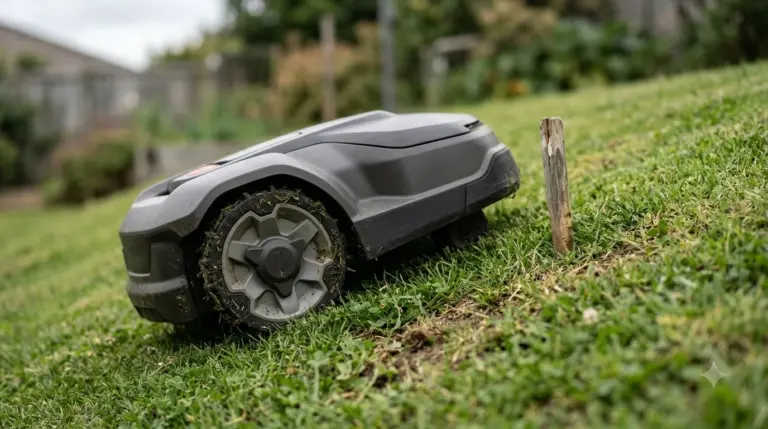 Up next8 min readBest Robot MowersWhat Is the Best Robot Lawn Mower for Hills?Updated Nov 11, 2026
 8 min readBest Robot MowersWhich Robot Mower Works Best With Poor Wifi?Updated Nov 11, 2026
 9 min readBest Robot MowersWhat Is the Best Robot Lawn Mower for a Narrow Yard?Updated Nov 11, 2026
 9 min readBest Robot MowersWhat Is the Best Robot Lawn Mower for a 1/2 Acre With SlopesUpdated Nov 11, 2026
 8 min readBest Robot MowersWhich Robot Mower Do Lawn Care Experts Recommend?Updated Nov 11, 2026
 8 min readBest Robot MowersWhat Size Robot Mower Do I Need for 1.5 Acres?Updated Nov 11, 2026