
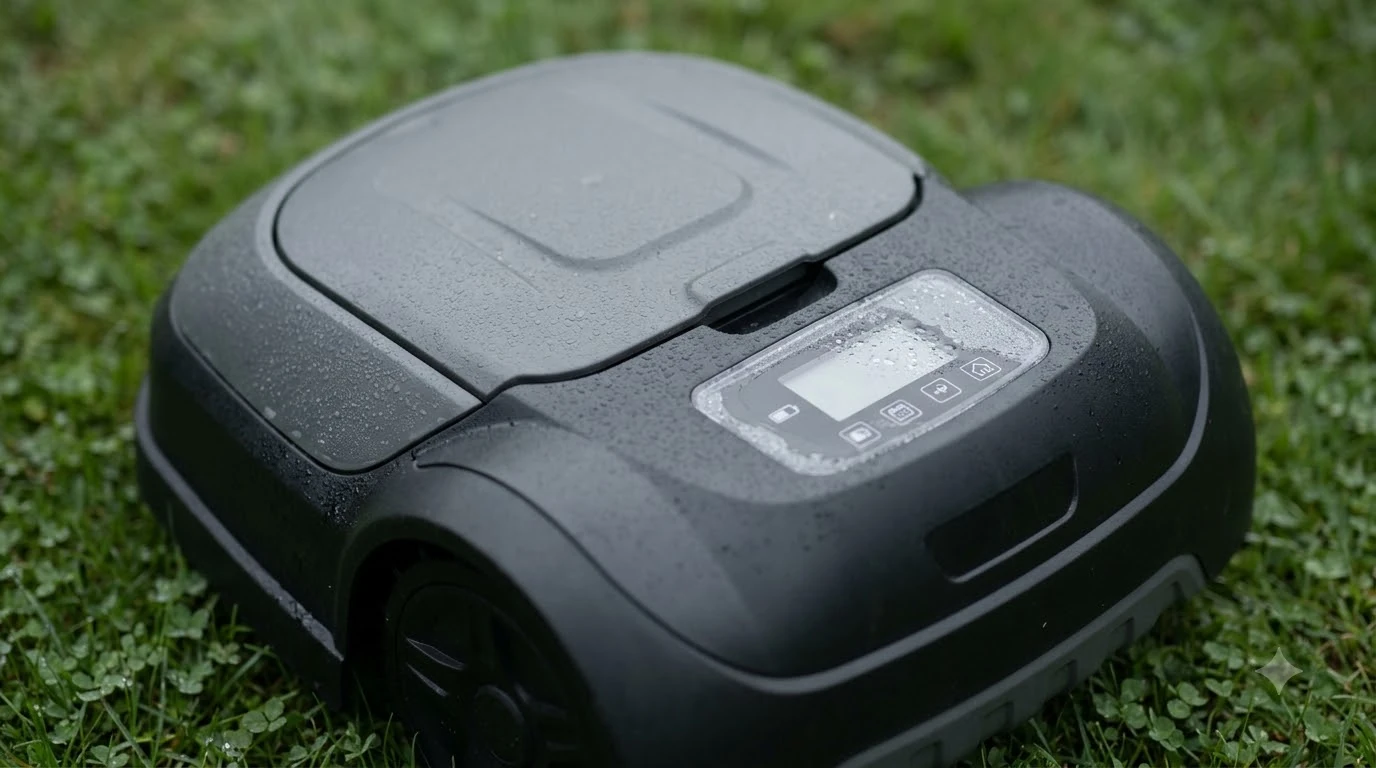

The best robot mower with rain sensor depends on how the sensor works, how long the rain delay lasts and which settings you can change. A rain sensor is a moisture detector on the mower body. When it gets wet, the mower returns to its charging base and waits, so the lawn is not cut while it is raining. This guide explains how these sensors work and what to check before you buy.
The short answer
- Sensor: a moisture detector that sends the mower back to its dock.
- Delay: the wait after the sensor dries, from 180 minutes by default on Worx Landroid to up to 12 hours on Segway Navimow.
- Sensitivity: some brands, including Robomow, let you set how much moisture stops the mower.
- Limit: a rain sensor protects the mower schedule, but the best robot mower with rain sensor still cannot stop ruts or disease on wet grass.
What a rain sensor does on a robot mower
A rain sensor on a robot mower detects moisture and sends the mower back to its charging base, where it waits until the weather changes. Robomow describes its sensor as a hardware device on the mower body. It says the sensor signals the mower to stop mowing and return to the charging station, and the mower stays there until the rain subsides.
Sensor designs differ between brands, so the best robot mower with rain sensor for your yard depends partly on the design. Segway’s Navimow H2 and X4 use a capacitive rain sensor, which measures the change in capacitance that moisture causes. Segway’s Navimow rain explainer says this design avoids the corrosion it links to resistive sensors, which measure whether water bridges two exposed metal contacts. Our reading is that the sensing method is worth checking in the manual, since a brand description alone does not show how a sensor behaves in your yard.
Rain delay and sensitivity decide how often the lawn gets cut
The rain delay sets how long the mower waits after the sensor dries, so it controls how often a wet lawn gets cut. Worx’s Landroid rain delay page sets the default at 180 minutes. The delay starts once the sensor is no longer wet, not when the rain stops, and you can change it in the Landroid app or on the display.
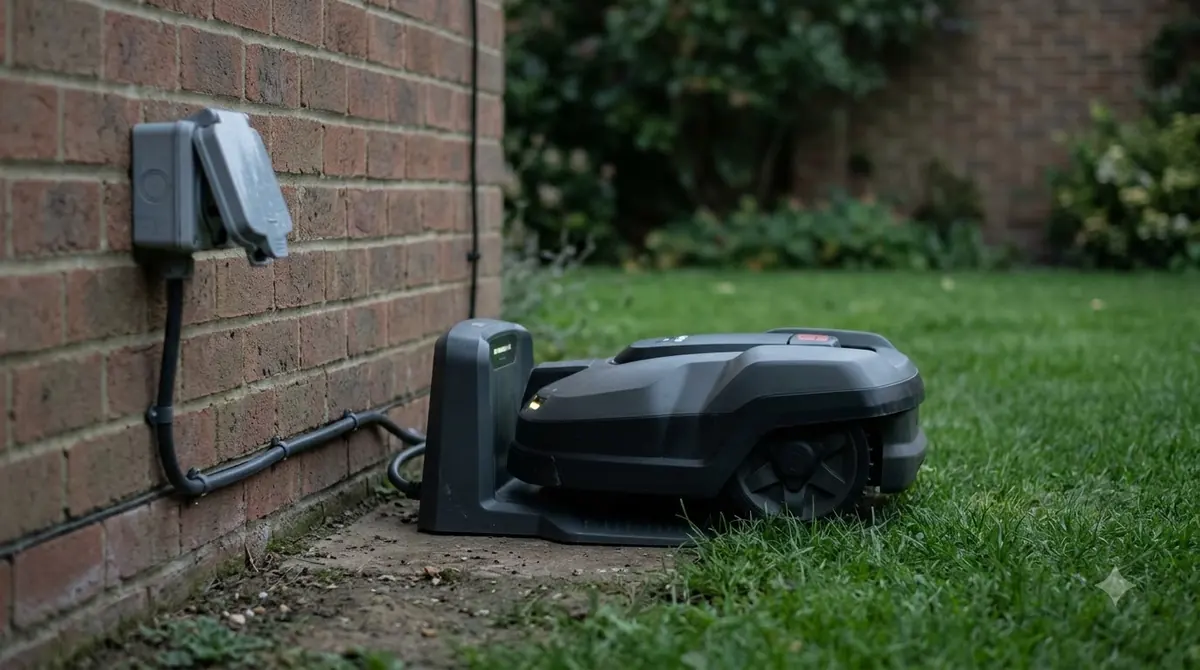
For the best robot mower with rain sensor, that timing creates a hidden condition. A short shower can still hold the mower in the dock for hours, because the countdown begins only after the sensor dries. Worx also notes that very humid air can trigger the sensor without rain, so a damp morning can delay mowing even on a dry day.
| Brand or model line | Sensing method | Rain delay | Sensitivity or forecast |
|---|---|---|---|
| Worx Landroid Classic | Moisture sensor on the mower | 180 minutes by default, can be changed | Humid air can trigger it; no sensitivity setting named |
| Segway Navimow H2 and X4 | Capacitive sensor plus online weather sync | Adjustable up to 12 hours | Forecast check when weather adaptation is on |
| Robomow (brand blog) | Hardware sensor on the mower body | Not stated | Sensitivity adjustable: light rain or downpour |
| Husqvarna Automower | Weather timer; no rain sensor described | Not stated | Weather timer adjusts mowing hours by season |
Robomow says its sensitivity can be adjusted so the mower keeps working in light rain but stops in a downpour. Our reading is that in climates with frequent drizzle, a very sensitive setting can keep the mower docked for long stretches. Our reading is that the best robot mower with rain sensor for a lawn that stays usable after light rain has an adjustable sensitivity and a shorter delay, while a longer delay suits a yard that drains slowly.
Forecast checks and weather timers
Some brands add a forecast check or a weather timer, so a robot mower with a rain sensor may skip a session before rain starts. Navimow’s weather adaptation must be turned on in the app. When it is on, the mower checks regional forecasts on a schedule, and it delays heading out when the forecast looks bad. The article gives no rainfall amount or forecast probability that triggers the delay.
Husqvarna’s weather timer works differently. It adjusts mowing hours to grass growth, so more time is scheduled in wet, humid periods when grass grows faster and less in cooler, drier periods. The page says the mower is designed to cut in rain, but it does not describe a rain sensor or any delay after rain stops. A forecast check and a sensor do different jobs, so confirm which one a model has before you assume it will stay docked during a storm.
Wet grass is still a problem after the mower docks
Even after the best robot mower with rain sensor docks itself, Husqvarna advises waiting at least 24 hours after rain before mowing wet grass. Its guide lists the main risks: wheel ruts that slow drainage, soil compaction that limits root growth, and disease such as red thread, dollar spot and rust, which can spread through torn grass and wet clippings.
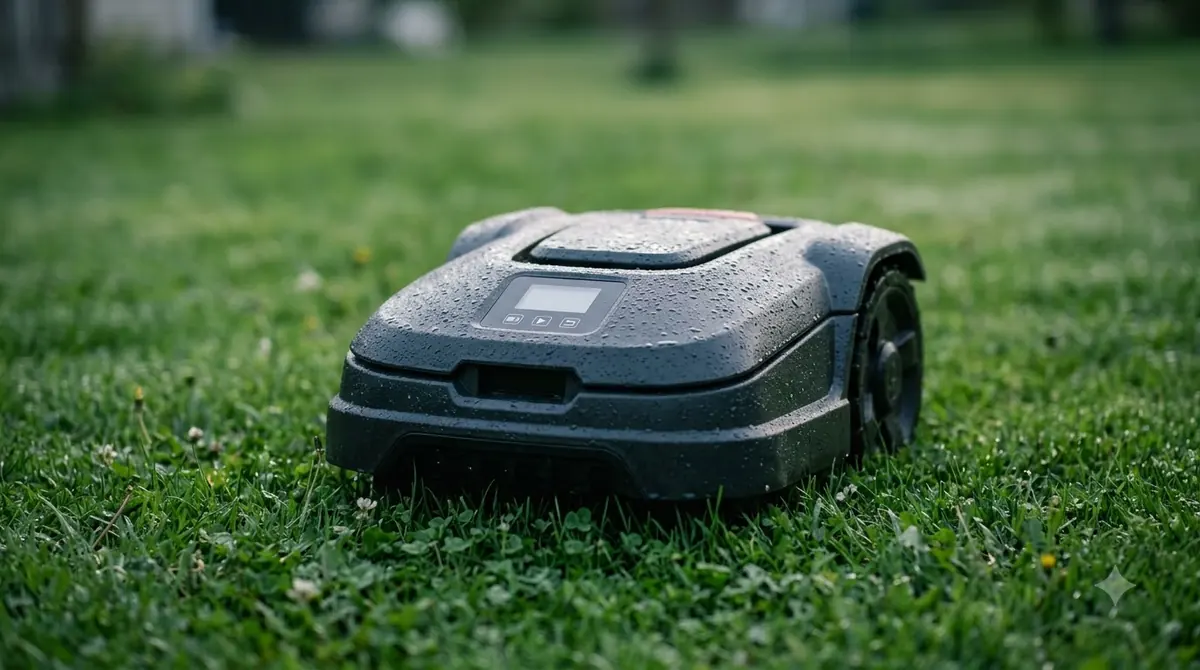
Husqvarna’s bounce test is a simple check. If the grass feels damp or clumpy, it is too wet to cut. If footprints leave visible marks in the soil, wait longer. The same guide says many robot mowers are light enough to avoid compaction, but a rain rating describes the mower, not the soil. Heavy rain or overcast skies can mean a longer wait, while strong sunlight may dry the lawn within a few hours.
How to choose the best robot mower with rain sensor
Check the manual for the sensor type, the delay range, the sensitivity setting and any forecast feature before you choose a model. Each of these settings changes how the best robot mower with rain sensor behaves in a real week of weather.
- Sensor type. Confirm the sensor is built in. Robomow says retrofitting a sensor is possible but usually cumbersome and not very practical.
- Delay range. Find the default delay and whether the app lets you change it. Worx Landroid defaults to 180 minutes, and Navimow’s timer goes up to 12 hours.
- Sensitivity. Look for a setting that separates light rain from a downpour, since that choice affects how often the mower stays docked.
- Forecast or weather timer. Decide whether you want a schedule that reacts to the weather or a sensor alone.
- Drainage. Robomow notes that its mowers cannot mow when standing water forms on the lawn, so check where water pools before you rely on any model.
Our reading is that for the best robot mower with rain sensor in a wet climate, the sensor is the feature to prioritize, but the delay and sensitivity settings decide how the mower behaves after the rain. Read the manual for the exact model you plan to buy, because these specs change between product lines.
Frequently asked questions
Does the best robot mower with rain sensor work in the rain?
Not always. A mower with a rain sensor usually returns to its dock when it detects moisture and waits there. Robomow says its sensitivity can be adjusted, so a mower may keep cutting in light rain and stop in a downpour.
How long does a robot mower wait after rain?
It depends on the brand. Worx Landroid sets a default rain delay of 180 minutes that starts once the sensor is dry, and you can change it in the app or on the display. Segway’s Navimow rain-delay timer can be adjusted up to 12 hours.
Can I add a rain sensor to a mower that does not have one?
Robomow says retrofitting a rain sensor is possible but usually cumbersome and not very practical. Check the sensor before you buy, rather than planning to add one later.
Should I mow the lawn right after it rains?
Husqvarna advises waiting at least 24 hours after rain before mowing wet grass. Heavy rain or overcast skies can mean a longer wait. A mower’s rain sensor does not change the soil conditions, so the bounce and footprint tests are still useful.
Sources
- Rain Delay and Sensor, Landroid Classic (Worx): sensor behavior, 180-minute default delay, humidity note.
- How Navimow decides whether or not to mow (Segway Navimow): capacitive sensor, forecast check, 12-hour delay.
- Robotic mowers with rain sensors (Robomow): sensor on the mower body, adjustable sensitivity, retrofit note, standing water.
- How do Husqvarna Automower weather timer and sensors work (Husqvarna): weather timer, no rain sensor described.
- Can you mow wet grass (Husqvarna): 24-hour wait, ruts, compaction, disease, bounce test.
 Up next8 min readBest Robot MowersBest Robot Mower That Works in the Rain: What to Check Before You BuyUpdated Nov 11, 2026
 8 min readBest Robot MowersBest Robot Mower With Ultrasonic Sensors: 5 Checks Before You BuyUpdated Nov 11, 2026
 8 min readBest Robot MowersDo Robot Mowers Work in the Rain? Sensors, Delays and LimitsUpdated Nov 11, 2026
 6 min readBest Robot MowersBest Robot Mower for a Yard with a Rain Garden: What to CheckUpdated Nov 14, 2026
 8 min readBest Robot MowersBest Robot Mower with PIN Code Lock: What to Check Before You BuyUpdated Nov 11, 2026
 8 min readBest Robot MowersBest RTK Robot Lawn Mower for Suburban Yards: What to Check Before You BuyUpdated Nov 11, 2026