
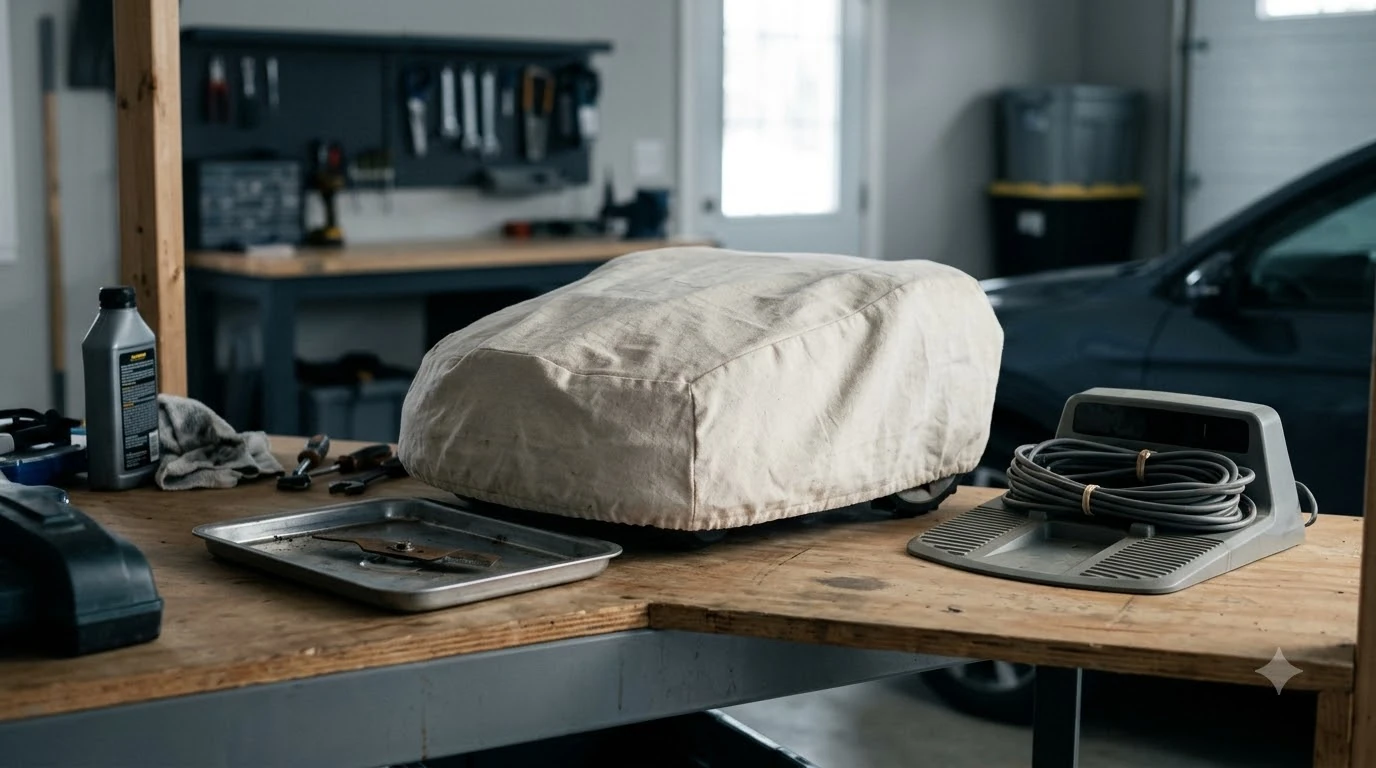

How long do robot lawn mowers last? Most last about 5 to 10 years with regular care. The answer depends on which part you mean, because the battery usually wears out first, often within 3 to 5 years. These are vendor estimates, not independent tests, so plan around the battery rather than the mower body alone.
The short answer
- Mower body: 5 to 10 years with good care.
- Battery: 3 to 5 years, usually the first part to need replacing.
- Blades: wear far faster, with vendor intervals from 4 weeks to 3 months.
- What you control most: heat, storage charge level, and matching the mower to your lawn size.
How long do robot lawn mowers last overall
A robot mower’s body typically lasts 5 to 10 years with good care, according to manufacturer guidance from Ecovacs and Eufy.
Both companies publish the same range. Ecovacs says robot lawn mowers last around 5 to 10 years with good care, and Eufy’s UK lifespan guide lists the main unit at 5 to 10 years in typical UK garden conditions. Both are marketing content written by sellers of the mowers, so treat the range as a planning figure rather than a guarantee. Neither publishes test data behind the number, and the figure assumes the mower is cleaned, stored and used as the manual describes. So how long do robot lawn mowers last in practice? The honest answer is a range, not a single year.
| Part | Typical life | What it depends on |
|---|---|---|
| Mower body | 5 to 10 years | Care, weather exposure, build quality |
| Battery | 3 to 5 years | Charge cycles, heat, storage habits |
| Blades | Every 4 to 8 weeks, or every 1 to 3 months, depending on vendor | Grass type, run time, obstacles |
Our reading is that the body outlasts the battery in most homes, so the battery usually decides when a mower starts to feel worn out. Blades need the most frequent attention of the three parts.
Why the battery usually fails first
How long do robot lawn mowers last on one battery? Typically 3 to 5 years, and Eufy says advanced high-capacity packs can reach up to 2,000 charging cycles. The cycle figure is a vendor claim, so the general lithium-ion data below helps explain why the battery sets the limit. For a battery-only deep dive, see how long robot mower batteries last.
Battery University’s lithium-ion guide, sponsored by the battery test firm Cadex, puts consumer lithium-ion life at 300 to 500 charge and discharge cycles. That figure is for ordinary consumer products rather than mowers, but it shows how quickly cycles add up when a mower runs most days.
How deeply each cycle drains the battery matters too. In the same guide’s table for one common lithium chemistry, cells reached 70 percent of their original capacity after about 300 cycles at 100 percent depth of discharge, about 1,000 cycles at 40 percent, and about 2,000 cycles at 20 percent. Shallower cycles give a battery a longer working life, which is why a mower that finishes most of its work on a small charge tends to age more slowly.
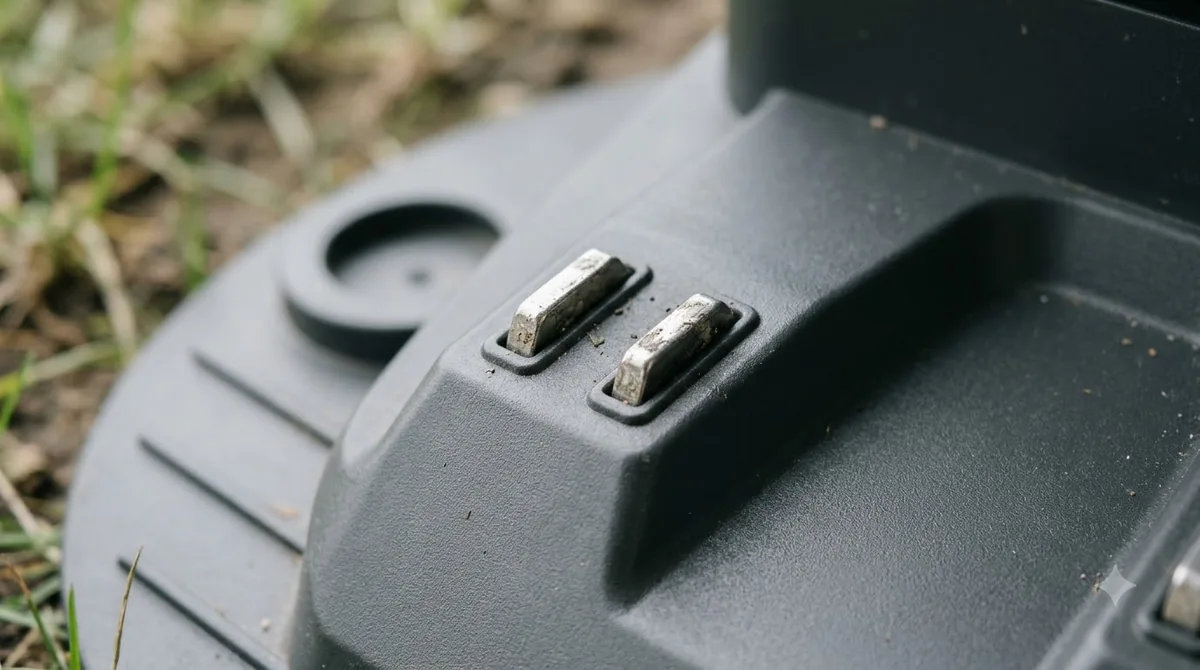
Our reading is that a mower on a large lawn that runs most days cycles its battery far more than one on a small garden that is cut every two weeks. Ecovacs makes the same point, saying a mower used on a large lawn daily wears the battery faster than one trimming a small garden every two weeks.
How heat and storage shorten battery life
Lithium-ion batteries lose capacity faster above 30°C (86°F), and a battery stored at full charge loses more than one stored partly charged.
Battery University defines elevated temperature as anything above 30°C (86°F). Its one-year storage table shows the gap clearly. At 40°C, a cell kept 85 percent of its recoverable capacity at 40 percent charge but only 65 percent at full charge. At 25°C, the same comparison gave 96 percent and 80 percent. Heat and a full charge both cost capacity, and together they cost the most.
| Storage condition (one year) | Recoverable capacity |
|---|---|
| 40°C, 40 percent charge | 85 percent |
| 40°C, full charge | 65 percent |
| 25°C, 40 percent charge | 96 percent |
| 25°C, full charge | 80 percent |
Manufacturer guidance on winter storage is more practical but points the other way on charge level. Husqvarna’s winter storage guide says to fully charge the mower and switch it off before storage, and to keep it indoors in a dry place above freezing (above 0°C or 32°F). Most models need no charging during storage, though some older models need a charge every three months. Our reading is to follow your model’s manual, since the battery data favors a lower charge for long storage while the manufacturer asks for a full charge.
Heads up
Ecovacs advises against charging to 100 percent again and again and then letting the battery drain completely, because both habits can shorten battery life. It gives no numbers for either.
How often blades need replacing
Blades wear much faster than the mower body, and manufacturers do not agree on a single interval.

Eufy’s guide gives two figures on one page. Its body text says to check blades regularly and replace them every one to three months during the growing season, while its FAQ says blades generally need replacing every 4 to 8 weeks. Ecovacs puts the typical interval at 4 to 6 weeks. Mammotion warns against treating a generic 6 to 8 week interval as a universal rule, since wear depends on the mower, the grass and how often it runs.
Our reading is to check the manual for your model and to replace blades when the cut shows wear, not only when the calendar says so. Our guide on how often to replace robot mower blades breaks the intervals down by blade type. Mammotion lists these wear signs:
- Ragged grass tips instead of clean cuts
- Bent blades
- Cracks or chips in the blade edge
- Loose hardware on the blade mount
What shortens a robot mower’s life
Lawn size, terrain, weather, usage and maintenance are the factors vendors name most often as shortening a robot mower’s life.
- Lawn size and usage: a mower sized for a small yard that runs on a large lawn wears sooner.
- Terrain: steep slopes, bumps, mud and obstacles put extra demands on the mower.
- Weather: damp conditions, frost and winter moisture are common causes of failure, according to Eufy.
- Maintenance: regular cleaning and blade care keep wear down.
- Build quality: materials and construction vary by model, so check the warranty and parts support before you buy.
How to make a robot mower last longer
Keep the battery away from extreme heat, avoid leaving it at full charge for long periods, and store the mower dry and frost-free over winter.
- Store it indoors and frost-free. Husqvarna recommends a dry place above freezing for the mower and the charging station.
- Charge before winter storage, then follow the manual. Husqvarna says to fully charge before storage, while Battery University’s data favors a lower charge for long storage.
- Keep the battery out of heat. Battery University’s table shows the largest capacity loss in hot storage at full charge.
- Avoid repeated full drains. Ecovacs advises against them, and gives no number.
- Clean and inspect on schedule. Follow the manual for sensor and blade cleaning, and check for the wear signs listed above.
- Replace blades on wear. Do not wait for a fixed date if the cut looks ragged.
Our reading is that these habits will not guarantee a full 10-year life, but they remove the avoidable causes of early battery loss.

Frequently asked questions
How long do robot lawn mowers last before the battery needs replacing?
Usually 3 to 5 years, because batteries typically wear out before the mower body does. Replacing one is often worth it if the body is still in good shape, because the body is expected to last 5 to 10 years and the battery 3 to 5. Compare the replacement cost with the mower’s remaining life and warranty terms. This guide does not list battery prices, so check with the manufacturer or a dealer for a current figure.
How long do robot lawn mowers last in cold climates?
Eufy names frost and winter moisture as common causes of failure, and Husqvarna advises storing the mower above freezing (above 0°C or 32°F). Plan indoor, frost-free storage for winter, and check the manual for model-specific limits.
Do robot mowers last longer when stored indoors?
Storage conditions matter. Husqvarna advises indoor, frost-free storage above 0°C (32°F), and Battery University’s one-year storage table shows lithium cells keep more capacity at 25°C than at 40°C. A cool, dry place is the simplest way to protect the battery.
Should I buy a used robot mower?
A used mower has less of its expected life left, so check the battery’s age, the blade and sensor condition, and whether any remaining warranty transfers to a second owner under the manufacturer’s terms. A battery near the end of its typical 3 to 5 year life may need replacing soon after purchase.
Plan for the battery, not the mower body, when you ask “how long do robot lawn mowers last?” Check the warranty and battery replacement terms before you buy, and keep the manual, since it sets the real limits for your model. If you are weighing a second-hand unit, read our guide to buying a used robot lawn mower, and see whether robot lawn mowers are worth it for the wider cost picture.
Sources
- How Long Do Robot Lawn Mowers Last? (Ecovacs, manufacturer blog): mower body 5 to 10 years, battery 3 to 5 years, blade interval.
- How long do robotic lawn mowers last (Eufy UK, manufacturer blog): overall and battery ranges, blade intervals, lifespan factors.
- How long do robot mower blades last (Mammotion, manufacturer blog): caution on generic blade intervals and wear signs.
- How to Prolong Lithium-based Batteries (Battery University, sponsored by Cadex): cycle life, depth of discharge, storage temperature tables.
- Complete winter storage guide for your Automower robotic lawn mower (Husqvarna, manufacturer support): full charge before storage, indoor frost-free storage, older model charging interval.
 Up next8 min readBest Robot MowersHow Long Do Robot Mower Batteries Last?Updated Nov 11, 2026
 9 min readBest Robot MowersAre Robot Mowers Safe for Kids and Pets?Updated Nov 11, 2026
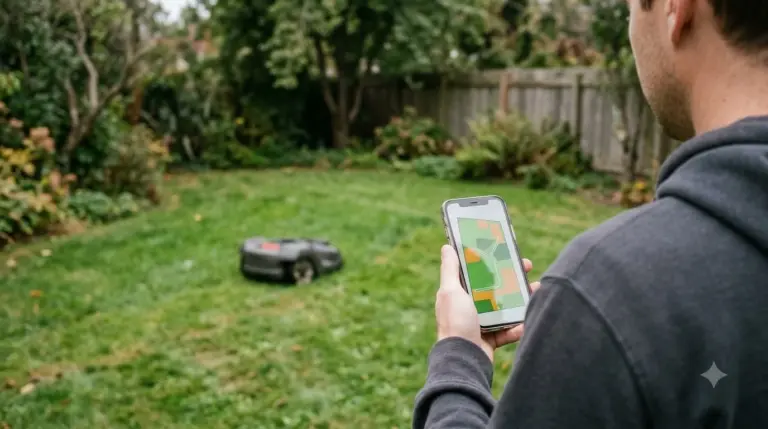 9 min readBest Robot MowersDo Robot Mowers Need Wifi or Cellular?Updated Nov 11, 2026
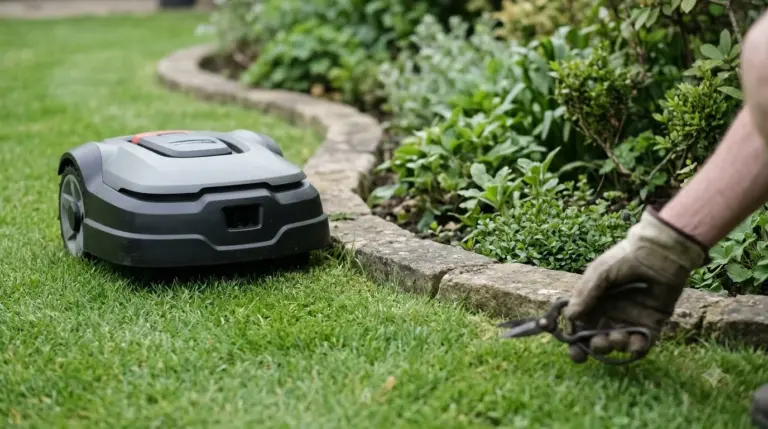 8 min readBest Robot MowersDo Robot Mowers Trim Edges?Updated Nov 11, 2026
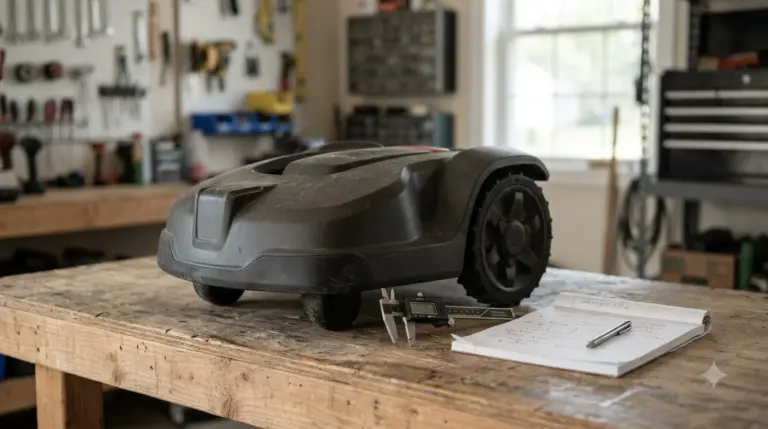 8 min readBest Robot MowersRobot Mower Warranty Guide: Coverage, Exclusions and ClaimsUpdated Nov 11, 2026
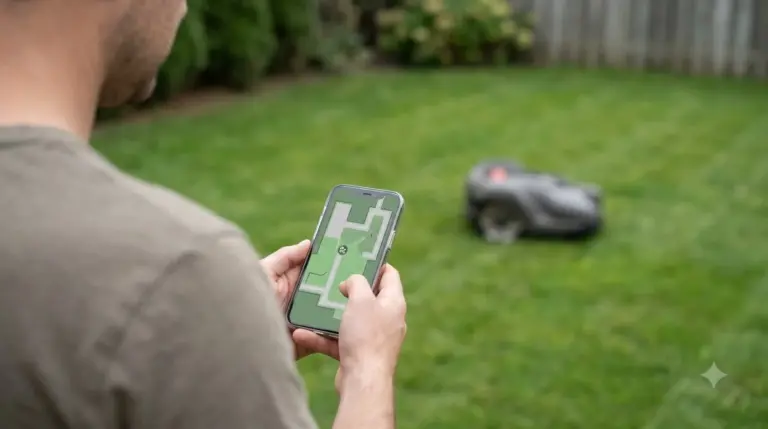 9 min readBest Robot MowersHow to Protect a Robot Mower From TheftUpdated Nov 11, 2026