
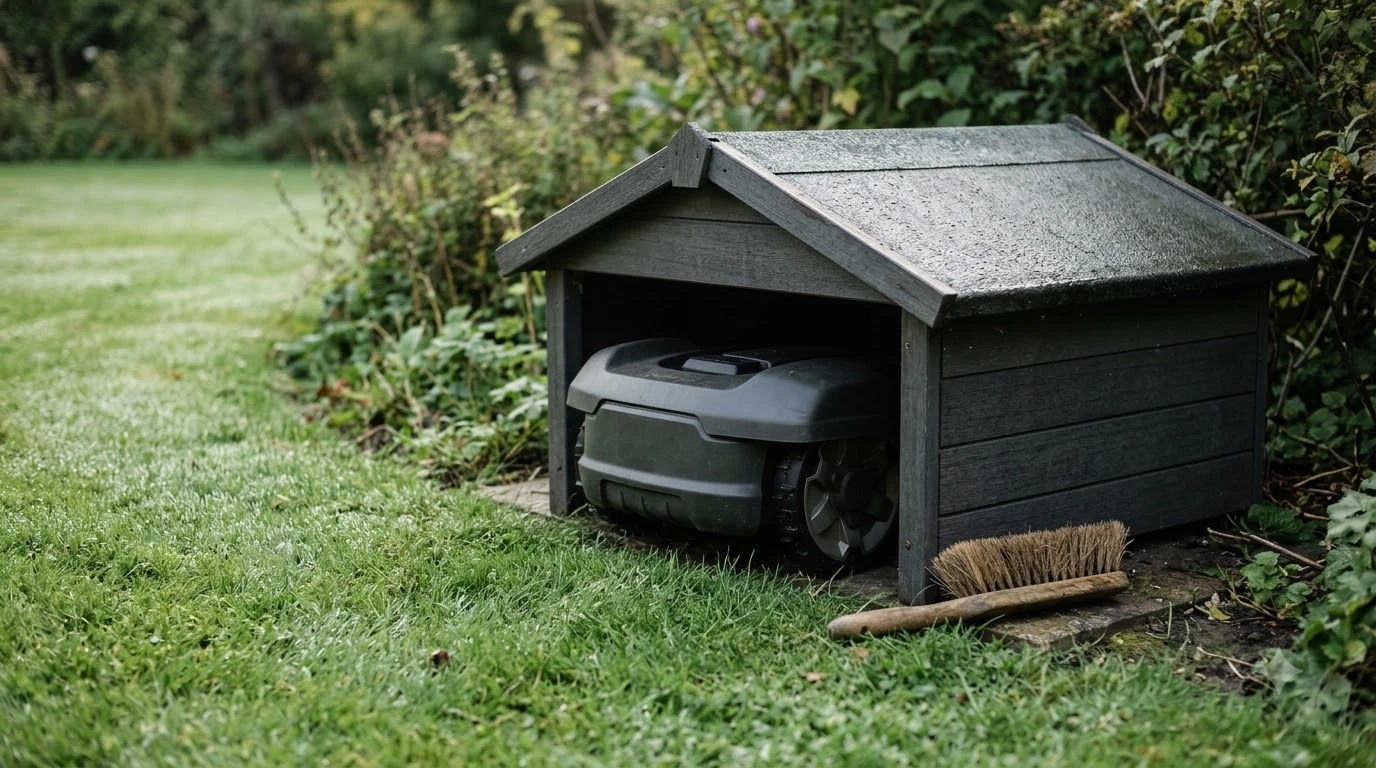

What is the best robot mower for weekend homes? There is no single best model. The right choice depends on how the mower will run while nobody is on site, and on whether one unit must serve more than one property. Focus on the boundary system, the setup at each site, and how you will catch a fault before it spreads.
The short answer
- No universal winner. Choose by how the mower finds its boundary and how it is set up at the property.
- Two properties need two setups. Husqvarna requires a charging station and a wire or wire-free installation at each site.
- Faults last longer off-site. A cut boundary wire can stop the mower, so alerts and a periodic check matter.
- Check the dock. The University of Florida flags fire ants and lightning risks around docking stations.
What is the best robot mower for weekend homes if nobody is watching?
A weekend home is different because a robot mower may run for days while no one is watching. Robot mowers are built to work unattended, so the real question is what happens when something goes wrong. Mammotion, a robot mower manufacturer, notes that a broken wire mid-season can stop the mower cold, and at a home you visit only occasionally, that stop can go unnoticed until your next trip. Our reading is that when you ask what is the best robot mower for weekend homes, setup, alerts and fault handling matter more than headline features such as cutting speed or battery size. Our notes on robot mower theft protection cover another risk of leaving a mower unattended.
Boundary wire or wire-free positioning
Wired mowers follow a buried loop, while wire-free models rely on satellite positioning, so each one fails in a different way. Mammotion advises burying wire 1 to 2 inches deep, using waterproof splice connectors to prevent corrosion, and expecting a typical yard install to take hours. Its wire-free models use RTK positioning and virtual boundaries, which avoids trenching but depends on a clear view of the sky, and our guide on whether robot mowers need boundary wire compares the two. The same vendor lists dense trees, tall buildings and bad weather as limits, and says some models may need software updates or occasional recalibration.
| Factor | Buried boundary wire | Wire-free positioning |
|---|---|---|
| Installation | Trenching; Mammotion says a typical yard takes hours | No trenching for RTK models; Navimow says no local antenna is needed |
| Main weak point | A cut or broken wire, from garden tools or rodents | Satellite visibility under trees, near buildings, or in bad weather |
| Check for a rarely visited site | Walk the perimeter and test continuity once a season (Mammotion advice) | Confirm coverage at the address first; Navimow says availability depends on location |
| Hybrid option | Not described for wired-only models | Mammotion says some GPS models add short wired sections for flower beds, ponds and steep slopes |
Running one mower at two properties
Husqvarna says one Automower can serve a main home and a second property, but each site needs its own setup. According to its two-location guidance, you need a charging station and either a physical boundary wire or an EPOS wire-free installation at each location, and the mower model must support Profiles. Once both sites are installed, you can set up two profiles in the Automower Connect app or on the mower’s display, depending on the model, and switch between them when you move the mower.
Two points limit this option. EPOS via the Husqvarna Cloud is only available in selected markets, and for some models the reference station must be installed by a Husqvarna dealer. Our reading is that a two-site plan roughly doubles the installation work, so check the market, the model and the dealer requirement before you buy. For a second property, the setup question usually comes before the question of what is the best robot mower for weekend homes in terms of features.

Wire breaks and weak satellite signal
Husqvarna’s EPOS Support by Wire uses a boundary wire to assist navigation where satellite coverage is weak. According to the EPOS page, the wire only works within the boundaries of a virtual installation and cannot be used to extend the work area, and several support areas can share one loop of up to 800 m (2,625 ft). The charging station’s docking point should have an unobstructed sky view, because the wire cannot make up for poor satellite coverage there.
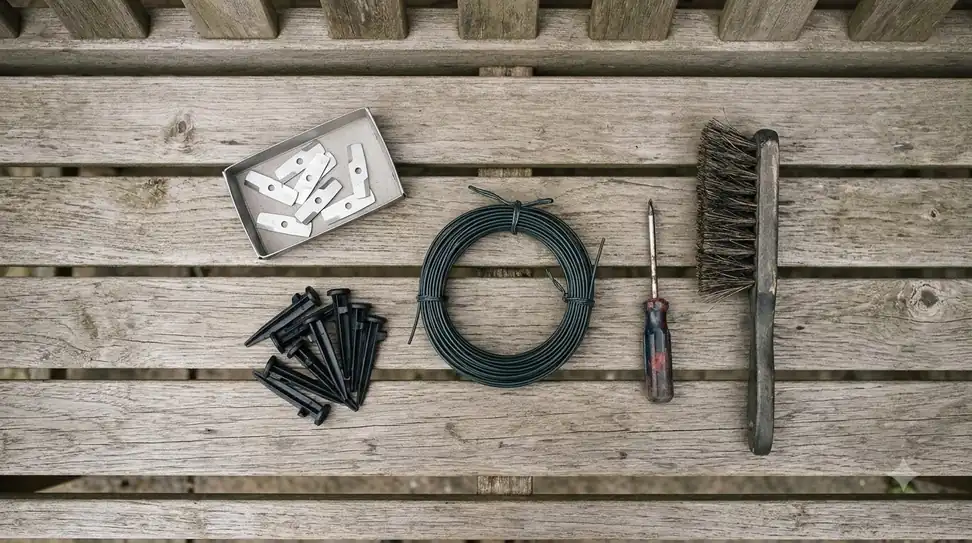
What happens when the signal drops depends on the mowing pattern. In systematic mowing, the mower stops at the boundary wire and resumes once the signal returns. In irregular mowing, it keeps mowing inside the wire-defined area without the signal. If the wire breaks, the mower operates as if EPOS Support by Wire were disabled, the app shows a warning, and the charging station light flashes blue. For a home you rarely visit, that app warning is often the only early signal, so confirm alerts reach your phone before you leave the mower running. If the mower stops mid-season, see how to find a break in robot mower wire.
Site hazards to check before you leave
Fire ants and lightning are the two site hazards the University of Florida flagged for robotic mowers, and both concentrate around the charging station. UF/IFAS researchers note that fire ants are attracted to electrical equipment and can build mounds near docking stations, and they recommend a routine insecticide treatment.
For lightning, Bryan Unruh, associate director of the UF/IFAS West Florida Research and Education Center, advises homeowners to consider grounding the docking stations or at least connecting them to surge protection. The same UF News report says it found no negative effects from running the units in rainy conditions, so rain alone is not the main concern. Our explainer on whether robot mowers can be left outside covers weather and storage in more detail.
Cutting height and mowing schedule
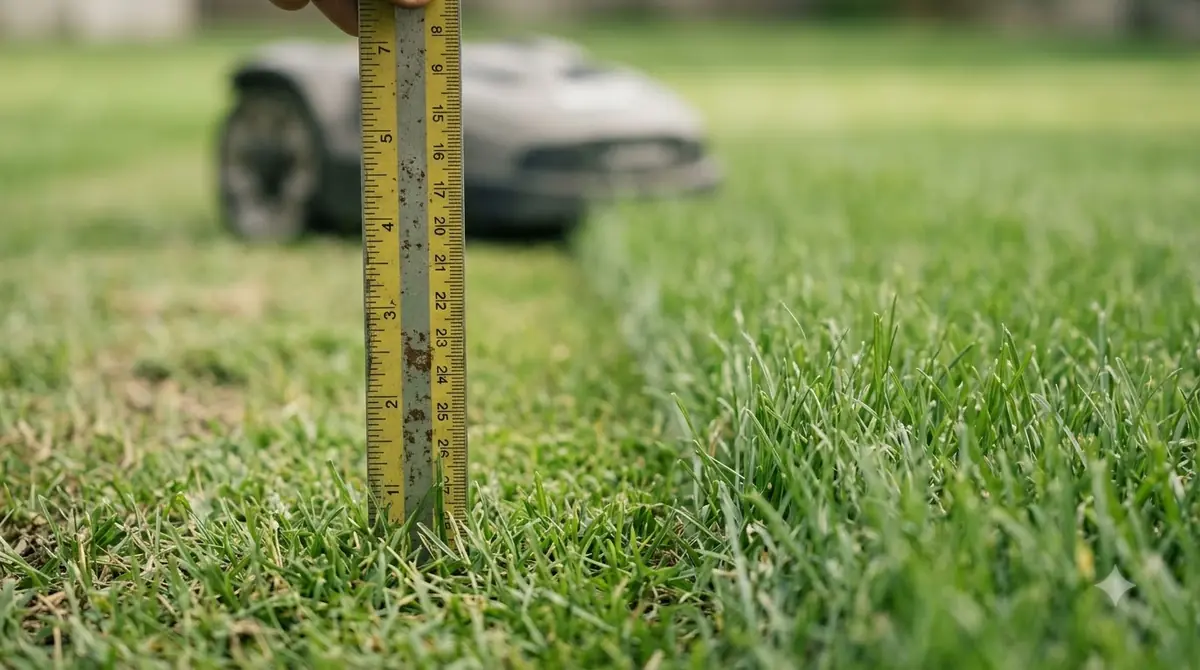
For most warm-season grasses, the usual recommendation is an average height between three and four inches, and robot mowers can cut lower and more often than a weekly mow. Conventional guidance is to mow every seven days to remove a third of the grass blade, while robotic mowers cut small amounts daily. The UF/IFAS article also raises the question of whether a robotic cut height of 2.4 inches can maintain St. Augustine grass, which is a reason to set height deliberately rather than leave the mower at its lowest setting.
Our reading is that a weekend home should set cutting height by grass type, not by the mower’s minimum. This applies to warm-season grasses only, and the source does not cover cool-season lawns, so check your own grass before changing the setting.
What to check before you buy
Start with these checks when you ask what is the best robot mower for weekend homes, since each one can change the answer. They are our reading, built from the sources above, not a ranking of models.
- Confirm the setup works at each property: a charging station and a wire or wire-free installation at every site.
- If one mower will move between sites, confirm the model supports Profiles.
- For wire-free models, confirm satellite coverage at the address before you buy.
- Find a docking spot with an unobstructed sky view and a plan for surge protection.
- Plan fire ant control at the dock and check the wire or positioning system each season.
- Confirm app alerts reach your phone before the mower runs unattended.
Frequently asked questions
Can one robot mower serve two properties?
Yes, for some models, and it is a deciding point in what is the best robot mower for weekend homes when you own two properties. Husqvarna says the mower can move between two sites if each site has its own charging station and a wire or EPOS wire-free installation, and the model supports Profiles. You then switch profiles when you move the mower. Confirm model support and market availability first.
Do weekend homes need a boundary wire?
Not always, but the choice has trade-offs. Wired mowers need trenching and a cut wire can stop them, while wire-free models depend on satellite visibility. Mammotion lists trees, tall buildings and bad weather as limits. Check the address before you decide.
Does rain stop a robot mower?
The UF/IFAS report on robotic mowers says it found no negative effects from running the units in rainy conditions. For a home you visit rarely, the bigger concerns are the docking station hazards and the boundary system, not the weather alone.
How do I check a mower I rarely visit?
Confirm app alerts before you leave, as explained in robot mower Wi-Fi, Bluetooth and 4G, and walk the boundary once a season to test the wire, as Mammotion advises. Check the charging station light, since Husqvarna says a wire break makes it flash blue. Plan fire ant treatment and surge protection at the dock.
Sources
- Husqvarna support: using one Automower at two locations (Husqvarna): two-site requirements and profile switching.
- Husqvarna EPOS Support by Wire guide (Husqvarna): wire role, 800 m loop limit, signal-loss behavior and wire-break warning.
- UF News: robotic mowers and Florida lawn health (University of Florida): fire ants, docking grounding, rain findings and cutting height context.
- Do robot lawn mowers need a boundary wire? (Mammotion, manufacturer): wire burial depth, install time and wire-free limits.
- How do robotic lawnmowers without boundary wires work? (Navimow, manufacturer): network RTK with no local antenna and location-dependent availability.
 Up next9 min readBest Robot MowersBest Robot Lawn Mower for Vacation Homes: What to CheckUpdated Nov 11, 2026
 8 min readBest Robot MowersBest Robot Lawn Mower for Suburban Homes: What to Check FirstUpdated Nov 11, 2026
 7 min readBest Robot MowersWhat Size Robot Mower Do You Need for 2 Acres?Updated Nov 11, 2026
 9 min readBest Robot MowersWhat Is the Best Cheap Robot Lawn Mower? How to Choose One That FitsUpdated Nov 11, 2026
 8 min readBest Robot MowersWhat Size Robot Mower Do I Need for 1/4 Acre?Updated Nov 11, 2026
 8 min readBest Robot MowersWhich Robot Mower Has the Best Navigation? It Depends on Your YardUpdated Nov 11, 2026