
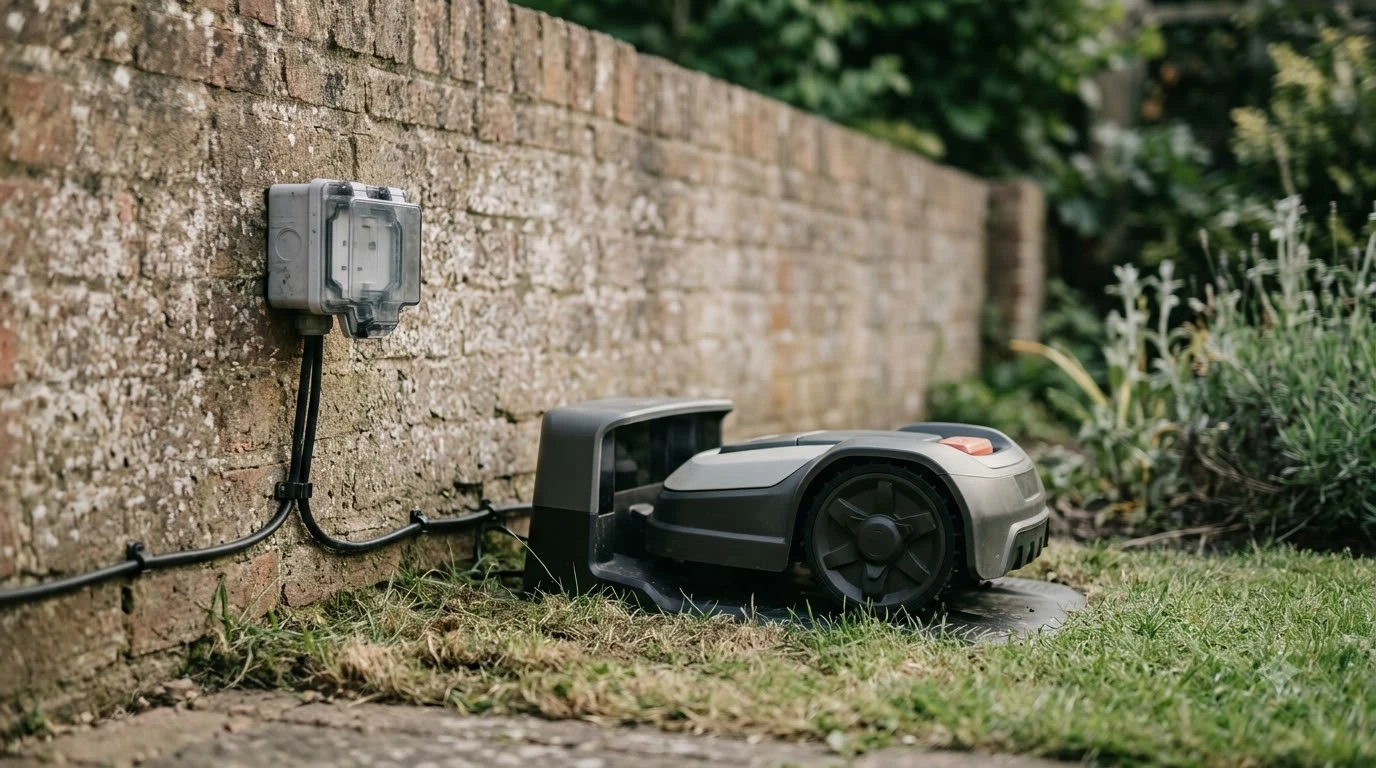

The best GFCI outlet cover for robot mower use is a weatherproof, while-in-use cover that fits the outdoor outlet box your charging station plugs into. The cover shields the receptacle from rain and debris, but it does not provide ground fault protection by itself. The facts below come from CPSC and Leviton pages read as of 2026-11-10, and our own reading is labeled as such.
The short answer
- Type: a weatherproof while-in-use cover, so protection stays in place with the plug inserted.
- Protection: the cover does not replace GFCI protection, so the outlet or breaker needs one.
- Fit: match the cover to your device (GFCI or Decora) and your wallbox size.
- Install: have a qualified electrician check the box and wiring, then test the GFCI regularly.
What a GFCI does and what a cover does not
A cover is a weatherproof enclosure, while a GFCI is a protective device. The U.S. Consumer Product Safety Commission describes a ground fault circuit interrupter as a device that monitors the current in a circuit, and it trips when the current difference is as small as 0.006 amperes, cutting power faster than a blink of an eye (CPSC’s GFCI fact sheet).
Because of that, even the best GFCI outlet cover for robot mower setups gives no ground fault protection on its own. The protection has to come from a GFCI receptacle, a GFCI circuit breaker, or a portable GFCI plugged into the outlet. CPSC describes portable GFCIs as useful where installed GFCIs are not practical, and it recommends one whenever you operate electrically powered garden equipment such as a mower or hedge trimmer.
The CPSC also notes that a GFCI can work even on two-slot receptacles, and that it can reduce the severity of some fires by interrupting current. Those points are the reason the outlet, not the cover, is the safety layer that matters most for a charging station. Where the dock sits also decides where the outlet has to be, so read where to put a robot mower charging station before you choose a spot.
Why a weatherproof while-in-use cover matters for a charging station
The outlet that feeds a charging station sits outdoors and faces rain, moisture, dust and debris. Leviton’s support article says outdoor devices need protection from those conditions, and it notes that NEC Section 406.9 includes weatherproof enclosure requirements for receptacles in damp and wet locations (Leviton’s weatherproof covers article).
The same article says the protection needed may depend on whether the receptacle is in use. A cover may need to protect the outlet when nothing is plugged in, or while a plug stays connected. The second case is the while-in-use design, which keeps the outlet protected with the plug inserted.
Our reading is that a while-in-use cover suits a charging station better than a basic cover, and the outlet protection matters more than the cover color, because the power supply is typically left plugged in between mowing sessions. Check your own station’s manual for how its power supply connects before you buy. For the electrical side of the station, see robot mower charging station power requirements, and for what it costs to run, see robot mower electricity cost.
Features to check before you buy
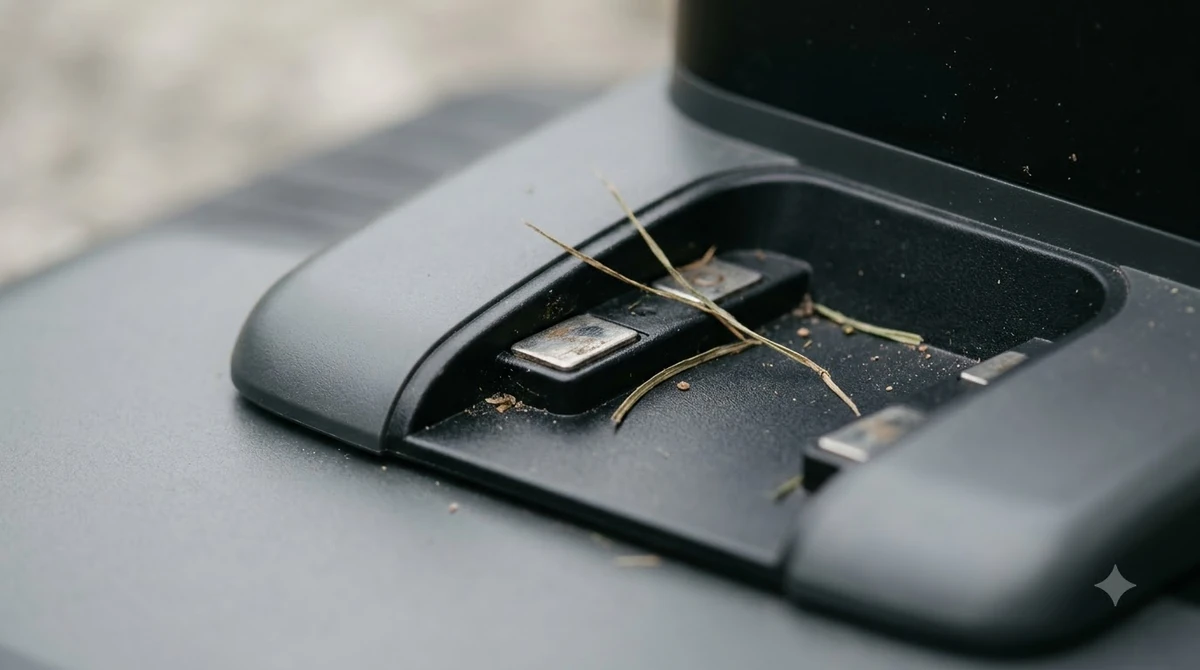
Leviton’s 2-gang while-in-use cover is a useful reference for what a complete listing should show. The table below uses that listing as the example, so you can compare any other cover on the same points.
| Feature | What to look for | Why it matters |
|---|---|---|
| Weather rating | Listed as rated 3R | Leviton’s listing describes the 3R rating for outdoor use |
| Design | While-in-use, with protection while the device is plugged in | A charger left plugged in stays protected |
| Material | Polycarbonate, UV-resistant | Resists sun exposure over time, according to Leviton |
| Seal | Pre-mounted heavy-duty gasket | Keeps water and debris out at the cover edge |
| Lock | Lockable cover | Helps guard against weather, tampering and unauthorized access |
| Fit | 2-gang, for GFCI, Decora or standard outlets, with adapter plates included | Confirms the cover matches your device and opening |
| Box | Standard 2-gang wallbox, sold separately | Plan for the box as part of the job |
| Certification | cULus listed, citing NEC 2017 Section 406.9(B)(1) | Look for listing marks on any cover you consider |
Covers from other makers can use different materials and ratings, so when you compare the best GFCI outlet cover for robot mower use, compare the listing marks and the rating on each product rather than the product name. A cover that does not state a wet or outdoor rating is hard to verify, and our reading is to skip it for a charging station.
Confirm the outlet has GFCI protection first
Before you buy a cover, confirm that the outlet already has GFCI protection, because even the best GFCI outlet cover for robot mower use does not add it. CPSC lists outdoor receptacles among the locations the National Electrical Code has required to have GFCI protection since 1973. The NEC typically applies to new construction and major renovations, so an older outlet may not have one.
If an outlet has no GFCI, a cover will not add that protection. CPSC describes a portable GFCI as a plug-in option where installed GFCIs are not practical, and it advises contacting a qualified electrician when in doubt about any electrical work. A surge protector is a separate product, covered in our guide to an outdoor surge protector for a robot mower.
Install and test the cover and GFCI
CPSC says circuit breaker and receptacle GFCIs may be installed by a qualified electrician, and receptacle GFCIs may be installed by a consumer who has the knowledge to follow proper wiring practice. When in doubt, CPSC says to call a qualified electrician rather than attempt the work yourself.
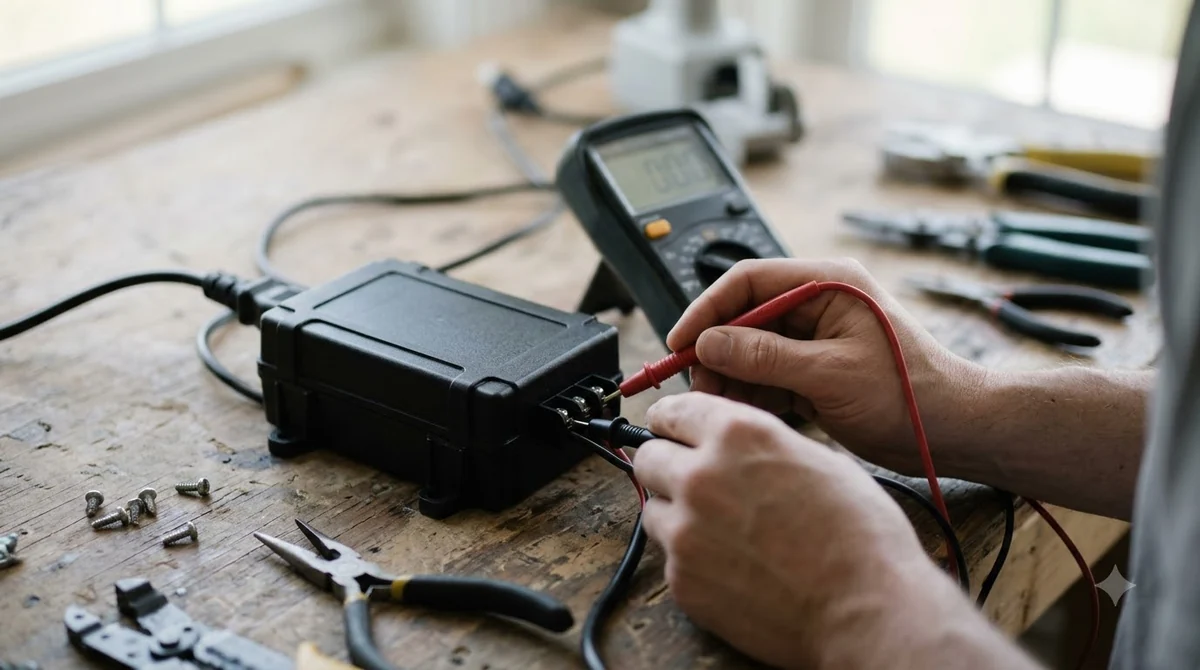
- Check the box. If you use a 2-gang Leviton model, confirm you have a standard 2-gang wallbox, since Leviton sells it separately.
- Seal the back. Leviton’s product page says to apply silicone around the back gasket during installation.
- Use the inserts. Leviton includes two inserts for the circular cord openings to keep out insects and debris.
- Test the GFCI. CPSC says to test every GFCI after installation, at least once a month, and after a power failure, following the manufacturer’s instructions.
- Protect the cord run. Where the station’s power cord runs outdoors, an outdoor cable protector for robot mowers is a separate item to consider.
- Recheck after a fault. If the lamp stays on when you press test, CPSC says the GFCI is not working or was not installed correctly. If it does not come back on after reset, replace the GFCI.
Best GFCI outlet cover for robot mower: what to check before you buy
Use this checklist before you choose the best GFCI outlet cover for robot mower use at your charging station.
- The outlet or breaker has GFCI protection, and the GFCI passes its monthly test.
- The cover is listed for outdoor or wet use and marked while-in-use.
- The gang count and device type match your outlet box.
- The cover includes a gasket, and a lock if you need tamper resistance.
- Any box or wiring change goes to a qualified electrician when you are not sure.
Frequently asked questions
Does a GFCI outlet cover provide ground fault protection?
No. A cover is a weatherproof enclosure. Ground fault protection comes from a GFCI receptacle, a GFCI circuit breaker or a portable GFCI, which CPSC says trips when the current difference is as small as 0.006 amperes.
Do I need a while-in-use cover for a robot mower charger?
Our reading is yes when the station stays plugged in. Leviton describes its while-in-use covers as keeping outdoor outlets protected even when devices are plugged in. Confirm the requirement with your local code and your station’s manual.
Should I buy a 1-gang or 2-gang cover?
Match the gang count to your box and device. Leviton’s 2-gang model requires a standard 2-gang wallbox, which it sells separately, so check your existing box before ordering. That box check comes first when you shop for the best GFCI outlet cover for robot mower use.
How often should I test the GFCI?
CPSC advises testing a GFCI after installation, at least once a month, and after a power failure. Follow the manufacturer’s instructions, and call a qualified electrician if the GFCI does not trip or reset properly.
Sources
- CPSC GFCI fact sheet (U.S. Consumer Product Safety Commission): GFCI trip threshold, outdoor receptacle requirement, portable GFCI use, and testing and installation guidance.
- Leviton 2-gang while-in-use cover listing (manufacturer): rating, material, gasket, lock, box requirement and code citation.
- Leviton weatherproof covers article (manufacturer): outdoor exposure and the NEC 406.9 wet and damp location covers.
 Up next7 min readGearBest Outdoor Surge Protector for Robot Mower: What to Check Before You BuyUpdated Nov 11, 2026
 8 min readGearBest Metal Robot Mower Shelter: What to Check Before You BuyUpdated Nov 11, 2026
 7 min readGearWooden Robot Mower Garage: What to Check Before You BuyUpdated Nov 11, 2026
 9 min readGearRTK Antenna Wall Mount Bracket: What to Check Before You BuyUpdated Nov 11, 2026
 8 min readGearBest Garage for Dreame Robot Mowers: 5 Checks Before You BuyUpdated Nov 11, 2026
 8 min readGearBest Weatherproof Enclosure for RTK Base Station: 6 Checks Before You BuyUpdated Nov 11, 2026