
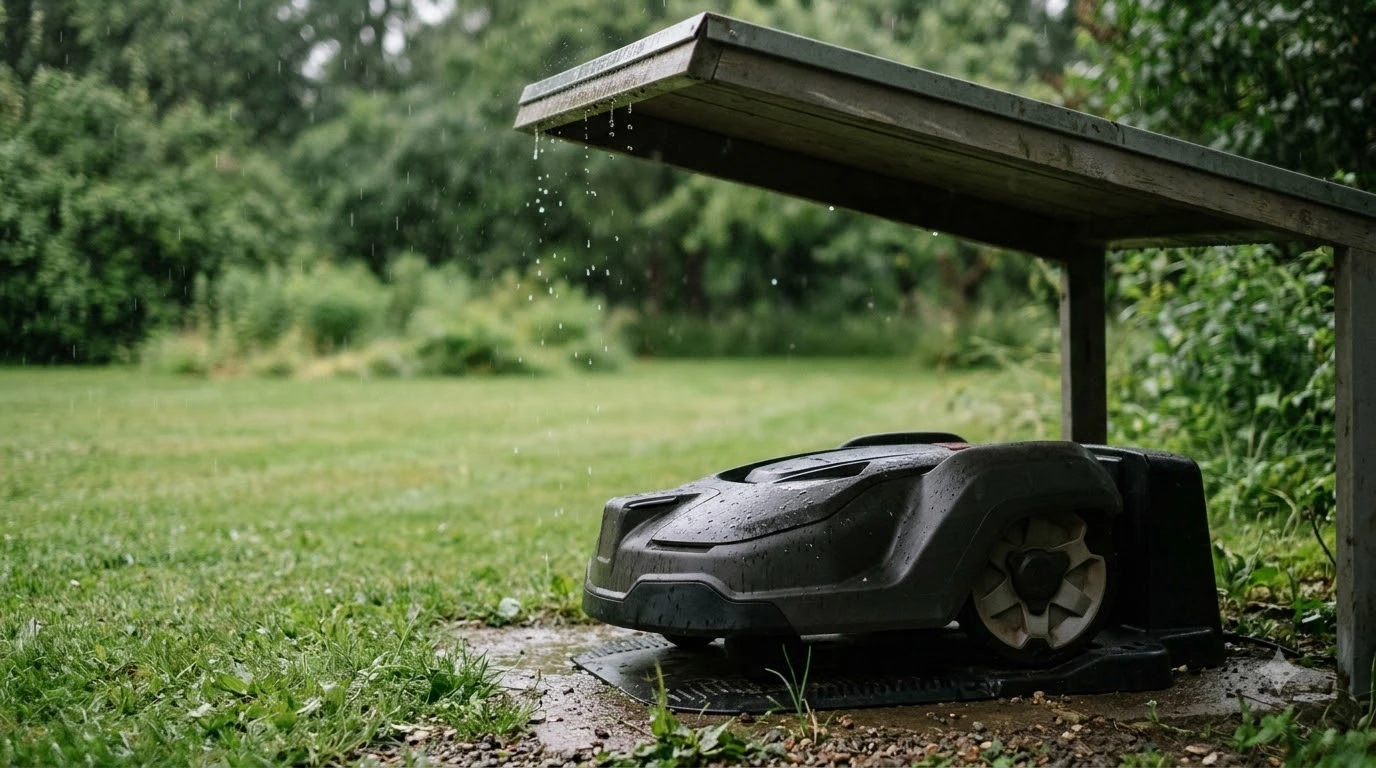

The best metal robot mower shelter keeps rust out, lets air move, and leaves the charging dock its required clearance. Metal resists rain and rust well, but it can heat up quickly in direct sunlight. Measure your mower and dock before you choose a size, because a shelter that fits the roof but blocks the dock fails the job.
The short answer
- Rust: choose a shelter whose steel or metal is rustproof, since the Robomow guide says metal garages must be rustproof.
- Heat: metal can get hot in sun, so our reading is that a roof with open sides or a carport-style layout suits warm climates best.
- Airflow: the design should not be too open, but it needs gaps for air to move so heat and moisture do not build up.
- Clearance: plan the dock footprint plus about 10 cm (4 in) margin in length and 20 cm (8 in) extra width.
- Winter: a shelter does not give adequate frost protection, so store the mower indoors when temperatures drop below zero.
Why metal is a common choice for a robot mower shelter
Metal is a common choice for a robot mower shelter, because it holds up to rain and resists rust better than many cheap plastic covers. The Mammotion guide says metal resists rain and rust well, which matters for a mower that sits outdoors through wet seasons. Our reading is that a metal frame suits a permanent setup on a windy lawn better than a light cover does, as long as it is anchored.
Plastic is still the most common material. If you are not sure you need a shelter at all, read does a robot mower need a garage first, and for a build-it-yourself route see these DIY robot mower garage ideas. The Robomow guide notes that the majority of robotic mower garages for specific models are made of weather-resistant plastic, and that plastic is discreet and inexpensive. The Robomow garage guide also mentions shelters with glass or transparent polycarbonate roofs.
The heat problem with metal in direct sun
Metal can heat up quickly in direct sunlight, which is the main drawback of a metal shelter. Robomow warns that a garage can heat up when exposed to sunlight, so a metal roof in a sunny yard needs more thought than a shaded one.
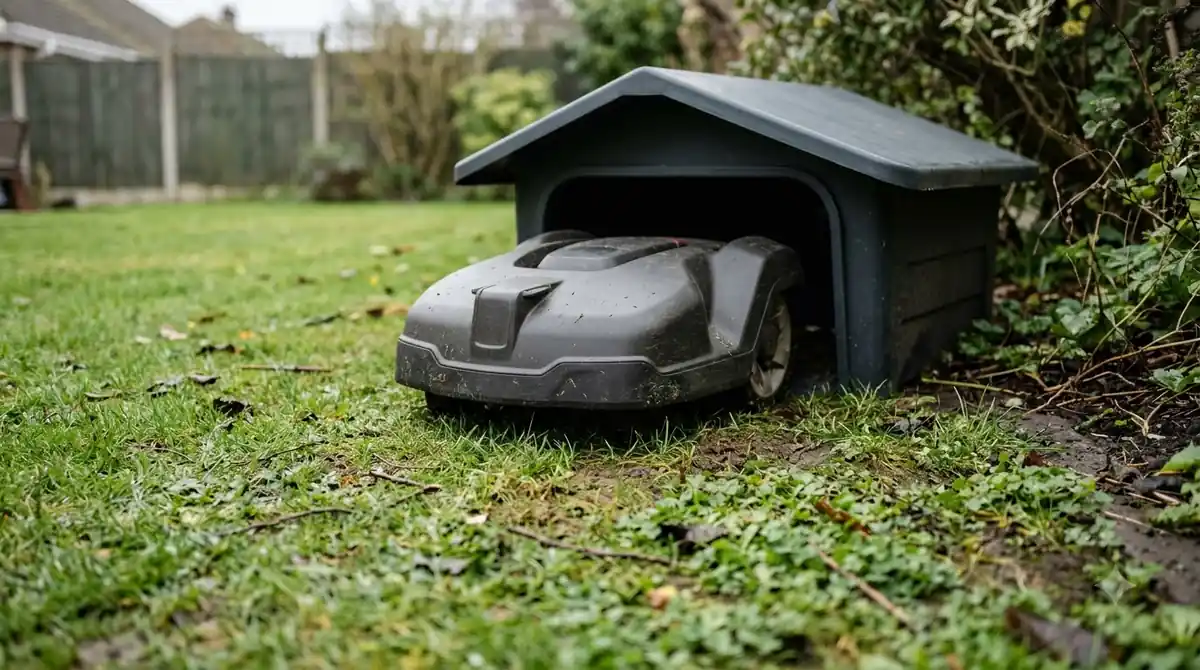
Our reading is that heat matters most for the battery, because the Robomow guide says constant exposure to wind and other elements may shorten battery life. A metal shelter that traps warm air can work against that goal. Choose a design with open sides or a carport-style layout where the climate is hot, and keep the shelter in shade if your lawn allows it.
Rust protection: what to look for in the metal
Rust protection decides how long a metal shelter lasts outdoors. The Robomow guide says metal garages must be rustproof, so check the spec sheet for the treatment on the frame, legs and fixings before you buy.
Look at the legs and pegs as well as the roof. Ground pegs keep a shelter in place in wind, and the Robomow guide notes that they help provide protection in windy conditions. Our reading is that legs standing on damp soil are the first place rust starts, so check whether the feet are raised or sealed.
Airflow and clearance around the dock
Airflow and clearance are the two dimensions most often ignored when buyers focus on the metal itself. The Robomow guide says proper air circulation helps prevent excessive heat and moisture buildup, and that a garage should not be too open or airy. The Mammotion guide suggests leaving a small gap at the top of the side walls or at the back.
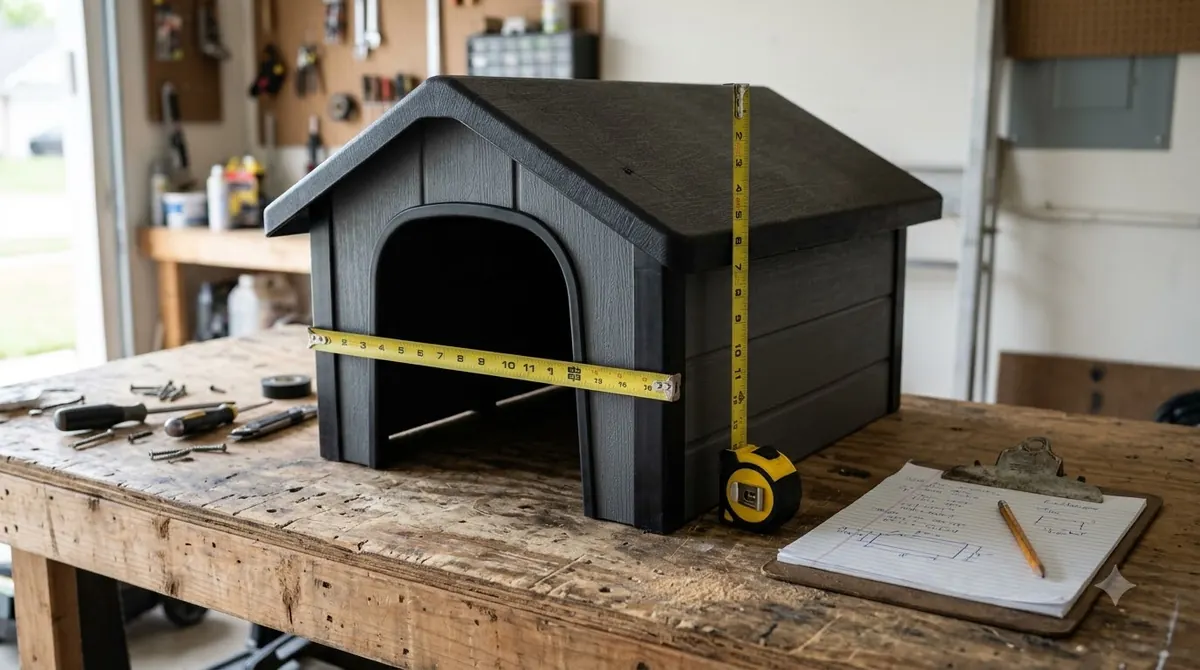
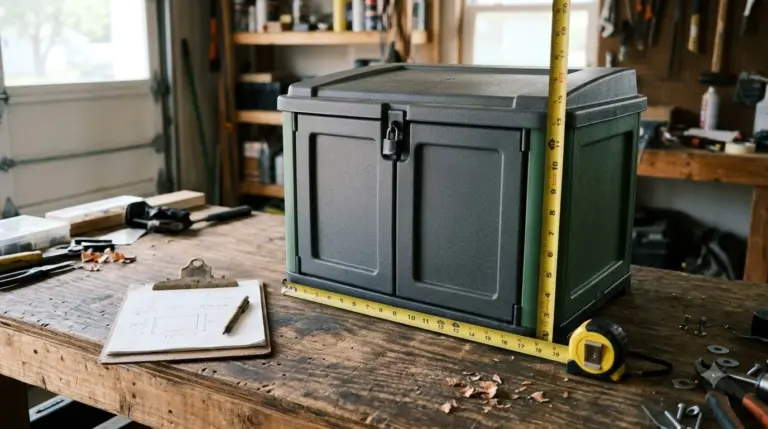
For clearance, the Mammotion guide gives a sizing rule from its example mower, which measures 690 × 533 × 279 mm (about 27 × 21 × 11 in). The width of the space should equal the machine width plus 20 cm (about 8 in, or 10 cm on each side). The length should equal the machine length plus the charging station length plus a 10 cm (about 4 in) margin. The roof must also be high enough to open the display hatch. Our robot mower garage size guide goes deeper on sizing.
| Material | Strength | Watch for |
|---|---|---|
| Metal | Resists rain and rust well when rustproof | Can heat up in direct sun; check rust treatment |
| Plastic | Weather-resistant and inexpensive; the most common type | Cold can make it porous and prone to breaking, per Robomow |
| Wood | Natural look; stays cool in some setups | Needs treated timber and regular upkeep; may not be stable in heavy storms if not fixed |
| Acrylic | Light, affordable and easy to install | Less shade; can become brittle or fade after long UV exposure |
The table lists the main trade-offs. Our reading is that a metal shelter suits a permanent, windy or wet site, while a light acrylic cover suits a quick rain cover on a mild lawn. If you are weighing a cover against a full shelter, see our comparison of a robot mower rain cover versus a garage.
Winter and frost limits of a metal shelter
No metal shelter protects a mower from frost, so winter storage needs more than a roof. Robomow states that garages do not provide adequate protection against frost, and that the mower should be stored indoors when the temperature drops below zero to protect the battery.
Plastic garages in particular should be stored indoors in winter, because cold can make plastic porous. A metal shelter does not change that frost limit, so the battery still needs an indoor store in deep cold. Our guide on how to winterize a robot mower covers the steps. Our reading is that a best metal robot mower shelter works best as a summer and rain shelter, with winter storage handled indoors.
Metal shelter fit: manufacturer models versus universal designs
A shelter made for your model usually fits better than a universal one. The Robomow guide says manufacturer garages fit snugly and protect the device on two or three sides. It also warns that universal garages may not achieve an optimal fit, and that wood or metal garages are not always matched in size to a specific mower.
When you shop for the best metal robot mower shelter in a universal design, measure the mower and dock first and compare the result with the clearance rule in the previous section. Our reading is that a shelter that looks large enough on the product page can still block the mower’s path to the dock.
How to pick the best metal robot mower shelter for your yard
Run through these checks before you order, so the best metal robot mower shelter you pick fits both your yard and your mower. Each step uses the manufacturer or guide figures above.
- Measure the mower. Record its width, length and height, and the dock’s length.
- Add clearance. Add 20 cm to the width and 10 cm to the length, as the Mammotion example rule shows.
- Confirm rust protection. Check the spec sheet for rustproof treatment on the roof, legs and fixings.
- Check airflow. Look for open gaps at the top or back, and avoid a fully enclosed box.
- Check the roof height. Make sure you can open the display hatch.
- Anchor it. Use ground pegs so the shelter holds in wind.
- Plan winter storage. Keep a plan to bring the mower indoors when temperatures fall below zero.
Frequently asked questions
What makes the best metal robot mower shelter?
No single model is the best metal robot mower shelter for every yard. Metal resists rain and rust well, according to the Mammotion guide, but it can heat up in direct sunlight. The right choice depends on sun exposure, airflow and whether the shelter is permanent.
Can a metal roof affect GPS or RTK signal?
We did not find a manufacturer statement on this, so we cannot say it is a problem or that it is not. Check your model’s manual, and keep any RTK antenna or base station clear of metal surfaces if the manual advises it.
Does a metal robot mower shelter protect against frost?
No. Robomow says garages do not provide adequate protection against frost. Store the mower indoors when the temperature drops below zero to protect the battery and the mower.
How much space does a robot mower shelter need?
The Mammotion guide gives a rule from its example mower: add 20 cm to the machine width and add the charging station length plus 10 cm to the machine length. Your model’s manual sets the exact figure, and the manual should win if it differs.
Sources
- Which robotic lawnmower garage is the right one? (Robomow): used for material types, rustproof metal, sunlight heat, airflow, frost, wind pegs and fit.
- DIY robot mower garage (Mammotion): used for metal and wood properties, acrylic, airflow gap, warm-climate design and the clearance rule.
 Up next7 min readGearBest Outdoor Surge Protector for Robot Mower: What to Check Before You BuyUpdated Nov 11, 2026
 8 min readGearBest GFCI Outlet Cover for Robot Mower: What to Check Before You BuyUpdated Nov 11, 2026
 7 min readGearWooden Robot Mower Garage: What to Check Before You BuyUpdated Nov 11, 2026
 9 min readGearRTK Antenna Wall Mount Bracket: What to Check Before You BuyUpdated Nov 11, 2026
 8 min readGearBest Garage for Dreame Robot Mowers: 5 Checks Before You BuyUpdated Nov 11, 2026
 8 min readGearBest Weatherproof Enclosure for RTK Base Station: 6 Checks Before You BuyUpdated Nov 11, 2026