
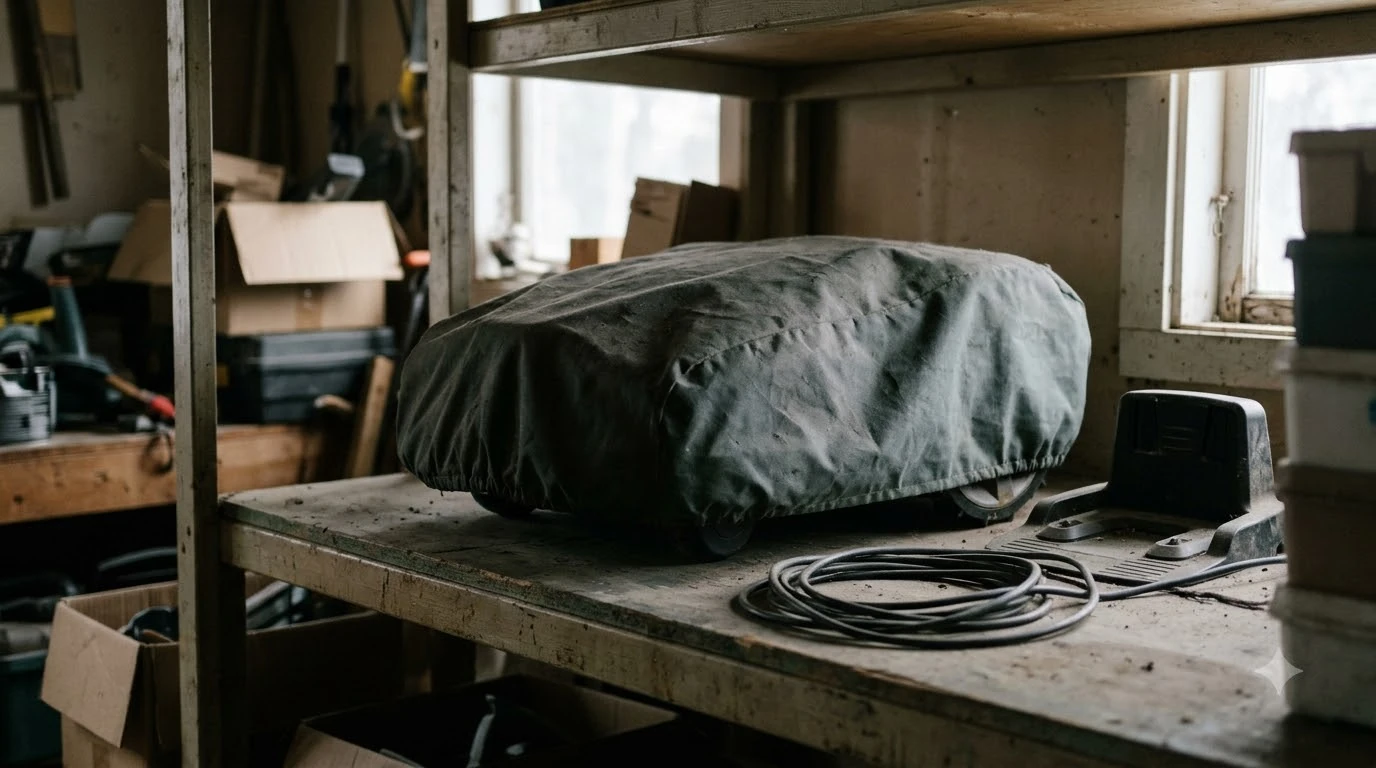

A robot mower cover for charging station is useful only if it keeps rain, splashing water and direct sun off the station without closing in the power supply or blocking airflow. None of the manuals reviewed asks for a fully sealed enclosure, and several warn that a non-approved cover can interfere with the mower. The guidance below is as of 2026-11-11.
The short answer
- Protect, do not seal. Husqvarna’s thunderstorm guide tells owners to close the charging station cover to keep connections dry, which shows covers are meant for rain protection.
- Keep the power supply open. Husqvarna says the power supply must not be put in an enclosed box, and its placement guide asks for open sides and good ventilation.
- Check fit with the manual. Husqvarna states that alternative covers have not been tested or verified by Husqvarna and could interfere with mower functionality.
- Bring it indoors in deep cold. Most winter guides move the station indoors or into a dry, sheltered spot.
What a robot mower cover for charging station is supposed to protect
A cover mainly addresses water. Husqvarna’s thunderstorm guide advises owners to disconnect the power supply and close the charging station hatch or cover before a storm, because lightning and heavy rain can damage the mower and the station. The same page says to close the charging station cover to protect the connections from rain. Placement matters too, so read where to put the robot mower charging station first.
Rain itself is not always the main threat. Eufy’s garage guide says its IPX6 rating covers rain and splashes, not constant direct exposure, and that water standing near charging contacts can cause corrosion over time (vendor claim). Mammotion’s garage guide makes a similar point: the mower usually handles rain, but repeated wet and dry cycles corrode the charging contacts. So a cover that keeps the contacts dry between cuts addresses the more common problem.
Our reading: the job of a cover is to keep the contact area and the connections dry, not to keep the whole station dry at any cost.
Ventilation and the open power supply
Husqvarna’s charging station placement guide gives clearance figures for boundary wire installations: about 3 m (10 ft) of free space in front, 150 cm (60 in) on each side of centre, and 60 cm (2 ft) at the rear. The guide sets these as clearance around the station, so a cover should stay outside those zones and should not close the sides.
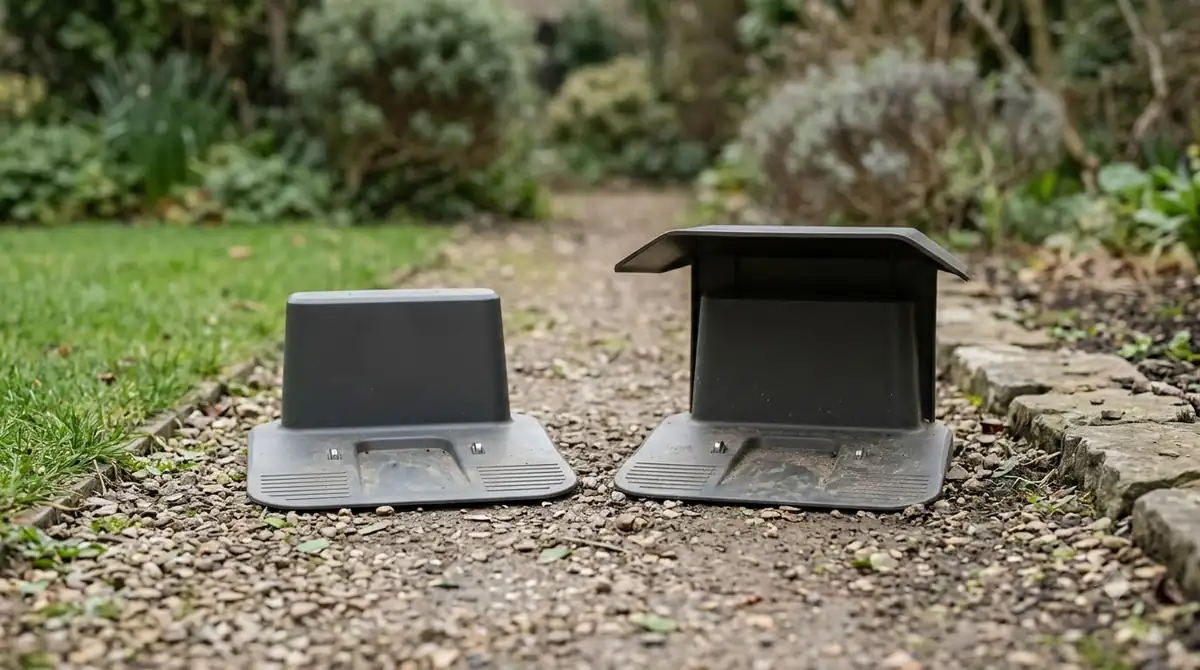
The same guide says covers should have open sides and good ventilation, and that the power supply should never sit in an enclosed box. Mammotion’s garage guide adds that a dark or fully enclosed design can trap heat, and it recommends keeping the design open and ventilated. Robomow’s garage guidance says proper air circulation prevents excessive heat and moisture build-up. Our reading: a station cover should shade and shield from the top and front without becoming a box.
| Design feature | Why it matters | Source type |
|---|---|---|
| Open sides and back | Airflow for the station and power supply | Husqvarna placement guide |
| Power supply outside any enclosure | Heat and moisture build-up | Husqvarna placement guide |
| Roof or hood over the front | Shields the contacts from rain and splash; the Husqvarna guide mentions a roof only for its EPOS reference station, and only where the front has a view of the sky | Husqvarna placement guide |
Sun, heat and contact corrosion
Direct sun is a separate concern. Mammotion’s blog says constant sunlight can fade plastics and weaken housings, and that UV and temperature swings cause most long-term damage. Robomow’s installation guide asks for protection from full sunlight and from splashing water for the station, and says the transformer needs the same sun and water protection. A robot mower cover for charging station that traps heat on a hot afternoon works against the goal.
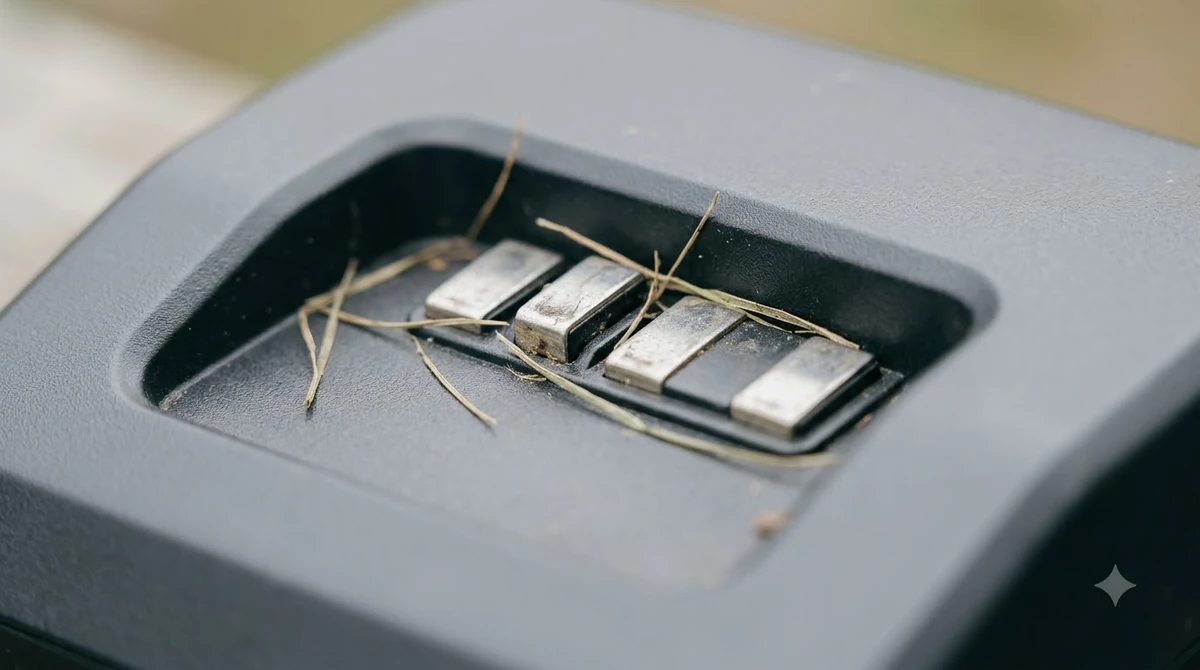
Contact condition is the practical check. If the metal contacts are dirty, wet or corroded, the mower may not dock reliably. A cover should keep leaves and water off the contacts without touching them, and the contacts should be cleaned on a schedule the manual sets.
Electrical safety: outlet, cord and GFCI
A cover does not replace electrical protection. Toro’s charging station manual for its professional model says not to plug the station into a power strip or an extension cord, that installation should be done by a qualified professional, and that the station should be at least 15 m (49 ft) from the water edge. Robomow’s guide asks for a weatherproof outdoor socket, and our guide to charging station power requirements goes through the electrical side.
The Consumer Product Safety Commission notes that the National Electrical Code has required GFCI protection on outdoor receptacles since 1973, and that portable GFCIs are an option for garden equipment. Test the GFCI regularly, as the CPSC fact sheet advises. A robot mower cover for charging station is a different product from an outlet cover; a NEMA 3R while-in-use cover protects an outlet from falling liquids and light splashing, but it is not a charging station cover. For the outlet itself, compare a weatherproof outlet box for a robot mower.
Our reading: buy a robot mower cover for charging station only after the outlet, cord and GFCI are already correct, because a cover cannot fix a wet or unprotected outlet.
Storms and winter storage
Husqvarna’s winter storage guide says the mower, charging station and power supply should be stored indoors in a dry place above freezing (above 0 C or 32 F), with the exception of the NERA baseplate, which is designed to stay outdoors. If the station stays outside, the guide says to keep it connected to mains power and keep the wires connected. Mammotion’s winter guide says the base station should move indoors or to a sheltered, dry spot, and suggests a breathable, dust-proof cover rather than a sealed one. Its garage guide also says not to place the mower in a low spot. For the full routine, see winterizing a robot mower.
Storage limits differ by brand, so check your own model’s manual for its temperature limits before choosing a storage plan.
Smart checks before you buy a robot mower cover for charging station
Use this checklist before you buy any cover for a robot mower charging station. It reflects the manuals and vendor guides above, plus our reading.
- Confirm the model. Look for a cover the manufacturer names for your station. Husqvarna says alternative covers are not verified by Husqvarna.
- Check the openings. The power supply and the airflow must stay open, as the Husqvarna guide describes.
- Check the clearance. The cover must not sit inside the free-space zones the manual gives, and it must not block the front where the mower docks.
- Check the outlet. The station should be on a weatherproof outdoor outlet with GFCI protection, not on a power strip or an extension cord.
- Plan for storms and winter. Know how to disconnect the power and close the hatch, and when to move the station indoors.
Frequently asked questions
Does a robot mower charging station need a cover?
Not always. Robomow asks for protection from full sun and splashing water, and Husqvarna says a station that stays outdoors should stay connected to mains power with its wires connected. Husqvarna also says the NERA baseplate is designed to stay outdoors.
Can I cover the charging station completely?
A robot mower cover for charging station should not be fully sealed. The manuals do not recommend a sealed enclosure. Husqvarna asks for open sides and a power supply outside any enclosed box, and Mammotion warns that dark, fully enclosed designs can trap heat.
Is a cover the same as a garage for the mower?
No. A station cover protects the charging station and its connections. A garage or shelter protects the mower itself. The two have different clearance rules, so check each product’s manual. Our comparison of a robot mower rain cover versus a garage covers the mower side.
Should I take the charging station indoors in winter?
Most winter guides say yes, or at least move it to a sheltered, dry spot. Husqvarna’s storage guide asks for indoor storage above freezing, with the NERA baseplate as the exception, and Mammotion suggests a breathable, dust-proof cover if it stays outside.
Sources
- Husqvarna, protect your Automower during thunderstorms (manufacturer): cover closed to keep connections dry, disconnection before storms.
- Husqvarna, charging station placement guide (manufacturer): free-space figures, open sides, power supply not in an enclosed box, alternative covers not verified.
- Husqvarna, complete winter storage guide (manufacturer): indoor storage above freezing, NERA baseplate exception.
- Robomow, how to install the charging station (manufacturer): protection from full sun and splashing water, weatherproof outdoor socket.
- Toro, Turf Pro charging station installation manual (manufacturer): no power strip or extension cord, professional installation, distance from water edge.
- Mammotion, robot lawn mower garage guide (vendor): UV effects, heat trapping, corrosion from wet and dry cycles.
- Mammotion, how to winterize a robotic lawn mower (vendor): base station indoors or in a sheltered spot, breathable cover.
- Eufy, do you need a robotic lawn mower garage (vendor): IPX6 rating scope, corrosion near contacts, operating range.
- U.S. Consumer Product Safety Commission, GFCI fact sheet (government): outdoor receptacle GFCI, portable GFCI for garden equipment, testing.
 Up next9 min readGearRobot Mower Charging Station Power Requirements ExplainedUpdated Nov 11, 2026
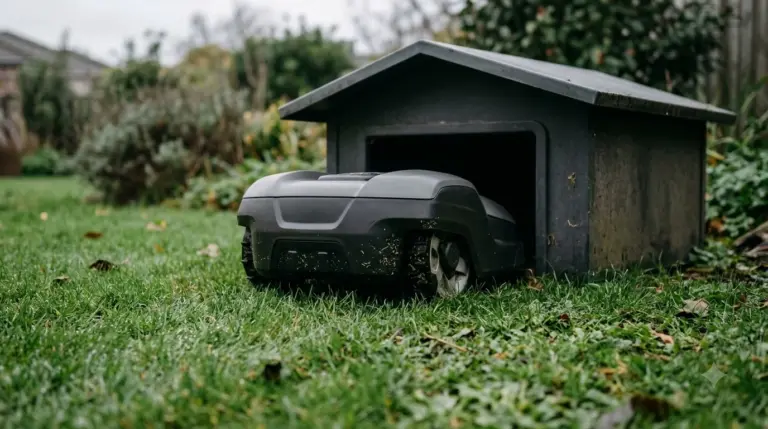 7 min readGearRobot Mower Rain Cover vs Garage: Which Protects Better?Updated Nov 11, 2026
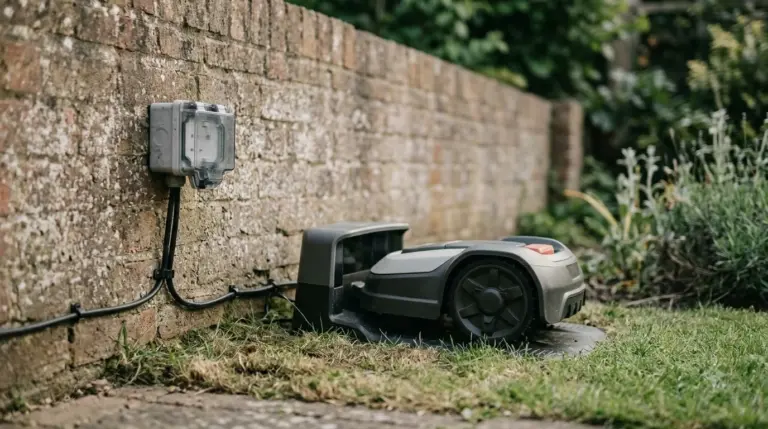 8 min readGearBest GFCI Outlet Cover for Robot Mower: What to Check Before You BuyUpdated Nov 11, 2026
 8 min readGearBest Battery Maintainer for Robot Mower in Winter: What the Guides SayUpdated Nov 11, 2026
 7 min readGearRobot Mower Blade Sharpening or Replace: What the Makers SayUpdated Nov 11, 2026
 9 min readGearBest Silicone Spray for Robot Mower: What Manufacturer Guides SayUpdated Nov 11, 2026