
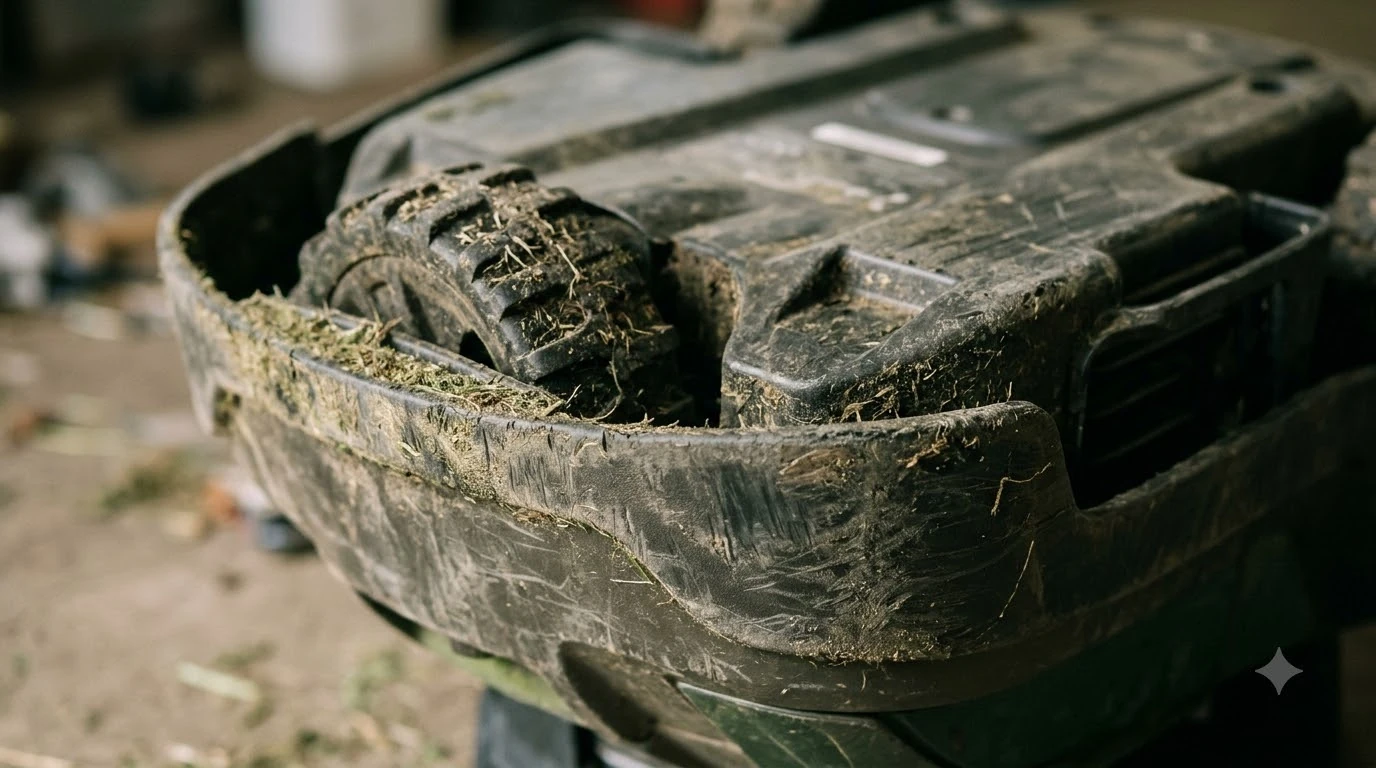

A robot mower wheel bearing noise is usually a squeak or grind from one wheel, caused by a dry or worn bearing, packed debris, or a loose hub. Manufacturer guidance asks owners to power off the mower, rotate each wheel by hand, and listen for the sound before any part is replaced. Doing that hands-on check first, before buying any part, matches the guidance on the manufacturer pages listed under Sources.
The short answer
- Squeak or grind from one wheel: check that wheel’s bearing, the tread, and the axle first.
- Buzzing or vibration: look at the cutting disc and blades, not the wheels.
- Click or knock while moving: more often a gearbox or drive problem, which is a different repair.
- Play or wobble in a wheel: stop using the mower and contact the dealer.
Telling wheel noise from blade noise
A robot mower wheel bearing noise and blade noise can sound alike from the next room, so start by working out which part is making it. Husqvarna’s support page on buzzing links the sound to an imbalance in the cutting system, such as two blades on one screw or dull, chipped blades. Those problems cause vibration across the whole mower, not one wheel, and our guide to dull robot mower blade signs covers that side. For a wider look at loudness, see how to reduce robot mower noise.
| Noise you hear | Most likely area | First check |
|---|---|---|
| Buzz or steady vibration | Cutting disc and blades | Count one blade per screw, look for chips, replace all three blades together |
| Squeak or chirp when a wheel turns | Wheel bearing or bushing | Power off, rotate each wheel by hand, compare the feel |
| Grinding or gritty feel by hand | Wheel bearing or hub | Clean the wheel, check for play, note which side |
| Loud click or knock while driving | Drive gearbox or wheel gears | Note timing on slopes and turns, contact the dealer if it continues |
If the sound stops when you lift the mower and the blades are off, the cutting system is the likely source. If the sound follows one wheel as you turn it by hand, that robot mower wheel bearing noise is the next suspect. Our reading is that a noise you can reproduce by hand is far easier to diagnose than one that only appears under load.
Check the wheels by hand first
Turn the mower off, disconnect power as the manual describes, and lift it onto a towel or blanket so the wheels spin freely. Husqvarna’s support center lists the lower front wheel bearings among the wear parts to check, and says to rotate the wheels and listen for squeaking. The same support center also says to keep the mower on all its wheels and on level ground during storage.
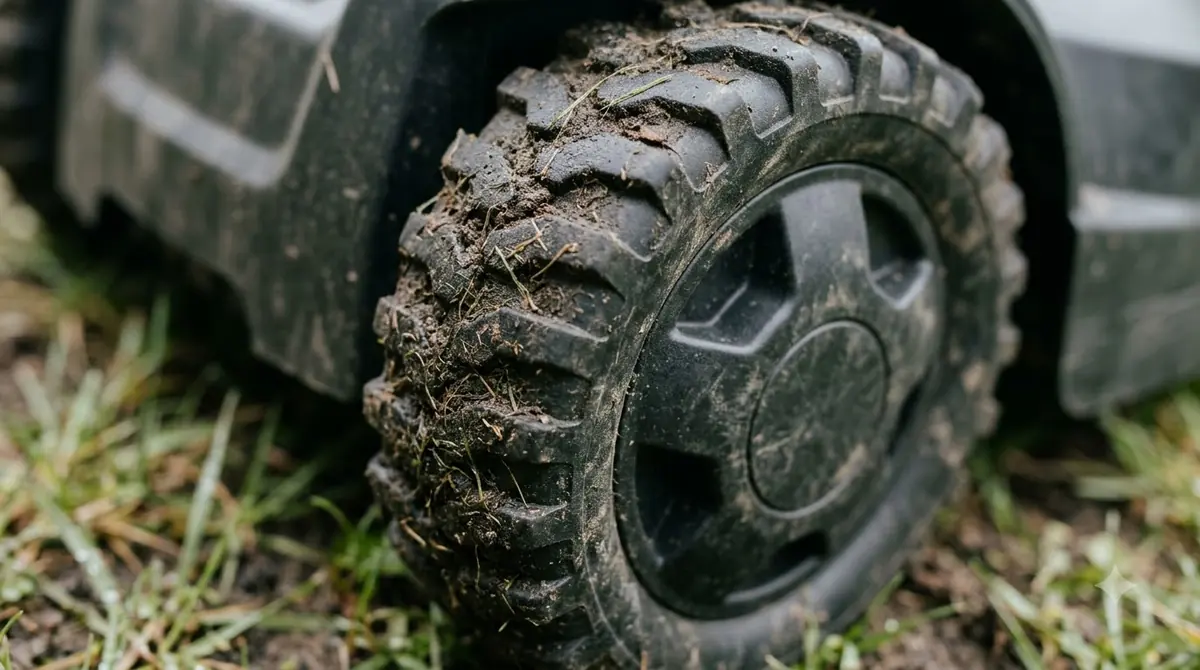
Ecovacs suggests a similar routine after brushing debris from the wheel treads and axles. Rotate each wheel afterward and check its stiffness. Ecovacs also advises a soft brush rather than sharp or hard tools, which keeps the wheel and its parts from being damaged during cleaning.
What causes a robot mower wheel bearing noise
A robot mower wheel bearing noise usually traces to a short list of causes. Journeyman HQ, a parts article, says a gritty feel or squeaking means the bearing needs attention, and that play or wobble should be checked at least monthly. Those are secondhand descriptions, so use them as a checklist rather than a manufacturer statement.
Third-party troubleshooting guides for robot mowers commonly list four causes for a squeak when the wheel turns: a dry bearing, dirt in the bushing, a slightly bent axle, and a worn hub. Wheels that slip rather than squeak are a separate problem, covered in robot mower wheels slipping on grass. Some guides also point to stones or branches wedged between the spokes or near the gearbox. These are not statements from the manufacturers, so they are best treated as hypotheses to test.
- Dirt or grass packed around the axle: often the simplest case to fix, according to our reading of the cleaning guidance.
- Play or wobble: the wheel moves side to side on the axle, which points to the hub or bearing.
- Bent or loose axle: a wheel that does not sit square will wear the bearing faster.
- Worn plastic tread or hub: cracks and thin treads show up after seasons of sun exposure.

Clean and inspect the wheels
Inspect the wheels and sensors once a month, which is the simplest way to catch a robot mower wheel bearing noise early, according to Mammotion’s maintenance guidance. The same page says to brush mud and debris from the drive wheels while turning them by hand. Clean only with the power off, because a wheel can move when the mower is live.
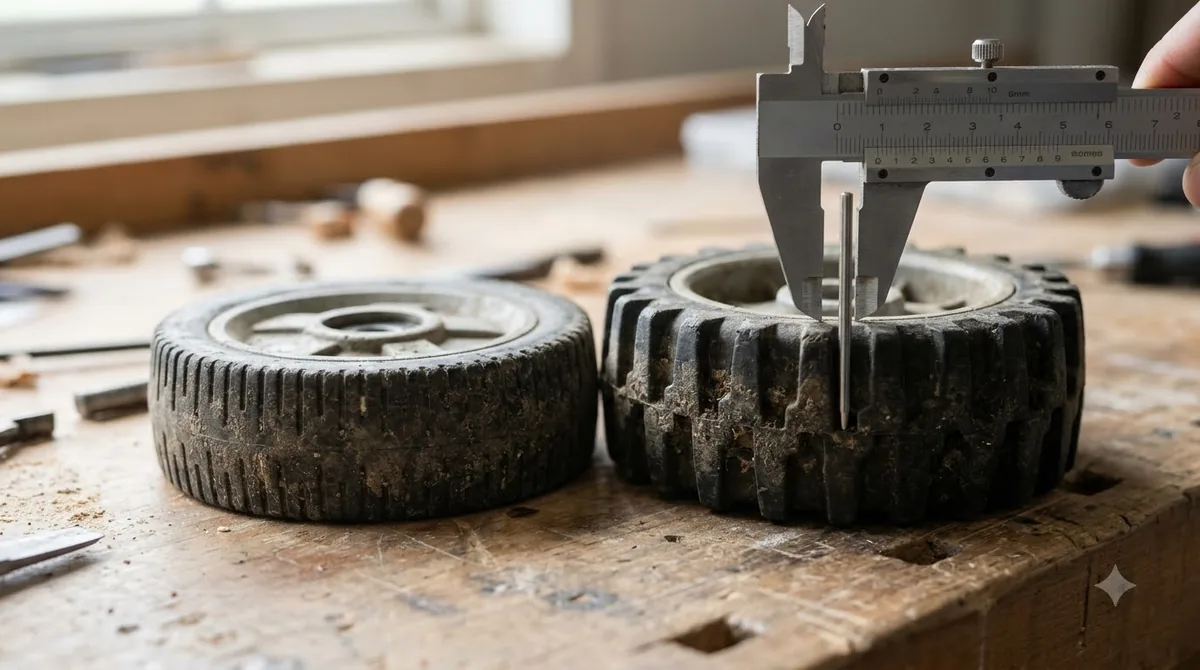
Cleaning often clears a robot mower wheel bearing noise without any parts cost. Pull out grass, debris, and stones from around the axle, wipe the hub, and turn the wheel again. If the noise is still there after a clean, the bearing or hub is the likely cause, and the next step is a closer check or a service call. A badly worn wheel may need a swap, which our robot mower wheel replacement guide walks through, and a monthly pass fits into a standard robot mower maintenance checklist.
When a click or knock points to the gearbox instead
A squeak and a click are not the same fault. A squeak usually comes from the wheel assembly, while a click or knock while driving is more often a gear or drive problem inside the wheel motor or gearbox. Our reading is that a gearbox issue will not be fixed by cleaning the bearing, so do not spend money on bearing parts until the gear noise is ruled out.
Note whether the click, unlike a wheel bearing noise, happens on flat ground or only on slopes and turns. That pattern helps a technician decide whether the gear, the drive wheel, or the bearing is involved. Husqvarna’s buzzing guidance tells owners to contact a local dealer when a problem persists. A robot mower wheel bearing noise is a wheel problem, so it should follow the wheel, not the blades.
When to stop and contact the dealer
Stop using the mower if a wheel has play, shows a robot mower wheel bearing noise that continues after cleaning, or the noise gets louder over several mowing sessions. Our reading is that continued use risks more damage to the bearing and hub, though none of the pages read say so directly. Husqvarna says that for spare parts and assistance, owners should contact a dealer.
Check the warranty before you pay for a robot mower wheel bearing noise repair. Some warranties exclude wear parts. Worx’s EU warranty statement, for example, lists wheels and wear parts as excluded, which is a different brand but shows why reading the terms matters. Our reading is that a wheel bearing is closer to a wear item than a defect, so it may fall outside a standard warranty.
Frequently asked questions
Can I grease a robot mower wheel bearing myself?
Only if the manual names the bearing and the lubricant. Many wheel bearings are sealed, and the manufacturer pages read for this article describe cleaning and inspecting the wheels rather than greasing them. Check your model’s manual before you open a wheel.
Is it safe to keep mowing with a squeaking wheel?
Stop and check it first. Husqvarna lists the lower front wheel bearings as wear parts to inspect, and a worn bearing can get worse with use. If the noise continues after cleaning, contact a dealer rather than running the mower.
Does a warranty cover a worn wheel bearing?
It depends on the warranty. Worx’s EU warranty excludes wheels and wear parts, which is a different brand. Read your own model’s warranty terms and ask the dealer whether a bearing or hub counts as a wear part.
How often should I check the wheels?
Mammotion’s maintenance guidance says to inspect the wheels and sensors once a month. Journeyman HQ also recommends checking for play at least monthly. Check more often if the lawn is muddy or has many stones.
Sources
- Husqvarna Automower support center (manufacturer): wear parts to check, rotate wheels and listen, dealer contact, storage on all wheels.
- Husqvarna support, buzzing sound (KA 70052) (manufacturer): imbalance, two blades on one screw, replace all blades together.
- Husqvarna care and maintenance tips (manufacturer): power off first, dry brushing of wheels and underside.
- Ecovacs robot lawn mower maintenance (manufacturer): brush debris from wheel treads and axles, rotate each wheel to check stiffness.
- Mammotion robot lawn mower maintenance (manufacturer): monthly wheel and sensor inspection, debris removal with the power off.
- Journeyman HQ, robot mower parts article (third party): monthly play check, gritty feel and squeaking as bearing signs.
- Worx EU warranty statement (manufacturer, other brand): wheels and wear parts excluded.
 Up next7 min readGearRobot Mower Wheel Bearing Replacement Kit: What to CheckUpdated Nov 20, 2026
 7 min readGearMammotion Luba Replacement Wheels: What to Check FirstUpdated Nov 19, 2026
 8 min readGearDreame Replacement Wheels: 5 Easy Checks Before You BuyUpdated Nov 19, 2026
 6 min readGearSunseeker Replacement Wheels: What Fits and What to CheckUpdated Nov 20, 2026
 8 min readGearEcovacs GOAT Replacement Wheels: What Is Published and What to CheckUpdated Nov 12, 2026
 7 min readGearRobot Mower Wheel Replacement: When to Swap and What to CheckUpdated Nov 19, 2026