
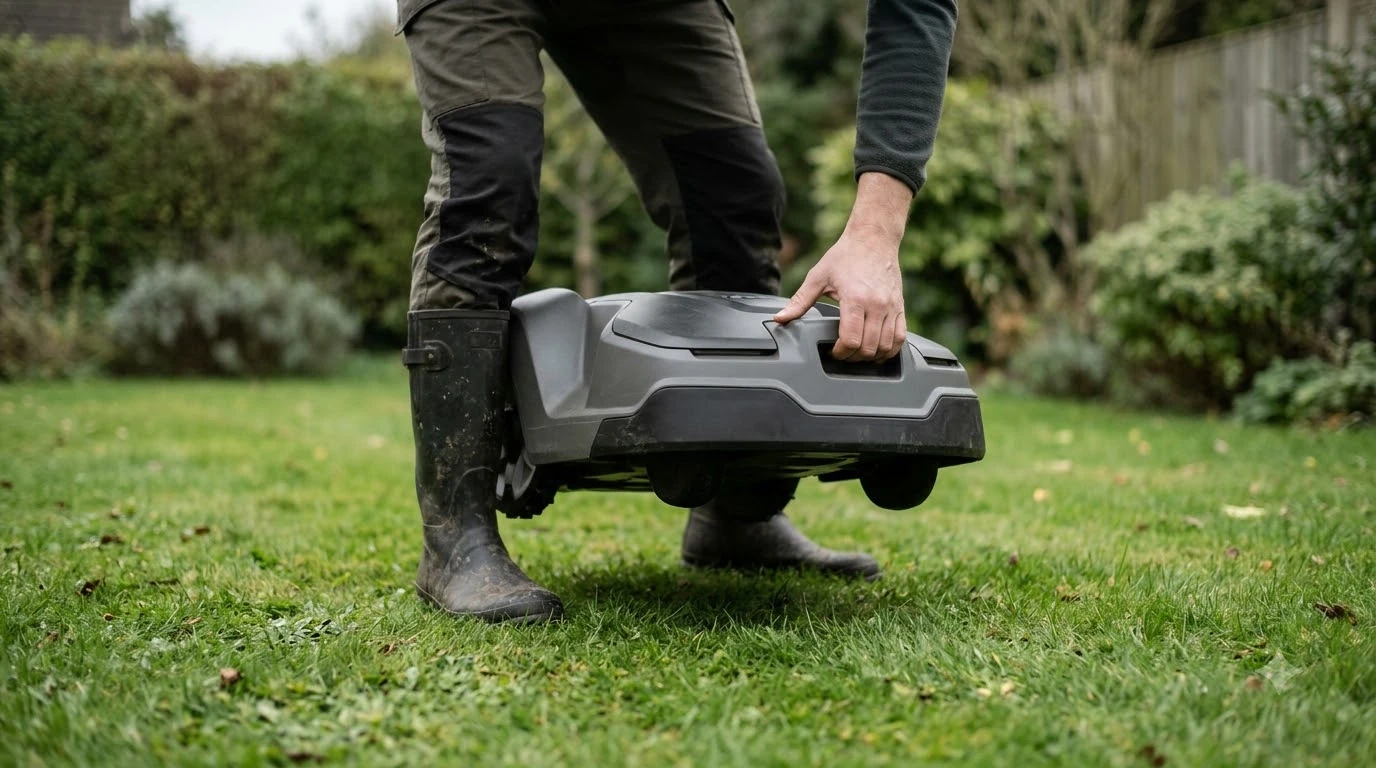

Can you ship a robot mower battery? Yes, but the lithium-ion pack is a regulated hazardous material in the United States, so the packaging and paperwork depend on its watt-hour rating and on whether the pack is damaged. Under the Hazardous Materials Regulations, every lithium cell and battery counts as hazardous when it is transported, whatever its size. The rules below come from the PHMSA shipper guide and from EPA guidance on used lithium-ion batteries. Carriers can add their own limits, so check with yours before you hand over a package.
The short answer
- A healthy replacement pack can be shipped. It has to be protected against short circuits and packed so it cannot shift.
- The watt-hour rating decides the paperwork. Batteries up to 100 Wh fall under the “smaller” exception, which removes some requirements. Batteries above 100 Wh are fully regulated.
- A damaged, swollen or recalled pack has the tightest limits. It may not travel by air at all, and ground shipment needs special packaging.
- Protect the terminals. The EPA advises taping them and bagging each pack separately.
Why a robot mower battery counts as hazardous cargo
Every lithium battery is a hazardous material while it is being transported, and the reason is the chemistry. The PHMSA Lithium Battery Guide for Shippers states that “ALL lithium cells and batteries are hazardous materials when being transported, no matter the size or quantity.” The guide explains that misused, damaged or improperly packed batteries can short circuit, overheat and catch fire, and that heat from one cell in thermal runaway can spread to neighboring cells and packages.
A mower pack is a lithium battery, so it falls under the same rules as any other lithium battery, including how robot mower batteries are covered in our guide to robot mower battery life. Its size does not remove it from the regulations. Only specific exceptions do, and those exceptions depend on the rating and the condition of the pack.
Our reading: the safe starting point is to treat any mower battery as hazmat and then check which exception, if any, applies. Assuming a small pack is exempt is the common mistake.
Can you ship a robot mower battery? Check the watt-hour rating first
Before you ship a robot mower battery, find the Wh figure on the label or in the spec sheet, because it decides which PHMSA guide applies. The PHMSA flowchart sends batteries equal to or less than 100 Wh to the “smaller” guide and batteries above 100 Wh to the fully regulated guide. The guide also says batteries made after December 31, 2015 must be marked with their Wh rating, so the number should be printed on the pack or in its documentation.
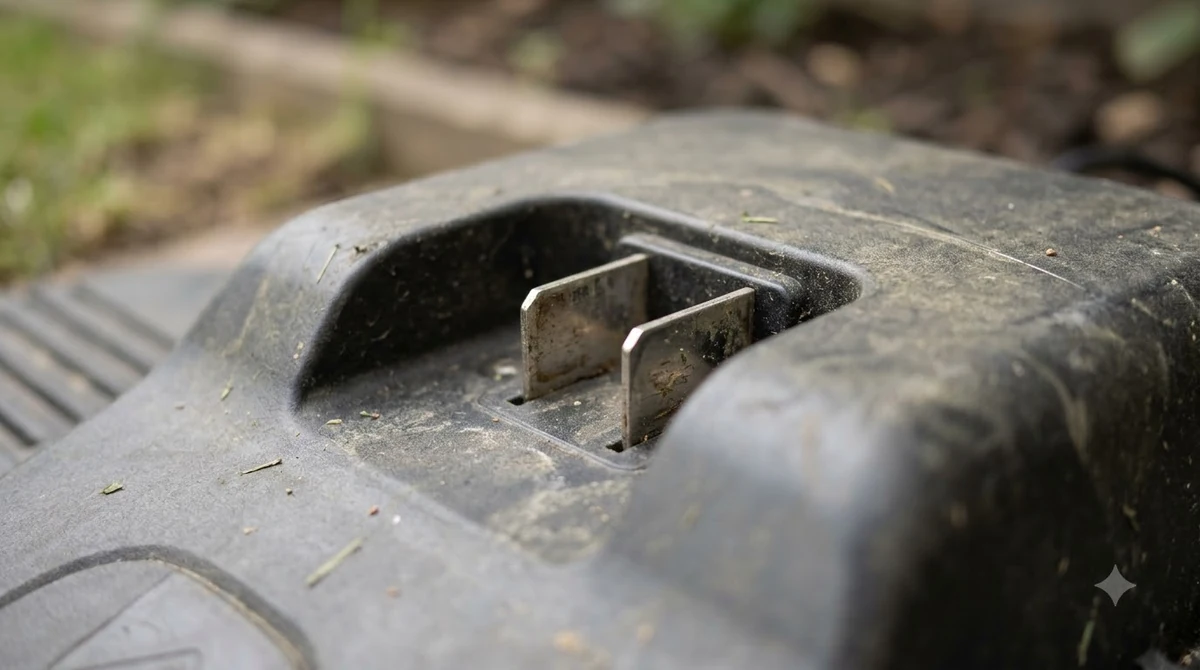
Retailer listings give a sense of scale. One Anthbot M5 LiDAR listing gives a 2.5 Ah battery, which is 45 Wh, and an Anthbot Genie 1000 listing gives 5 Ah, which is 90 Wh. Both are in the smaller range. A retailer listing is not the manufacturer’s spec, though, so confirm the number on your own pack before you ship it.
| Question | Up to 100 Wh (“smaller”) | Above 100 Wh (fully regulated) |
|---|---|---|
| Shipping paper | Not required | Required |
| Hazmat employee training (49 CFR 172.704) | Not required, but anyone preparing an air shipment must be instructed | Required |
| Outer packaging | No more than 2 batteries per package for packs above 2.7 Wh up to 100 Wh; one smaller package per consignment | UN specification packaging, Packing Group II, following the packaging maker’s instructions |
| Passenger aircraft | Forbidden as cargo | Forbidden as cargo |
| Cargo aircraft | Offered at no more than 30% state of charge | Offered at no more than 30% state of charge |
Use the table as a checklist, not a substitute for the regulations. The PHMSA guide says that where it differs from the Hazardous Materials Regulations, the regulations control.
Shipping a damaged, swollen or recalled battery
You cannot ship a robot mower battery by air if it is damaged, defective or recalled. A pack in that condition cannot go by air at all. The PHMSA guide says these packs may only move by highway, rail or vessel, and that they are “strictly forbidden for transportation by aircraft.”
Ground shipment still comes with tight rules. The guide requires an individual non-metallic inner packaging that fully encloses the battery, non-combustible and absorbent cushioning, Packing Group I outer packaging, one battery per package, and an outer marking that the package holds a damaged battery. It also says there are no exceptions from training, shipping papers, marking or labeling for these packs. Many packages built for this purpose are sold under a DOT special permit, and the manufacturer’s instructions for that permit must be followed.
The EPA gives the same first step. Its guidance says that “if the Li-ion battery becomes damaged, contact the battery or device manufacturer for specific handling information.” The EPA’s lithium-ion FAQ says swelling “indicates damage to the battery and is a potential fire hazard,” and that if there is no imminent threat of fire, the manufacturer should be contacted. If there is an imminent risk of fire, the EPA says you may need to call 911.
Our reading: for a swollen pack, start with the manufacturer or dealer rather than packing it yourself. Husqvarna’s battery support page says a Husqvarna dealer can help with battery replacement, but that page does not cover damaged, swollen, bulging or leaking packs. Our page on what to do if a robot mower battery is swollen covers the handling side, and robot mower battery replacement cost explains why a replacement is often ordered instead.
Packing the battery to the rules
If you can ship a robot mower battery, the rules come down to five habits for a healthy pack: protect the terminals, isolate each pack, stop it from moving, use the right outer box, and keep it away from other hazardous goods.

- Protect the terminals. The EPA advises placing “non-conductive tape (e.g., electrical tape) over the battery’s terminals.” The PHMSA guide requires terminals to be protected against short circuits for fully regulated packs.
- Bag or wrap each pack separately. The EPA says to place lithium-ion batteries “in separate plastic bags.” For fully regulated packs, the PHMSA guide requires a non-metallic inner packaging that separates the battery from conductive materials such as metal.
- Stop it from shifting. The guide requires packing that prevents movement which could damage the cells inside the outer box.
- Use the right outer packaging. A fully regulated pack needs UN specification packaging at Packing Group II. The guide also allows batteries of 12 kg (26.5 lb) or more with a strong, impact-resistant casing to go in crates or be banded to pallets, but that route needs approval for air transport.
- Keep it away from other hazardous goods. The guide forbids packing lithium batteries with explosives (other than 1.4S), flammable gases, flammable liquids, flammable solids or oxidizers. Check the hazard class of any other goods and keep the pack in its own box.
Air versus ground: the 30 percent charge rule
Can you ship a robot mower battery by air? Only on cargo aircraft, and at a limited charge. The one charge rule in the pages we read is for cargo aircraft: the PHMSA guide says lithium cells and batteries shipped by cargo aircraft “must be offered at a state of charge not exceeding 30 percent of their rated capacity.” The same guide sets a 35 kg net limit per package for fully regulated cargo shipments and bars these shipments from passenger aircraft.
We did not find a ground state-of-charge rule in the sections we read, so this article does not state one. Ground transport still follows the packaging and marking rules above. For keeping a pack at a sensible charge before it ships or goes into storage, see robot mower battery storage and charge level.
Our reading: whoever ships the pack should check the carrier’s own policy, because the PHMSA guide itself notes that many air carriers have supplemental policies on lithium batteries.
Old or retired packs are a separate question
Shipping a used pack for recycling is not the same as shipping a replacement. The EPA says lithium-ion batteries and devices containing them should not go in household garbage or recycling bins. They should go to separate recycling points or household hazardous waste collection sites.
The PHMSA guide also limits one shipping exception: disposal and recycling exceptions for lithium batteries apply only when the shipment goes by motor vehicle to a permitted storage facility, a disposal site or a recycler. Husqvarna says its Automower battery typically lasts between 2 and 5 years, so a replacement often comes years after the first purchase, and the old pack needs a plan.
Frequently asked questions
Can you ship a robot mower battery with a parcel carrier?
Possibly, but ask the carrier first. The PHMSA guide says carriers may have supplemental policies and limits on lithium batteries beyond the federal rules. For regulatory questions, the DOT Hazardous Materials Information Center lists 1-800-467-4922 and infocntr@dot.gov.
Does the small battery exception mean my pack is not hazardous?
No. The PHMSA guide says all lithium cells and batteries are hazardous materials when transported. The smaller-battery exception reduces some requirements, such as the shipping paper and hazmat training, but it does not change the hazard class.
Can a swollen or damaged battery go by air?
No. The PHMSA guide says damaged, defective or recalled lithium batteries are strictly forbidden on aircraft. They may only travel by highway, rail or vessel, in special packaging. Contact the manufacturer before you ship one.
Do I need to tape the terminals on a new pack?
Yes, you should. The EPA says to tape battery terminals or bag lithium-ion batteries to prevent fires, and the PHMSA guide requires terminals to be protected against short circuits for fully regulated shipments.
Sources
- PHMSA, Lithium Battery Guide for Shippers (US government, revised June 2023): hazmat status, watt-hour split, packaging, damaged-battery rules, 30% state of charge for cargo aircraft.
- EPA, Used Lithium-Ion Batteries (US government): taping terminals, separate bags, handling damaged packs, disposal.
- EPA, Frequent questions about lithium-ion batteries (US government): swelling as damage and fire hazard, contacting the manufacturer.
- Husqvarna support, Automower battery messages and lifespan tips (manufacturer): typical 2 to 5 year battery life and dealer help with replacement.
- Freshly Charged, Anthbot M5 LiDAR listing (retailer, not a manufacturer spec): 2.5 Ah (45 Wh) battery rating.
- Freshly Charged, Anthbot Genie 1000 listing (retailer, not a manufacturer spec): 5 Ah (90 Wh) battery rating.
 Up next8 min readLearnHow Long Does the Husqvarna Automower 430X Battery Last?Updated Nov 12, 2026
 8 min readLearnHow to Tell If a Robot Mower Battery Is FailingUpdated Nov 12, 2026
 8 min readLearnHow to Tell If a Robot Mower Battery Is SwellingUpdated Nov 12, 2026
 8 min readLearnHow to Dispose of an Old Robot Mower and Its BatteryUpdated Nov 12, 2026
 8 min readLearnHow Long Does the Worx Landroid Vision Battery Last?Updated Nov 12, 2026
 6 min readLearnWhat to do if a robot mower battery is swollenUpdated Nov 12, 2026