
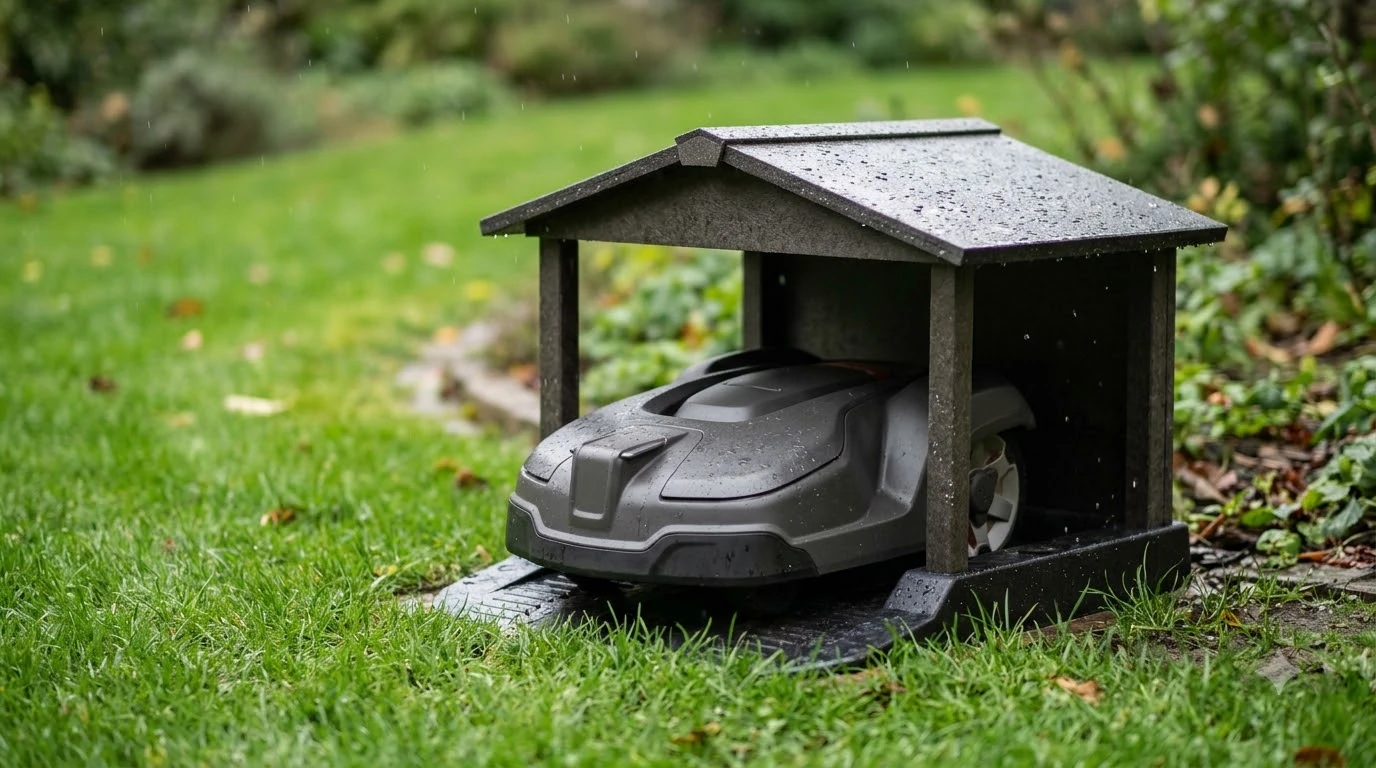

Do robot mowers need a ground rod? Not according to the manuals and install guides we read. A residential robot mower charging station is set up with a nearby outdoor outlet, a level spot, and an installation that follows local electrical code. Lightning-prone areas are the main caveat, and that decision belongs to a licensed electrician, not to the mower’s instructions.
The short answer
- Ground rod: none of the four sources we read lists a separate ground rod as a requirement for the charging station.
- Power: the station plugs into a nearby outdoor outlet through its power adapter.
- Lightning: LawnStarter says lightning-prone areas such as Florida need the docking station grounded, but it gives no method.
- Installer: the Toro manual says installation should be done by a qualified professional, following national and regional codes.
Do robot mowers need a ground rod according to the manuals?
The short version is that the install pages focus on where the station goes and how it is powered, not on driving a rod into the ground. Husqvarna’s charging station placement guide asks owners to place the station near a power outlet and to keep the power supply out of an enclosed box. Mammotion’s installation guide tells owners to plug the power adapter into a nearby outdoor outlet. Neither page mentions grounding or a ground rod. Husqvarna’s placement guide and Mammotion’s installation guide are the two brand pages we used.
Our reading is that “do robot mowers need a ground rod” is answered by the electrical setup, not by the mower. The mower only needs its charger to receive safe, correct power. Whether the outlet, the cable run, and any bonding meet code depends on the house wiring and the local rules, which no robot mower manual can settle for your yard.
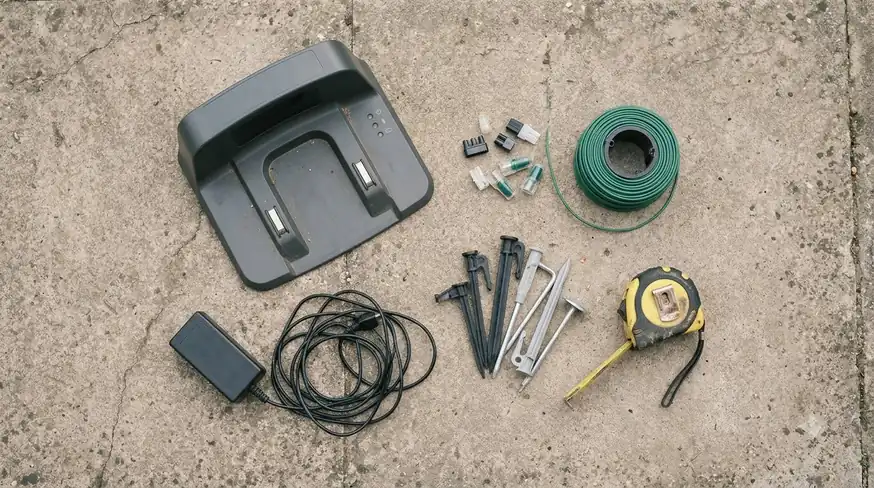
Heads up
Electrical work near outdoor outlets carries risk. This is research, not electrical advice: local code and a licensed electrician decide what your setup needs.
| Source | What it says about power or grounding | Ground rod named? |
|---|---|---|
| Husqvarna placement guide | Place the station near a power outlet; keep the power supply out of an enclosed box | No |
| Mammotion installation guide | Plug the power adapter into a nearby outdoor outlet; keep cables free of tension | No |
| Toro manual, professional Turf Pro model | No power strip or extension cord; 120 VAC, 60 Hz, 3.5 A input | No |
| LawnStarter explainer | In lightning-prone areas such as Florida, the docking station needs grounding | Grounding named, no method given |
When lightning-prone areas change the answer
Lightning is the one place where the sources we read raise grounding directly. LawnStarter’s explainer says that in lightning-prone areas such as Florida, you will also need to ground the docking station. The LawnStarter article is a general explainer rather than a manufacturer install page, and it does not say how the grounding should be done or what hardware to use.
That gap matters. A lightning caveat from a general guide does not tell you whether your station needs a rod, a bonding conductor, or nothing at all. Ask the mower brand which grounding and surge protection it recommends for your model, then have a licensed electrician check the work. Surge protection is a separate question from grounding; none of the brand pages we read specify a surge protector for the charging station. If you want to compare options, outdoor surge protectors for robot mowers lists what to check.
Do robot mowers need a ground rod at your home? That answer comes from your site, not from the mower. Before you ask, collect three things: the model number and its power rating from the manual, a photo or sketch of where the outlet and dock sit, and a note on how often lightning storms reach your area. Those details let an electrician or the brand’s support team give a specific answer. A general guide, including this one, cannot see your wiring or your local code.
Outlet, power adapter, and extension cords
The station needs a dependable outdoor outlet within reach of the power adapter, and the install pages are consistent on that point. LawnStarter adds that the station needs an outdoor outlet nearby and a clear path to and from the dock. Mammotion’s guide asks owners to secure the charging cable so it is not pulled or put under tension. Our robot mower charging station power requirements explainer covers the electrical side, and weatherproof outlet boxes for robot mowers cover the outlet itself.
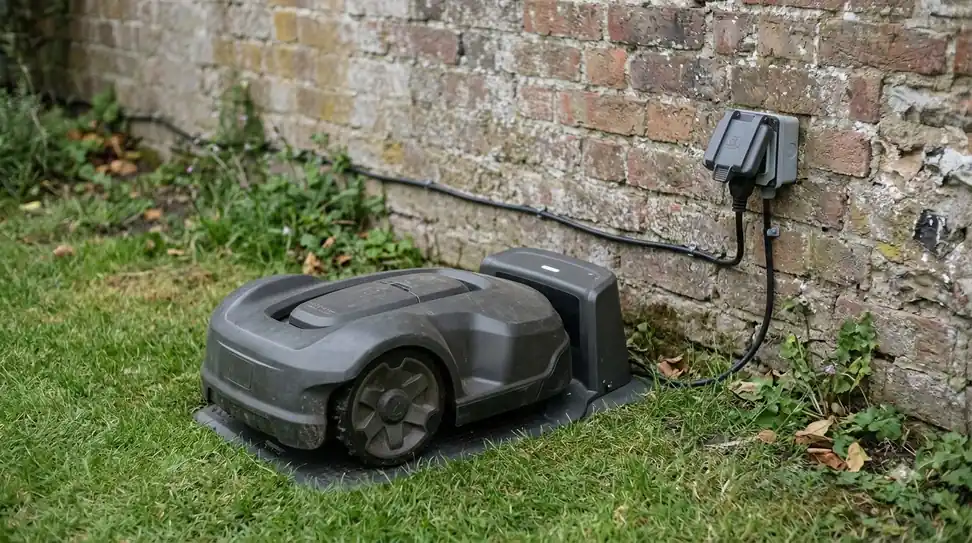
- Use a direct outlet. Toro’s manual for its professional Turf Pro station says not to plug it into a power strip or an extension cord (for home stations, see outdoor extension cords for a robot mower charger). The manual lists the input as 120 VAC, 60 Hz, 3.5 A (360 W maximum). Check your own model’s manual, because a home charger may have different limits.
- Keep the power supply dry and open. Husqvarna says not to put the power supply in an enclosed box.
- Route the cable so it is not stretched. Mammotion says the cables should be secured and not exposed to tension or pulling.
Placement: level ground and standing water
Placement is where the install pages agree most. Husqvarna asks owners to put the charging station on a level surface, and Toro’s manual says to install the station on flat ground where water does not pool. Both points protect the charging contacts and the electrical parts from standing water and from a tilted dock.
Our reading is that a dock sitting in a low spot after rain is the first thing to fix, before asking whether robot mowers need a ground rod. Our guide on where to put a robot mower charging station lists the placement rules. If the station sits in water, the electrical risk is higher and the grounding question becomes more urgent.
Who should install it and what to ask an electrician
The Toro manual is the most explicit of the four sources. It says the installation is required to be performed by a qualified professional and that you must follow all national and regional codes. A consumer install guide will usually be written more casually, so treat it as a checklist, not as a code reference.
- Read your model’s manual first. Check the power input, cable routing, and any grounding instructions in the document for your exact station.
- Confirm the outlet. Ask an electrician whether the outdoor outlet is protected and suited to the adapter’s rating.
- Ask about grounding in your area. Lightning-prone regions may need grounding of the docking station, as LawnStarter notes, but the method is set by local code.
- Keep the power supply out of a sealed box. Husqvarna’s guide says the power supply should not be enclosed in a box, so ask the brand what outdoor protection it allows for your model.
Frequently asked questions
Do robot mowers need a ground rod?
Not according to the manuals and install guides we read. Husqvarna, Mammotion, and Toro do not name a ground rod for their charging stations. Your local electrical code and an electrician decide what your outlet needs.
Can I plug the charging station into an extension cord?
The Toro manual for its professional Turf Pro station says not to use a power strip or an extension cord. Check your own model’s manual before you use any extension, since many home stations have their own cable rules.
Does lightning change the answer?
Yes, according to LawnStarter, which says lightning-prone areas such as Florida need the docking station grounded. The article does not give a method, so ask the brand and a licensed electrician what your area requires.
Should I hire an electrician to install the outlet?
The Toro manual requires a qualified professional for its station and tells installers to follow national and regional codes. For a home outdoor outlet, we recommend having a licensed electrician confirm the outlet and any grounding before you connect the charger.
If you are planning a new install, the safest approach is to treat the brand manual as the starting point and the local electrical code as the final word. So, do robot mowers need a ground rod? Not by default, but a lightning-prone yard or a damp outlet deserves a professional check before the first charge.
Sources
- Automower charging station: optimal placement and mower house guide (Husqvarna): outlet placement, level surface, enclosed power supply; no grounding named.
- Mammotion charging station installation guide (Mammotion): nearby outdoor outlet, cable securing; no grounding named.
- How robot lawn mowers work (LawnStarter): grounding of the docking station in lightning-prone areas such as Florida; outdoor outlet and clear path needs.
- Charging station installation instructions, Turf Pro and Range Pro (Toro, manual 3471-497 B): no power strip or extension cord, 120 VAC input, qualified-professional installation, flat ground.
 Up next8 min readLearnDo Robot Mowers Work in Windy Weather? What the Manuals SayUpdated Nov 12, 2026
 8 min readLearnDo Robot Mowers Cause Thatch Buildup? What Extension Sources SayUpdated Nov 11, 2026
 9 min readLearnCan a Robot Mower Cut Long Grass? What the Sources SayUpdated Nov 11, 2026
 8 min readLearnCan a Robot Mower Mow Over Sticks? What the Sources SayUpdated Nov 11, 2026
 8 min readLearnWhy Does My Robot Mower App Say Offline?Updated Nov 13, 2026
 7 min readLearnCan a Robot Mower Cut Your Foot? What the Sources SayUpdated Nov 11, 2026