


Do robot mowers work in windy weather? Most can run on a breezy day, but the manuals we could read do not publish a wind-speed limit. In practice, wind matters through three things: slopes, loose objects the wind can carry into the cutting path, and storms that call for docking the mower. Check those before each session instead of relying on a single wind number.
The short answer
- Wind speed limit: none found in the Toro Turf Pro operator manual we read as of November 2026.
- Slopes: a third-party Bosch help article warns that strong gusts can affect stability, and advises close monitoring above 15 degrees.
- Loose debris: clear sticks and stones before each session, since they can become flying hazards in wind.
- Storms: stop mowing and return the mower to its dock before a thunderstorm arrives.
- Shelters: anchor an outdoor shelter in windy areas, because an unfixed shelter can shift in heavy storms.
Do robot mowers have a wind speed limit?
Not in the sources we could read. The Toro Turf Pro robotic mower manual covers bad weather in general, warning to avoid using the machine in bad weather, especially when there is a risk of lightning. It does not state a wind speed, a gust limit, or a rule that the mower must stop above a certain wind level. The Navimow weather page we read also contains no wind information.
That gap matters for a buyer. For anyone asking “do robot mowers work in windy weather”, a number such as “works up to 20 mph” would be easy to quote, but we did not find one in a manufacturer manual, so we do not state one here. Our reading is that you should treat wind as a condition to inspect, not a box to tick on the spec sheet.
Do robot mowers work in windy weather on slopes and open lawns?
Our reading is that wind itself is rarely the main issue for a robot mower on flat ground, though none of the manuals we read says so. The factors that matter more are the terrain under the wheels, what the wind moves across the lawn, and whether the mower is near a structure it could be pushed into. Our reading of the sources is that the effects show up in four places: slopes, debris, storms, and the docking area. So, do robot mowers work in windy weather on a hillside? Check the slope first: see how to choose a robot mower for slopes and whether robot mowers slide on wet slopes.
The Bosch help article, which is a third-party site and not an official Bosch manual, says strong winds can affect the stability of a mower, especially on slopes. It advises watching the mower closely on uneven terrain and on steep slopes greater than 15 degrees. The article is the only source we read that gives a slope figure linked to wind, so treat that 15-degree number as a conservative check rather than a manufacturer limit.
Debris and loose objects before a session
Wind can move light objects onto the lawn, and it can also pick up items already lying around the yard. The Bosch help article advises inspecting the area before each mowing session and removing stones, sticks, or other foreign objects, because in windy conditions they can become flying hazards. Our reading is that the same reasoning applies to a robot mower: a stick or stone left in its path is a hazard whether or not the wind moves it.
Leaves are a related problem. Our reading is that wind-blown leaves piled in corners and against fences are worth clearing too, although the sources we read do not describe leaf piles as a fault cause. A quick walk-through before each run is cheap, and it takes only a few minutes on most lawns.
- Walk the lawn. Remove sticks, stones, toys, hoses, and garden furniture that could move.
- Check the edges. Look at fence lines and corners where wind collects leaves and light debris.
- Confirm the boundary. Make sure the perimeter wire or zone map still matches the lawn after wind has moved things.
Storms, lightning and docking
Storms are the clearest case where a robot mower should not run at all. The Toro manual says to avoid using the machine in bad weather conditions, especially when there is a risk of lightning. It also says not to use the charging station power supply during severe weather. The UF/IFAS publication on robot mowers in Florida lists lightning at docks among the risks of these machines, so the charging station is part of the storm plan, not only the mower.
The Bosch help article advises stopping the mower and returning it to its docking station during a thunderstorm, ideally before the storm arrives. That is a simple rule, and it matches what the manuals say about lightning. A storm forecast is a good moment to check the schedule and make sure the mower will not start mid-storm.
Heads up
Storm rules are about lightning and severe weather, not about a specific wind speed. If a storm is forecast, dock the mower and cut the power to the charging station if your manual recommends it.
Shelters and charging stations in windy areas
A shelter or garage protects the mower from wind-driven rain and debris, but only if it stays put. The Robomow blog we read says pegs help in windy conditions, and that a wooden shelter that is not fixed to the ground may be unstable in heavy storms. It also notes that summer exposure to wind and the elements may shorten battery life, which is a reason to keep the mower sheltered when it is not working.
The Sunseeker UK guide we read says that in windy regions you may need to anchor a mower garage securely to the ground or a heavy base, and it advises a level spot with good drainage. Our reading is that anchoring matters more than the shelter’s looks: a station that shifts could misalign the charging contacts, and a shelter that lifts can expose the mower to the same weather it was meant to block.
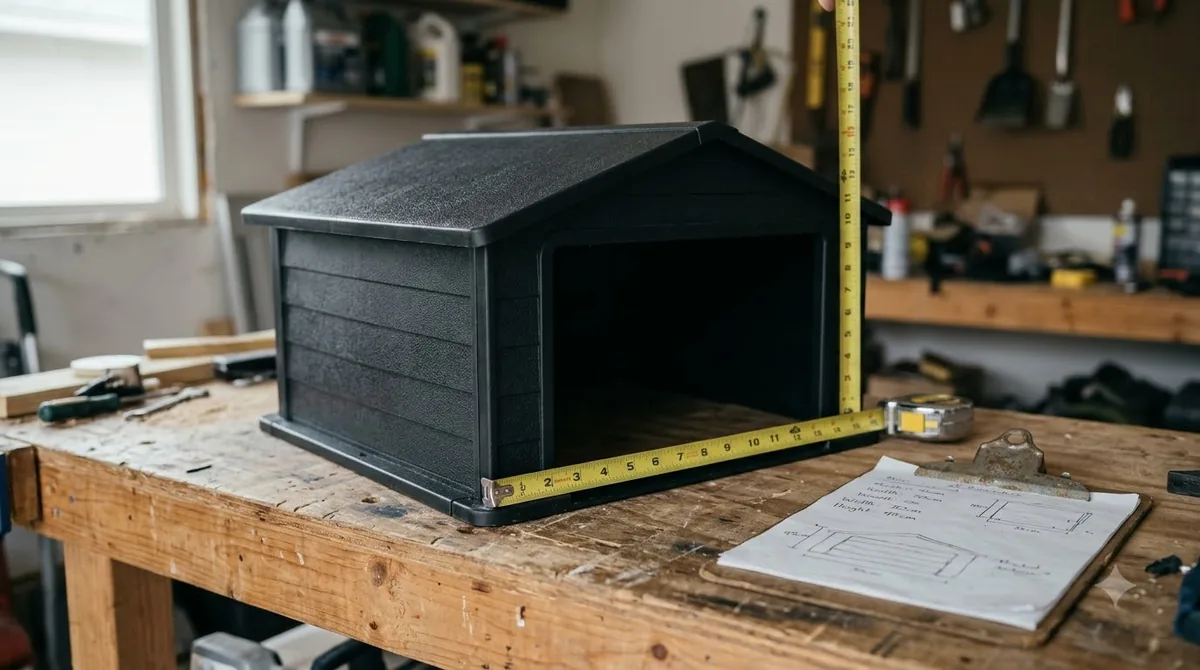
When you choose a shelter for a windy yard, see robot mower rain cover vs garage and check the anchoring method, the roof design, and the ventilation before you buy. A hinged roof and solid base help, but the mount is the part that decides whether the shelter stays in place through a gust.
What to check before you buy for a windy yard
If your yard is open or exposed, ask “do robot mowers work in windy weather” before you buy, because wind should shape the purchase more than any single speed rating. Our reading is that the following points matter more than a headline wind number, because none of them depends on a figure that the manuals do not publish.
- Slope rating and terrain: compare the manufacturer’s slope specification with the steepest part of your lawn, and treat exposed hills with extra caution.
- Anchoring options: check whether the station or shelter includes pegs or mounting points.
- Storm behavior: confirm whether the mower can be sent to its dock quickly or lifted there by hand. Our guide to robot lawn mowers in the rain covers the wet-weather side.
- Manual language: search the owner’s manual for “wind”, “storm”, and “lightning” before you rely on the mower in those conditions.

So do robot mowers work in windy weather in a yard with trees, fences, or open lawn areas? A quick inspection before each run is a better plan than assuming the mower will handle every condition. Keep the lawn clear, dock the mower before storms, and anchor the station. Heat is the other weather question; see whether robot mowers work in hot weather.
Frequently asked questions
Do robot mowers work in windy weather?
Most can run on a breezy day, but the manuals we read do not give a wind speed limit. Wind matters most on slopes, with loose debris, and during storms. Check those conditions before each session.
What wind speed stops a robot mower?
We did not find a manufacturer wind-speed figure in the Toro manual or the other pages we read. Check your model’s owner’s manual for “wind” and “storm” before relying on it in strong gusts.
Should I dock a robot mower before a storm?
Yes. The Toro manual advises avoiding use in bad weather, especially when lightning is possible, and the Bosch help article advises returning the mower to its dock ideally before a thunderstorm arrives.
Is an outdoor robot mower shelter safe in high wind?
Only if it is anchored. The Robomow blog we read says an unfixed wooden shelter may be unstable in heavy storms, and that pegs help in windy conditions.
Sources
- Turf Pro Series Robotic Mower manual (Toro): avoid bad weather and lightning risk; no wind limit stated.
- Operating a Bosch lawn mower in extreme weather (third-party help site, not an official Bosch manual): wind and slope warning, 15-degree figure, debris check, storm docking.
- How Navimow decides whether or not to mow (Segway Navimow): read; contains no wind information.
- Do you need a robot lawn mower garage? (Sunseeker): anchoring a garage in windy regions, level ground and drainage.
- Which robotic lawnmower garage is the right one (Robomow): pegs in windy conditions, unfixed wooden shelters in storms, wind exposure and battery life.
- Autonomous or Robotic Mower Use on Florida Lawns (UF/IFAS EDIS EP667): lightning at docks listed among risks.
 Up next7 min readLearnDo Robot Mowers Work in Hot Weather? Temperature Limits ExplainedUpdated Nov 11, 2026
 8 min readLearnDo Robot Mowers Need a Ground Rod? What the Manuals SayUpdated Nov 12, 2026
 8 min readLearnDo Robot Mowers Cause Thatch Buildup? What Extension Sources SayUpdated Nov 11, 2026
 9 min readLearnCan a Robot Mower Cut Long Grass? What the Sources SayUpdated Nov 11, 2026
 8 min readLearnCan a Robot Mower Mow Over Sticks? What the Sources SayUpdated Nov 11, 2026
 8 min readLearnWhy Does My Robot Mower App Say Offline?Updated Nov 13, 2026