
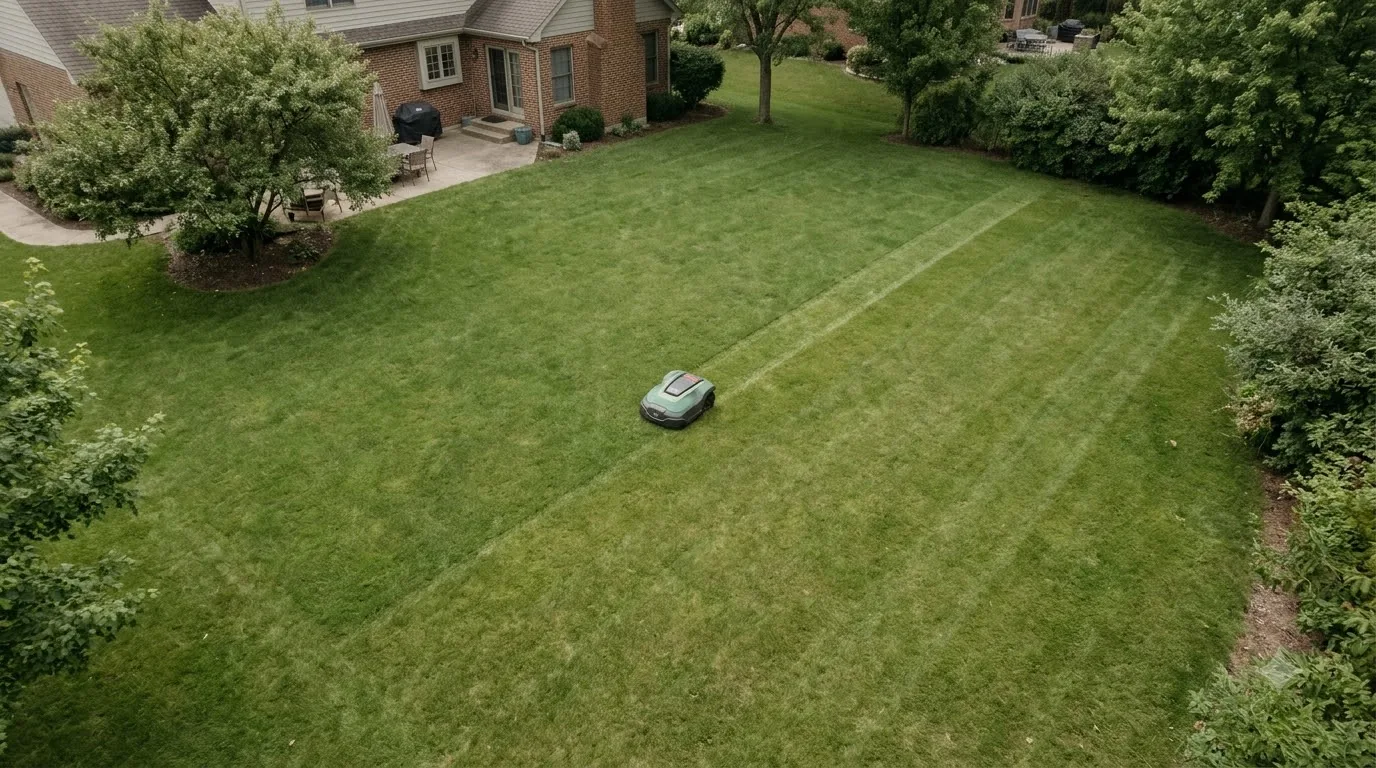

How to keep a robot mower from scaring the dog: introduce the mower in small steps, run it while the dog is indoors or in a quiet room, and keep its start and approach as predictable as you can. A robot mower is a noisy, moving object that can start without warning, and many dogs react to that. The sources below describe the general method for noise fear. They do not give a dog-specific test for mowers.
The short answer
- Short answer: the usual fix for a robot mower that scares the dog is gradual exposure, not forcing the dog to stay near the mower.
- Method: Humane World says fear of loud noises is handled with “counterconditioning” and “desensitization,” and that these “must be implemented very gradually.”
- Timing: run the mower when the dog is inside or in a separate space, which Eufy also recommends for pets.
- Safe place: give the dog a spot it can retreat to when the mower runs.
- Vet: do not give the dog any medication to calm it without a vet’s advice.
Why a robot mower can startle a dog
A robot mower combines three things that many dogs find unsettling: a motor sound that continues for a long time, a machine that moves across the lawn on its own, and a start that the dog did not see coming. Sound is the most obvious trigger. Robomow, a robot mower maker, says that about 60 dB at a neighbour’s fence is the level that usually avoids complaints, and that sound drops about 6 dB each time the distance doubles. Those figures describe human neighbours, not dogs. The sources we read do not give a hearing threshold or reaction level for dogs, so treat the dB numbers as a rough guide to how far the sound carries.
Watch the dog as well as the mower. Our reading is that the signs of a startled dog, such as ears back, tail tucked, pacing, or refusing treats, tell you more about the next step than the mower model does.
Movement is the second trigger. A dog that watches the mower roll toward it may respond to the approach, not only the noise. Our reading is that the most useful steps in how to keep a robot mower from scaring the dog are the ones that make the mower’s sound and movement familiar and predictable, one small change at a time. If the dog already reacts to the sound of the mower, the same ways to reduce robot mower noise can help the dog settle.
How to keep a robot mower from scaring the dog: start small
The method used for fear of loud noises is counterconditioning paired with desensitization. Humane World describes both techniques and says they must be used very gradually, so a single long session is unlikely to work. The goal is to pair the mower’s presence with something the dog likes, such as treats or a favourite toy, while keeping the dog far enough away that it stays calm.
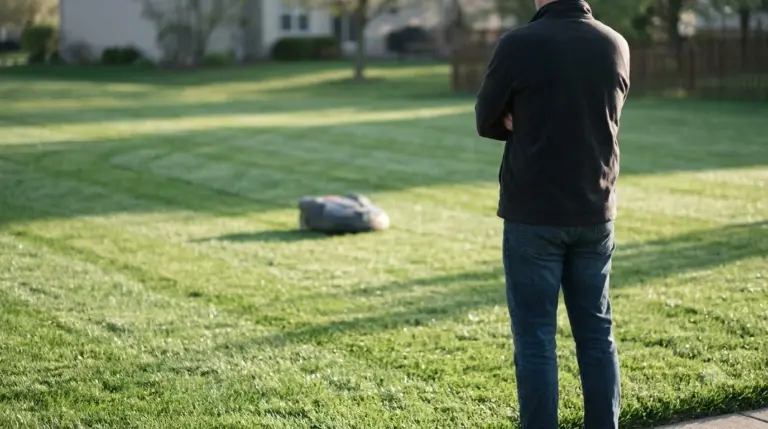
Our reading of how this looks in practice, based on that method and not on a tested protocol, is a sequence like this. Start with the mower switched off and parked on the dock. Let the dog approach it on its own, and reward calm behaviour. Next, run the mower briefly with the dog indoors or behind a closed door, so the sound is present but the dog is not near it. Then move to short runs with the dog in another room, and only later try a supervised run with the dog outside, at a distance that keeps it relaxed.
If the dog backs away, hides, or barks each time, go back one step. Pushing the dog closer to a running mower is the most likely way to turn a mild reaction into a lasting fear.
Give the dog a quiet place during runs
A quiet place is one of the simplest answers to how to keep a robot mower from scaring the dog, because it removes the dog from the sound without a fight.
Humane World advises owners to “create a safe place for your dog to go when they hear noises that frighten them.” For a robot mower, that usually means a room with a closed door, a crate the dog already uses, or a quiet corner away from the lawn. The place should already be familiar and comfortable before the mower runs for the first time, so the dog has somewhere to go that it associates with calm rather than with the mower.
Schedule matters too. Eufy’s safety guidance for households with pets says to run the mower only when the lawn is empty, with pets kept indoors or away from the lawn, and adds that daytime mowing is easier to organise around backyard play and pets. Our best time of day to run a robot mower guide covers the schedule side. Many owners find that a fixed daily run gives the dog a predictable pattern, which can make the noise less surprising over time.
Keep the start and the approach predictable
Surprise is a common reason dogs react badly, so how to keep a robot mower from scaring the dog often comes down to removing surprises. A mower that starts while the dog is in the yard, or that comes toward it from behind, is more likely to startle than one that the dog has learned to expect. Eufy advises owners to observe the first pass after any change, such as a new remapping, a software update, or a landscaping change, because the route can differ from before.
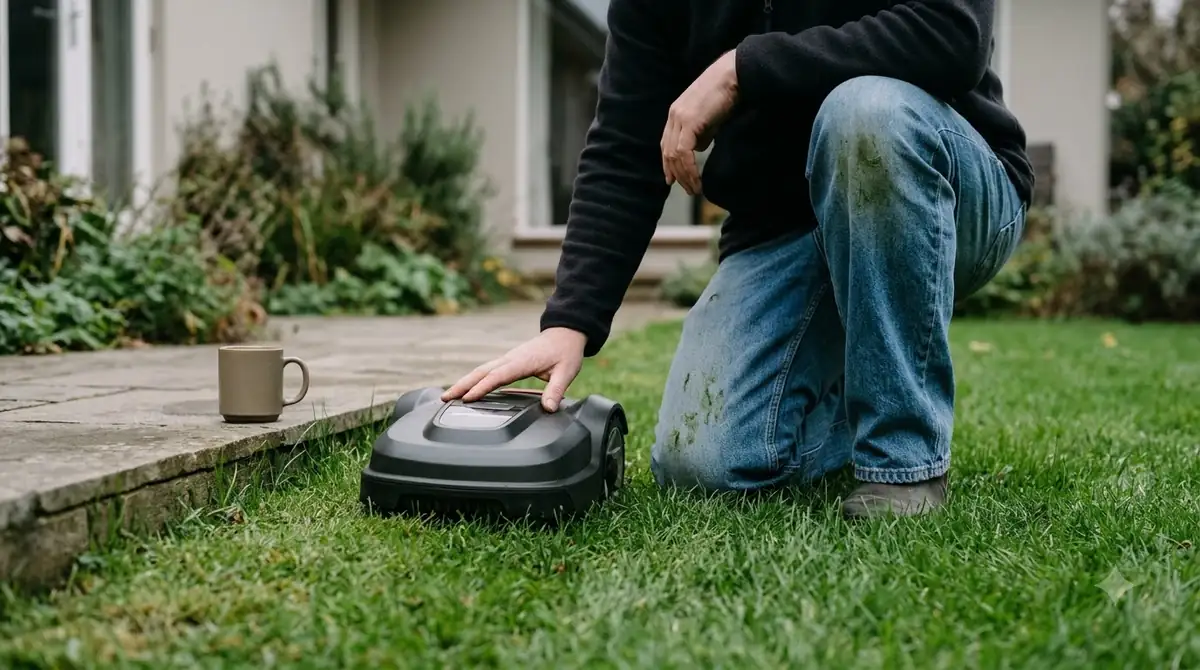
Keep people near the mower while it starts, and avoid having a dog run up to it when it moves. CMU’s campus mower guidance says owners should not let a pet approach or chase the mower. Our reading is that a dog should be indoors, or on a lead well away from the mower, whenever the mower is active and no one can watch it.
Do not rely on sensors to prevent contact. Eufy says no camera or sensor system should be expected to recognise every small animal, toy or sudden movement, and notes that small, low or partly hidden objects can be harder to recognise. Mammotion says a robot mower should not be treated as a pet-safety device simply because it has obstacle detection. Sensors may slow or stop the mower, but they do not make a startled dog predictable. For a longer look at living with a dog and a mower, see robot mowers and dogs in the yard, and for what happens when an animal walks into the path, see how robot mowers react to animals.
Clear toys and balls before each run
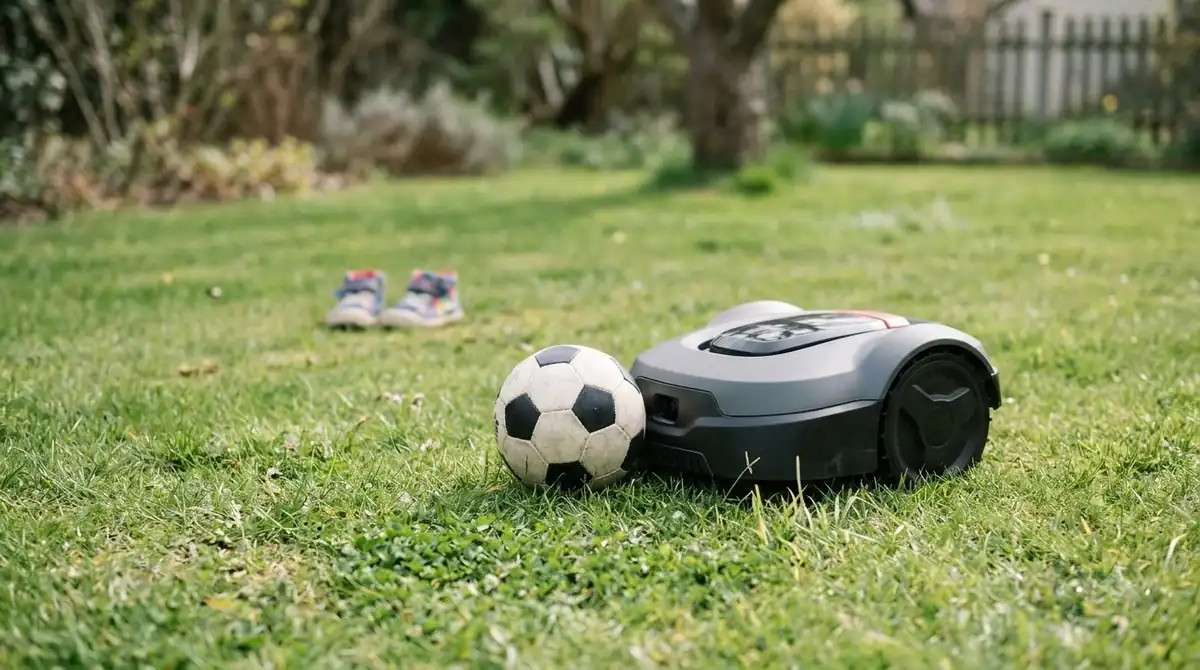
Clearing the lawn is part of how to keep a robot mower from scaring the dog, because toys, balls and bowls can pull a dog onto the lawn while the mower is working. Mammotion’s dog guidance recommends clearing toys and bowls from the lawn before a run, and Eufy advises clearing loose items from the lawn beforehand as well. A ball that the dog wants to chase is a common reason a dog enters the mowing area, so put it away before the mower starts.
Check the lawn for other items as well. Our reading is that a short walk around the lawn before each run is enough: look for toys, garden hoses, pet waste and anything the dog might chase. Pet waste is worth a separate check too.
When to ask a vet for help
Most dogs settle with gradual steps and a predictable routine. A dog that shakes, hides for hours, or becomes aggressive when the mower is nearby should be seen by a vet, and the owner should not try to calm the dog with medication on their own. Humane World says owners should not give a dog any over-the-counter or prescription medication without consulting a veterinarian first.
Keep notes for a few weeks: the time of each run, how close the dog came, and how quickly it settled afterwards. These notes help a vet or behaviourist see whether the problem is getting better.
If you have followed the steps on how to keep a robot mower from scaring the dog and its fear does not improve after several weeks, ask the vet about a referral to a veterinary behaviourist. Our reading is that a behaviourist can build a plan for the specific trigger, which a general article cannot do.
Frequently asked questions
Will a robot mower scare my dog every time it runs?
Not necessarily. Many dogs get used to a mower with gradual exposure and a predictable routine. The sources we read do not give a dog-specific reaction rate, so watch your dog’s behaviour during the first few weeks.
Should I let the dog watch the mower start?
Only at a distance where the dog stays calm. Humane World’s method uses gradual exposure, so start far away and reward calm behaviour. If the dog barks, hides or backs away, move it farther off.
Is it safe to run the mower while the dog is outside?
Eufy recommends running the mower when pets are indoors, and Mammotion says a robot mower should not be treated as a pet-safety device. Keep the dog inside or away from the lawn during runs, and check the lawn first.
Can I give my dog something to calm it before the mower runs?
Do not give any medication without asking a veterinarian first. Humane World advises consulting a vet before giving over-the-counter or prescription medication for noise fear.
Sources
- Why are dogs afraid of thunder? (Humane World for Animals): counterconditioning, desensitization, gradual pacing, safe place, vet before medication.
- Robotic mower (Carnegie Mellon University): low-speed bump detection, shutoff when lifted, pets should not chase the mower.
- Robot lawn mower safety for kids and pets (Eufy): run when the lawn is empty, schedule with pets indoors, observe the first pass after a change, sensor limits.
- Dog-friendly backyard (Mammotion): not a pet-safety device; clear toys and bowls.
- Danger to animals: use robotic mowers with caution (PETBOOK, June 10, 2025): small dogs at risk, especially at night.
- How loud is a robotic mower? (Robomow): 60 dB neighbour reference; about 6 dB drop per doubling of distance.
 Up next7 min readLearnDoes a Robot Mower Work With a Dog in the Yard?Updated Nov 11, 2026
 10 min readLearnRobot Mower and Invisible Dog Fence Wires: How to Prevent InterferenceUpdated Nov 19, 2026
 8 min readLearnRobot Mower Keeps Getting Stuck on Edges? Causes and FixesUpdated Nov 11, 2026
 9 min readLearnRobot Mower Lifted Error Keeps Appearing: Causes and FixesUpdated Nov 11, 2026
 9 min readLearnRobot mower wifi keeps disconnecting: causes and fixesUpdated Nov 12, 2026
 8 min readLearnWhy Does My Robot Mower Keep Losing RTK Signal?Updated Nov 10, 2026