
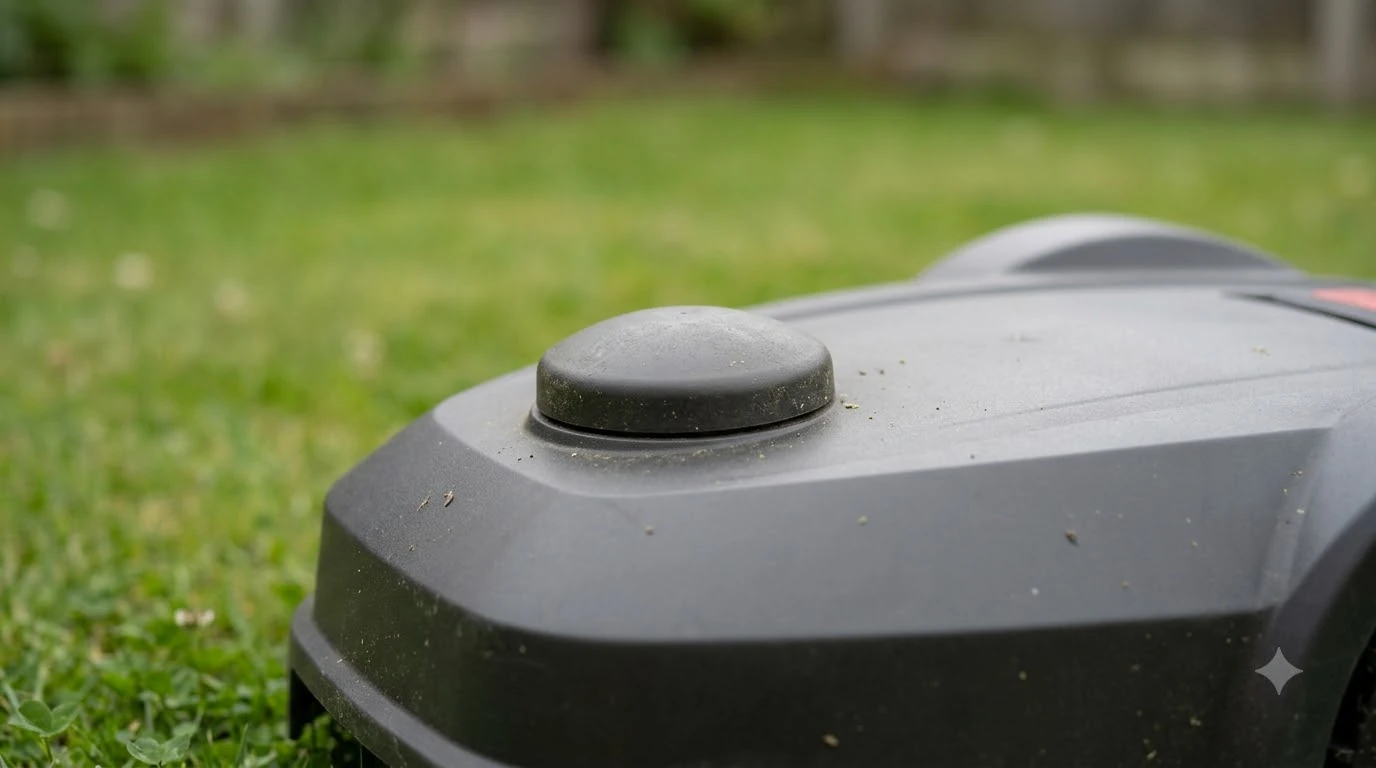

What does an RTK fixed solution mean? It means the receiver has resolved its carrier-phase measurements into whole numbers, which gives centimeter-level position instead of a looser estimate. For a robot mower, a fixed solution is the state you want while it mows, because the boundary and the cutting path depend on accurate position. A float solution is usable, but it is less precise.
The short answer
- Fixed: the receiver has pinned the integer ambiguity in its signal measurements, so the position is most accurate, at the centimeter level in good conditions.
- Float: the ambiguity is still an estimate, so accuracy is looser, often decimeter level or worse until it converges.
- Why it matters: a mower trusts its position to stay inside the work area and to follow its path.
- What breaks a fix: trees, tall buildings, and weak antenna placement interrupt the signal and can drop the solution back to float.
What does an RTK fixed solution mean in plain terms
RTK, or real-time kinematic positioning, uses a fixed reference station and a rover receiver. The rover measures the carrier phase of the satellite signals, which is very precise but has an unknown whole-cycle count, called the integer ambiguity. When the receiver resolves that count to a whole number, the solution is called fixed. NovaTel’s processing documentation describes fixed solutions as resolving carrier-phase integer ambiguities, and they are the route to centimeter-level results.

Think of the fixed state as the mower knowing exactly where it is, and the float state as the mower knowing roughly where it is and improving that estimate as data arrives. Both states can still drive the mower, but the fixed state leaves less room for error on tight edges, near the dock, and along the boundary.
A float solution is what you get before the count is resolved, or when it has been lost. The ambiguity remains a non-integer estimate, so the position is less accurate. NovaTel associates float solutions with lower-accuracy work, although they can reach centimeter level over time with good data, enough satellites, and a short enough baseline.
Why fixed and float matter for a robot mower
A robot mower does not need the same precision as a surveying rig, but position still matters. The mower follows a path across the lawn and uses its position to stay inside the boundary and return to the dock. A fixed solution gives it the steadiest picture of where it is, so the route is cleaner and the risk of drifting toward a bed or flowerbed is lower.
Our reading is that the difference shows most in the edges and narrow passages, where a few centimeters can decide whether the mower stays on the lawn. In the open middle of a large yard, a float solution may be good enough for the job. This is a judgment from how RTK works, not a measured test of any one model.
How the receiver switches between fixed and float
The receiver tries to resolve the ambiguity whenever it can. Resolution needs clean carrier-phase measurements and enough satellites, and it can take a while. A GPS World overview of centimeter positioning calls the integer ambiguity the main challenge for RTK receivers. Fixed mode can also show a jump when it switches from float to fixed, so a sudden change in reported position is a symptom to watch. Corrections arrive through services described in NTRIP correction streams, so check it if you want the details behind this point.
The same article notes that interruptions in phase-lock tracking can reset the ambiguity, forcing the receiver to resolve it again. Tree cover can drop the satellite count and reduce the fixed rate, and multipath, where signals bounce off nearby surfaces, can produce a wrong fix. A ground plane and careful antenna siting help reduce that risk.
What to check when your mower is not holding a fix
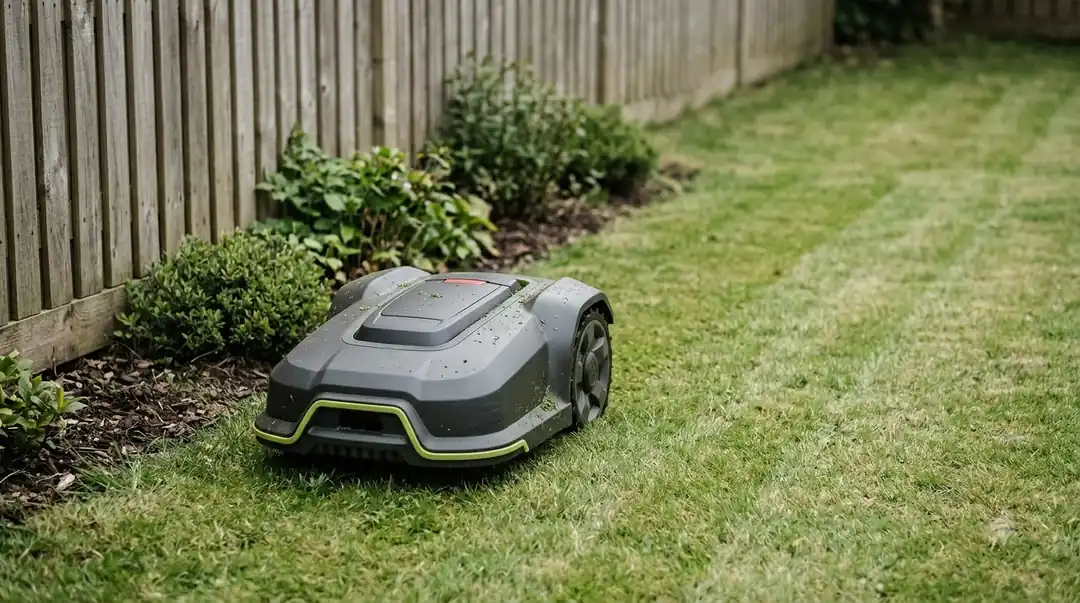
If the mower reports float for long periods, start with the antenna. Open sky above the antenna is the simplest fix, so move the antenna away from trees, eaves, and metal structures where possible. Check that the reference station has a clear view of the sky and that its power and cable are sound. A loose connection or a cable run with a kink can break the link even when the sky is clear. A brand example of fix trouble is shown in Anthbot M5 RTK station problems.
Heads up
A fixed solution does not guarantee a correct boundary. Keep the boundary wire or virtual zones set up as the manufacturer describes, and check the mowing map after changes to the antenna or base station.
Base station placement matters too. The reference station needs a stable, known position, so set it up once, leave it undisturbed, and avoid moving it after the mower has learned the lawn. A station that is knocked or shifted can make a fixed solution appear in the wrong place, which is harder to spot than a plain float reading.
Also check the mower’s status display or app for the solution type. Manufacturers label the states differently, so use the manual’s terms rather than assuming a particular word means fixed.
Frequently asked questions
Is a fixed solution always better?
For position accuracy, yes. Fixed solutions give the highest accuracy, but they can jump when they switch from float, and wrong fixes can occur in poor conditions. Stability and correct resolution matter as much as the label.
Does a float solution mean the mower is broken?
Not necessarily. Float is a normal state while the receiver is still resolving the ambiguity or when signals are weak. Persistent float under open sky, though, suggests an antenna, cable, or base station problem.
How long does it take to reach a fixed solution?
It depends on the receiver, the satellites in view, and the conditions. NovaTel notes that ambiguity resolution can take some time, and short baselines with open sky usually resolve faster than long ones or sites with obstructions.
Can trees stop the mower from getting a fixed solution?
They can. Tree cover reduces satellite visibility and can drop the fixed rate, so the antenna should sit where it sees as much sky as possible. Moving the antenna is often the first thing to try.
Sources
- Processing Modes and Solutions (NovaTel Waypoint documentation): fixed and float definitions, integer ambiguity, convergence of float solutions.
- Centimeter positioning for UAVs and mass-market applications (GPS World): fixed mode accuracy, float-to-fixed jumps, phase-lock resets, tree and multipath effects.
 Up next6 min readLearnWhat Does RTK Float Mean on a Robot Mower?Updated Nov 14, 2026
 7 min readLearnWhat Does AWD Mean on a Robot Mower?Updated Nov 13, 2026
 7 min readLearnHow Much Does an RTK Base Station Cost?Updated Nov 14, 2026
 8 min readLearnWhy Does My Robot Mower Keep Losing RTK Signal?Updated Nov 10, 2026
 7 min readLearnWhat Does RTK Stand for on a Robot Mower?Updated Nov 11, 2026
 7 min readLearnWhat Do Robot Mower Charging Station Lights Mean?Updated Nov 12, 2026