
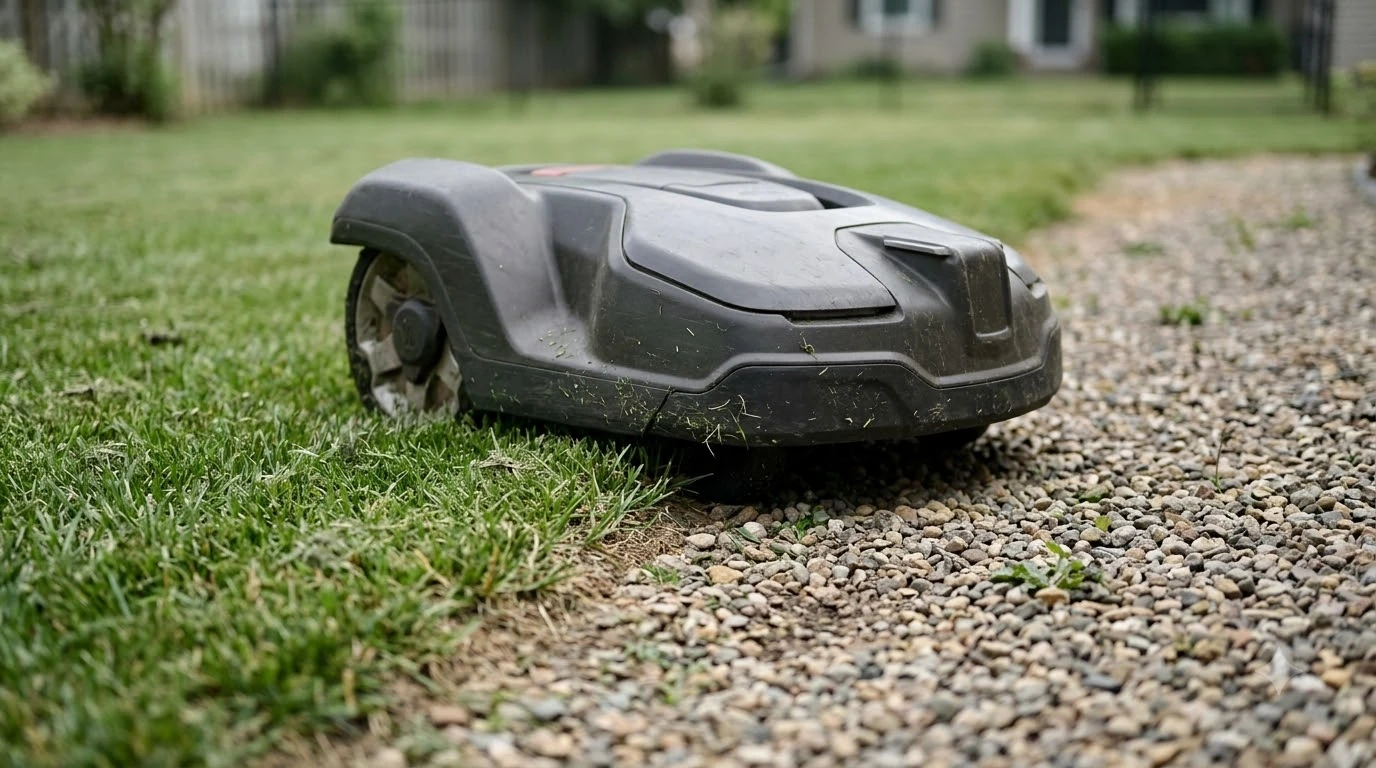

MOVA Lidax Ultra 2000 pros and cons: the main advantages are a wide cutting-height range, a 0.5-acre rated area, and a claim of no boundary wire or RTK base, while the main drawbacks are rear-wheel drive limits on slopes and gaps in the official spec sheet. This review sorts the points by what the sources support. Most figures come from retailer spec pages, and the brand’s own claims are labelled as claims, because the official MOVA product page did not load during our checks.
The short answer
- Pros: a cutting height of 30 to 99 mm (1.2 to 3.9 in), a rated area of up to 0.5 acre, and a 45% maximum incline on retailer specs.
- Pros, claimed: MOVA says no boundary wire or RTK is needed, and it lists a 1.6-inch obstacle climb and a 23.6-inch clearing path.
- Cons: only the rear wheels are driven, which vendor sources say limits recovery when the rear slips.
- Cons: runtime, cutting width, warranty, and dimensions were not listed on any page we could read.
- Verdict in brief: a reasonable candidate for a mid-size, mostly flat lawn, and a weaker pick for steep or very wet yards.
MOVA Lidax Ultra 2000 pros and cons: the spec pros
The spec sheet is the strongest part of the case for the Lidax Ultra 2000. A cutting height range of 30 to 99 mm, which is 1.2 to 3.9 inches, gives room to keep the grass higher in shade or heat and lower for a tidier finish. Two retailer pages, Fresh Charged and Robotic Gizmos, give the same range, which is a good sign that the figure is consistent across listings. The figures behind this list are laid out in the MOVA Lidax Ultra 2000 specs review for anyone who wants the full detail.
The rated area of 0.5 acre is also useful for a medium yard. Remember that a rated area assumes a flat, open lawn. Obstacles, layout, and slope reduce what the mower can cover in practice, as the Eufy coverage guidance explains for robot mowers in general.


The claimed advantages: no wire, no RTK
MOVA’s own blog says the Lidax range needs no boundary wire or RTK base, and it describes a 1.6-inch obstacle climb and a 23.6-inch corridor for the 2000. These are brand claims. We found no independent test that confirms them, so treat them as the vendor’s view. The no-wire claim is tested against another premium model in Lidax Ultra 2000 against Dreame A2. To weigh the no-RTK approach against a satellite rival, see Lidax Ultra 2000 versus Segway Navimow X3.
The wire-free claim matters because a boundary wire can be hard to repair. Robomow notes that a wire must form a complete loop and that a break is hard to locate, especially when it is buried. If the claim holds in your yard, that is one fewer thing to maintain. Our reading is that the claim is worth testing in the first week rather than trusting from the spec sheet alone.
Slope and drive: where the Lidax Ultra 2000 falls short
A 45% maximum incline sounds generous, but the number is an absolute limit, not a target. Percent grade is 100 times the vertical rise over the horizontal run, so a 45% slope means a rise of 45 cm for every 100 cm across. Husqvarna’s guidance on steep slopes uses the same formula (see the sources list). Eufy notes that running at the top of the rated limit strains the motor, drains the battery, and adds tyre slip. Since slope is the weak point here, AWD Lidax Ultra 3000 for slopes shows the step up in the range.
The bigger issue is drive layout. Lymow describes two-wheel-drive mowers as driving only the rear wheels, with an unpowered front that limits recovery when the rear slips. That is a vendor claim about a category, not a test of this model. Mammotion, a competitor, says two-wheel-drive designs suit yards under roughly 0.25 to 0.5 acre, which is the same range as the rated area of this mower.
Heads up
Wet grass cuts traction even inside the rated slope limit, according to Eufy. A lawn that is steep and frequently damp is the scenario where a rear-drive mower is most likely to struggle.

Gaps in the official spec sheet
This is the most important caveat in the review. MOVA’s US product page returned repeated HTTP 429 errors during our checks, and a manuals aggregator returned 403. The figures above therefore come from third-party retailer pages and the brand’s blog. None of the pages we could read listed runtime per charge, cutting width, warranty, or dimensions for this model. Gaps in the official sheet are easier to judge after reading owner issues with the Lidax Ultra 2000.
Before you buy, check those four items on the official MOVA listing or the owner manual. Battery runtime in particular decides whether a 0.5-acre lawn is mowed in one session or split across two, and a retailer page that omits it should not be treated as a confirmed number.
Who the Lidax Ultra 2000 suits, and who should look elsewhere
The Lidax Ultra 2000 suits a mid-size lawn that is mostly flat, has a wide range of cutting heights to choose from, and where the owner is happy to test the wire-free navigation claim in a supervised first week. It is a weaker fit for a steep yard, a large lawn that needs confirmed runtime, or a damp site where rear-wheel traction is a concern. For a single recommendation line, see the MOVA Lidax Ultra 2000 worth-it verdict once the trade-offs are clear. Buyers with a modest lawn can read the smaller Lidax Ultra 1000 review before paying for more capacity.
Our reading is that the pros are mostly about the spec sheet, while the cons are about what the sheet does not yet show. A buyer who can confirm runtime, cutting width, and warranty from the official listing will have a much clearer picture than one who relies on retailer summaries.
Related reads: The best-known all-wheel-drive rival is covered in Luba 3 AWD against Lidax Ultra 2000.
Frequently asked questions
What are the main pros and cons of the MOVA Lidax Ultra 2000?
Pros include a 1.2 to 3.9 inch cutting range, a 0.5-acre rated area, and a claim of no boundary wire or RTK. Cons include rear-wheel drive limits on slopes and missing runtime, width, and warranty details in the sources we could read.
Does the Lidax Ultra 2000 need a boundary wire?
MOVA says it does not need a boundary wire or RTK base. That is the brand’s claim. We found no independent test of it, so check the behaviour in your own yard during the first week.
Is the 45% slope rating safe to use at the limit?
Eufy describes the rated maximum as an absolute limit. Running at the top of the range strains the motor and adds tyre slip, so most owners should leave a margin below it.
What is missing from the official spec sheet?
Runtime per charge, cutting width, warranty, and dimensions were not listed on any page we could read. The MOVA US product page returned repeated 429 errors during our checks.
Sources
- Fresh Charged, MOVA Lidax Ultra 2000 (retailer): 0.5-acre rated area, 45% incline, cutting height range.
- Robotic Gizmos, MOVA Lidax Ultra 2000 (retailer): cutting height of 1.2 to 3.9 in and a 23.6 in clearing path.
- MOVA, comparison with traditional robotic lawn mowers (brand blog): no boundary wire or RTK, 1.6 in climb; claim only.
- Eufy, robot lawn mower slope limits (manufacturer): rated slope is an absolute limit; wet grass reduces grip.
- Lymow, robot mowers on hills (vendor): rear-wheel drive limits recovery on two-wheel-drive designs.
- Eufy, robot lawn mower coverage and yard size (manufacturer): a rated area assumes a flat, open lawn.
- Robomow, boundary wire vs grass sensors (manufacturer): a wire must form a complete loop, and a break is hard to find.
- Husqvarna, optimising installation for steep slopes (manufacturer): slope percentage formula.
- Mammotion, 2WD vs 4WD robot mower (competitor vendor): suitable yard size for two-wheel-drive designs.
 Up next7 min readReviews & CompareMOVA LiDAX Ultra 2000 Problems and Complaints: What Is VerifiedUpdated Nov 14, 2026
 8 min readReviews & CompareMOVA LiDAX Ultra 2000 vs Segway Navimow X3: Specs ComparedUpdated Nov 11, 2026
 8 min readReviews & CompareMOVA LiDAX Ultra 2000 vs Dreame A2: Published Specs ComparedUpdated Nov 13, 2026
 7 min readReviews & CompareMammotion LUBA 3 AWD vs MOVA LiDAX Ultra 2000: What the Published Specs ShowUpdated Nov 13, 2026
 7 min readReviews & CompareMOVA LiDAX Ultra 2000 Review: Specs, Slope and LimitsUpdated Nov 12, 2026
 7 min readReviews & CompareMOVA LiDAX Ultra 1000 vs ECOVACS GOAT O1000 LiDAR PRO: Which Fits Your Lawn?Updated Nov 16, 2026