
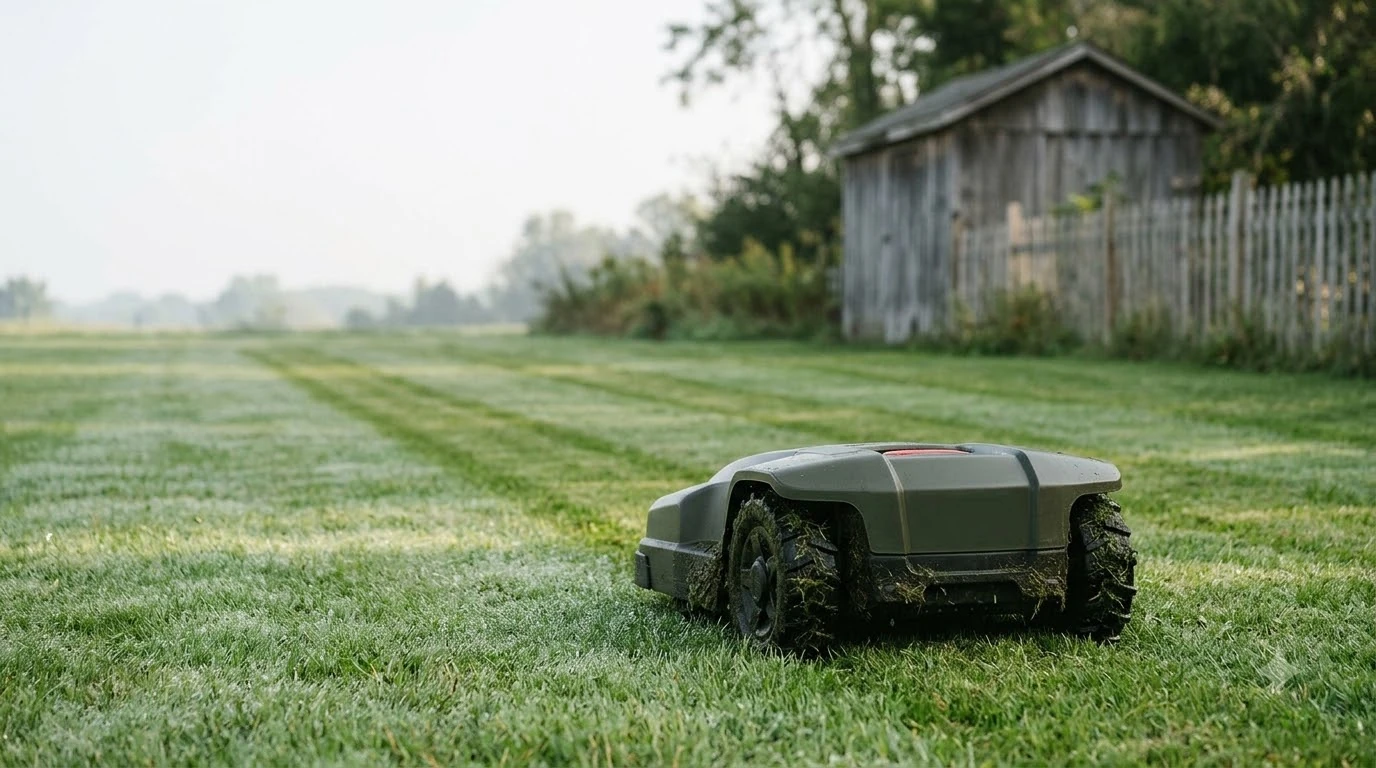

The Roborock robot lawn mower, the RockMow, is a wire-free, four-wheel-drive robot mower that Roborock rates for slopes up to 80 percent. Models in the Z/X family are sized for roughly 1,500 to 5,000 square meters, and the hardware gets good reviews, but reviewers report that software and obstacle handling still lag behind some rivals. Below is what the published specs say, what independent reviewers measured, and what to check before you buy.
The short answer
- Best fit: steep, open lawns where a wire-free Roborock robot lawn mower setup matters more than the lowest price.
- Slopes: Roborock claims 80 percent (about 39 degrees). One reviewer climbed just over 70 degrees on artificial turf before a tip-over error stopped it.
- Navigation: RTK with visual navigation on the standard model, LiDAR on the LiDAR variant for shaded or wooded yards.
- Weak spots: battery size on the LiDAR version, obstacle detection, and edge cutting without the optional module.
- Price: the flagship LiDAR model had a recommended retail price of about 2,699 euros in the reviewer’s market, as of Nov 2026.
Which RockMow model you are looking at
The naming for this Roborock robot lawn mower is confusing. The mower sold as the RockMow X1 in the United States is the Z1 in most other markets, according to one review, and the Z-series is listed in three sizes: the Z115 for about 1,500 square meters, the Z130 for about 3,000, and the Z150 for about 5,000. The RockMow S108 is a separate, smaller model with a 22 cm cutting width, rated for about 800 square meters and a 2-year warranty. Check the model number on the box before you compare any spec in this guide, because the battery, width, and coverage figures are not the same across the family. The first model in the range is covered in the RockMow X120H specs and review, which sets a baseline for the other RockMow versions. For the larger variant, the RockMow X130H specs and limits page lists its edge-cutting module and how sources describe its navigation. The RockNeo Q110H small-lawn review covers the compact model in the line and the lawn sizes it is meant for.
Specs that matter most
The table below uses the figures that reviewers reported. Where the manufacturer’s claim and a measured result differ, both are shown.
| Spec | Reported figure | What it means |
|---|---|---|
| Maximum slope | 80 percent (Roborock claim) | Tested near 70 degrees on turf before a tip-over error |
| Cutting width | 24 cm, one floating disc with six blades | Narrower than many rival decks, so more passes on large lawns |
| Cutting height | 20 to 70 mm in the app (about 2 to 7 cm) | Covers most cool-season and warm-season lawns |
| Obstacle limit | 8 cm | Reviewers found detection reliable for large objects but not for a hose or ball |
| Passage width | Roborock states 0.8 m | One reviewer found at least 1 m is needed, preferably more |
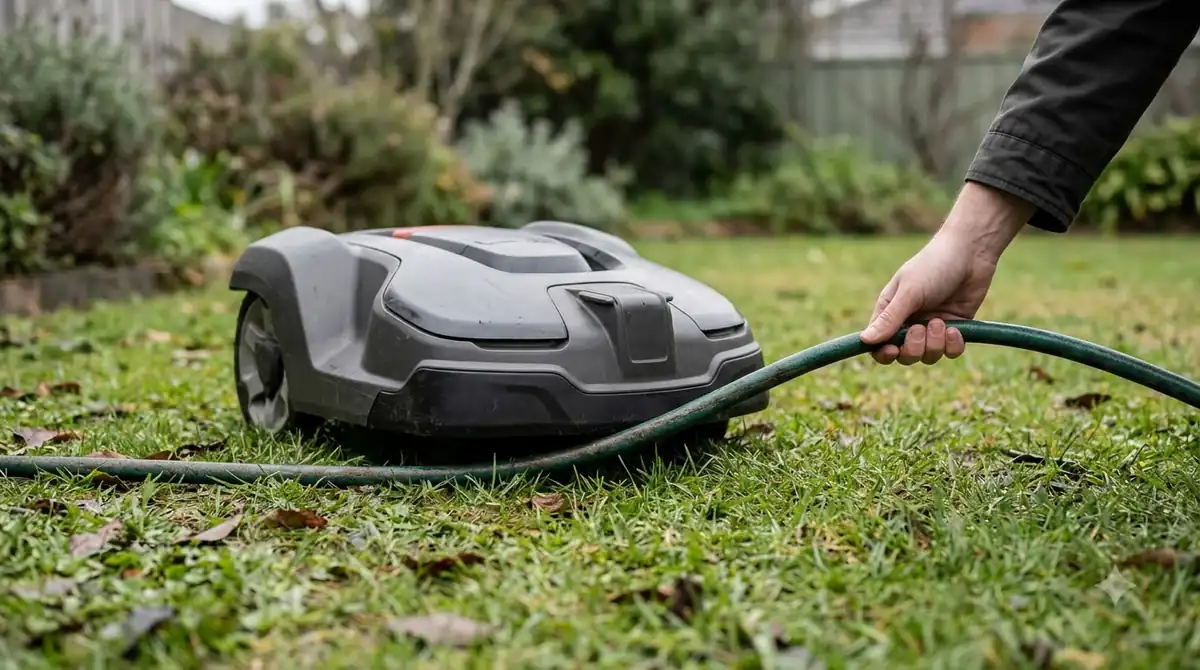
| Water resistance | IPX6 | Can be rinsed with a garden hose; rain sensor sends it home |
| Battery (LiDAR variant) | 6 Ah, rated 110 minutes | Small for a lawn rated up to 2,000 square meters |
Read the table as a starting point. Specs printed on a product page are the manufacturer’s best case, and the coverage figure assumes a simple, open lawn. A yard with beds, trees, and narrow gaps will use more runtime and more passes.
Navigation: RTK, visual mapping, or LiDAR
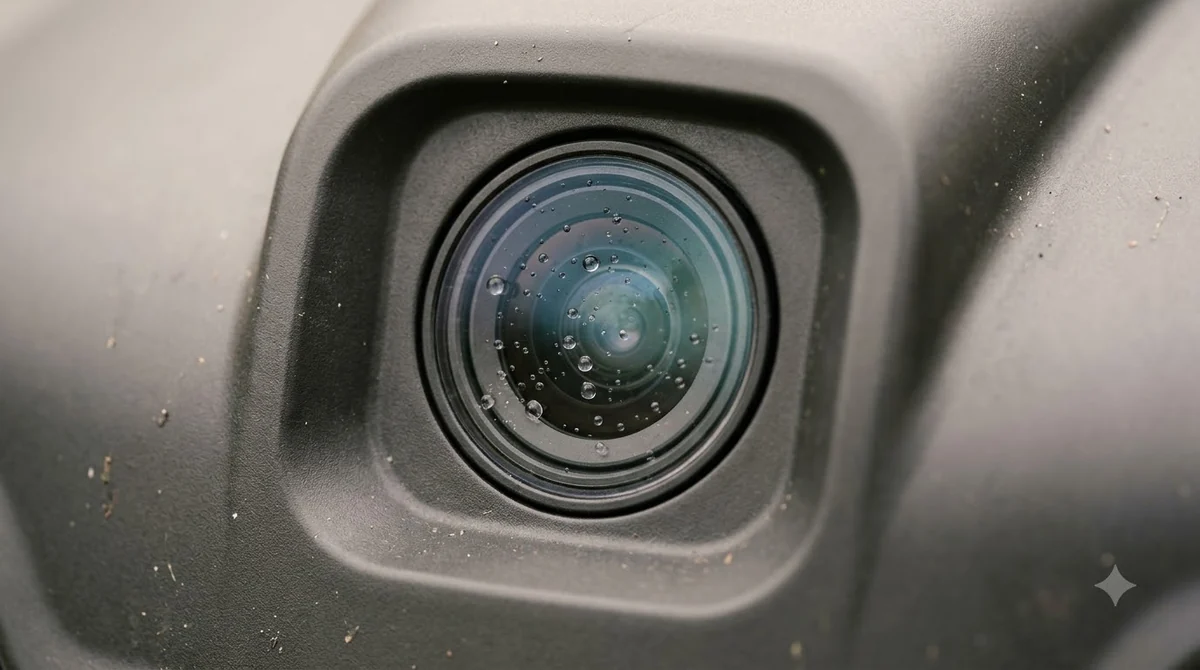
The standard RockMow combines satellite positioning (RTK) with visual navigation (VSLAM). It needs a physical RTK antenna placed upright with a clear view of the sky, at least 2 m from walls and trees, which is why the setup works best on large, open lawns. Roborock has announced network-based positioning over Wi-Fi or 4G that would remove the antenna, and one reviewer reported that this was entering beta for Z1 owners in July 2026. Confirm the current status on the product’s support page before you rely on it.
The LiDAR variant drops the antenna and suits shaded or wooded gardens, where satellite signal is weak. Reviewers said LiDAR navigation ran reliably in straight lines on test areas, but AI mapping did not work on the two properties one reviewer tested, so mapping by driving the boundary in the app remains the safer route.
Wire-free setup is the main reason buyers look at this line. There is no buried perimeter wire. You map the lawn by driving the mower around the edge in the app, and the 4G connection included with the mower (three years of data, per one review) keeps it reachable once it is set up.
Slopes and obstacle handling
Four-wheel drive is the feature that separates the RockMow from entry-level mowers. One reviewer reported that the mower handled steep hills in a real garden without trouble. The same testing showed the limits: the mower stopped on a slope just over 70 degrees with a tip-over error, so the 80 percent figure should be read as a rating, not a guarantee on every surface.
Obstacle detection is more mixed. In one test it reliably detected a hedgehog dummy but usually ran over a tennis ball and a garden hose. Other reviewers described the avoidance as reliable but a little too cautious, with wide detours that leave extra uncut strips. If your lawn has many toys, hoses, or loose objects, plan on picking them up before each run.
Heads up
Roborock’s 0.8 m passage figure is tighter than reviewers measured. If your lawn has narrow gaps between beds and the house, measure them before you buy, and allow at least 1 m.
Edge cutting and the PreciEdge module
The PreciEdge module is an optional edge-trimming attachment, sold separately (about 150 euros in one review). Without it, the mower leaves an uncut strip of at least 12 cm along raised borders. With it, the reviewer measured an edge clearance of about 3 cm on the best runs, but the mower often left a gap of around 10 cm even along clear, ground-level edges. Cut quality varies by mower design, so the debate over mulching vs bagging for lawn health is worth reading too.
The module has trade-offs. It makes the mower less agile, and it lowers obstacle clearance from 8 cm to 5 cm. If you have a lot of raised beds or stone borders, budget for the module and a hand trimmer for the last few centimeters.
Battery and run time
Battery size is where the LiDAR variant falls short of its coverage rating. The reviewer measured a 6 Ah battery that ran just over two hours and mowed about 300 square meters per charge, returning with about 15 percent left. Charging took about 75 minutes at up to 140 W. For a yard much larger than one charge covers, expect the mower to return and recharge several times, and check whether your lawn layout allows a clean path back to the station.
Software maturity
Reviewers consistently rated the Roborock robot lawn mower hardware above its software. One review called the product powerful hardware with software that needs improvement, and noted that Smart Edge Trimming was still in beta. Pattern mowing was also reported as delayed. Roborock has been shipping updates, and one reviewer said the August 2026 updates seemed to improve edge behavior, so check the firmware version and release notes before you buy.
Who the Roborock robot lawn mower suits
The Roborock robot lawn mower suits owners with a steep, open, mostly unobstructed lawn who do not want to bury a perimeter wire. It is a weaker match for a small, tight yard with many obstacles, a lawn under heavy tree cover without a LiDAR model, or a buyer who needs a finished edge without buying the extra module. Compare it with a model from a brand with a larger service network if warranty and parts access in your area are a priority. A Roborock is one alternative to consider, and the Dreame A2 worth-it verdict assesses another option.
What to check before you buy
- Model number: confirm the size class (Z115, Z130, Z150, or S108) and whether it is the RTK or LiDAR version.
- Measure the lawn and gaps: passages should be 1 m or more, and the mower should fit your largest run without a second charge.
- Check the slope honestly: walk the steepest section and look for loose soil, wet patches, or obstacles that could cause a tip-over.
- Decide on edge cutting: price the PreciEdge module and a trimmer together.
- Confirm the warranty and local service with the seller before you pay, since parts and repairs depend on it.

Frequently asked questions
Is the Roborock robot lawn mower a good choice?
It is strong on steep, open lawns, where its four-wheel drive and wire-free setup stand out. Reviewers rated the hardware highly but were less impressed with obstacle detection, battery size on the LiDAR variant, and software maturity.
What is the difference between the RockMow X1 and Z1?
According to one review, the mower sold as the RockMow X1 in the United States is the Z1 in most other markets. Check the model number and region before comparing specs or warranty terms.
Does the RockMow need a boundary wire?
No. The mower maps the lawn by driving the boundary in the app. The RTK model uses an external antenna, and the LiDAR model does not need one.
Can the RockMow mow right up to the edge?
Not without the optional PreciEdge module. Without it, reviewers measured an uncut strip of at least 12 cm along raised borders. With the module, edge clearance improved to about 3 cm, but gaps still appeared in testing.
Sources
- Notebookcheck review of the RockMow Z1 LiDAR (independent test): battery, cutting width, obstacle tests, slope test, PreciEdge results.
- Senses review of the RockMow Z1 (independent review): slope rating, navigation and RTK behavior, passage width, IPX6 and rain sensor.
 Up next8 min readReviews & CompareRoborock RockMow X120H Review: Specs, Slope and Buying ChecksUpdated Nov 16, 2026
 7 min readReviews & CompareNavimow i210 AWD Review: Specs, Slope and Conflicts to CheckUpdated Nov 16, 2026
 8 min readReviews & CompareMammotion LUBA 2 AWD Review: Specs, Slope Limits and What to CheckUpdated Nov 11, 2026
 6 min readReviews & CompareRockMow X130H Review: Roborock Specs, Edges and Trade-OffsUpdated Nov 13, 2026
 6 min readReviews & CompareRoborock RockNeo Q110H Review: Simple Specs and WarrantyUpdated Nov 16, 2026
 6 min readReviews & CompareIs the MOVA LiDAR Ultra 2000 Worth It? Slope and Yard CheckUpdated Nov 17, 2026