
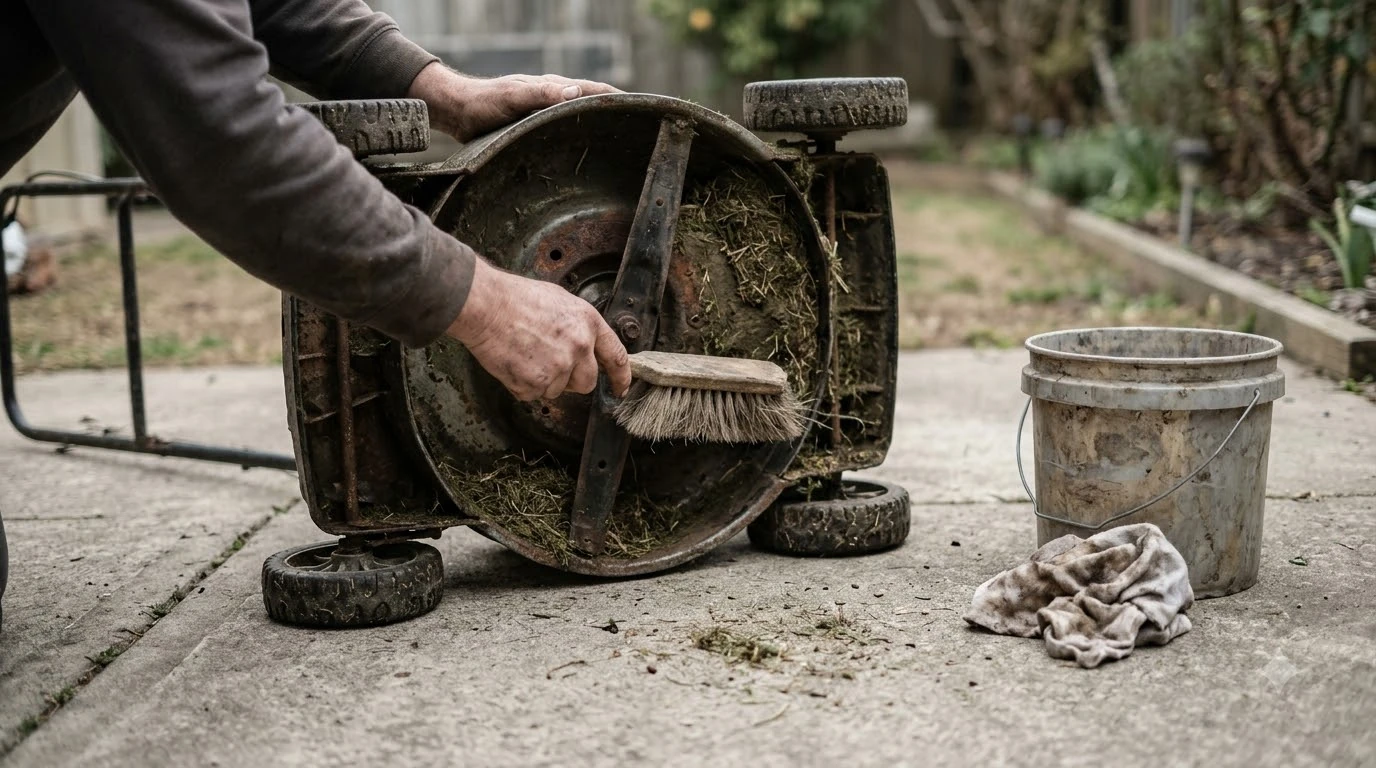

For a robot mower mulching vs bagging lawn health question, leaving clippings on the lawn is generally the better choice for routine mowing, because the clippings return nutrients and add little to thatch. Bagging is the exception. It makes more sense for specific problems such as lawn disease, heavy thatch, weed seed heads, or overseeding. This guide explains the reasoning and where the sources agree.
The short answer
- Routine mowing: mulch. Clippings return nutrients to the soil and generally do not build thatch.
- Fertilizer: clippings can replace some feeding. A University of Kentucky turf specialist says homeowners can skip one fertilizer application a year.
- Disease or heavy thatch: bag, at least until the problem is under control.
- The one-third rule: remove no more than about one-third to one-half of the grass height at a time, whichever method you use.
Robot mower mulching vs bagging: what grasscycling does
Grasscycling means leaving short clippings on the lawn after each mowing. The clippings break down quickly and return water and nutrients to the soil. A University of Kentucky article from 2004, quoting turf specialist A.J. Powell Jr., states the view plainly: “There are few if any good reasons to ever bag clippings.” It also says bagging increases landfill use and cost. The article is older than most current guidance, but its core points on clippings are still widely repeated.

What the fertilizer and thatch claims say
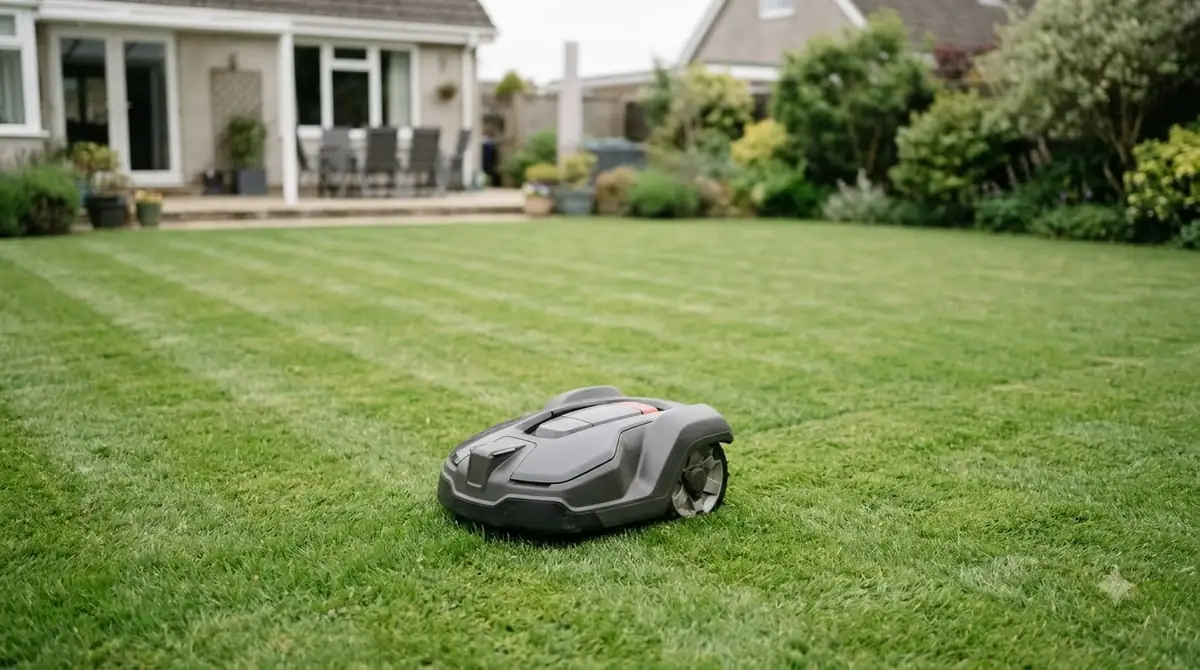
The main reason to mulch is the nutrient return. Powell says homeowners “can skip one fertilizer application a year” by leaving clippings. The article does not give a nutrient total, so the fertilizer saving is a rough, general figure rather than a measured one.
Thatch is the usual worry. Powell says clippings “do not add to a problem with thatch,” and that a little surface organic debris can help moderate soil temperature and hold some moisture. A second source, LawnStarter’s comparison of mulching and bagging, makes a more cautious point: long clippings decompose slowly and can build up on existing thatch. It also cites a figure that clippings can supply up to 25 percent of a lawn’s yearly fertilizer needs, attributed to the University of Missouri Extension. We could not open that extension page, so treat the 25 percent figure as secondhand.
Mowing height and clipping size
Clipping problems usually come from cutting too much grass at once. Powell’s guidance is to remove no more than one-third to one-half of the grass height in a single mowing, which keeps clippings short and reduces disease risk. A sharp blade cuts clippings cleanly and spreads them evenly, which makes them break down faster.
For tall grass, Powell recommends raising the mower height by three inches or more and mowing about every three days, rather than bagging or raking the bulk off in one pass. This is the practical way to mulch a lawn that has grown too long between cuts.
When bagging is the better choice
Powell names few situations where bagging is clearly right. Wet clippings can keep a compost pile from breaking down and make it smell, so bagging for compost is a case where the clippings are better off out of the pile. Clippings also make poor mulch for garden beds. Clippings from a lawn that has been treated with a broadleaf herbicide in the last few weeks should not be used as mulch, and clippings can spread crabgrass or dandelion seed into gardens.
LawnStarter lists more situations, several of which are sourced only to the company itself. It suggests bagging when the grass is very tall or wet, when thatch exceeds one-half inch, when a fungal disease is present, when weeds have seed heads, when a lawn is newly seeded or sodded, before overseeding, and during spring or fall cleanup. The one-half inch thatch threshold has no cited source, so use it as a rule of thumb rather than a standard.
Robot mower clippings and lawn health
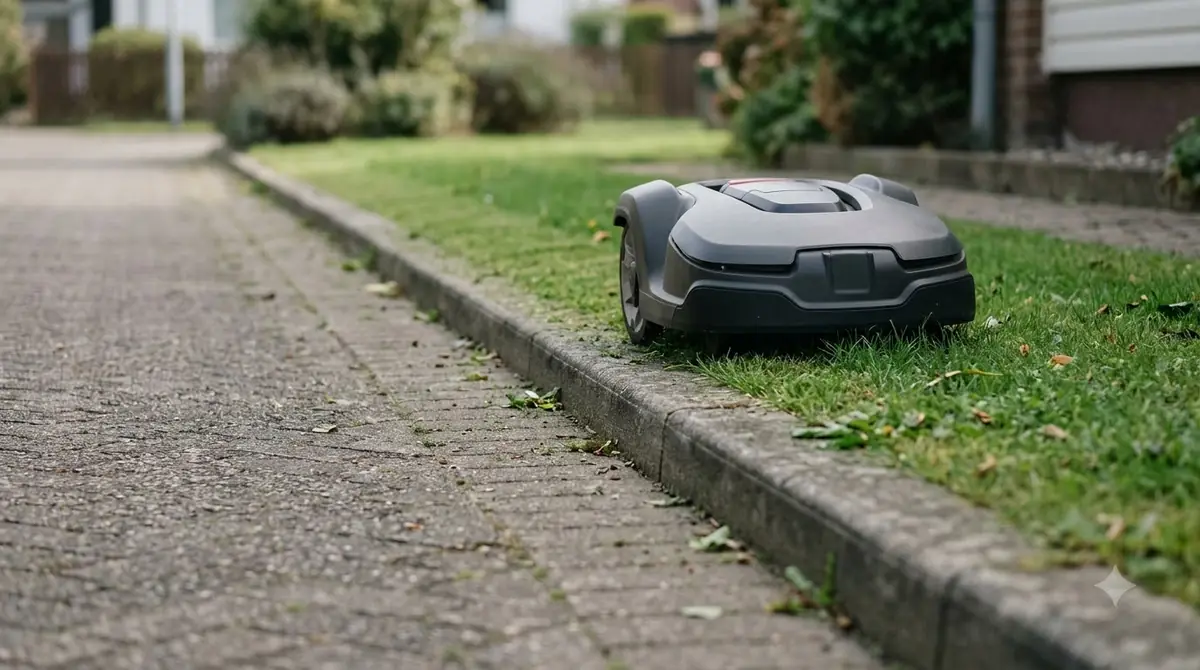
Robot mowers cut small amounts of grass often, which keeps clippings short. Our reading is that this suits mulching well, because the mower returns fine clippings to the lawn each time it runs and there is no bag to empty. The mowing schedule matters more than the method: a robot that runs daily stays inside the one-third rule without any measuring, which Powell’s guidance supports.
Robot mowers do not remove clippings the way a bagging mower does, so the choice of bagging is not usually an option on a robot. If a lawn needs bagging for a short period, for example during a disease outbreak or before overseeding, a push or ride-on mower with a bag is the simpler tool for that job.
Who each approach suits
Mulching suits most homeowners with a healthy, regularly mowed lawn. It saves time, returns nutrients, and avoids handling wet clippings. It is the default choice for a lawn that is mowed often and kept at a steady height. Clipping handling is only one difference, and Mammotion against Ecovacs covers the rest of the brand comparison. Clipping handling is only one feature to weigh, and GOAT and Navimow app features compared covers the software side. Another mower type worth weighing is the hover model, covered in robot mower versus hover mower.
Bagging suits a lawn with active disease, a thatch layer that is building up, a new seeding, or weeds that are setting seed. It also suits a garden owner who wants clean paths and does not want clippings spread across beds. In those cases, bag until the problem is under control, then return to mulching.
Related reads: To compare complete machines, robot mowers compared across features cover drive systems, slopes and battery capacity.
Frequently asked questions
Is mulching better than bagging for lawn health?
For routine mowing, the sources we read generally favor mulching. Clippings return nutrients and add little to thatch, according to a University of Kentucky turf specialist. Bagging is better for specific problems such as disease, heavy thatch, or overseeding.
Do grass clippings cause thatch?
Powell says clippings do not add meaningfully to thatch when the mowing follows the one-third rule. LawnStarter notes that long clippings can decompose slowly and build up on an existing thatch layer, so keep mowing height and frequency in check.
How much fertilizer do grass clippings replace?
Powell says leaving clippings lets homeowners skip about one fertilizer application a year. A secondhand figure from LawnStarter puts clippings at up to 25 percent of yearly needs, but we could not confirm that against the original extension page.
Should I bag grass clippings if I have a robot mower?
Robot mowers generally mulch as they cut, so bagging is not usually an option. For a short period that needs bagging, such as disease or overseeding, a separate bagging mower is the practical tool.
Sources
- Bagging grass clippings not always best idea (University of Kentucky College of Agriculture, 2004, quoting A.J. Powell Jr., UK Extension turf specialist): the case for mulching, the fertilizer and thatch claims, the one-third mowing rule, and the few cases for bagging.
- Mulching vs bagging grass clippings (LawnStarter, a lawn-care company): the nitrogen comparison, thatch threshold, and bagging situations. Several claims are unsourced or cite extension pages secondhand.
 Up next7 min readReviews & CompareRobot Mower 2025 Model vs 2026 Model What ChangedUpdated Nov 18, 2026
 7 min readReviews & CompareRobot Mower vs No Mow Lawn Alternatives: What Fits BestUpdated Nov 13, 2026
 6 min readReviews & CompareRobot Mower Front Wheel Drive vs Rear Wheel DriveUpdated Nov 18, 2026
 7 min readReviews & CompareRobot Mower vs Landscaping Company Contract: Which Costs Less?Updated Nov 13, 2026
 6 min readReviews & CompareRobot Mower vs String Trimmer Edging TimeUpdated Nov 18, 2026
 6 min readReviews & CompareRobot Mower Plastic vs Metal Blades: What MattersUpdated Nov 18, 2026