
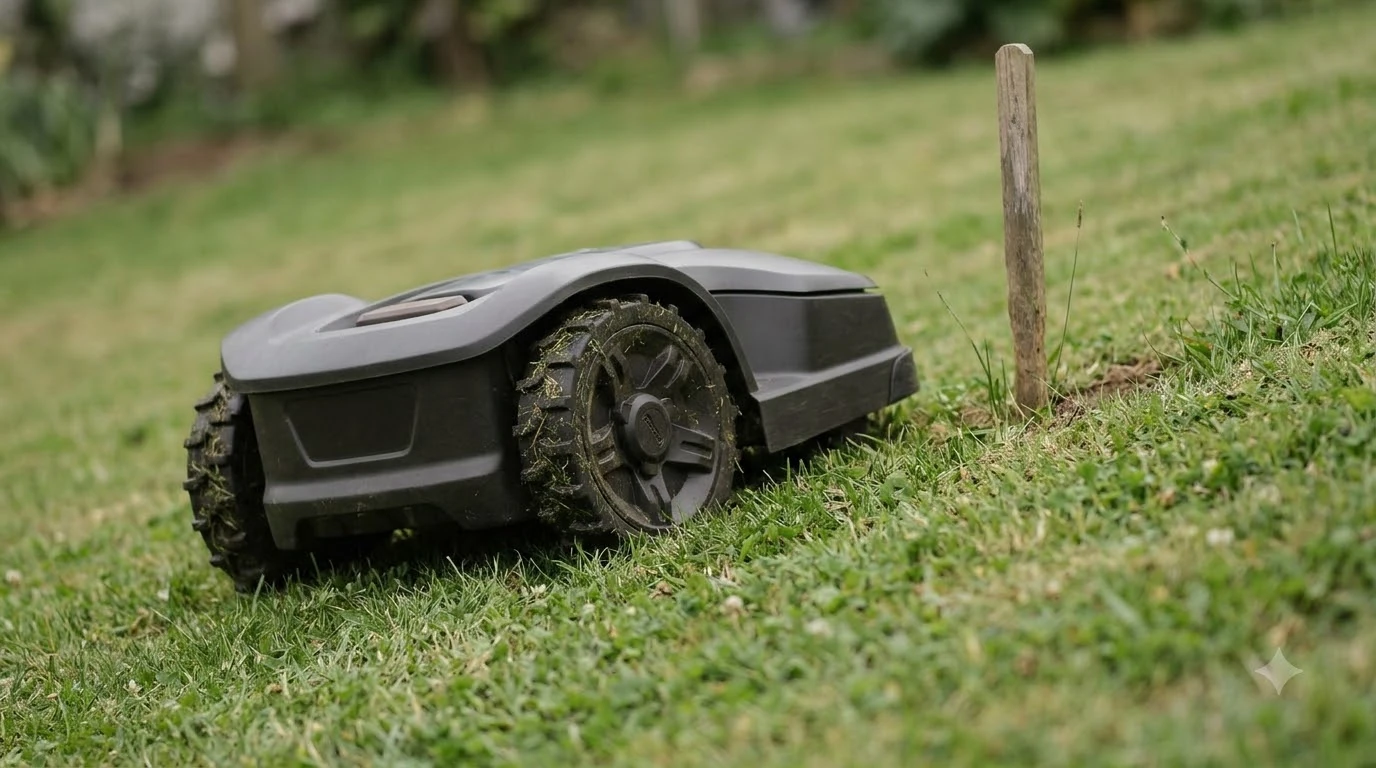

In a robot mower front wheel drive vs rear wheel drive comparison, rear-wheel drive generally gives better grip on slopes, while front-wheel drive turns more tightly and usually costs less. Neither layout suits every lawn. Flat, tight, obstacle-heavy yards tend to favor front-wheel drive, and hilly or uneven ground tends to favor rear-wheel drive. Where the ground is steep or wet, most sources point to all-wheel drive.
The short answer
- Front-wheel drive: the most agile and usually the cheapest, but the weakest on slopes and wet grass.
- Rear-wheel drive: better traction on moderate inclines, with a little less turning precision in tight spots.
- All-wheel drive: the strongest grip for steep, soft, or wet ground, at the highest price and power draw.
- Our reading: match the drive to your steepest slope and your tightest corner, not to the lawn’s total size.
How the drive layout changes the mower
A robot mower’s drive wheels push it across the lawn, and which wheels are powered changes how weight is spread. In a front-wheel drive model, the powered wheels sit at the front, so when the mower climbs, weight shifts toward the back and the front wheels can lose contact with the ground. In a rear-wheel drive model, the powered wheels stay under the mower’s weight as it climbs. The Sunseeker comparison of FWD, RWD and AWD robot mowers explains this trade-off in terms of traction. Drive layout is one factor in hill performance, and slope performance across mowers compares complete machines on real gradients.
Robot mower front wheel drive vs rear wheel drive on slopes
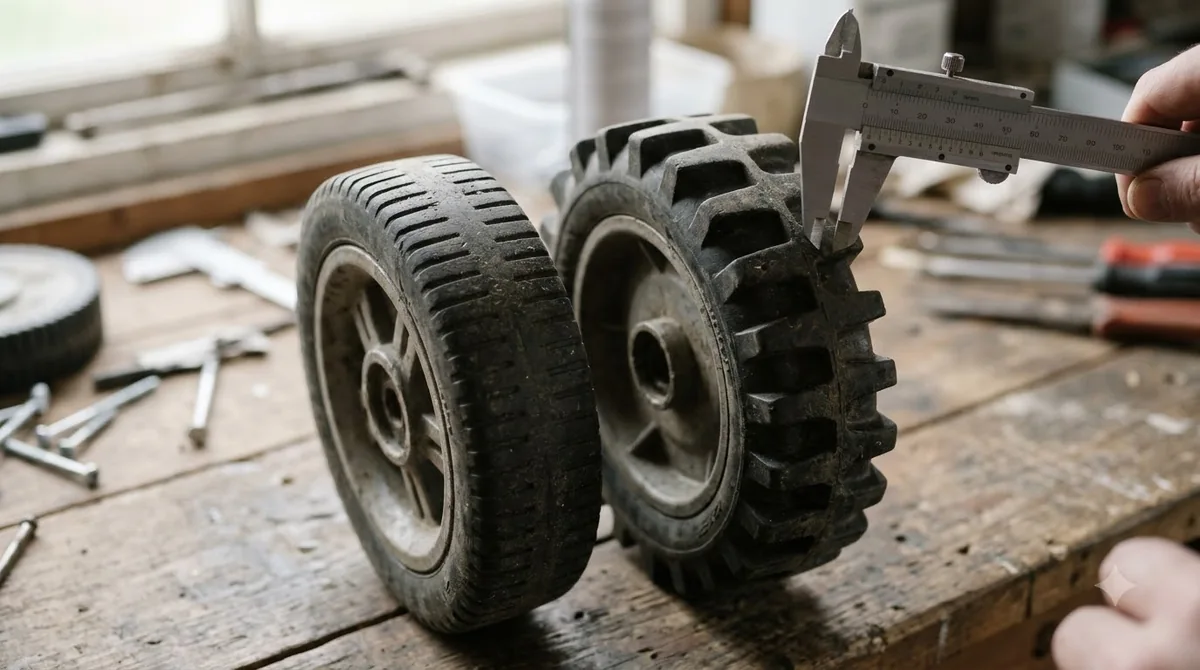
Slope grip is where the two layouts differ most. Sunseeker’s comparison says front-wheel drive is the weakest on inclines because weight comes off the front wheels on a climb. Rear-wheel drive grips better on dry, moderate slopes, though it can feel less planted going downhill. All-wheel drive performs best of the three on hills, according to the same page. The number of driven wheels matters too, and how 2WD and AWD grip differ is covered in a related comparison. Ratings depend on layout and tyres, and how steep slopes can get explains how to read the limits. A real rating helps put theory in context, and an example of a stated slope limit shows how one model handles it. Drive layout is a key difference between models, and Navimow X3 vs Mammotion LUBA 3 AWD compares two high-end machines side by side.
Traction on wet grass follows the same pattern. Sunseeker says front-wheel drive can lose grip even on mild inclines when dew is present. Rear-wheel drive can slip on slick turf and needs slower speeds. The page recommends all-wheel drive for wet ground, which is a vendor view, since Sunseeker sells all three layouts.
The published slope ratings are useful for scale. Sunseeker’s rear-wheel drive X4 is rated for climbing up to 45 percent, or about 24 degrees, and its all-wheel drive X7 Gen 2 is rated for up to 70 percent, or about 35 degrees. The company gives no slope rating for a front-wheel drive model, which fits its suggestion that front-wheel drive suits flat, firm lawns.

Turning and tight spaces
Front-wheel drive is usually the easiest layout to steer in a tight space. Sunseeker describes it as the most agile of the three and says it turns tightly around obstacles. Rear-wheel drive is less nimble in narrow spaces, and all-wheel drive is stable and predictable but may have a slightly wider turning radius.
An older article on self-propelled push mowers makes a similar point about precision. It says front-wheel drive is well suited to navigating tricky areas, such as between bushes, and that the front wheels can be lifted to turn without stopping the drive. That article is about push mowers rather than robots, so it is a general pattern, not a robot-specific test.
Cost and effort
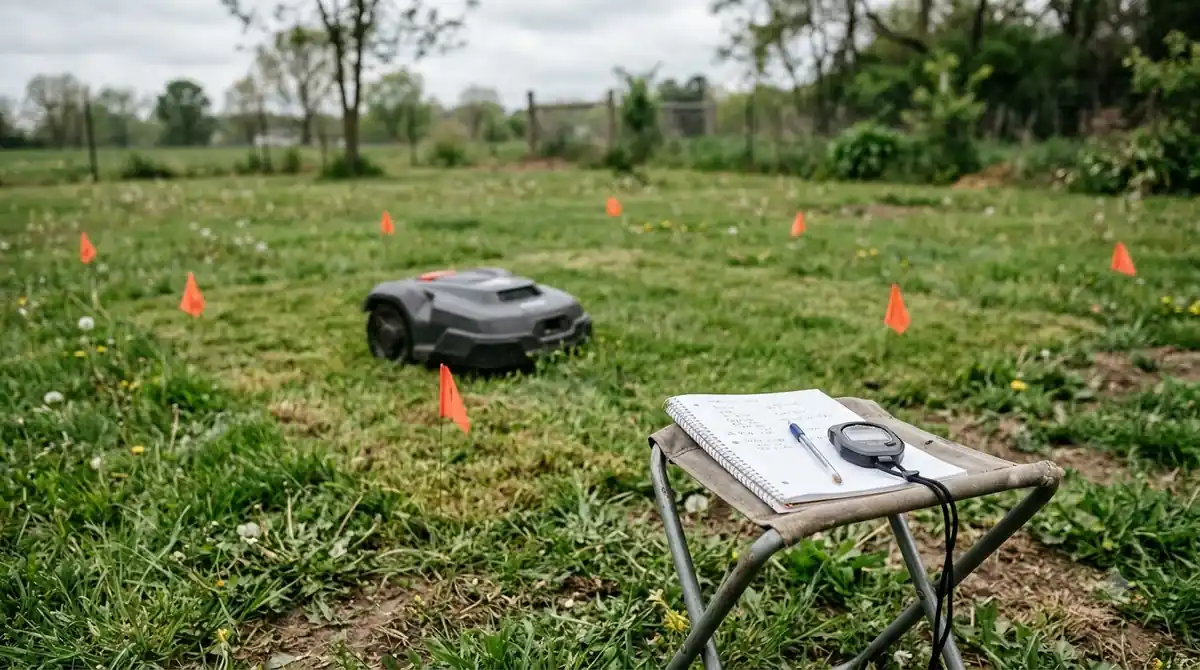
Front-wheel drive is generally the cheapest layout. Sunseeker says it is the least expensive and most efficient option on flat ground, and rear-wheel drive sits in the middle on price and performance. All-wheel drive costs the most, draws the most power, and needs more involved maintenance, according to the same vendor page.
Effort matters on push-type self-propelled mowers, which is where the older article applies. It says rear-wheel drive requires far less physical force to operate, while a front-wheel model whose front wheels lift off uneven ground can leave you pushing the mower yourself. A robot mower does not need you to push it, but the same traction problem shows up as lost cutting time and stalls on slopes.
Who each drive layout suits
Front-wheel drive suits a small, flat, firm lawn with many beds, trees, or corners to work around. It is the simplest and cheapest way to cover a yard that has no real hills. Rear-wheel drive suits a lawn with moderate slopes or uneven ground where the mower must climb consistently. All-wheel drive suits steep, wet, or soft lawns, where the extra grip is worth the extra cost.
Before you buy, check the maximum slope rating on the specification sheet, and measure your steepest section with a level or a phone app. A mower that is rated for less than your slope will struggle in exactly the places where you need it most.
Frequently asked questions
Is rear wheel drive better for a robot mower on a hill?
Generally yes. Sources describe rear-wheel drive as better for moderate slopes because weight stays over the powered wheels on a climb. For steep or wet hills, all-wheel drive gives the most grip, according to Sunseeker’s comparison.
Is front wheel drive good for a small, flat lawn?
Front-wheel drive is well suited to a small, flat lawn. It is usually the cheapest option, turns tightly around obstacles, and is the most efficient of the three on flat ground, according to Sunseeker.
What slope can a robot mower climb?
It depends on the model. Sunseeker rates one rear-wheel drive model for up to 45 percent (about 24 degrees) and one all-wheel drive model for up to 70 percent (about 35 degrees). Check the rating for the exact model you plan to buy, because the figure varies widely.
Does all-wheel drive cost much more than front-wheel drive?
Usually yes. Sunseeker says all-wheel drive costs the most and draws the most power, while front-wheel drive is the cheapest. Prices change often, so compare current listings for the same lawn size and features.
Sources
- FWD vs RWD vs AWD Robot Mowers: Which Drive is Best for Your Lawn? (Sunseeker Elite, a manufacturer): slope and wet-grass traction, turning, cost, and slope ratings for specific models.
- Front-Wheel Vs Rear-Wheel Drive: How To Choose The Best Self-Propelled Lawn Mower (SlashGear): general traction, turning, and effort points for push-type self-propelled mowers, not robot mowers.
 Up next9 min readReviews & CompareAWD vs 2WD Robot Mower for Hills: Which Drive Do You Need?Updated Nov 11, 2026
 7 min readReviews & CompareRobot Mower vs No Mow Lawn Alternatives: What Fits BestUpdated Nov 13, 2026
 7 min readReviews & CompareRobot Mower 2025 Model vs 2026 Model What ChangedUpdated Nov 18, 2026
 6 min readReviews & CompareRobot Mower Plastic vs Metal Blades: What MattersUpdated Nov 18, 2026
 7 min readReviews & CompareRobot Mower Mulching vs Bagging Lawn HealthUpdated Nov 18, 2026
 7 min readReviews & CompareRobot Mower vs Sheep Grazing: Which Suits Your LandUpdated Nov 17, 2026