
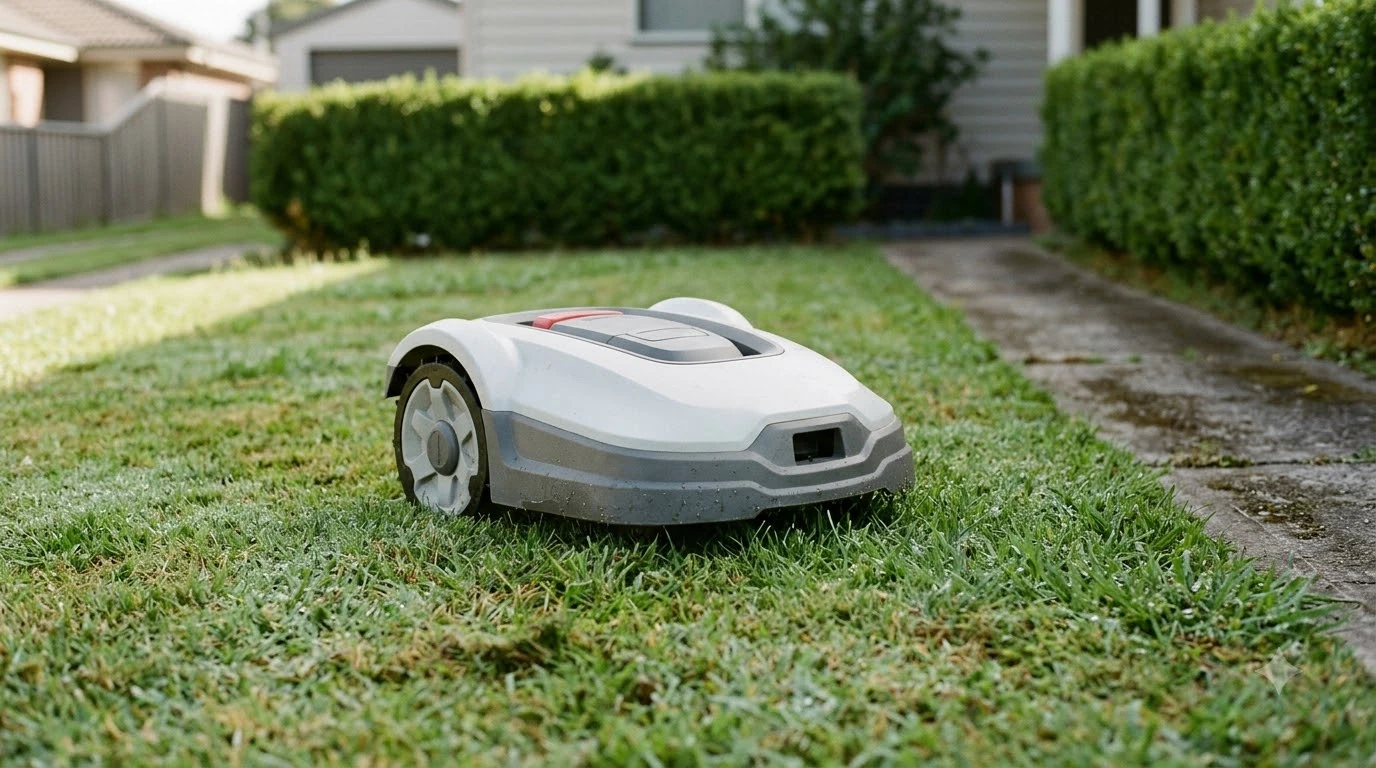

For robot mower 2025 model vs 2026 model what changed, the answer is usually three areas: how it finds its position, how many sensors it uses to avoid obstacles, and how it manages the battery. Cutting deck, blade count and basic mowing patterns often stay the same. Read the spec sheet for each year side by side, because brand marketing tends to highlight navigation and rarely states battery capacity or runtime.
The short answer
- Navigation: newer models lean toward wire-free positioning that combines RTK with LiDAR or cameras, while older models often relied on a boundary wire or one main positioning method.
- Sensors: expect more obstacle types, drop or lift detection, and extra safety layers in the newer year.
- Battery: brands often add charge limits or off-peak charging, but rarely publish a new capacity or runtime figure.
- Your move: compare the same 6 to 8 spec lines for both years, then confirm the changes against a current review or the manufacturer’s manual.
Robot mower 2025 model vs 2026 model: what usually changes
Most year-to-year updates are software and sensor upgrades on the same chassis. The cutting motor, wheel layout and blade system often carry over, so the differences show up in the parts you cannot see from the box. A clean comparison starts with a short list of lines that should match on both spec sheets. Newer models do not always change upkeep, and yearly maintenance cost helps you judge what an upgrade must offset.
| Spec line | Older model (LUBA 2 AWD) | Newer model (LUBA 3 AWD) |
|---|---|---|
| Navigation | RTK plus AI vision | Tri-Fusion: 360-degree LiDAR, dual-camera AI vision, integrated RTK |
| AI processing | 5 TOPS | 10 TOPS |
| Obstacle recognition | Not stated | Over 300 obstacle types |
| Drop detection | Basic edge sensing | AI-based drop detection |
| Battery management | Not listed | Custom charge limit and off-peak charging |
| Yard monitoring | Not available | Optional 720p, off by default |
This pair comes from one brand’s own comparison page, so read it as the vendor’s claims. The pattern is still useful: the newer year adds positioning and processing capacity, and the spec sheet becomes more specific about safety. Where a line says “not stated” for one year, you cannot compare it, and that gap is worth noting before you decide.

Navigation: wire-free positioning and the sensor stack
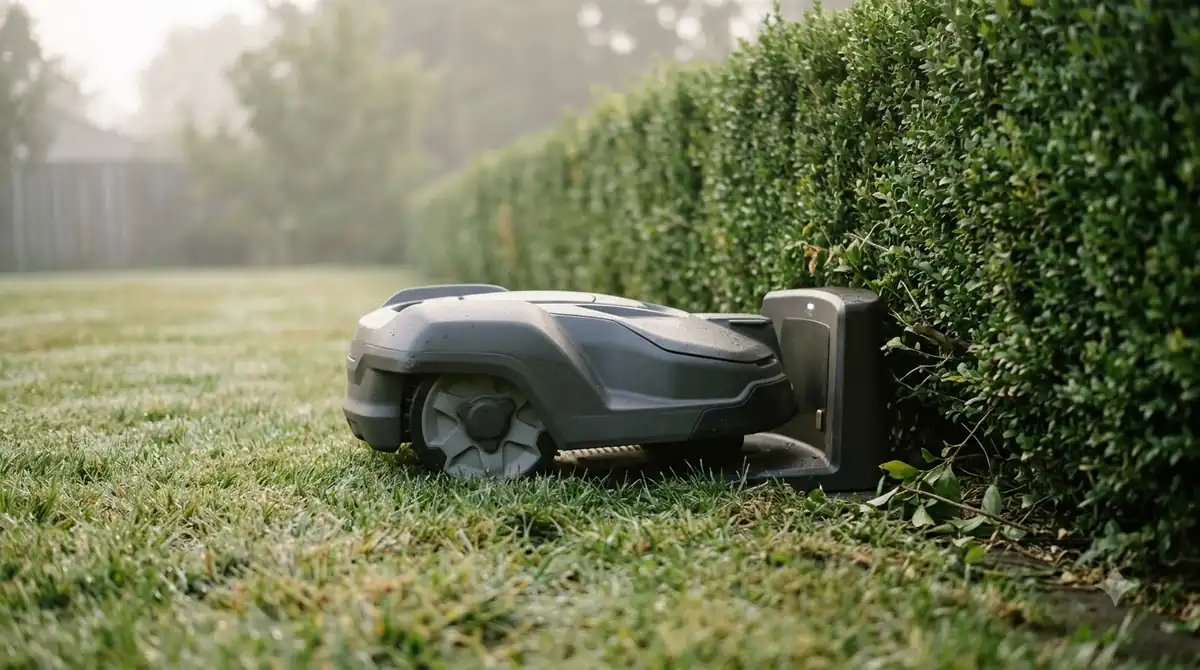
Navigation is the change buyers notice first. Many 2026 models are described as wire-free, meaning they do not need a buried boundary wire to know where the lawn ends. Instead they combine satellite positioning (RTK) with LiDAR, cameras or both. The brand page for the newer model gives a system accuracy of “up to plus or minus 1 cm,” but it does not say what conditions that figure assumes, so treat it as a best case. Navigation is the area changing fastest, and where robot mower technology is heading puts yearly updates in context.
Multiple sensors matter most where one method can fail. Trees, buildings and a sky view blocked by roof lines can weaken satellite signal. Cameras struggle in low light. A mower with two independent methods can keep working when one is degraded. Our reading is that a second sensor type matters more than a bigger number on the spec sheet.
- Wire-guided older models: the boundary wire is the reference, so moving or damaging the wire changes the mowing area.
- Wire-free newer models: the map is built during setup, so a poor first mapping run can cause problems later.
- Hybrid setups: some systems use a wire as a fallback in tight spots, which is worth checking in the manual.
Battery and charging: where the spec sheet is thin
Battery is the area where year-to-year comparisons are hardest. Brands often describe “smarter” battery management without listing a capacity in amp-hours, a runtime per charge, or a cycle rating. The newer model in the comparison above lists a custom charge limit and off-peak charging, which can slow battery wear if you keep the mower plugged in through the season. It does not give a new runtime figure, so you cannot tell from that page alone whether a battery upgrade lasts longer on one lawn. Some improvements arrive in software, and how firmware updates work shows which changes an older model can still receive.
Runtime depends on the lawn more than on the label. Denser turf and steeper slopes make the motors work harder, and that shortens each charge. A University of Florida (IFAS) article on robot mowing notes that robotic mowers cut small amounts daily, which research links to denser turf. That mowing pattern means the mower is running more often, so charge behavior matters more than a single peak runtime number.
Heads up
If a model-year update changes the battery pack, check whether the old charger and dock still match. A new battery with an old dock can leave you with a mower that charges slowly or not at all.
Cutting, slope and coverage: compare the same numbers
Cutting height, slope rating and coverage area are the lines most likely to change between years, and they are the easiest to compare directly. Make sure both years list the same units and the same test method. A slope figure given as a percentage and another given in degrees look different but can describe the same limit, so convert them before you compare.
Coverage should be matched to your yard size and shape, not to the top figure on the box. Narrow passages, gardens and many small islands reduce the working area even when the stated acreage looks large. Our reading is that a mower rated well above your usable lawn area, after you subtract beds, trees and other no-mow zones, gives more margin than one rated just above the total.
How to compare two model years before you buy
- Pull both spec sheets. Use the manufacturer’s current page for each year, and save the date you checked.
- Line up the same fields. Navigation, AI processing, obstacle detection, battery, cutting height, slope and coverage.
- Mark the gaps. If a line is “not stated” for one year, record it as unknown rather than assuming it is equal.
- Check the manual. Setup needs, wire use and charging rules often differ more than the marketing does.
- Look for an independent review. Compare the newer year’s real-world results with the vendor’s claims before deciding.
Spec-sheet comparisons only tell you what is promised. For a decision that depends on runtime or accuracy in your own yard, the honest answer is that you will know after a full season. The model that fits best is usually the one whose weaknesses match what you can tolerate, such as slower mapping, shorter runtime on thick grass, or no camera. Older stock often goes on offer at big retailers, and retailer timing and return terms compare two common options. Spec changes sometimes justify a higher price, and where the extra cost goes explains which upgrades matter. Last season stock and refurbished units are different routes, and buying an older or refurbished unit weighs the risks.
Frequently asked questions
Is a 2026 robot mower always better than the 2025 model?
Not always. Newer years usually add navigation and sensor upgrades, but they can also raise the price or change the app. If your current mower works well and your yard is simple, the older model may still be the better value.
What is the most important difference to check first?
Start with navigation, because it decides whether the mower needs a boundary wire and how it handles trees and tight spaces. Then check the battery and charging lines, which often change quietly.
Can I upgrade an older model’s sensors or battery?
Sometimes. Battery packs and charging docks are often sold as replacements, but sensor hardware usually is not. Check the manufacturer’s parts list for your exact model before assuming an upgrade is possible.
Do model-year changes affect warranty?
They can. Warranty terms are set by each model and by the seller, so confirm the coverage for the exact year you plan to buy, and keep the original purchase record.
Sources
- LUBA 3 AWD vs LUBA 2 AWD upgrades (Mammotion): navigation stack, AI processing, obstacle count, battery management, yard monitoring, as the brand states them.
- UF robot mowers news (University of Florida, IFAS): daily short cuts linked to denser turf.
 Up next7 min readReviews & CompareRobot Mower Noise Level Comparison by Model and DistanceUpdated Nov 17, 2026
 8 min readReviews & CompareHusqvarna Automower 450X NERA Pros and Cons: 5,000 m² ModelUpdated Nov 18, 2026
 7 min readReviews & CompareMammotion LUBA 2 AWD Lawn Size: Which Model Fits Your YardUpdated Nov 17, 2026
 7 min readReviews & CompareMammotion Yuka Mini Review: 2 Models, Limits, VerdictUpdated Nov 17, 2026
 8 min readReviews & CompareNavimow i206 AWD vs i210 AWD: Which Model Fits Your YardUpdated Nov 16, 2026
 8 min readReviews & CompareIs the Worx Landroid Vision Worth It? Model Specs Compared (2026)Updated Nov 14, 2026