
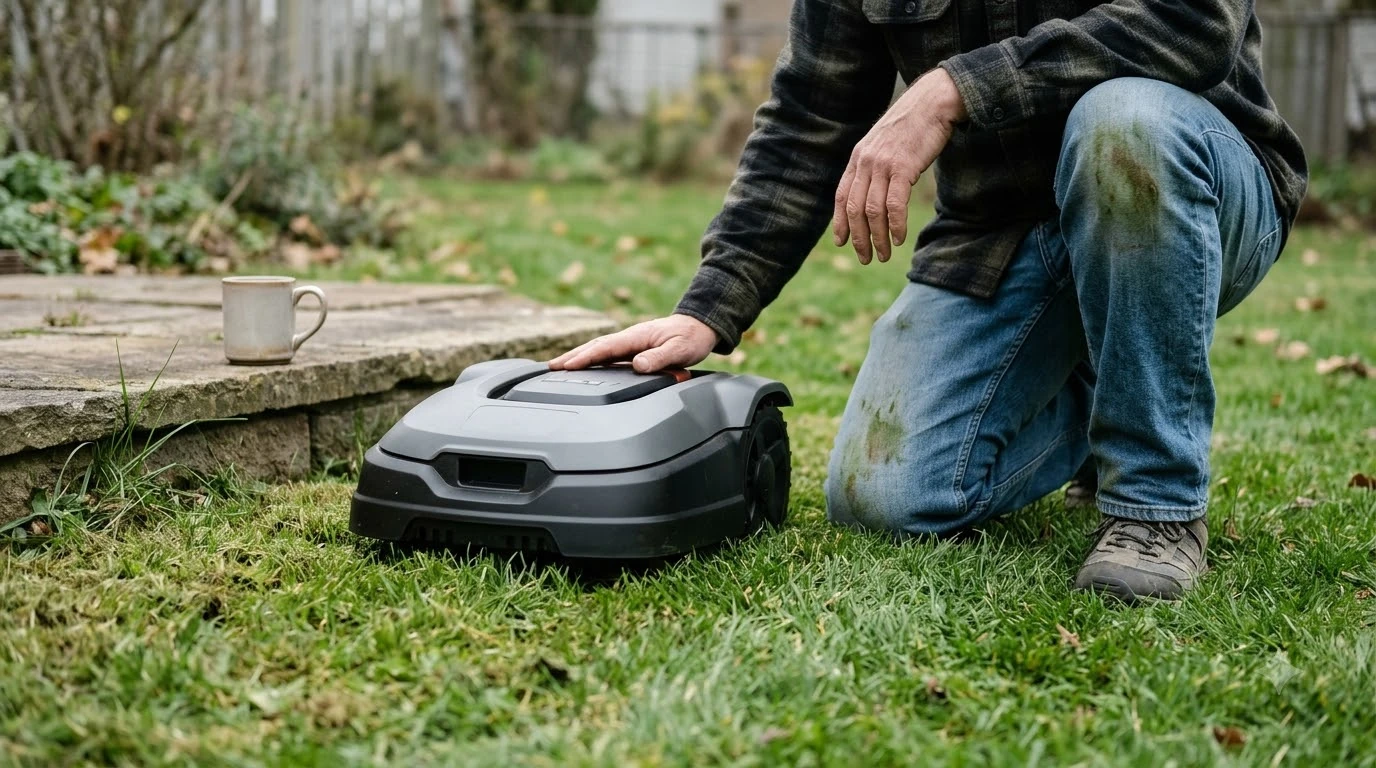

Is the Worx Landroid Vision worth it? That depends on the model you buy and how big and steep your lawn is. The two Landroid Vision models with published specs differ widely: one is rated for 500 m2 and a 30% slope, the other for 1000 m2 and an 84% slope.
The short answer
- Smaller, gentler yards: the WR305E is rated for lawns up to 500 m2 (about 0.12 acre) and slopes up to 30%.
- Larger or steeper yards: the WR341E is rated for lawns up to 1000 m2 (about 0.25 acre) and slopes up to 84%, with all-wheel drive.
- Wire-free: both pages say the mower needs no boundary wire.
- Warranty: the WR341E page lists 2 years; the WR305E page does not list one.
- Not listed on either page: runtime.
What “Landroid Vision” covers across models
Landroid Vision is a product family, not a single mower, so the answer changes with the model number. The two Worx pages we read cover the WR305E, sold on the EU page as a 500 m2 model, and the WR341E, sold on the UK page as a 1000 m2 model. Other Landroid Vision numbers exist, but this article does not cover them, so check the model number on the box against the specs below.
| Spec | WR305E (EU page) | WR341E (UK page) |
|---|---|---|
| Maximum lawn size | 500 m2 (about 0.12 acre) | 1000 m2 (about 0.25 acre) |
| Maximum slope | 30% (17 degrees) | 84% (40 degrees) |
| Drive | 2WD | 4WD |
| Cutting height | 30 to 60 mm | 20 to 70 mm |
| Cutting width | 18 cm | 22 cm |
| Battery | Li-ion 4 Ah, 80 min charge | Li-ion 4 Ah (20V 4.0 Ah pack), 80 min charge |
| Warranty | Not listed | 2 years, plus 1 year if registered within 30 days |
| Runtime | Not listed | Not listed |
The page figures are manufacturer specs, and the two pages come from different regional sites. A US model may carry different numbers, so confirm the spec for your exact model before you buy. The EU page is also inconsistent on height adjustment: its spec table says manual, while its marketing text says electronic adjustment is available on select models only. Ask the seller which type your unit has.
How it navigates without a boundary wire
Both pages say the mower works without a boundary wire, using satellite positioning and camera-based obstacle detection. If you are weighing wire against satellite setups, our comparison of wire-free vs boundary wire robot mowers explains the trade-off. The WR305E page describes RTK cloud positioning and Vision AI, and its breadcrumb reads “Robot mower without boundary wire.” The WR341E page adds V-SLAM to its vision system and states “No boundary wire or antennas needed.”
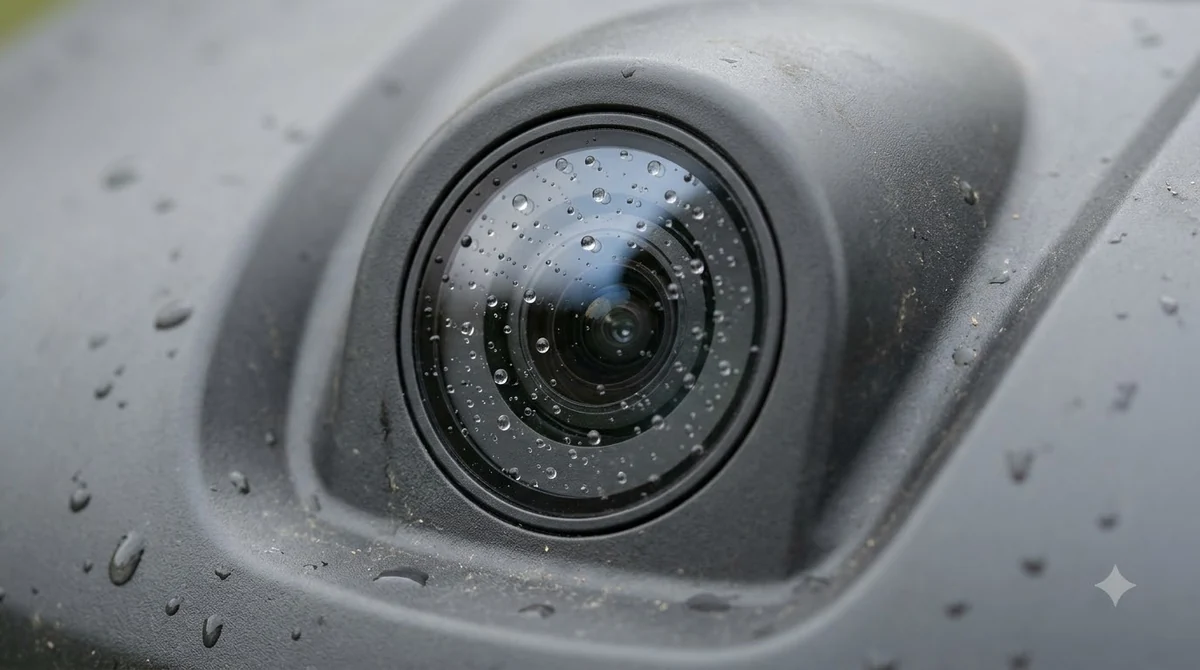
Is the Worx Landroid Vision worth it without a wire? That depends on the satellite and camera performance in your own yard. These are manufacturer descriptions. The pages do not cite independent tests of how the system handles shade, tree cover or tight corners, so treat the navigation claims as Worx’s own. Check how your yard’s trees and fences affect satellite signal before you assume the mower will map every area cleanly. Our walkthrough on how to set up Worx Landroid Vision shows what the first mapping run involves.
Heads up
The WR341E page says its vision system and V-SLAM help in shaded and complex areas. Neither page gives a coverage figure for shade, and RTK positioning generally works best with a clear view of the sky (our reading).
Lawn size and slope limits: where each model stops
The WR305E stops at 500 m2 and 30%, which the page gives as about 17 degrees. The WR341E stops at 1000 m2 and 84%, which the page gives as about 40 degrees, and it is the only one of the two that is 4WD. As a rough check, a 30% slope means a rise of 30 units for every 100 units of ground distance (our arithmetic), which is far gentler than 84%.
Our reading is that a 30% limit is enough for most flat or gently sloped yards, but a yard with a steep bank will need the WR341E or a yard without that bank. Measure the bank first, as our guide on how to measure yard slope explains. Also check the slope in wet weather, because a rated slope is a ceiling, not a guaranteed grip figure.
Whether the Worx Landroid Vision is worth it for a quarter-acre yard depends on the model: the WR305E is too small, while the WR341E’s rating covers it. Lawn size matters as much as slope. The WR305E’s 500 m2 rating is about 0.12 acre, so a yard of a quarter acre is already double its listed capacity. If your lawn sits near the limit, the WR341E’s 1000 m2 rating leaves more room, while the smaller model leaves no margin for odd-shaped beds or a generous lawn edge.
Cutting height, width and battery: what the listings give
Is the Worx Landroid Vision worth it for cutting quality? The listings cannot settle that, because they give ranges rather than results. Cutting height is the setting that decides how much grass comes off each pass. The WR305E goes from 30 to 60 mm and the WR341E from 20 to 70 mm, so the WR341E covers a lower and wider range. The WR341E also has a wider 22 cm cutting width against 18 cm on the WR305E, which means fewer passes on the same area (our arithmetic from the listed widths, not a measured result).
Battery figures are capacity only. Both pages list a 4 Ah Li-ion pack with an 80 minute charge time, and the WR341E in-box list gives it as a 20V 4.0 Ah battery. Neither page gives a runtime, so you cannot turn these numbers into mowing time per charge. Our guide to the Worx Landroid replacement battery covers fit and the warranty on a swap.
Warranty and what the pages leave out
Is the Worx Landroid Vision worth it with a warranty in mind? Only if the terms match your needs, and the WR341E page is the one that states them. The WR341E page lists a 2-year warranty, extended by one year if you register online within 30 days of purchase. The WR305E page links to a warranty statement but does not state its terms, so the length is unknown from the page we read.
Runtime, charge limits by temperature and the full warranty conditions are missing from both pages. Check the warranty statement for your model and the retailer’s return terms before you pay, since the listings do not settle these points.
Is the Worx Landroid Vision worth it for your lawn?
So is the Worx Landroid Vision worth it for you? Our reading is that the WR305E suits a small, mostly flat lawn with a 30% ceiling, where its simpler 2WD layout is enough. The WR341E suits a larger lawn or a steep bank, where its 4WD drive and 84% rating matter more than they would on a small, flat yard.

- Choose the WR305E if: your lawn is under about 500 m2 and no area rises above 30%.
- Choose the WR341E if: your lawn is up to 1000 m2 or has steep areas above 30%.
- Check first: your model number, the warranty statement, and the runtime from the manufacturer’s full spec sheet.
Before you decide, measure your lawn area and the steepest slope, then compare both against the table above. Keep the cutting deck and wheels clear of clippings as well, since a clogged wheel can reduce grip on a slope (our reading). If your yard is larger than 1000 m2 or steeper than 84%, neither model fits, and you should look at a different mower. To see how this family stacks up against another wire-free option, read Worx Landroid Vision vs eufy E18.

Frequently asked questions
Does the Worx Landroid Vision need a boundary wire?
No, according to the Worx pages we read. The WR305E breadcrumb reads “Robot mower without boundary wire,” and the WR341E page says no boundary wire or antennas are needed. These are manufacturer statements, so test the mapping on your own yard.
What is the slope limit on the Landroid Vision?
It depends on the model. The WR305E is rated to 30%, about 17 degrees, and the WR341E to 84%, about 40 degrees. Treat these as maximum ratings, and keep steep areas below the limit when the grass is wet.
How long does the Landroid Vision battery run?
Neither page we read lists a runtime. The WR305E lists a 4 Ah battery with an 80 minute charge time, and the WR341E lists a 20V 4.0 Ah battery. Check the full spec sheet for your model before you size it for your lawn.
Is the Worx Landroid Vision worth it for a small lawn?
Often yes, if the lawn is under 500 m2 and no area rises above 30%, because the WR305E is rated for that case. Choose by lawn size and slope. The WR305E suits lawns up to 500 m2 with slopes up to 30%. The WR341E covers lawns up to 1000 m2 and slopes up to 84% with 4WD. Confirm the exact model number on the box, because this article covers only the two models whose pages we read.
Sources
- Worx EU product page, WR305E (manufacturer): lawn size, slope, cutting height and width, battery, navigation and drive.
- Worx UK product page, WR341E (manufacturer): lawn size, 84% slope, cutting height and width, battery, navigation and 2-year warranty.
 Up next8 min readReviews & CompareWorx Landroid Vision Review: 5 Models, Specs and Worth ItUpdated Nov 12, 2026
 8 min readReviews & CompareWorx Landroid Vision vs Mammotion Luba 3 AWD: Published Specs ComparedUpdated Nov 14, 2026
 7 min readReviews & CompareWorx Landroid Vision vs eufy E18: Simple Spec ComparisonUpdated Nov 11, 2026
 8 min readReviews & CompareWorx Landroid Vision Cloud WR320.1 Review: Specs and Setup LimitsUpdated Nov 16, 2026
 8 min readReviews & Compareeufy E15 vs Worx Landroid Vision: Lawn Size, Slope and SpecsUpdated Nov 12, 2026
 9 min readReviews & CompareHusqvarna Automower 115H vs Worx Landroid Vision: SpecsUpdated Nov 11, 2026