
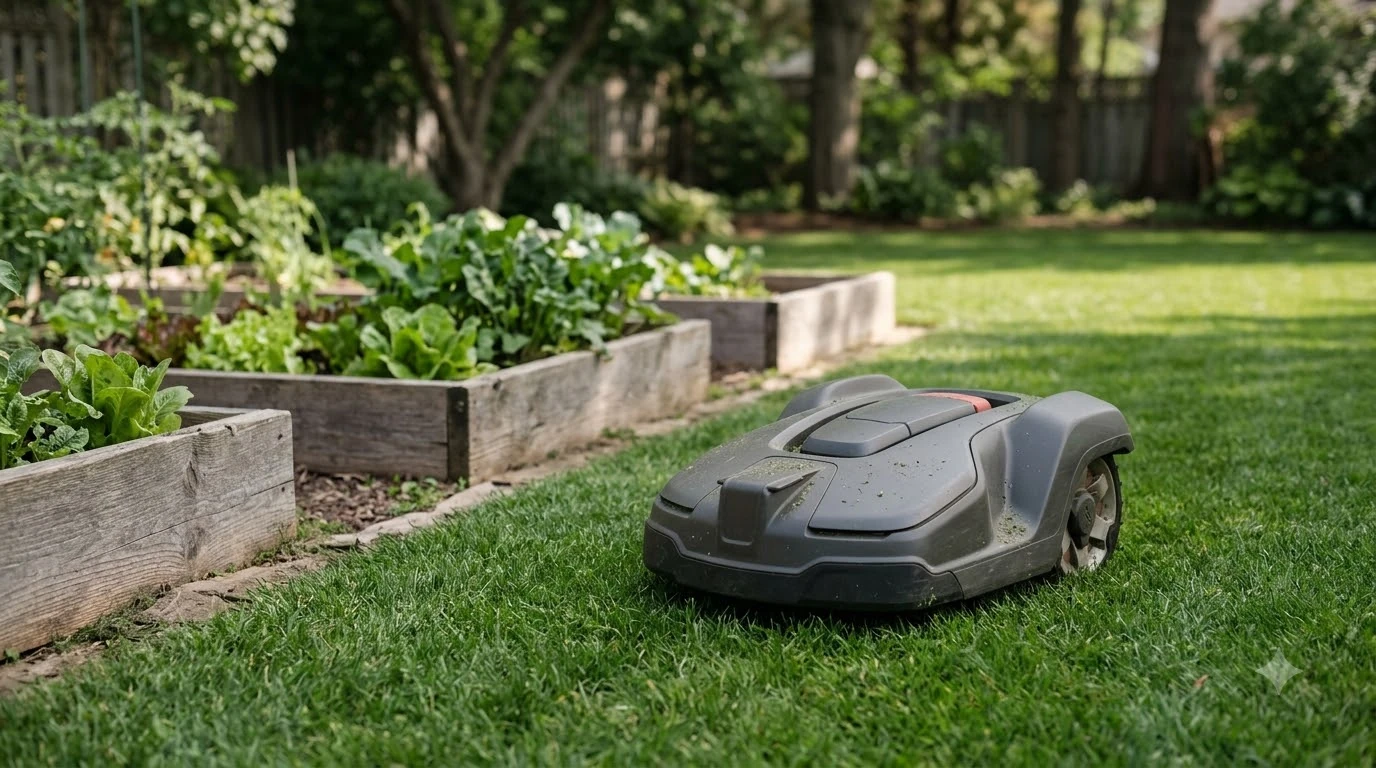

The future of robot lawn mowers is mostly about better positioning, connectivity and sensing, not new cutting blades. Most of the change so far is wire-free navigation, optional cellular links, and cameras that help the mower avoid obstacles.
The sources we read agree on the direction of the future of robot lawn mowers but not on timing or price. Check each feature against the specific model you plan to buy, since support for RTK, cellular and cameras varies widely.
The short answer
- Navigation: buried wire is being joined by satellite RTK and LiDAR options, and each has limits near trees and buildings.
- Connectivity: cellular links are spreading, but coverage depends on where your yard is.
- Sensors: cameras and rain sensors help, but they do not remove the need for hand trimming.
- Timing and prices: none of the sources we read gives a reliable forecast for 2027.
The future of robot lawn mowers: where the boundary is moving
Traditional robot mowers rely on buried or stapled wire, while newer models use satellite RTK or LiDAR to define the mowing area without it.
According to Husqvarna’s how-it-works page, traditional models use buried or stapled physical wire, while the EPOS RTK-GNSS virtual boundary is its wire-free option. The same page says a physical wire is kept as a fallback where satellite coverage is poor.
A university extension publication on autonomous mowers, UF/IFAS EP667, describes the same two approaches: a boundary wire or GPS/RTK defines the mowing area.
LiDAR is the other route, and our explainer on how LiDAR robot mowers work covers the basics. Dreame’s A1 Pro, as described in an independent Notebookcheck review, uses OmniSense 3D LiDAR with no cables, RTK or GPS. Accuracy claims for LiDAR mostly come from vendors, and the sources we read include no independent test data for them.
RTK has its own limit. Ecovacs, a robot mower maker, acknowledges that RTK struggles under dense trees and buildings, so a heavily shaded yard may not suit an RTK-only model.
| Approach | How it defines the area | Limit noted in the sources |
|---|---|---|
| Buried or stapled wire | A physical loop around the lawn | Installation work and cable repairs |
| RTK-GNSS virtual boundary | Satellite positioning, no buried wire | Weak under dense trees and buildings; physical wire may be a fallback |
| LiDAR with camera | Onboard 3D sensing of surroundings | Accuracy claims mostly from vendors; no independent test data in the sources read |
For the future of robot lawn mowers, our reading is that the right option depends on your yard more than on the label. Check which system your model uses before you plan the installation, and see our comparison of RTK vs LiDAR vs vision robot mowers for the trade-offs.

Connectivity: cellular links and remote control
Husqvarna says its cellular connection works in most locations, but some areas, particularly remote rural ones, may lack coverage.
Husqvarna’s cellular support article warns that a phone’s signal is not a reliable guide, because the mower uses a different cellular network. The advice is to test at the install location before you rely on remote control.
Cellular is usually an add-on rather than a requirement, and it is one part of the future of robot lawn mowers rather than the whole picture. Mammotion describes its 4G service as an optional upgrade, and says Wi-Fi or Bluetooth still work without it. Its service terms list 60 minutes of FPV yard monitoring each month, with Wi-Fi recommended for unlimited use. Free data periods and renewal terms differ by brand, so check the current terms as of November 2026. Our cellular vs Wi-Fi robot mower comparison explains when each link makes sense.
Cameras and rain sensors: what they handle
According to UGA Extension, onboard cameras let a robotic mower avoid wildlife, pets and most toys.
The UGA article describes this as a feature and gives no test results, so read it as what the camera is for rather than how well it performs. Worx’s rain delay guide says its rain sensor sends the mower back to the charging base when moisture is detected, and that irrigation can trigger the sensor.
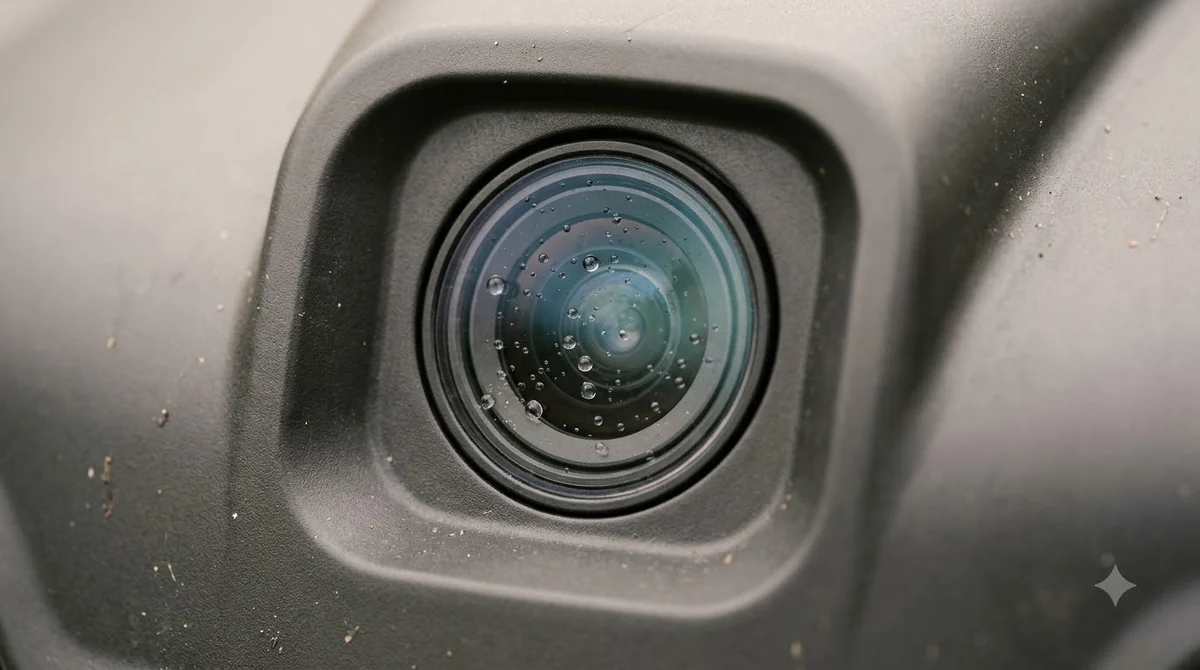
Docking problems are often mechanical. Worx’s error guide for the Landroid Vision links repeated docking to dirty or misaligned charging poles, and recommends cleaning them and re-docking.
Our reading is that sensor problems often come down to basic upkeep. Clean the charging contacts and check alignment before you assume the software is at fault.
Lawn health: why frequent light cutting matters
Robot mowers remove very little leaf tissue per pass, which UGA Extension says reduces stress on the plant.
Clint Waltz, a UGA Cooperative Extension turfgrass specialist, makes the point in an interview published by UGA Today. He says, “Because the mower takes off very little leaf tissue every time, there’s less stress on the plant,” and adds, “Our research has shown improved rooting and improved density of the canopy.” The article does not give a mowing schedule, so timing still depends on your grass type.
The UF/IFAS publication EP667 adds a limit. It says autonomous mowers are designed mostly for cool-season grasses and are typically run at heights below 2.5 inches. It also reports that autonomous mowers reduce overall weed coverage compared with rotary mowers, citing a 2016 study.
Detail work and what robots still leave for you
Robot mowers still leave trimming and edging to hand tools, according to UGA Extension.
UGA notes that robotic mower owners still need to do detail work, such as trimming and edging by hand around garden beds, shrubs and trees. The same article says the mowers can keep working in light rain, but it does not address heavier rain.
In the future of robot lawn mowers, industry articles discuss edge-trimming add-ons as a next step. We did not read a source that confirms their availability or timing, so treat them as a possibility rather than a feature to plan around.
Cost and adoption: what the evidence does not show
None of the sources we read gives a reliable price or adoption figure for robot lawn mowers in 2027.
The UGA article does not discuss cost or future adoption. Its only historical remark is that robot mowers were introduced in Europe a couple of decades ago at the residential level. Several forecasts come from companies that sell robot mowers, and some predict specific future prices. We did not verify those figures, so we do not repeat them here.
Prices change often. Check current pricing as of November 2026 before comparing models, and treat any forecast of how the future of robot lawn mowers will be priced as a prediction rather than a fact.
What to check before you buy into the trend
The future of robot lawn mowers is still arriving, so buy the features you can use now: match navigation, connectivity and upkeep to your yard, not to features still in development.
- Positioning. Confirm whether the model uses wire, RTK or LiDAR, and what the manual says about trees and buildings.
- Connectivity. Check whether cellular is included, how long free data lasts, and what renewal costs in your area.
- Base and wire requirements. Learn what an RTK base station is, then note whether an RTK reference station or a backup wire is needed for your yard.
- Sensors. Look for a rain sensor and camera, then plan how you will keep the charging contacts clean.
- Grass and height range. Match the mower’s cutting height range to your grass type.
- Updates and support. Ask how firmware updates are delivered and how the maker supports the model after the warranty.
Our reading is that the smarter buy in the future of robot lawn mowers is a model that solves your yard’s specific problem, such as shade or slopes, rather than one that promises the most future features.
Frequently asked questions
Will robot lawn mowers stop needing boundary wires?
Not for every model. Husqvarna describes an RTK-GNSS virtual boundary as its wire-free option, and says physical wire remains a fallback where satellite coverage is poor. Whether a wire is needed depends on the model and the yard, so check the manual before you buy.
Is LiDAR better than RTK?
Neither is better in every yard. Ecovacs acknowledges that RTK struggles under dense trees and buildings, while LiDAR accuracy claims from vendors lack independent test data in the sources we read. Compare the spec sheet with your yard layout.
Do robot lawn mowers work in the rain?
UGA Extension says robotic mowers can keep working in light rain, but the article does not address heavy rain. Some models include rain sensors, such as Worx’s, which send the mower back to its base when moisture is detected.
Will robot mowers replace all hand trimming?
No. UGA Extension says owners still need to trim and edge by hand around garden beds, shrubs and trees. Edge-trimming add-ons are discussed in the industry, but we did not verify their availability or timing.
Sources
- Extension specialist discusses advantages of robotic mowers (UGA Today, University of Georgia): cutting frequency, light rain, cameras and detail work.
- How Automower works (Husqvarna): wire and RTK-GNSS virtual boundary options.
- Does Automower cellular connectivity work everywhere? (Husqvarna support): cellular coverage limits.
- Mammotion 4G Service Terms (Mammotion): monthly FPV monitoring allowance.
- LiDAR vs RTK robot lawn mowers (Ecovacs): RTK limits under trees and buildings.
- Dreame A1 Pro review (Notebookcheck): OmniSense LiDAR with no cables.
- Rain delay and sensor (Worx support wiki): rain sensor behavior.
- EP667, autonomous mowers (UF/IFAS Extension): positioning, cool-season grass, weed coverage.
 Up next9 min readLearnRobot Mower Trends 2027: What the Evidence ShowsUpdated Nov 11, 2026
 8 min readLearnAre Robot Mowers Expensive to Repair? What to ExpectUpdated Nov 11, 2026
 7 min readLearnHow long does the Ecovacs GOAT O1000 battery last?Updated Nov 11, 2026
 7 min readLearnWhat Is Mowing Efficiency on a Robot Mower?Updated Nov 11, 2026
 10 min readLearnCan a Robot Mower Charger Run on a Generator?Updated Nov 11, 2026
 9 min readLearnHow to Set Up Channels Between Lawn Zones on a Robot MowerUpdated Nov 11, 2026