

Single blade vs dual blade robot mower is a choice about cut quality and upkeep, and the sources we read name no clear overall winner. The term is used loosely, so check whether a model has two blades on its deck or two cutting edges on each replacement blade. The sources below separate those two ideas and show what they do and do not say.
The short answer
- Two different meanings: A dual blade deck has two blades. Husqvarna’s robot blades instead list two or four cutting edges on each blade, which is a separate question.
- Cut quality: Dual blade designs are described as leaving finer clippings, but none of the sources gives a measured comparison.
- Tall and wet grass: Yarbo’s dual blade robot gives partial mulching support in grass above 6 inches, a vendor claim.
- Upkeep: Two blades mean more sharpening and higher replacement cost, according to the sources that address it.
- Our reading: Choose a single blade vs dual blade robot mower by lawn condition and how much upkeep you accept, then confirm blade count and edge count in the model’s manual.
What single blade and dual blade mean on a robot mower
On a robot mower, “single blade” and “dual blade” are not standard terms, so the product page decides what a single blade vs dual blade robot mower really is. Yarbo describes its robot deck as having “dual 20-inch blades,” which means two blades working side by side. Husqvarna’s blade pages count something else: the cutting edges on each replacement blade, which they list as two or four.
General-mower sites use the same words for a different design, a stacked two-blade deck on a single spindle. SlashGear describes stacked blades as cutting grass “twice over,” but that is a push or ride-on claim, not a robot one. Read the model’s own specification before you compare any single blade vs dual blade robot mower on a shortlist.
How cut quality and clipping size compare
Dual blade designs are claimed to leave finer clippings, but the sources we read give no measured clipping size for either design. Mowrator and SlashGear both say two blades produce a finer, more even cut, yet neither article gives a clipping length, a test method or a sample size. For robot mowers, Yarbo’s own material is the only robot-specific source we found, and it credits its fine-cut result to “powerful suction and recirculation technology” rather than to blade count.
Clemson HGIC’s mowing guide describes mulching in general terms: mulching mowers “cut leaf blades into very small pieces that are able to fall into the lawn.” Its advice is to “return or recycle grass clippings to the lawn.” That frames fine clippings as a feature of mulching (how mulching robot mowers work) rather than of any one blade layout. Our reading is that a finer cut is a reasonable expectation from either design, but the sources do not show that a dual blade deck beats a single blade deck on it. For anyone weighing a single blade vs dual blade robot mower, that gap is the main unknown.
How tall, wet and thick grass changes the picture
Yarbo says its robot gives “partial mulching support” in grass above 15 cm, or about 6 inches. That is a vendor limit, not an independent result, and it tells you where the mulching claim stops. Mowrator says dual blades handle damp grass better because each blade passes over the grass at least twice. SlashGear says dual blades reduce clumping in thick lawns. Both articles are about general mowers, so they say little about a single blade vs dual blade robot mower on wet grass, and neither reports a test.
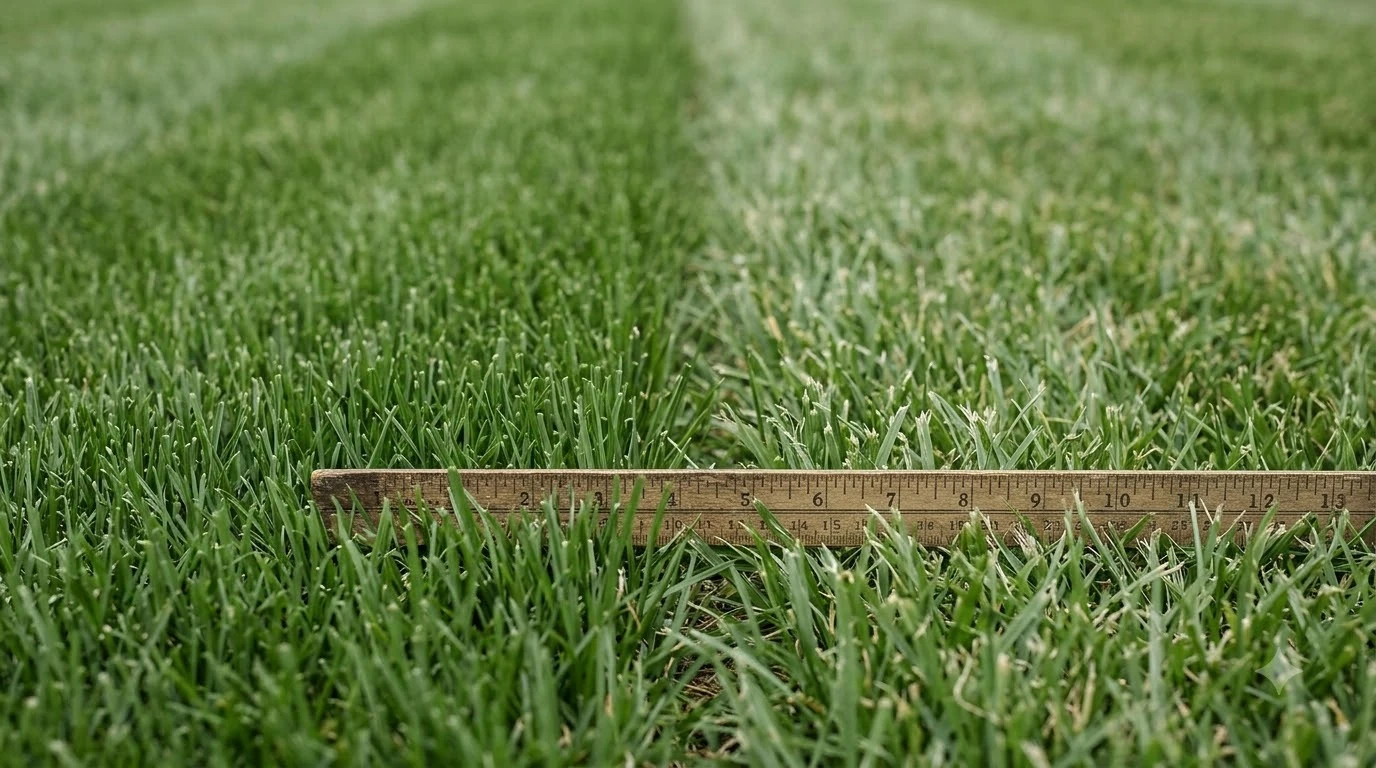
Clemson HGIC gives a rule that matters for any blade layout: “remove no more than one-third of the grass height at any one mowing.” Cutting more than that in one pass puts strain on any blade design, so your mowing schedule matters as much as the blade choice, and the one-third rule for mowing is easy to apply. Our reading is that a single blade vs dual blade robot mower on a schedule that keeps the grass short will depend less on blade layout for tall-grass performance.
Heads up
Mowrator and SlashGear are general-mower and retail sites, and their dual blade claims are not independent tests. Mowrator’s article also gives two different answers on bagging, so we do not rely on it for that point.
Cutting edges by blade line
Husqvarna’s robot blade pages list two cutting edges for its Classic and Enhance HSS blades and four for its Endurance blades. The table sets out what each page states, and the hardness figures come straight from the specification tables.
| Husqvarna blade line | Cutting edges | Edge hardness | What the page states |
|---|---|---|---|
| Classic blades | 2 | 58 HRC | Sold in 9, 45 and 300 piece sets, with a long list of robot models |
| Enhance HSS blades | 2 | 63 HRC | Two-edge design recommended for systematic cutting or where the skid plate is removed |
| Endurance blades | 4 | 61 HRC | Claims more than twice the lifetime of Long Life Safety Blades |
The pages list which models each blade fits but do not say how many blades a mower carries; third-party universal replacement blades are a separate topic. An edge count therefore describes the replacement blade, not whether the mower is single or dual bladed. That deck layout is what a buyer needs to know when weighing a single blade vs dual blade robot mower. The Endurance lifetime comparison is Husqvarna’s own claim against its earlier safety blade, so treat it as a manufacturer figure. For the full fit list, see the Husqvarna Classic blades page.
Upkeep for a single blade vs dual blade robot mower
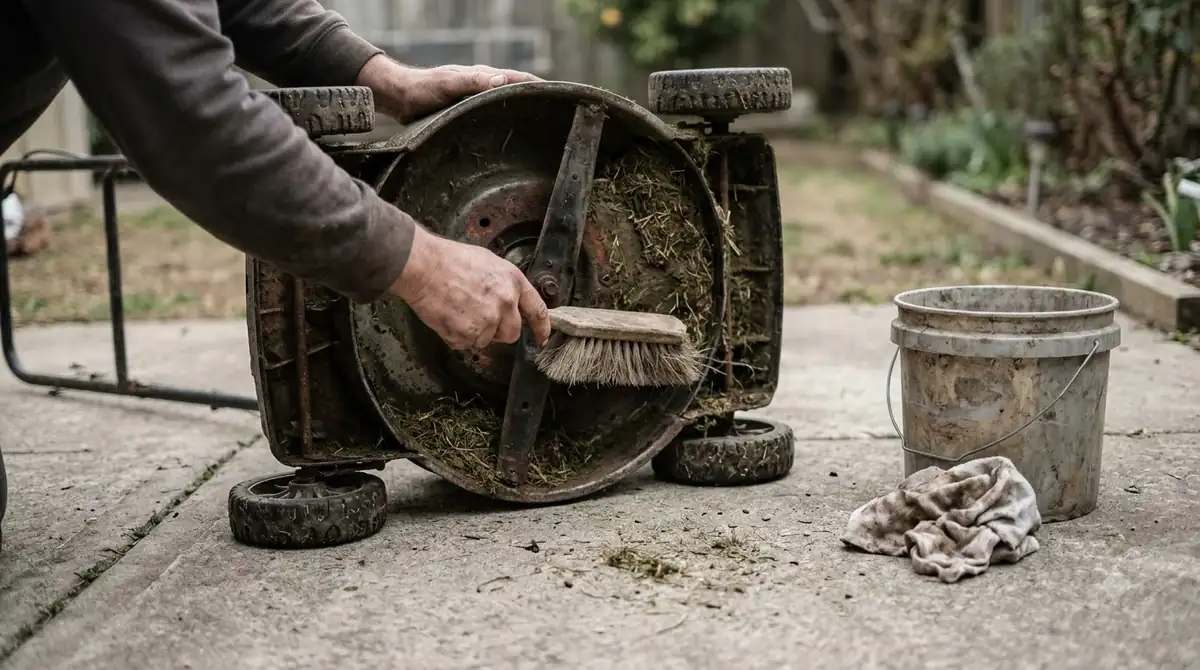
Yarbo lists sharpening at every 25 to 30 hours of mowing for its dual blade deck, and Clemson HGIC says a dull blade matters on rotary mowers as much as on reel mowers. A dull blade, according to Clemson, “will cause the leaf blade to turn brown at the point of impact and will give the lawn a general brown cast.”

SlashGear says sharpening takes longer on dual blades and that replacement blades cost roughly double, or a bit more, than a single blade. Those are general-mower claims with no price given, so they are a direction rather than a number. Yarbo’s blog is also inconsistent on replacement, saying blades should be replaced “every 6 months recommended” in one section and “seasonally” in another. For a single blade vs dual blade robot mower, use the replacement interval in your model’s manual rather than a blog line, and see our guide to robot mower blade replacement for the general routine.
Speed, run time and weight
The sources give no robot-specific speed or weight figures for either design. Yarbo states “up to 210 minutes of operation” per charge, but that is a figure for one product, not a result of its blade layout, so it cannot rank the two designs. Mowrator says single blade mowers have a “slightly faster rotation speed” because one blade gets all the power, while dual blades share it and spin slightly slower. SlashGear says dual blade mowers are often heavier, which can affect maneuverability. None of these is a robot-specific figure for a single blade vs dual blade robot mower, and all three come from general-mower claims with no measurements.
Who should pick a single blade vs dual blade robot mower and what to check
Dual blade decks suit owners who want a finer cut and better handling of damp or thick grass, while single blade designs suit owners who want lower cost and less upkeep. Those are the trade-offs the sources describe for a single blade vs dual blade robot mower, even though they lack measurements. Mowrator says single blade mowers suit small or moderate lawns mowed once or twice a week, which is general mower advice and not verified for robots.
Before you buy, check these points in the model’s own specification sheet:
- The number of blades on the cutting deck, and whether the manual calls the layout single or dual.
- The cutting edges on each replacement blade, and the blade sets sold for that model.
- The sharpening and replacement intervals, in hours or months.
- Any mulching or fine-cut claim, and the grass height limit printed beside it.
- The rated lawn size and slope, which in our reading often decide fit more than the blade layout does (see how to read a robot mower spec sheet).
Frequently asked questions
Is a dual blade robot mower better than a single blade model?
No source we read shows that either design is better overall. Yarbo claims partial mulching support in grass above 6 inches, and general-mower sites claim finer clippings for two blades. None of these claims for a single blade vs dual blade robot mower comes with a measured result, so a single blade vs dual blade robot mower choice depends on your lawn and your upkeep tolerance.
How many cutting edges does a Husqvarna robot blade have?
Husqvarna’s Classic and Enhance HSS blades have two cutting edges, and its Endurance blades have four, according to the product specification tables. The pages do not say how many blades a given mower carries, so check the manual for your model before comparing a single blade vs dual blade robot mower with another.
How often should robot mower blades be sharpened?
Yarbo says its dual blade deck should be sharpened every 25 to 30 hours of mowing. Clemson HGIC says sharpness matters on rotary mowers but does not give an interval. Follow the sharpening interval in the manual for your single blade vs dual blade robot mower, since vendor blogs can disagree.
Does a dull blade hurt the lawn?
Yes, according to Clemson HGIC. A dull blade turns the leaf tips brown at the point of impact and gives the lawn a general brown cast. Keeping the blade sharp is the simplest way to avoid that effect, whichever layout a single blade vs dual blade robot mower uses.
Sources
- Mowing lawns (Clemson HGIC, university extension): one-third rule, sharp blades, dull blade effect, mulching and clipping recycling.
- Mulching blades vs standard blades (Yarbo, manufacturer): dual 20-inch blades, partial mulching limit, fine-cut system, sharpening and replacement claims.
- Automower Classic blades (Husqvarna, manufacturer): two cutting edges, 58 HRC, pack sizes, fit list.
- Automower Enhance HSS blades (Husqvarna, manufacturer): two cutting edges, 63 HRC, two-edge design note.
- Automower Endurance blades (Husqvarna, manufacturer): four cutting edges, 61 HRC, lifetime claim.
- Dual vs single blade lawn mower (SlashGear, general-mower article): cut quality, sharpening and replacement cost claims.
- Dual blade vs single blade (Mowrator, general-mower article): rotation speed, wet grass and lawn size claims.
 Up next7 min readReviews & CompareDreame vs Mammotion Robot Mower: What the Published Specs ShowUpdated Nov 11, 2026
 7 min readReviews & CompareBest Alternative to Worx Landroid: What the Published Specs ShowUpdated Nov 11, 2026
 7 min readReviews & CompareMammotion vs Husqvarna Robot Mower: What the Specs ShowUpdated Nov 11, 2026
 9 min readReviews & CompareGardena vs Husqvarna Robot Mower: What the Spec Sheets ShowUpdated Nov 11, 2026
 8 min readReviews & CompareChinese Robot Mower Brands vs Husqvarna: What the Specs ShowUpdated Nov 11, 2026
 8 min readReviews & CompareWorx Landroid vs Husqvarna Robot Mower: What the Specs ShowUpdated Nov 11, 2026