
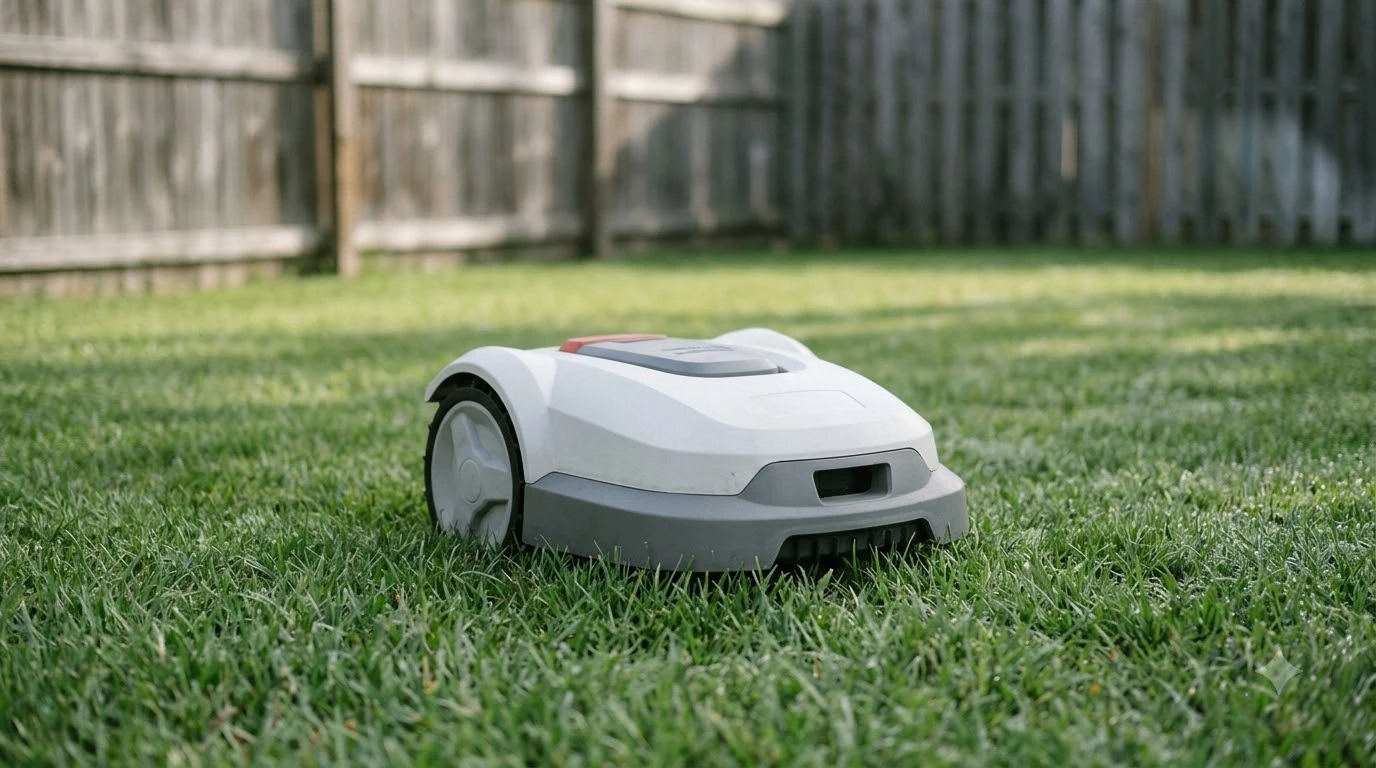

Toro Turf Pro 500S vs Husqvarna Automower 435X AWD: the two are built for different yards. The Toro is rated for a working area up to 18.5 acres and navigates with RTK GPS, which the brand says needs no boundary wire. The Husqvarna is rated for lawns up to 0.9 acre and uses a physical boundary wire. This comparison uses only the specs each brand publishes on its US product page, as of November 2026.
The short answer
- Size: Toro rates the 500S at 18.5 acres maximum (13.6 acres recommended). Husqvarna rates the 435X AWD at 0.9 acre, with a ±20% tolerance.
- Slope: Toro lists 30% (17 degrees). Husqvarna lists 50% at the boundary and 70% inside the installation area.
- Setup: Toro uses RTK GPS with no boundary wire, and sells its station loop wire separately. Husqvarna uses a physical boundary wire.
- Noise and runtime: Toro lists 52 dB at most and 110 minutes average run time. Husqvarna lists 60 dB(A) perceived and 145 minutes typical mow time.
Toro Turf Pro 500S vs Husqvarna Automower 435X AWD: quick verdict
In this toro turf pro 500s vs husqvarna automower 435x awd comparison, the Turf Pro 500S is the larger machine with the satellite-based setup. The Automower 435X AWD is the smaller lawn option with a wire boundary. Neither page names a winner, and the right pick depends on lawn size, sky view and how much installation work you want to do.
| Spec (as published) | Toro Turf Pro 500S | Husqvarna Automower 435X AWD |
|---|---|---|
| Rated working area | 18.5 acres max; 13.6 acres recommended | 0.9 acre (±20%) |
| Max slope | 30% (17 degrees) | 50% at boundary; 70% inside installation |
| Cutting height | 0.75 to 3.9 in (standard disc) | 1.2 to 2.8 in (approximate) |
| Navigation | RTK GPS, no boundary wire stated | Physical wire boundary, AWD |
| Noise | 52 dB (maximum) | 60 dB(A) (perceived) |
| Weather rating | Not stated | IPX4 |
| Warranty length | Not stated | Not stated |
Lawn size: the rated areas are not the same kind of number
Toro rates the Turf Pro 500S at 18.5 acres as a maximum working area, and at 13.6 acres as the recommended area. Husqvarna rates the 435X AWD at 0.9 acre, labeled as “Lawn Size ±20%”. The gap between the two is large, and it reflects two different product classes rather than a small difference in capacity.
Our reading is that you should size on the recommended figure, not the maximum. For the Husqvarna, the ±20% tolerance means a 0.9 acre rating can stretch in either direction, so a yard near the edge of that range deserves a closer look. Subtract beds, patios and other non-grass space from the total before you compare your lawn with either number.
Slope: 30% against 50% and 70%
In the toro turf pro 500s vs husqvarna automower 435x awd slope figures, the Toro lists a maximum slope of 30%, which the page also gives as 17 degrees. Our guide to robot mower slope ratings in percent and degrees explains how to read both. The Husqvarna lists 50% at the boundary and 70% inside the installation area. The two numbers are not measured at the same point, so a direct comparison needs care.
The Husqvarna figure at the boundary is the one that limits where the wire can run. The 70% figure describes the inside of the installation area. A yard with a steep edge near a fence may be limited by the lower boundary figure, not the higher interior one. Our reading is that you should map the steepest part of the lawn before you choose either model.
Navigation: RTK GPS against a physical boundary wire
Navigation is the biggest setup difference in Toro Turf Pro 500S vs Husqvarna Automower 435X AWD. The Toro Turf Pro 500S uses RTK GPS (GNSS-RTK) navigation, which our explainer on how an RTK robot mower works covers. The product page says the system requires no boundary wires, and it describes the mower as self-charging, returning to its station. The station loop wire is sold as a separate accessory, so the wire is not gone from the setup entirely.
RTK depends on a base station that receives satellite signals in an open area. The Mammotion blog describes placing the reference station where there are no major obstructions, and the mower’s map is built by driving the lawn edge with the app. Two vendor sources note that trees block, weaken and reflect satellite signals, and that the first fix can take 3 to 5 minutes. Those points are vendor descriptions rather than independent tests, so they are worth checking against your own yard.
The Husqvarna 435X AWD uses a physical boundary wire. The wire-based setup has its own trade-offs. The Robomow blog says the wire can be buried up to 20 cm deep, and that the return section must run parallel without crossing, with a gap of no more than 10 cm. A break can be hard to locate once the wire is underground, and a single fault can stop a wired mower completely, according to a Mammotion vendor article. For the trade-offs between the two approaches, see our wired vs wireless robot mower comparison and boundary wire vs RTK installation time.
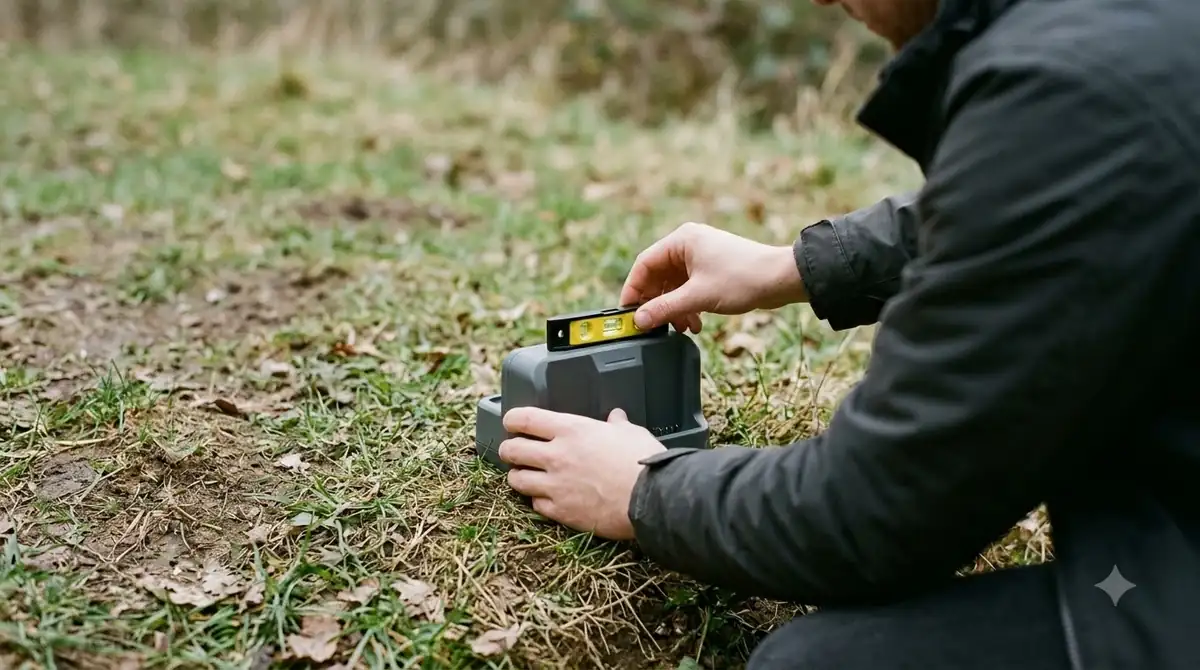
- Toro, RTK: the page says no boundary wire is required; the vendor sources above say the base station needs an open view of the sky.
- Husqvarna, wire: needs a complete loop installed, with burial or staking planned in advance.
Cutting width and height range
The Toro lists a 40.7 inch (103.3 cm) mowing and picking width. The Husqvarna lists a cutting width of 8.7 inches (22 cm) from its three pivoting razor blades. These figures measure different things for each brand, so they should not be read as a like-for-like cutter size.
On height, the Toro covers 0.75 to 3.9 inches with the standard disc and 0.60 to 3.5 inches with the low-height disc. The Husqvarna covers 1.2 to 2.8 inches, which the page describes as approximate, with electric adjustment. If you keep a taller warm-season lawn, the Toro’s upper range is the wider of the two, but check the height your grass species needs before you decide.
Noise, runtime and charging
Toro lists its noise as 52 dB at maximum. Husqvarna lists 60 dB(A) as the sound level perceived. Those are not the same measurement basis, so the two numbers cannot be ranked directly.
On runtime, the Toro page gives a 110 minute average run time and a 90 minute average charge time, with a 19.2 Ah battery at 25.6 V. The Husqvarna page gives a typical mow time of 145 minutes on one charge and a typical charging time of 45 minutes, with a maximum active time of 24 hours listed separately. Longer runtime helps a large lawn, while a shorter charge time matters if you run the mower often.
Connectivity and theft features
Both brands publish app features. The Toro page lists start and stop from anywhere, alerts, customizable working perimeters and no-go zones, cutting height settings and a PIN code. The Husqvarna page lists the Automower Connect app, Bluetooth and cellular connectivity, Amazon Alexa and Google Home integration, GPS theft tracking, a geofence and an alarm.
Neither page states a warranty duration in the text we read. The Husqvarna page refers to defects in material and workmanship during the warranty period without giving a length, and the Toro page refers buyers to customer service and the dealer.
Toro Turf Pro 500S vs Husqvarna Automower 435X AWD: who each suits (our reading)
Our reading is that the Turf Pro 500S suits a large, open lawn where the base station can see the sky, and where a buyer wants to avoid a boundary wire. The Automower 435X AWD suits a smaller lawn, up to about 0.9 acre, where a buried wire loop is practical and the 50% boundary and 70% interior slope figures match the terrain.
Before you settle toro turf pro 500s vs husqvarna automower 435x awd, check the sky view at the base station site, measure the steepest slope against the boundary figure, and confirm the warranty terms with the seller in your market. If you are still narrowing the field, our guide to the best Husqvarna Automower model to buy compares the wider Husqvarna range.
Frequently asked questions
Does the Toro Turf Pro 500S need a boundary wire?
The Toro product page says its RTK GPS navigation requires no boundary wires. The station loop wire is sold separately as an accessory.
How steep a slope can the Husqvarna Automower 435X AWD handle?
The page lists 50% at the boundary and 70% inside the installation area. The boundary figure is the lower one, so it is the one to check first on a steep yard edge.
Toro Turf Pro 500S vs Husqvarna Automower 435X AWD: which is quieter on the published specs?
Toro lists 52 dB at most. Husqvarna lists 60 dB(A) as perceived sound. The measurement bases differ, so the numbers are not a strict ranking.
Do the pages state how long the warranty lasts?
No. Neither page gives a warranty duration in the text we read. Confirm the terms with the seller or dealer in your market before you buy.
Sources
- Toro Turf Pro 500S product page (model 30922US) (Toro): specs, RTK navigation, noise, runtime and app features.
- Husqvarna Automower 435X AWD product page (US) (Husqvarna): cutting width, lawn size, slope, wire boundary, noise, runtime and connectivity.
- Boundary wire vs grass sensors for robotic mowers (Robomow): wire burial depth, return gap and repair notes.
- Boundary wires vs no-wire robot mowers (Mammotion): RTK base station placement, mapping by edge driving and wire fault behavior.
- RTK robot mower signal loss near trees (Mowrator): how tree cover affects satellite signals.
- What is RTK technology (Sunseeker): RTK first-fix time.
 Up next8 min readReviews & CompareHusqvarna Automower 435X AWD Review: Specs, Slope and Who It SuitsUpdated Nov 16, 2026
 9 min readReviews & CompareIs the Toro Turf Pro 200 Robot Mower Worth It?Updated Nov 12, 2026
 8 min readReviews & CompareDreame A1 Pro vs Mammotion LUBA 3 AWD: Listed Specs ComparedUpdated Nov 13, 2026
 9 min readReviews & CompareDreame A3 AWD Pro vs Navimow X430: Specs ComparedUpdated Nov 12, 2026
 8 min readReviews & CompareHusqvarna Automower Alternatives: Navimow, Mammotion and ECOVACS GOAT ComparedUpdated Nov 16, 2026
 7 min readReviews & CompareHusqvarna Automower Alternatives: Cheaper Options ComparedUpdated Nov 11, 2026