
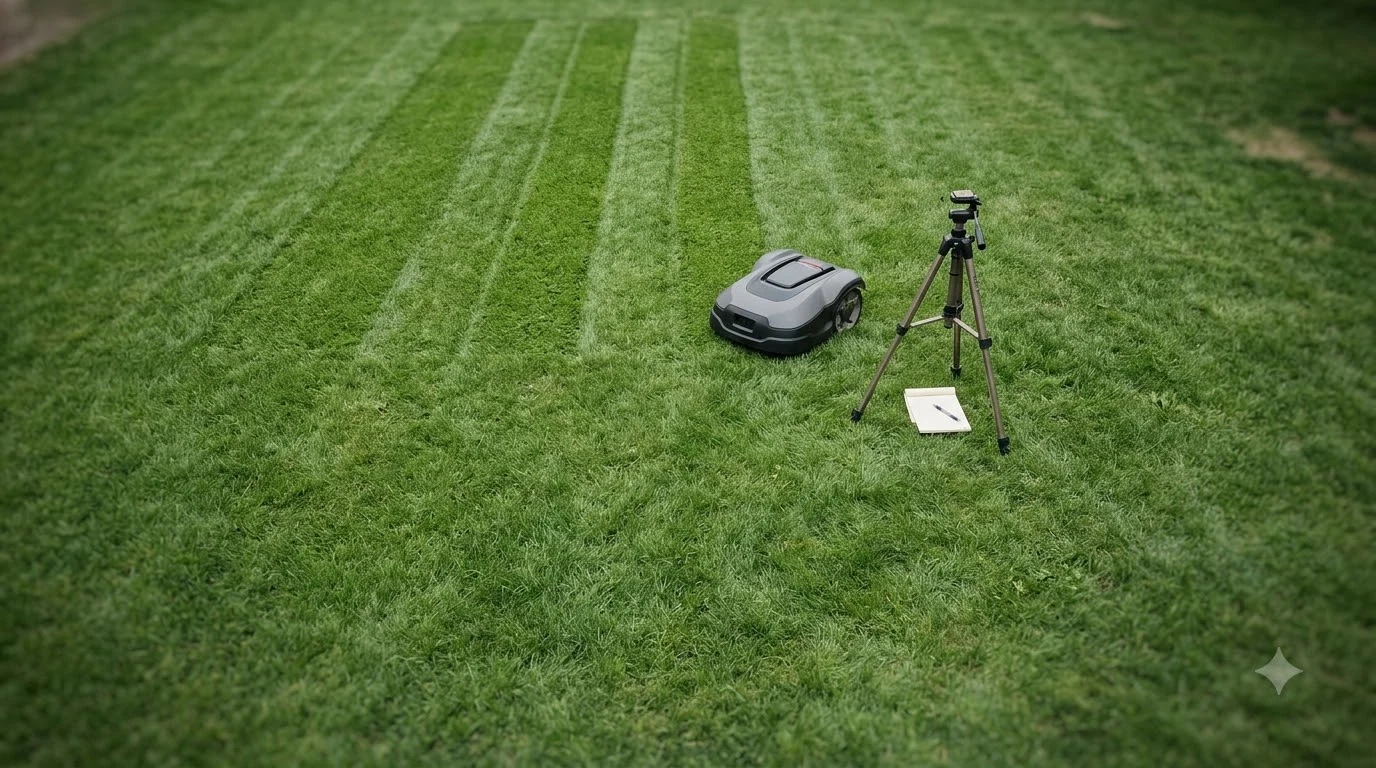

When to first mow new grass seed is when the blades reach about 3 inches and the seedlings have germinated evenly. Ohio State University says this often comes 4 to 6 weeks after seeding, but height matters more than the calendar. Cut only one-third of the blade on that first pass.
The short answer
- Height first: knowing when to first mow new grass seed means waiting until the grass is about 3 inches tall and fairly even.
- Timing: often 4 to 6 weeks after seeding, and sometimes up to 2 months.
- First cut: remove no more than one-third of the height, with a sharp blade set high.
- Too tall: at 4 inches or more, raise the blade as high as possible and mow promptly.
When to first mow new grass seed, by height
Knowing when to first mow new grass seed starts with height. Mow new seed once it is about 3 inches tall. Iowa State University Extension gives that 3-inch figure in its guidance on newly seeded lawns, and it treats height as the signal rather than a date. Ohio State University describes a ready lawn as near 3 to 4 inches tall with good density, which lines up with the same idea.
Height works better than a calendar because the calendar cannot see what is happening in the soil. Seed that sprouts slowly in cool or dry weather takes longer to reach mowing height than seed in a well-watered, sunny spot. Checking the grass tells you which situation you are in.
Before the first pass, look for three signs that the lawn is ready:
- The seedlings are spread evenly, with few bare patches.
- The blades stand upright and the grass is close to 3 inches tall.
- All or nearly all of the seeds have sprouted, so new shoots are no longer emerging.
If the grass is still short and thin, wait. The date on the calendar does not change what the plants need to establish.
Why height beats the calendar
Seeded lawns do not follow one schedule. UC IPM says a seeded lawn may take up to 2 months before it is ready to mow, and it advises waiting until all of the seeds have germinated before the first mow. For that reason, when to first mow new grass seed varies from one lawn to the next.
Weather and watering explain much of that variation, and they shape when to first mow new grass seed more than any calendar rule. Ohio State says that highly managed, irrigated turf may be ready sooner, while drought may push the date later.
Iowa State gives no week count at all, which is useful for when to first mow new grass seed. It makes the case that the grass height should guide the decision. Our reading is that the 4 to 6 week figure from Ohio State is a helpful check on the timing, but if the grass is still short, the lawn is not ready regardless of the date.
The one-third rule and the first cut
Deciding when to first mow new grass seed is only half the job. On the first mow, follow the one-third rule for mowing grass and remove no more than one-third of the grass height. Ohio State University explains that this rule protects the leaves, which the plant uses to store energy, so a heavy first cut weakens the young turf.
The sources describe the starting point in different ways. Compare them side by side:
| Source | When to mow | First cut | Notes |
|---|---|---|---|
| Iowa State University Extension | Grass about 3 inches tall | Mower set to 2 to 2.5 inches | Use a sharp blade |
| Ohio State University | Grass near 3 to 4 inches | Remove only one-third of the height | Mowing is timed to height, not the calendar |
| UC IPM | About 1.5 times the recommended height | Cut only one-third of the blade | Mow again a few days later to reach the recommended height |
Read together, the three sources agree on the limit and differ on the starting point. In practice, when to first mow new grass seed for a 3-inch finish means waiting until the lawn is about 4 inches before the first cut. Ohio State’s guide gives this exact example: mow when the grass is at 4 inches to get a 3-inch cut. Ohio State’s turfgrass mowing guide explains the reasoning in detail.
A second, lighter pass a few days later helps finish the job. UC IPM says you can let the grass reach the high end of the recommended range, or even a little higher, but you still cut off only one-third at a time. Then you mow again to bring the lawn to its recommended height.
Mower setup and clippings on the first cut
Set the mower high, sharpen the blade, and wait for dry ground. These three steps prevent most of the damage a first mow can cause to young turf. Good timing for when to first mow new grass seed only helps if the cut itself is right.
- Wait for germination. Make sure all or nearly all seeds have sprouted before the first pass.
- Check the height. Look for about 3 inches of even growth, not a few tall tufts.
- Wait for dry ground. Wet soil can cause ruts, and a lawn that is not fairly dry can lose new plants when mowed.
- Set the mower high and sharpen the blade. Iowa State advises a sharp blade and a setting of 2 to 2.5 inches for the first cut.
Clippings deserve a plan too once you know when to first mow new grass seed. Ohio State advises that if clippings pile up after the first mow, you can run over them when they are dry with the blade running, or rake them into the compost bin. Our reading is that raking is the safer choice when the clippings are heavy, since a thick layer sitting on young grass is hard to read as healthy growth.
What to do when new grass grows too tall
Missing the window for when to first mow new grass seed is easy to do. If new grass reaches 4 inches or more, raise the blade as high as possible, mow promptly, and lower the height gradually over later mowings. Iowa State University Extension gives this advice for grass that has run ahead of schedule.
- Raise the blade. Set the mower to its highest position for the first pass.
- Mow promptly. Do not wait another week, because longer grass makes the one-third limit harder to keep.
- Lower the height step by step. Take the lawn down over the next few mowings until it reaches the recommended height.
Waiting too long makes the one-third rule harder to follow, even if you got when to first mow new grass seed mostly right. A lawn that grows far past its target height forces a heavy cut, which is the very thing the rule is meant to prevent. This guidance covers seeded lawns only. It does not cover new sod, which follows its own timing, so see when to mow new sod for that case. Our reading is to keep a robot mower off new seed until the lawn is established and the first hand mow is done, and to skip mowing wet grass with a robot mower even after that.
Common first-mow mistakes
Most problems with when to first mow new grass seed come from one error: mowing by the date instead of the grass height. The mistakes below are the ones the sources warn about most.
- Mowing by the calendar. A date alone misses slow germination and cool weather, so let the height decide when to first mow new grass seed.
- Cutting more than one-third. A heavy cut removes too much leaf tissue for young plants.
- Mowing before all seeds sprout. UC IPM says to wait until the seeds have germinated.
- Mowing wet ground. Wet soil can cause ruts in the new turf.
- Setting the blade too low. Iowa State advises a higher setting, around 2 to 2.5 inches, for the first pass. Once the lawn is established, see the best mowing height for Kentucky bluegrass or the best mowing height for a robot-mowed lawn for a long-term setting.
Frequently asked questions
Can I mow new grass seed after two weeks?
Usually not. When to first mow new grass seed depends on height, so wait until the seeds have germinated and the grass is about 3 inches tall. Ohio State University gives 4 to 6 weeks as a typical window under favorable conditions, and UC IPM says it can take up to 2 months.
What height should the mower be set to for the first cut?
Iowa State University Extension advises a setting of 2 to 2.5 inches for the first mow, with a sharp blade. Keep each cut to no more than one-third of the grass height, and remember that when to first mow new grass seed is a height decision, not a date. Mow again a few days later if needed to reach the recommended height.
Should I bag the clippings on the first mow?
Ohio State University suggests running over clippings when they are dry, with the blade running, or raking them into the compost bin if they pile up. Avoid mowing wet grass, because wet soil can cause ruts in the new turf.
What if I missed the window and the grass is 4 inches or taller?
Iowa State University Extension says to raise the blade as high as possible, mow promptly, and lower the height gradually in later mowings. Do not try to take the grass down to its final height in a single pass.
Sources
- When should I start mowing a newly seeded lawn? (Iowa State University Extension): 3-inch height, mower setting, sharp blade, and too-tall guidance.
- Turfgrass Establishment Series: Mowing (Ohio State University Turfgrass Science): 4 to 6 week timing, 3 to 4 inch height, one-third rule, and clippings.
- Mowing newly seeded turf (UC IPM, University of California): germination, timing up to 2 months, and first-cut advice.
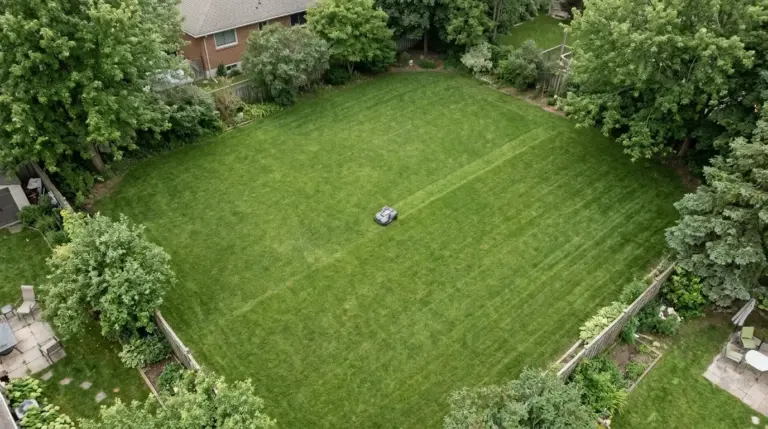
 Up next10 min readBy YardWhen to Mow New Sod: First Cut Height and Root TestUpdated Nov 11, 2026
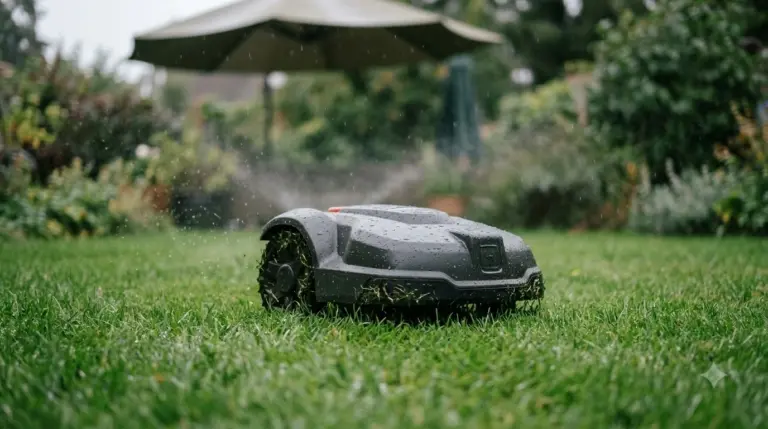
 8 min readBy YardHow Often to Mow Buffalo Grass (Schedule and Height)Updated Nov 11, 2026
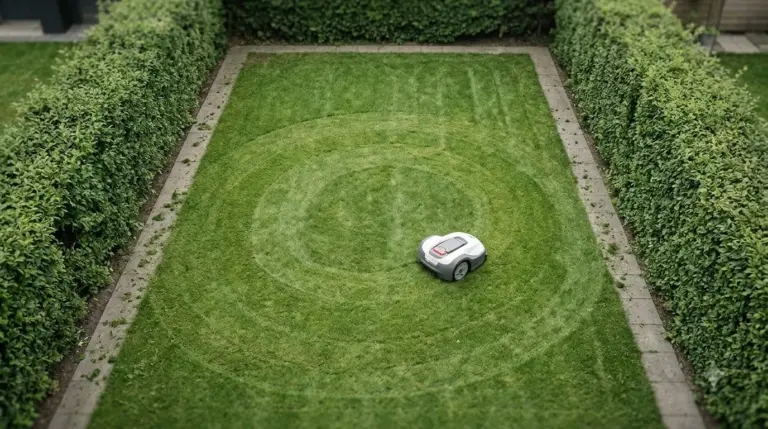
 7 min readBy YardRobot Mower Wet Grass: Can You Cut It and When to WaitUpdated Nov 11, 2026
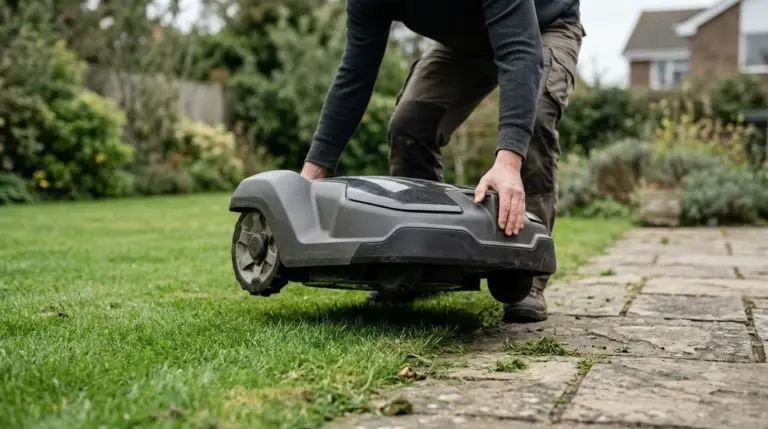
 7 min readBy YardBest Robot Mower for Bahia Grass: Check the Cutting Range FirstUpdated Nov 11, 2026
 8 min readBy YardWhat Yards Are Not Good for Robot Mowers?Updated Nov 11, 2026
 8 min readBy YardHow Often to Mow Zoysia GrassUpdated Nov 11, 2026