
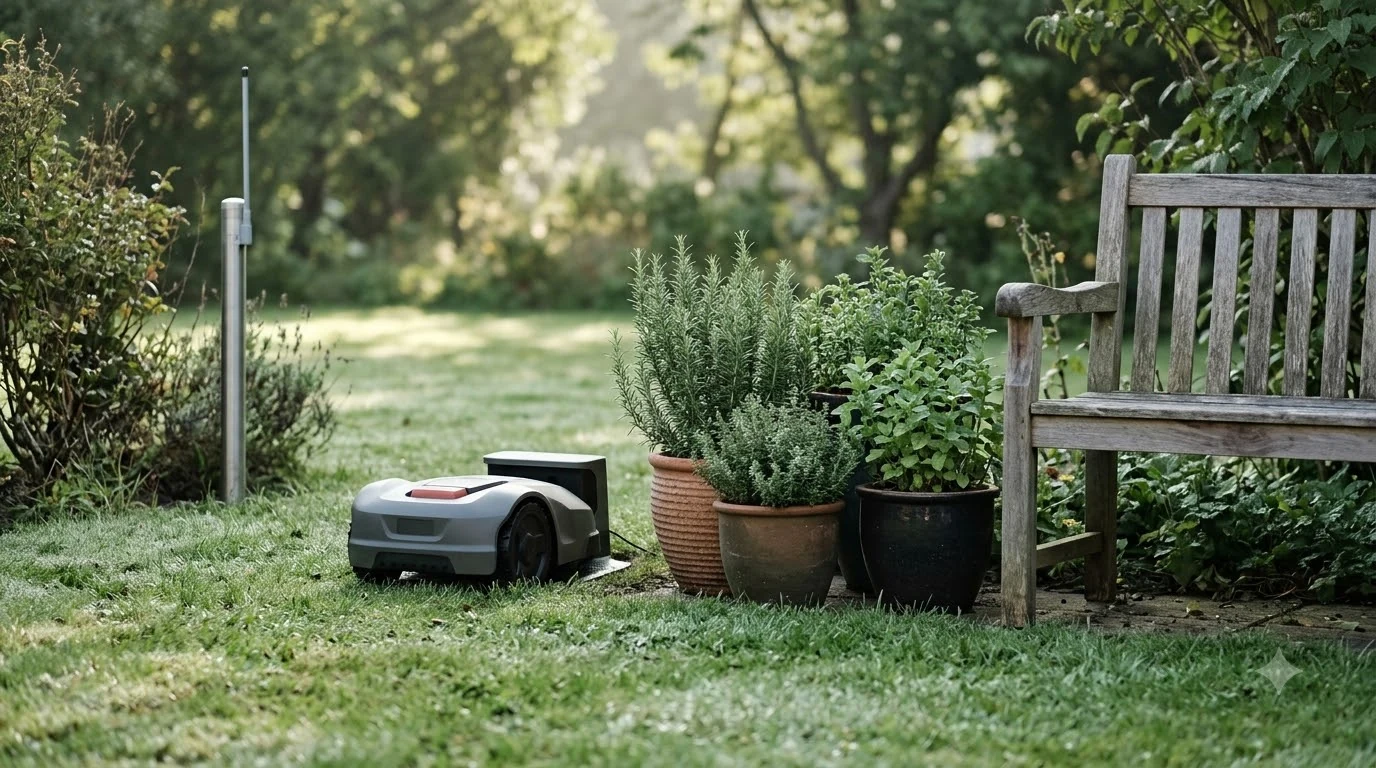

Robot mower weather station integration takes three forms: its own rain sensor, online forecast data, or a smart-home link that reads a personal weather station. The rain sensor is the most direct because it needs no internet. Smart-home links depend on the weather data and on how often the system checks it, so they respond with some delay.
The short answer
- Built-in rain sensor: the mower returns to its dock when it detects rain, with no internet needed.
- Online forecast: some mowers hold off on starting when the forecast looks bad.
- Personal weather station: a smart-home link can pause or resume mowing based on your own station’s readings.
- Check compatibility first: integration depends on the brand and model, so confirm before you buy a station.
How the built-in rain sensor works
Most robot mowers that advertise weather handling have a physical rain sensor on the body. Navimow’s guidance for its H2 and X4 models describes a capacitive sensor that measures the change in capacitance that moisture causes, rather than whether rainwater bridges two exposed metal contacts. The article says this avoids the corrosion that affects older resistive sensors. See our hail protection for robot mowers for further detail on a connected question.
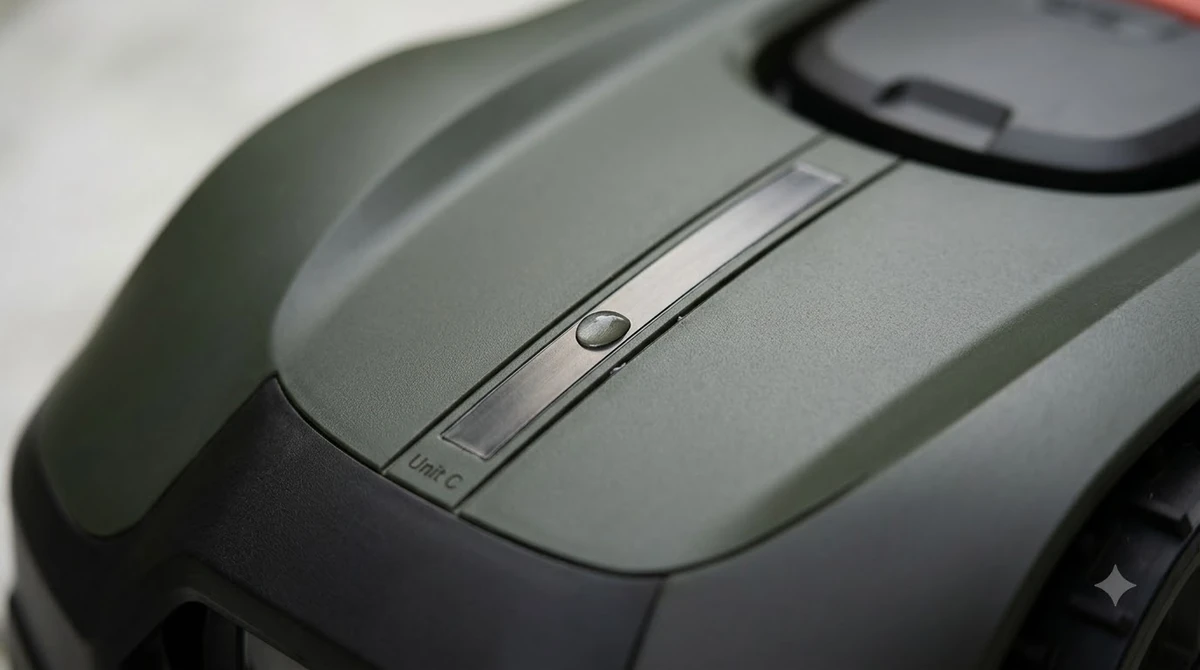
When the sensor detects rain, the mower goes back to the dock. Navimow says it resumes based on a rain-delay timer that you can set “up to 12 hours,” so the lawn gets time to dry before the next session. The sensor does the job without a phone signal, which is why we treat it as the most dependable trigger.
Forecast data and temperature limits
Many mowers also check online forecasts. In the Navimow app, weather adaptation “checks regional forecasts on a schedule,” and if conditions look bad before a session, the mower holds off on starting. If the weather turns during a job, the mower can dock on its own. For a closely related angle, see our weatherproof winter cover options as well.
Temperature is handled the same way. The app lets you set a maximum mowing temperature. Navimow gives a default of 35°C (95°F), and if the forecast exceeds your threshold, the mower waits at the dock until it cools. Our reading is that this matters as much as rain in hot climates, because heat stress on the grass is a separate concern from wet conditions.
Linking a personal weather station
If you already run a personal weather station, a smart-home platform can connect it to the mower. The Evon Smart Home page for Husqvarna Automower describes using “Regenerkennung bzw. die Regenmengenmessung der Wetterstationen,” which is rain detection and rain-amount measurement from weather stations, to plan and automate mowing runs. It also lets you start or stop mowing from a phone and blocks the exit during events or holidays.
Third-party automation tools, such as IFTTT applets, have also been used to link a station to some mowers. Those links usually check the station on a schedule, so expect a pause after rain starts rather than an instant stop. Check that the platform supports your exact mower model before you build the link.

Irrigation and the mower
Coordinating the mower with a sprinkler system is a separate question. In our search we saw automations that send a mower home when an irrigation system starts, and that restart mowing once watering stops, to avoid cutting wet grass and running the mower in spray. The Evon page we read does not mention irrigation, so treat that link as something to verify with your installer rather than a standard feature. You can find more background and practical detail on this point in our winter storage bag options.
Choosing a robot mower weather station integration setup
Start with what you already have. If the mower has a rain sensor and an app with forecast settings, that covers most homes, and you may not need a weather station at all. A personal station pays off when you want readings from your own yard, such as rain amount, rather than a regional forecast. Smart-home integration suits a home that already runs an automation system. If this point matters for your setup, read our winter storage accessories overview for more detail on it.
| Setup | What it reacts to | Internet needed? |
|---|---|---|
| Built-in rain sensor | Rain on the mower | No |
| Forecast in the app | Regional forecast | Yes |
| Personal weather station link | Your station’s readings | Yes |
| Smart-home or automation tool | Station data and irrigation status | Yes |
Before you connect anything
Confirm three things before you buy or build a link. First, check that your mower model supports the integration, since the Evon page applies to Automower models with its connect function. Second, check how the platform checks the weather, because a scheduled check means a delay. Third, decide what happens when the link drops: a mower that relies only on a remote signal may not stop in time, so keep the built-in rain sensor active as a backup.
Frequently asked questions
Does a robot mower need internet to stop for rain?
Not if it has a rain sensor. Navimow’s guidance describes its physical sensor as triggering the return to the dock on its own, while forecast checks and station links need a connection.
How long does a mower wait after rain before it restarts?
Navimow describes a rain-delay timer that you can set up to 12 hours. Set it to suit how fast your lawn dries, since a shady, damp yard may need longer.
Can a personal weather station control my robot mower?
It can, through a smart-home platform or an automation tool that supports your mower model. The Evon page we read describes using weather-station rain data to plan mowing. Check model support first, because integration varies by brand.
Will a mower stop on its own in hot weather?
Some do. Navimow lets you set a maximum mowing temperature in the app, with a default of 35°C (95°F). If the forecast exceeds it, the mower waits at the dock until it cools.
Sources
- How Navimow decides whether or not to mow in sunny, rainy and frosty conditions (Navimow, vendor): capacitive rain sensor, forecast checks, rain-delay timer up to 12 hours, 35°C default temperature limit.
- Husqvarna Automower in the Evon Smart Home system (Evon, smart-home vendor): weather-station rain data, exit blocking, remote start and stop. The page does not cover irrigation.
 Up next7 min readGearRobot Mower Pet Fence Integration: What WorksUpdated Nov 20, 2026
 7 min readGearSolar Power for a Robot Mower Charging Station: What WorksUpdated Nov 19, 2026
 7 min readGearDoes Cold Weather Hurt a Robot Mower Battery? 3 RulesUpdated Nov 20, 2026
 8 min readGearGPS Tracker for Robot Mower Theft: What Works and What to CheckUpdated Nov 19, 2026
 7 min readGearEcovacs GOAT Charging Station Cover: What to Check FirstUpdated Nov 20, 2026
 7 min readGearSegway Navimow Charging Station Cover: What to Check FirstUpdated Nov 20, 2026