
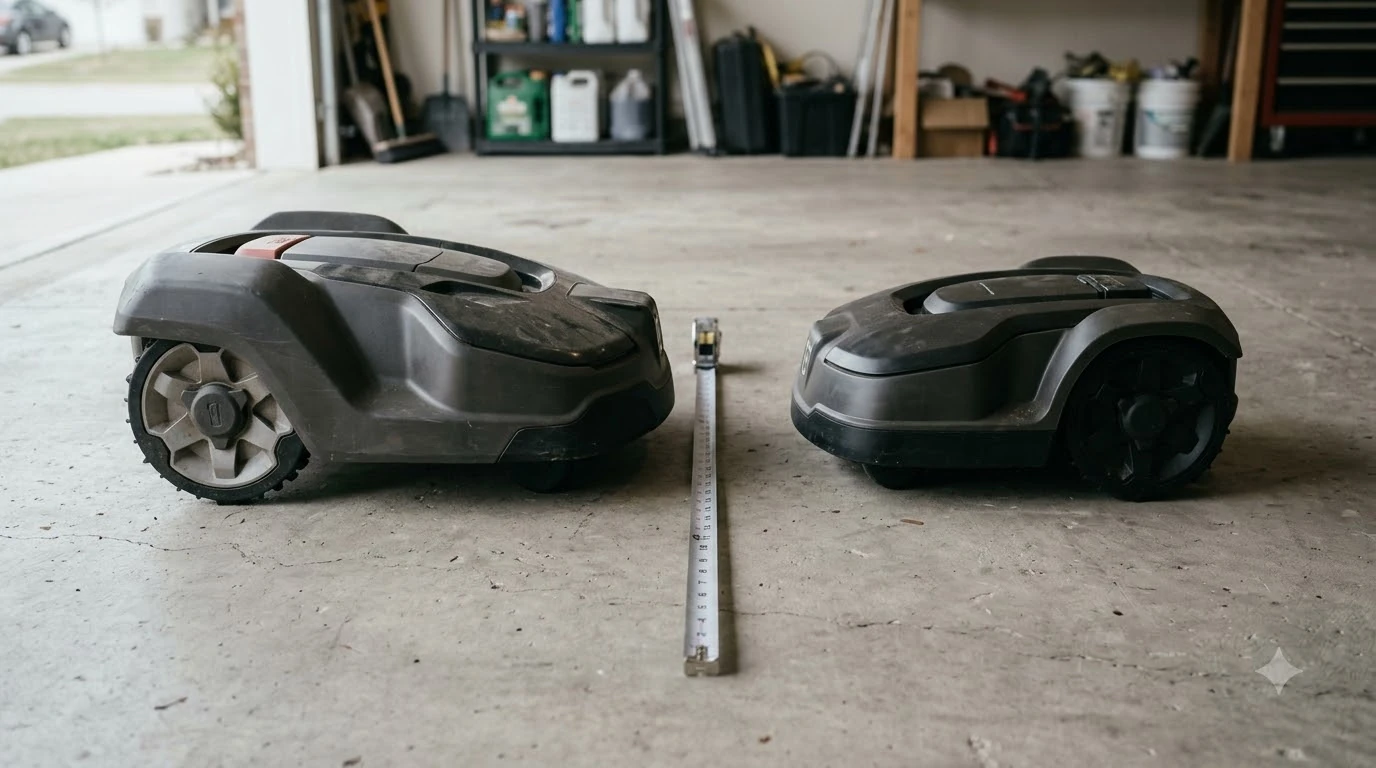

For a small vs large robot mower for the same lawn, size matters less than the mowable area: a larger one is not automatically better, and a smaller one is not automatically a bargain. The right size depends on the mowable area after you subtract beds, paths, and trees, plus slopes and how many hours a day you want the mower to run. Manufacturers size their models by daily coverage, so a larger deck or battery matters less than whether the rated capacity clears your lawn with some headroom.
The short answer
- Measure the mowable area, not the property line. Subtract the house footprint, driveway, patio, and garden beds.
- Add headroom. Dreame suggests multiplying the mowable area by about 1.3 to allow for trees, beds, slopes, and edges.
- Check daily coverage, not the maximum area on the box. A small mower that runs all day can cover more than a large one set to a quiet schedule.
- Consider slope and passages. A small model may struggle with steep banks or narrow gaps even when the area is within its rating.
What “small” and “large” mean for a robot mower
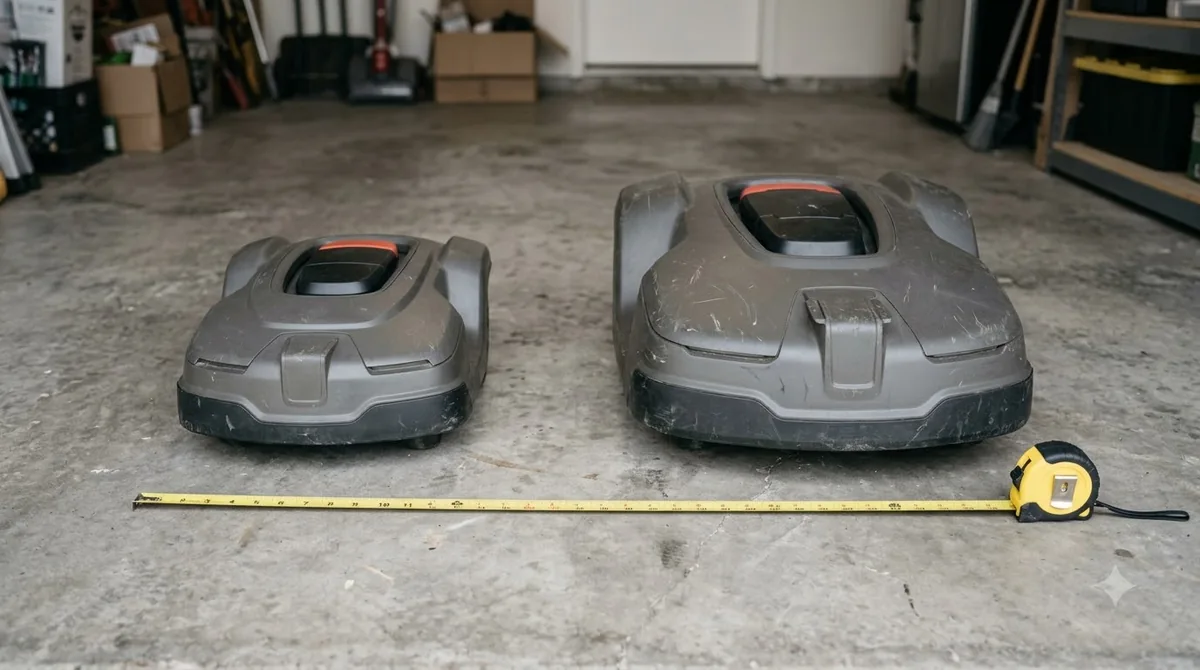
Robot mower size is usually described in two ways: the physical cutting width and the rated area it can handle. A wider deck covers more ground per pass, which helps on big lawns. A smaller body fits narrow side yards, tight corners, and under low branches. The rated area matters more for planning, because it tells you how much grass the mower can cut in a day. Manufacturers publish that number in square meters or acres, and the figures are not directly comparable between brands. Bigger mowers can cost more to maintain, and running costs by mower size are covered in our annual cost guide.
Dreame’s buying guide describes large lawns as roughly 2,000 to 8,000 square meters and suggests that the ideal range for a robot mower sits between about 2,000 and 5,000 square meters. Above about 6,000 square meters, the same guide recommends a multi-zone schedule or a second mower. Those bands are guidance from one manufacturer, so check the specs of each model you consider.
Small vs large robot mower for the same lawn: how much headroom
Headroom is the gap between the rated capacity and the lawn you actually need to cover. The guides we read do not agree on one number, but they point the same way. Dreame recommends buying about 1.3 to 1.5 times your actual lawn area, and notes that a 4,000 square meter yard with mature trees can lose 20 to 30 percent of rated coverage to obstacle navigation. Husqvarna advises choosing a capacity a little above the lawn size so you can set quiet hours without leaving grass uncut.
The reason is simple. A mower that is always at the edge of its rating will fall behind on wet days, when many models pause, and it will need more charge cycles. A slightly larger model can finish the same lawn in less time, which can matter more than the size of the deck.

When a smaller mower is the better choice
A smaller robot mower makes sense when the lawn is compact, the yard has many tight turns, or the space between beds and fences is narrow. Husqvarna’s guidance for smaller lawns points to compact models designed for limited storage and fine maneuvering, and it asks buyers to check whether the lawn has narrow passages or uneven ground. A smaller mower also tends to be easier to store in a garage or shed and easier to lift if you need to move it. Deck width changes coverage per hour, and cutting width explained shows why wider is not always better.
The trade-off is time. A smaller deck makes more passes to cover the same area, and a small battery may need more charge cycles. For a lawn with a lot of edges, a smaller model can run longer per day and still look tidy, because it follows the boundary closely.
When a larger mower is worth the cost
A larger mower earns its price on open, even lawns where the mowable area is well within its rating. It is also a better fit for long runs across a single zone, where a wider deck cuts fewer passes. If the lawn is near the upper limit of a smaller model, a larger one gives room for buffer days, slopes, and growth in the spring. Some lawns could use either option, and one large mower versus two small ones compares them directly. Size often tracks price, and cheap and expensive mower differences explains where the extra cost goes.
Mapping and boundary setup matter too
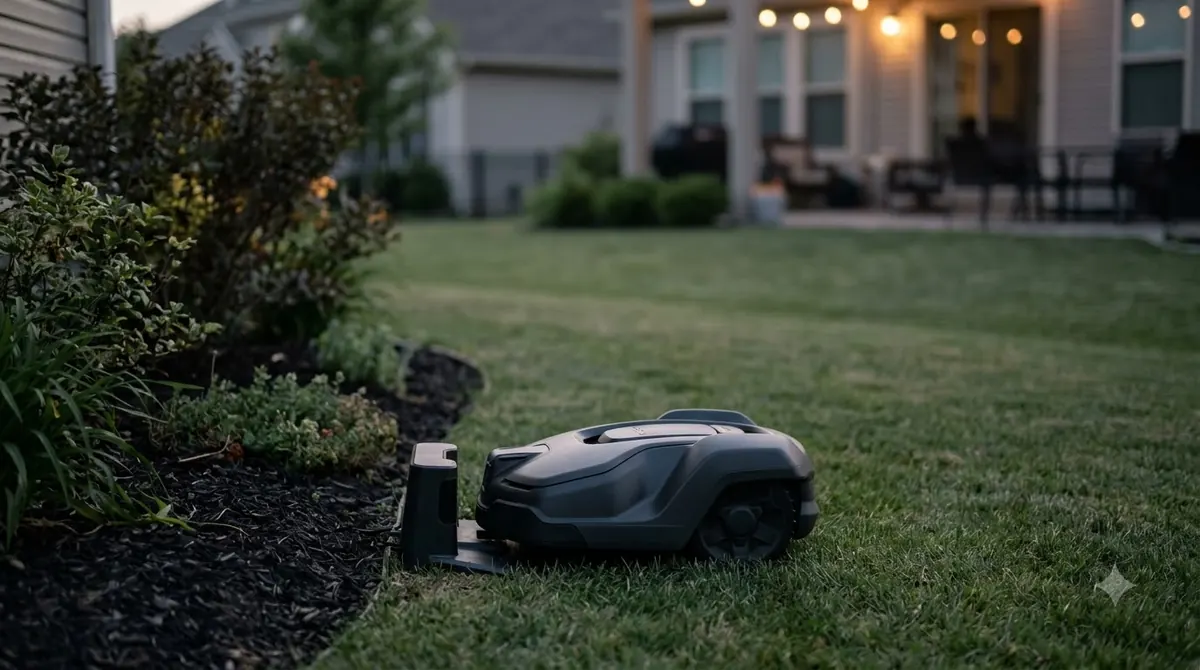
Size is only part of the decision. A larger mower can cover more ground per charge, but it still needs a boundary that fits the yard. Wire-based systems take time to install around beds and trees, while virtual boundaries drawn in an app take less work but depend on a clear view of the sky. Check how the model handles no-go zones and whether you can split the lawn into zones, because that choice affects how much of the rated capacity you actually use. Bigger or more complex yards may need professional setup, as installer help for complex yards describes.
If the lawn has several separate sections, two smaller units may make more sense than one large unit. That is a separate question, covered in its own comparison, but it starts with the same measurement of mowable area.
Who each size suits
A smaller robot mower suits a compact or irregular lawn with narrow passages, a moderate slope, and a homeowner who wants a light, easy-to-store unit. A larger robot mower suits an open lawn well above the small model’s rating, a yard with few obstacles, or an owner who wants buffer capacity for wet weather and fast growth. In most cases, the right answer comes from the measured mowable area with headroom added, not from the size of the deck alone. After deciding on mower size, Husqvarna Automower vs Eufy robot mower compares two brands side by side.
Frequently asked questions
Should I measure the whole yard or only the lawn?
Measure only the mowable grass. Subtract the house, driveway, patios, and garden beds. The rated capacity should cover that area with headroom, not the full property.
Is a bigger deck always faster?
A wider deck covers more ground per pass, so it usually finishes an open lawn sooner. On a complicated yard, the mower’s navigation and charge cycles can matter more than deck width.
How much buffer should I add?
Dreame suggests about 1.3 to 1.5 times the actual lawn area, depending on trees and beds. Many guides say the same thing in different words: do not buy a model that is only just big enough.
Do rated sizes compare fairly between brands?
Not directly. Each manufacturer sets its own rating method, and some assume continuous running. Compare daily coverage and the conditions behind each figure, not only the headline number.
Sources
- Dreame, Best Robot Mowers for Large Lawns (2026 Buyer’s Guide) (manufacturer): mowable area, 1.3 to 1.5 headroom, daily coverage, and the 2 to 3 hour run time per charge.
- Husqvarna, buying robotic lawn mowers for a small lawn (manufacturer): capacity above lawn size, narrow passages and uneven ground, and compact models for small yards.
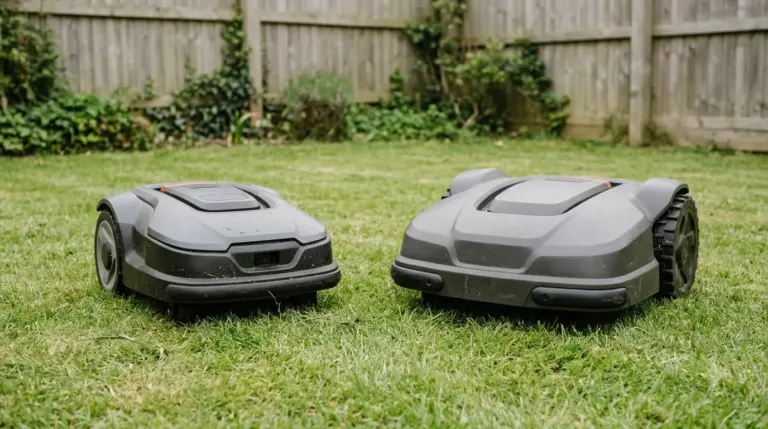 Up next7 min readReviews & CompareOne Large Robot Mower vs Two Small OnesUpdated Nov 13, 2026
 7 min readReviews & CompareIs RTK Worth It for a Small Yard? Sky View DecidesUpdated Nov 17, 2026
 7 min readReviews & CompareRobot Mower Open Box vs New: Warranty, Battery and ReturnsUpdated Nov 13, 2026
 7 min readReviews & CompareRobot Mower vs Gas Push Mower Emissions: What the Data ShowsUpdated Nov 18, 2026
 6 min readReviews & CompareRobot Mower With AI Vision vs Basic Bump SensorsUpdated Nov 18, 2026
 6 min readReviews & CompareRobot Mower Subscription GPS vs Free GPSUpdated Nov 13, 2026