
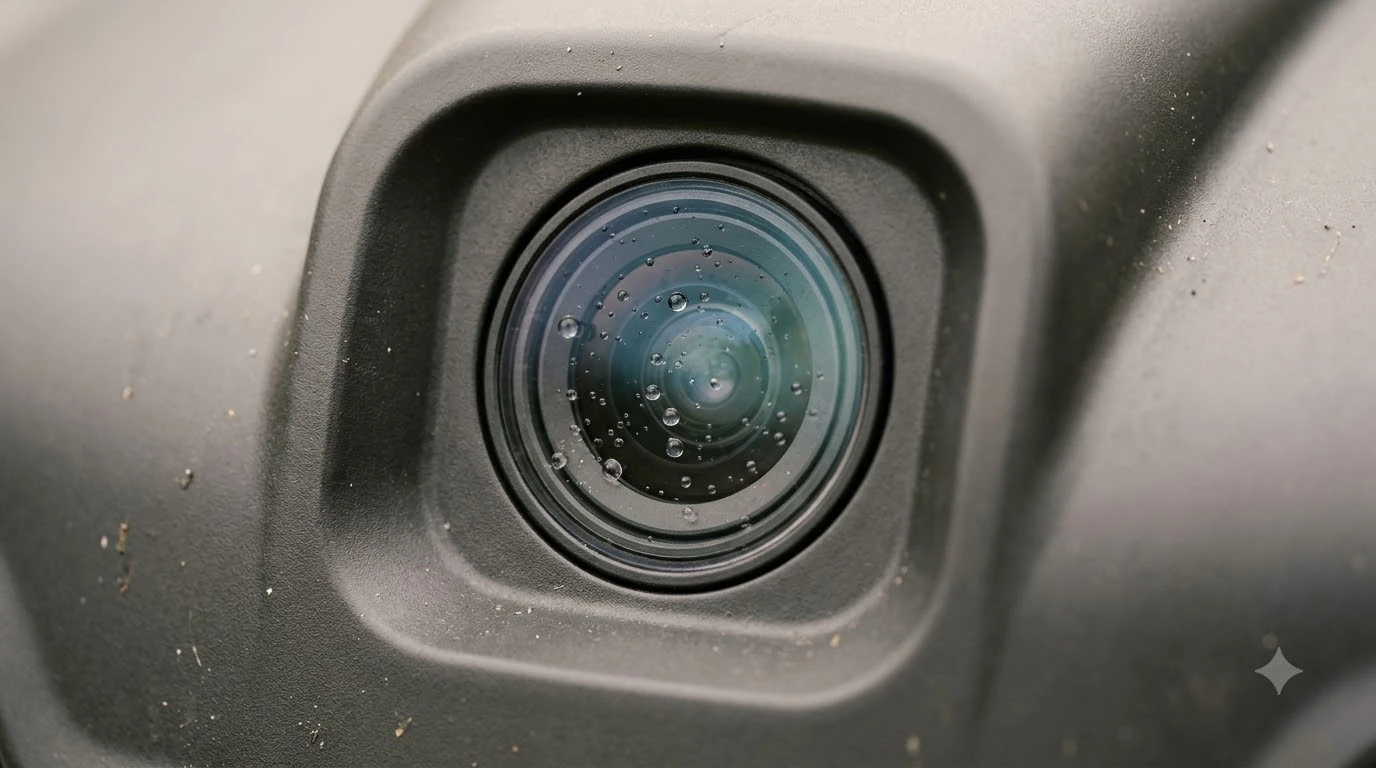

A robot mower with AI vision vs basic bump sensors differs mainly in timing: vision spots obstacles before contact, while bump sensors only react after they hit something. Vision can recognize objects such as toys, pets, and garden furniture and slow or reroute early. Bump sensors are simpler and cheaper, and they still catch what vision misses. Most current models combine several sensing methods, so the real question is how much of the work each system does and where it can fail.
The short answer
- Vision: a camera identifies an object as the mower approaches, then slows, stops, or turns. It can tell a toy from a hose.
- Bump sensors: the mower learns about an obstacle on contact, then backs off and turns. It does not know what the object is.
- Weak spots: vision depends on light, weather, and a clean lens. Bump sensors depend on hitting the object, which can scuff a soft or fragile item.
- Practical view: vision is the better fit for yards with many loose objects. A basic bump setup can be enough for a clear, simple lawn.
How bump sensors detect obstacles
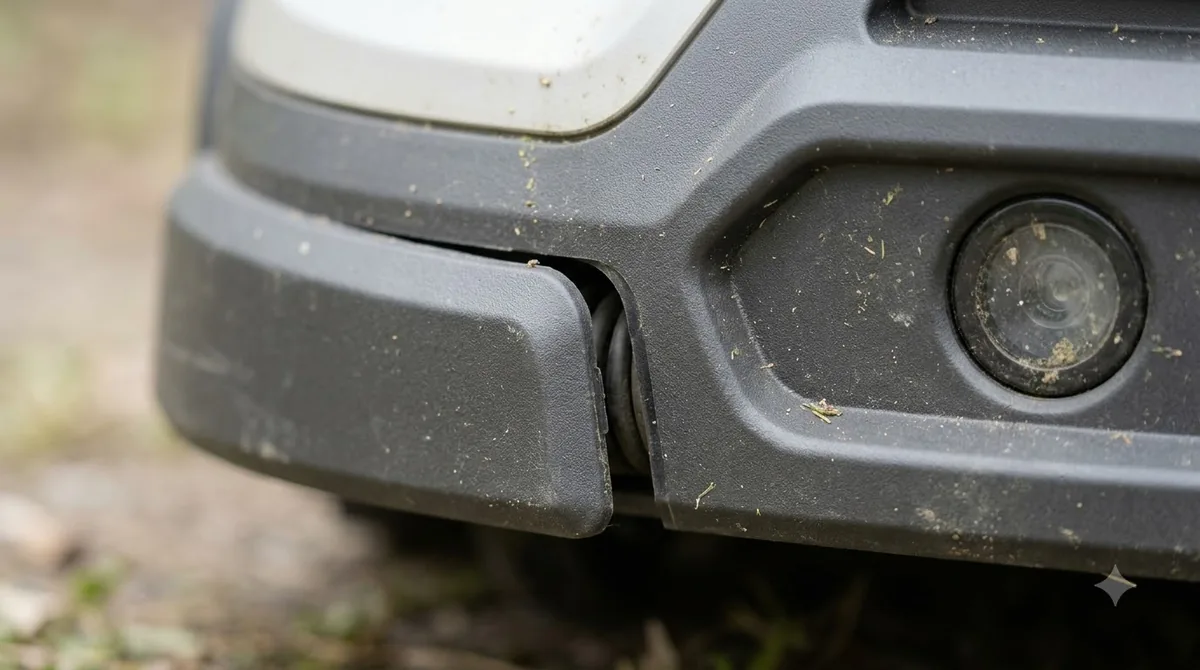
A bump sensor is a reactive system. When the mower’s body or deck pushes against an object, a switch or sensor registers the contact, and the mower backs up and changes direction. Patent texts describe a broader family of collision sensing that includes current, torque, speed, and accelerometer readings that detect a stall or interruption in movement, so not every bump sensor is a plate with a switch. In all cases, the mower is responding to something it has already touched.
This approach works well for large, fixed obstacles such as walls, fences, and tree trunks. It is simple, has few moving parts that can fail, and does not depend on light. Its limitation is that it cannot tell a dangerous object from a harmless one, and it may push a light object across the lawn before it stops.

How AI vision changes the approach
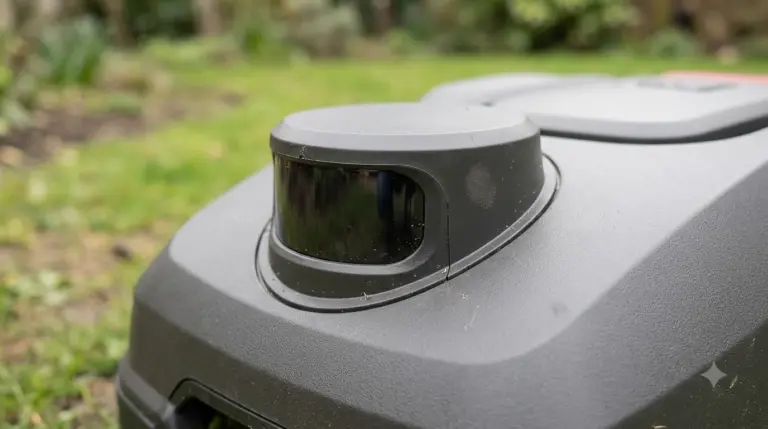
An AI vision system uses a camera that continually captures images as the mower moves, and an onboard processor classifies what it sees. Mammotion’s comparison describes vision as the strongest option for recognizing and classifying items such as pets, toys, and garden furniture. Anthbot’s buying guide describes the same idea: the mower identifies an object and then slows, stops, or reroutes, rather than simply bumping into it. Both are manufacturer pages, so their claims favor vision, but the principle is well established. A model that uses AI vision is covered in AI vision on the Yuka Mini and what it promises.
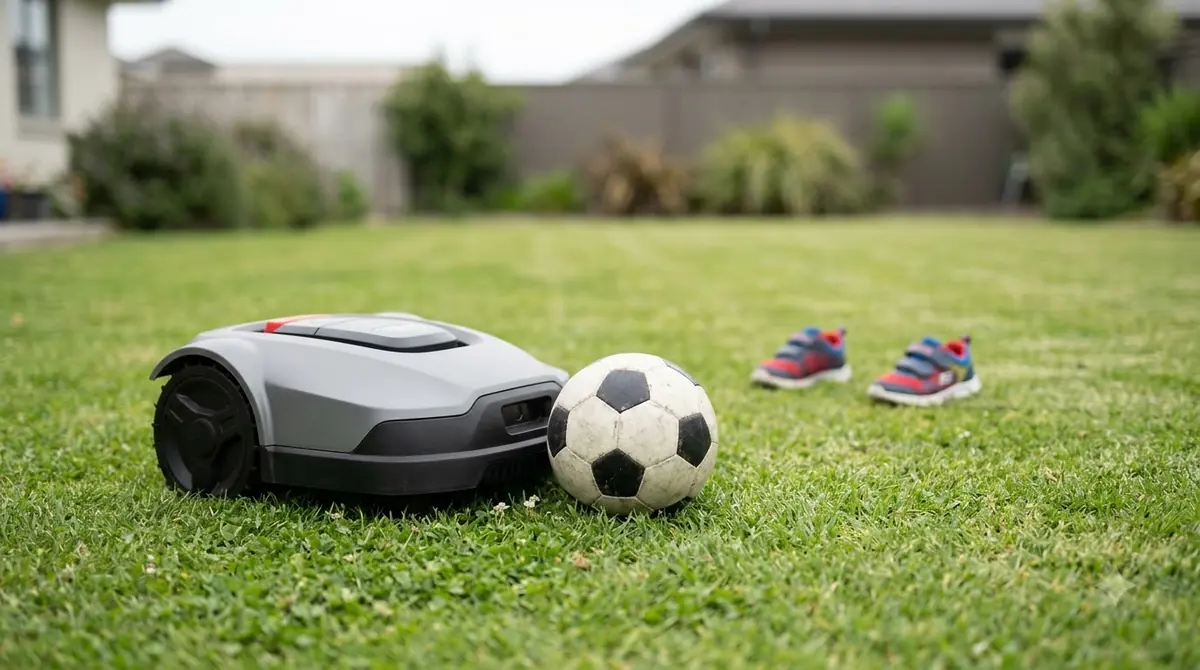
The benefit is most visible in yards with loose items. A child’s ball, a hose, or a dog’s toy can be avoided before contact, which keeps the grass and the object undamaged. Vision can also help the mower work around a flower bed edge without relying on a physical hit.
Where vision falls short
Vision has its own limits, and manufacturers say so. Mammotion notes that performance depends on lighting, visibility, and camera quality, and that shadows and weather are factors. Anthbot says image quality can drop at night or under heavy cloud cover, and that rain, fog, and dirt on the lens can affect visibility. Dense vegetation and tall grass are also harder cases. A lens that is not cleaned can reduce accuracy, so the camera needs regular checks, especially after mowing wet grass. Where vision falls short, vision against LiDAR mowers explains how other sensors fill the gap. Landroid Vision is one mower built around camera guidance, as assessed in the Worx Landroid Vision worth-it verdict.
Vision also does not solve positioning. Mammotion’s comparison rates RTK positioning as limited for obstacle awareness and says it depends on secondary sensors to avoid collisions. Vision is therefore often paired with RTK or LiDAR for navigation, while bump sensors remain a backup layer.
Why most mowers combine sensors
Few newer models rely on one method alone. Mowers typically combine a boundary system with obstacle sensing, and many add vision or LiDAR on top of a physical bump sensor. The bump sensor is the last line of defense. When vision misses an object in poor light, or when a fast-moving object appears too close, the physical contact still stops the blade and the drive. Most designs mix sensors, and how ultrasonic and camera sensors combine shows the typical pairing.
For a buyer, this means the comparison is rarely vision against bump sensors in the abstract. It is a comparison of two packages. A model with vision plus a bump backup handles more situations than a model with bump sensors alone, but the price and the extra camera maintenance are also higher. Check what the manufacturer says about the backup, because not every vendor states it clearly.
Robot mower with AI vision vs basic bump sensors: which suits
A basic bump-sensor mower suits a clear, mostly empty lawn with few loose objects, where the main concern is staying inside the boundary and avoiding walls and fences. Vision suits a yard with children’s toys, pets, outdoor furniture, or hoses that move around, and an owner who wants fewer interruptions. In both cases, a clean boundary and a clear charging path matter as much as the sensor type, because most problems start with a boundary that is set too close to a hazard. Obstacle strategy interacts with coverage, which mowing patterns and obstacle handling covers in detail.
Frequently asked questions
Does AI vision make bump sensors unnecessary?
Not in most designs. Vision handles recognition and early avoidance, and a physical bump sensor is usually kept as a backup for objects the camera misses. Check the specific model’s sensor list.
Will a vision mower work at night?
Vision performance can drop in low light, and many mowers run only during daylight hours. Check the manufacturer’s schedule and whether the model has a separate navigation method for dark periods.
Do I need to clean the camera?
Yes, regularly. Dirt, dew, and rain on the lens can reduce visibility. Wipe the camera with a soft cloth as part of routine care, and follow the manufacturer’s instructions.
Is a bump-sensor mower a bad choice?
No. For a simple lawn with few obstacles and a well-set boundary, a bump-sensor model can be a sensible, lower-cost choice. It just reacts to obstacles rather than anticipating them.
Sources
- Mammotion, AI Vision vs RTK vs LiDAR (manufacturer): how each system detects obstacles, the stated lighting and weather limits, and the RTK secondary-sensor note.
- Anthbot, AI Vision Robot Lawn Mower guide (manufacturer): object identification and rerouting, admitted limits in low light and bad weather, and the lens-visibility note.
 Up next6 min readReviews & CompareLiDAR vs Vision Robot Mower: Which Sensor Fits Your YardUpdated Nov 17, 2026
 8 min readReviews & CompareDreame A2 vs Sunseeker X7: Specs, Sensors and Who Each SuitsUpdated Nov 12, 2026
 8 min readReviews & CompareWorx Landroid Vision Cloud WR320.1 Review: Specs and Setup LimitsUpdated Nov 16, 2026
 9 min readReviews & CompareSunseeker V3 vs Eufy E15 Robot Mower: Wire-Free Vision ComparedUpdated Nov 19, 2026
 8 min readReviews & CompareIs the Worx Landroid Vision Worth It? Model Specs Compared (2026)Updated Nov 14, 2026
 8 min readReviews & CompareWorx Landroid Vision vs Mammotion Luba 3 AWD: Published Specs ComparedUpdated Nov 14, 2026