
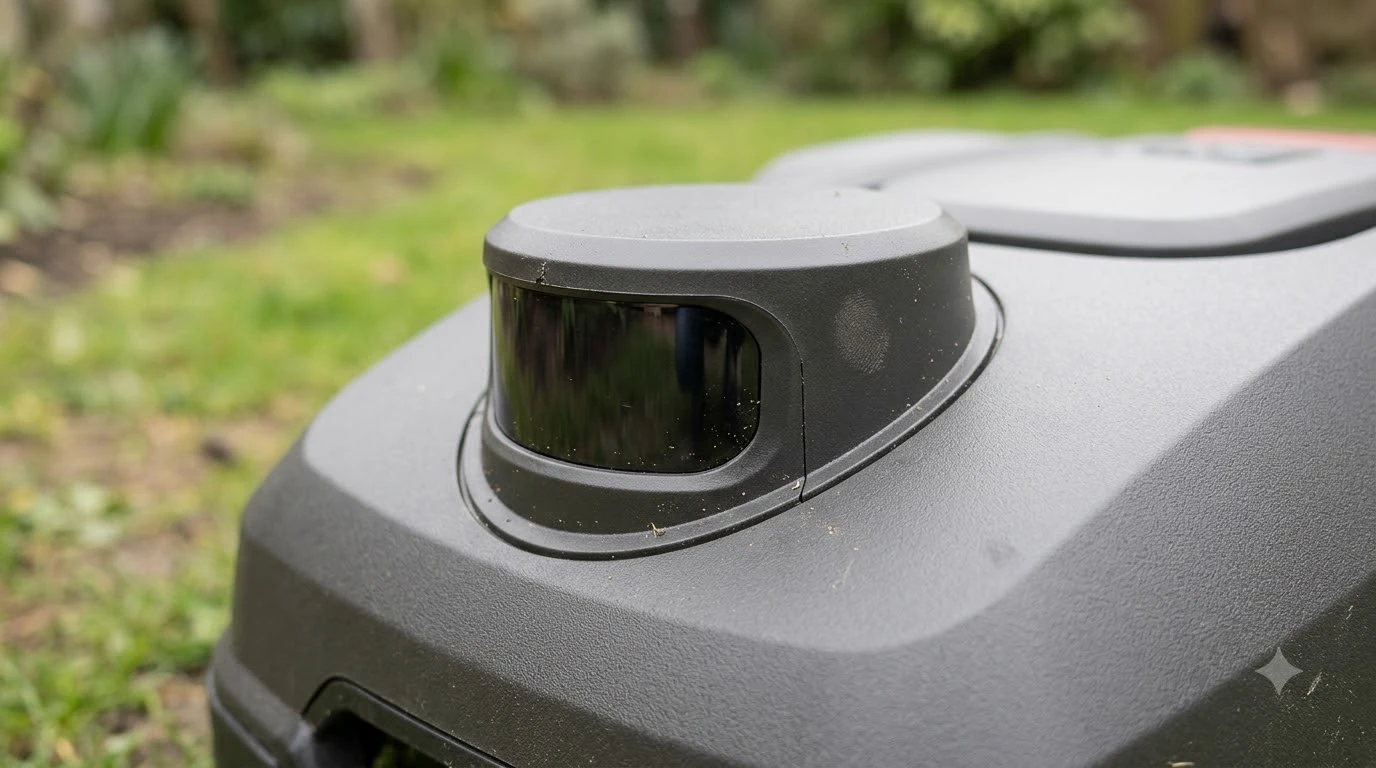

Lidar vs vision robot mower: LiDAR is usually the steadier choice for mapping and obstacle detection in changing light, while vision is strong at recognizing what an obstacle is but depends more on lighting and a clean lens. Both methods aim to do the same job, which is to keep the mower inside its area and away from things it should not hit. The difference is how they see the yard, and that decides how each one behaves at dusk, under shade, and around fine objects like hoses and toys.
The short answer
- LiDAR measures distance with a laser, so it works about the same in bright sun, shade, and at dusk.
- Vision uses cameras and software, so it can recognize objects, but it depends on light and a clean lens.
- Neither replaces a sound boundary setup. Check the stay-out zones and the edge behavior either way.
- Pairing with RTK positioning is common, so ask whether the mower can navigate when the satellite signal drops.
How each method sees the yard
A LiDAR sensor sends out laser pulses and measures how long they take to bounce back. Repeated across the field of view, that builds a three-dimensional picture of the nearby space, including the edges of beds, fence posts and the shape of a tree trunk. Because it measures distance rather than color or brightness, its readings are less affected by the time of day.
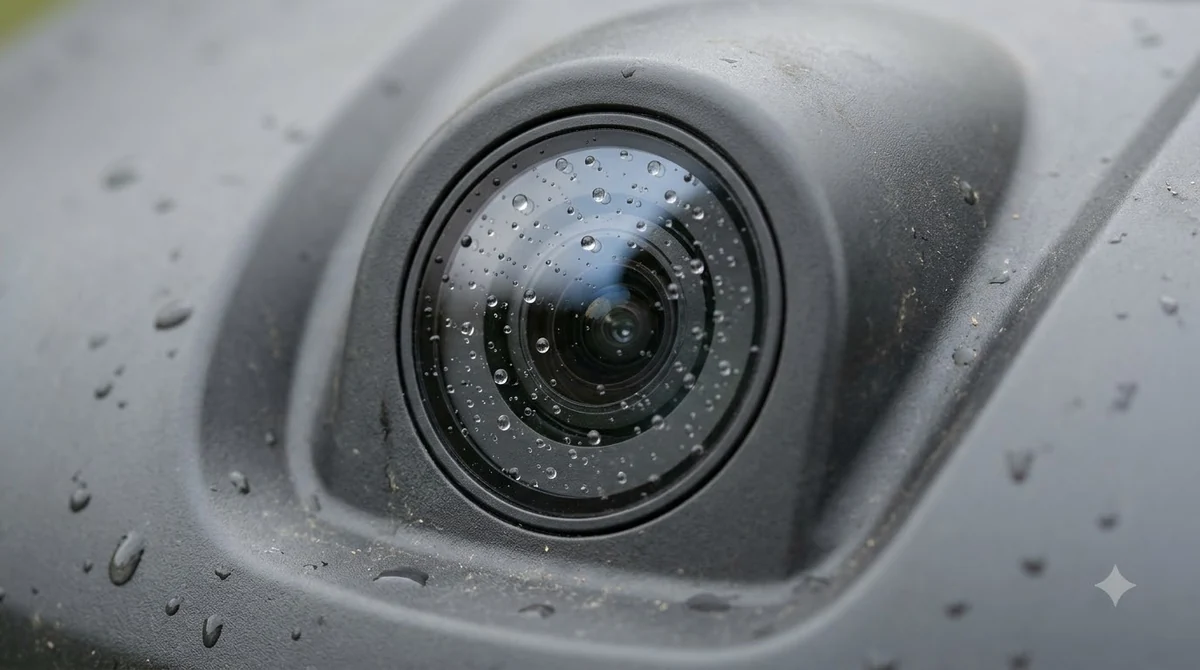
A vision system uses one or more cameras and software that identifies objects in the image. That approach can recognize a garden hose, a toy or a pet, and it can apply that knowledge to decide what to do. Its strength is the classification, and its weakness is the input. Low sun, deep shade, a dirty lens or a wet window can all reduce what the camera sees, and the mower’s behavior changes with it.
Lidar vs vision robot mower performance in changing light
The most practical difference shows up outside the middle of a sunny day. A LiDAR mower works about the same at 7 a.m., under a dense canopy, and in the evening, because it is not reading color. A vision mower depends on contrast and brightness. Dark green grass against a dark shadow can be harder to read, and a sudden change from sun to shade at the edge of a tree can confuse a camera that is tuned for even light.
Our reading is that a yard with large trees, a shaded side passage, or a habit of mowing in the early morning or evening favors LiDAR. A yard with mostly open sun, which can keep the camera clear, gives vision a fairer chance.
Obstacle handling and fine objects
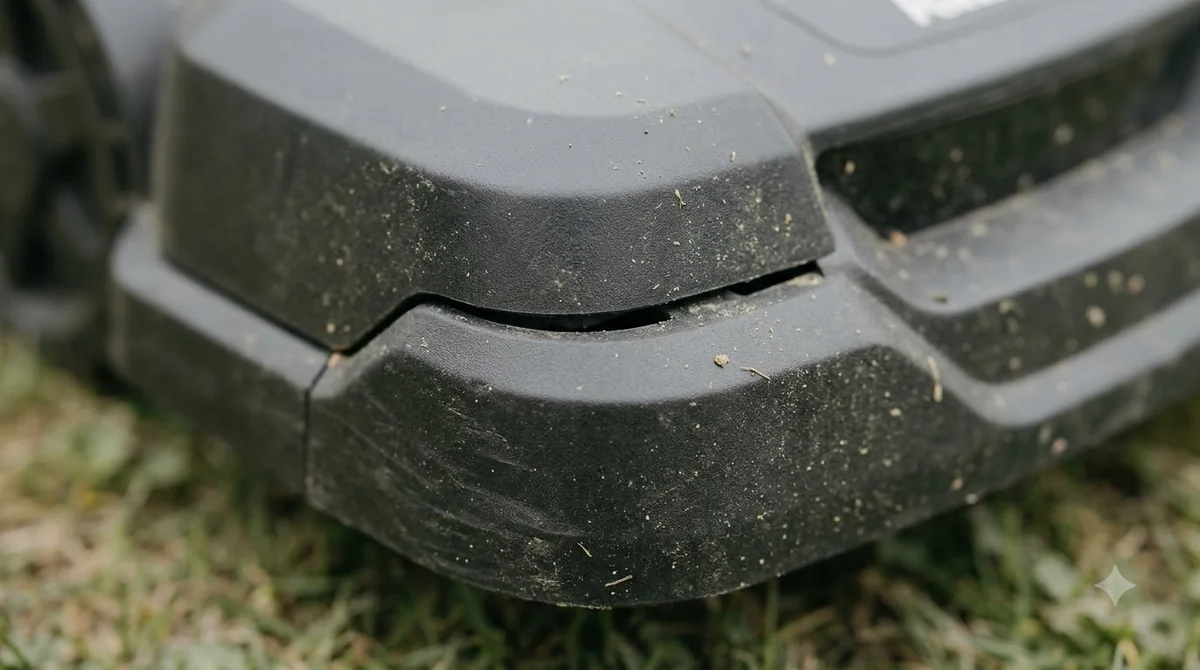
Obstacles are where the methods differ in character. LiDAR is good at finding solid objects and measuring their position, which helps the mower avoid a fence, a tree trunk or a stack of pavers. It can have difficulty with very thin or low objects, depending on the sensor height and its angle, so a bumper or ultrasonic sensor is often added as a second layer. Fine objects are handled differently by each sensor, as ultrasonic sensors against camera detection shows. Entry-level mowers rely on contact instead, which AI vision against simple bump sensors compares.
Vision can separate types of objects. That matters for a hose, a child’s toy or a dog’s ball, where the right response may be to stop, wait, or route around. The trade-off is that recognition is only as good as the training data and the image quality. A mower that recognizes a hose in clear light can miss the same hose in a dim corner.
Heads up
Vendor comparisons often present their own sensor as the most accurate option. Test the behavior you care about, such as edges and shaded corners, rather than relying on a headline claim.

Cost, upkeep and what to check before you buy
Price is not a reliable guide to the difference between the two methods, because both appear across budget and premium models. Upkeep is the more useful comparison. A camera lens needs cleaning, and a LiDAR sensor housing needs the same care. Dust, wet grass clippings and rain can coat either one. Check how easy the sensor is to reach and clean. Cost matters too, and RTK value on small lawns offers the satellite side of the decision. Before settling on a navigation type, check reliability concerns by robot mower brand to see which makers draw the most complaints.
Ask the seller how the mower handles the case where its main sensor is degraded, such as a dirty lens at dusk or a satellite signal lost under trees. A good answer names a fallback, a stop behavior, and a way to see the warning. A vague answer means you will find out the hard way on a wet evening.
Choosing a lidar vs vision robot mower for your yard
LiDAR suits a yard with mixed shade, early or late mowing, and a need for steady obstacle detection without much attention. Vision suits a yard with plenty of open sun, a need to recognize specific objects like hoses and toys, and a willingness to keep the lens clean. If your lot has both, look for a mower that combines the two, because each covers the other’s weak spot. A concrete LiDAR example with no RTK is in Lidax Ultra 2000 navigation claims.
Whatever you choose, plan the boundary and the stay-out zones before the first run. The sensor helps the mower avoid obstacles, but it does not replace a clear map of where the lawn ends and the flower bed begins.
Frequently asked questions
Is LiDAR better than vision for a robot mower?
LiDAR is usually steadier in changing light, while vision is stronger at recognizing specific objects. Neither is better in every yard, so match the method to your light and obstacles.
Does a vision robot mower work at night or in the shade?
Vision depends on light, so it usually performs less reliably in deep shade or after dark. Check the manufacturer’s stated conditions before you rely on it for evening runs.
Can LiDAR see a garden hose on the lawn?
LiDAR detects solid objects by distance, so a thin hose may be hard to see depending on the sensor height. Many mowers add a bumper or ultrasonic sensor as a second layer.
Do I need RTK if my mower has LiDAR or vision?
Not always. Some mowers combine satellite positioning with a camera or LiDAR, and the combination helps when one sensor is limited. Ask how the mower navigates if the satellite signal drops.
Sources
- Resident, LiDAR in robot lawn mowers (publication): how LiDAR measures distance and why it matters for robot mowers.
- Mammotion, AI vision vs RTK vs LiDAR (manufacturer blog): comparison of the three navigation approaches, read with the vendor bias in mind.
 Up next6 min readReviews & CompareRobot Mower With AI Vision vs Basic Bump SensorsUpdated Nov 18, 2026
 6 min readReviews & CompareIs the MOVA LiDAR Ultra 2000 Worth It? Slope and Yard CheckUpdated Nov 17, 2026
 8 min readReviews & CompareRTK vs Vision Robot Mower: Which Navigation Suits Your YardUpdated Nov 11, 2026
 7 min readReviews & CompareMOVA LiDAX Ultra 1000 vs ECOVACS GOAT O1000 LiDAR PRO: Which Fits Your Lawn?Updated Nov 16, 2026
 10 min readReviews & CompareSegway Navimow i105N vs Worx Landroid Vision: Which Fits Your LawnUpdated Nov 11, 2026
 7 min readReviews & CompareMammotion LUBA 2 AWD Lawn Size: Which Model Fits Your YardUpdated Nov 17, 2026