


Segway Navimow i105N vs Worx Landroid Vision: both are wire-free robot mowers, but they find the lawn edge in different ways and suit different yards. The Navimow i105N is rated for lawns up to about 1/8 acre and uses a positioning system with vision. The Worx Landroid Vision (WR220) is a camera-based model with no mapping step, rated by Worx for about 1/2 acre. The sources we read disagree on a few figures, so both are shown below with the conflicts marked.
The short answer
- Lawn size: Navimow i105N about 1/8 acre (about 506 m², per SmartHomeCompared). Worx WR220 rated 1/2 acre by Worx, though the same page also says up to 1/5 acre.
- Navigation: Navimow i105N is wire-free with positioning plus AI vision, according to one source. Worx WR220 uses a camera and neural network with magnetic strips as barriers and RFID tags for zones.
- Battery: Navimow i105N lists 2.55 Ah and about 60 minutes per charge. Worx WR220 lists 4.0 Ah (20V) but no runtime on its page.
- Noise: Worx publishes 59 dB. The Navimow i105N has no published dB figure in the sources we read.
- Fit: Our reading is that the Navimow fits a smaller lawn near its published 1/8 acre rating, and the Worx fits a single-zone yard where the camera-only setup and noise figure matter more than mapping.
What each mower is rated for
In Segway Navimow i105N vs Worx Landroid Vision, lawn size is where the two specs disagree most, so it helps to check the ratings before comparing anything else. SmartHomeCompared lists the Navimow i105N at 0.13 acre (506 m²), and its review gives a practical limit of about 1/8 acre, roughly 5,445 square feet. Our Segway Navimow i105N review covers that model on its own. Other sources we found also put the i105N near 1/8 acre, but we did not confirm a manufacturer page with the same figure.
The Worx WR220 is listed as “1/2 Acre” on the Worx US product page, and our Worx Landroid Vision review covers the lineup. The same page also describes it as covering “up to 1/5 acre (8,712 sq. ft.)”. Those two numbers do not match, so treat 1/2 acre as Worx’s recommended size and check the lower figure against your yard before buying. Worx’s US lineup lists the WR220 as the model that needs no mapping, while its other Landroid Vision models use cloud-based RTK mapping and are not covered in this comparison.
Our reading: if your lawn is close to 1/8 acre, the Navimow rating matches it directly. If your lawn is larger, the Worx figures are less consistent, and the 1/5 acre wording is worth confirming with Worx before you assume the 1/2 acre number.
How each one finds its way around the lawn
Both mowers avoid a perimeter boundary wire (see wire-free versus boundary wire robot mowers), but they do not navigate the same way. For the Navimow i105N, SmartHomeCompared describes the system as RTK plus vision (EFLS 2.0), with no LiDAR. TopTenReviews describes a GPS antenna instead. We did not confirm this on a manufacturer page, so the positioning method should be treated as unsettled, as RTK versus vision robot mowers also shows. Both sources agree the i105N is wire-free and supports multi-zone mapping through its app.
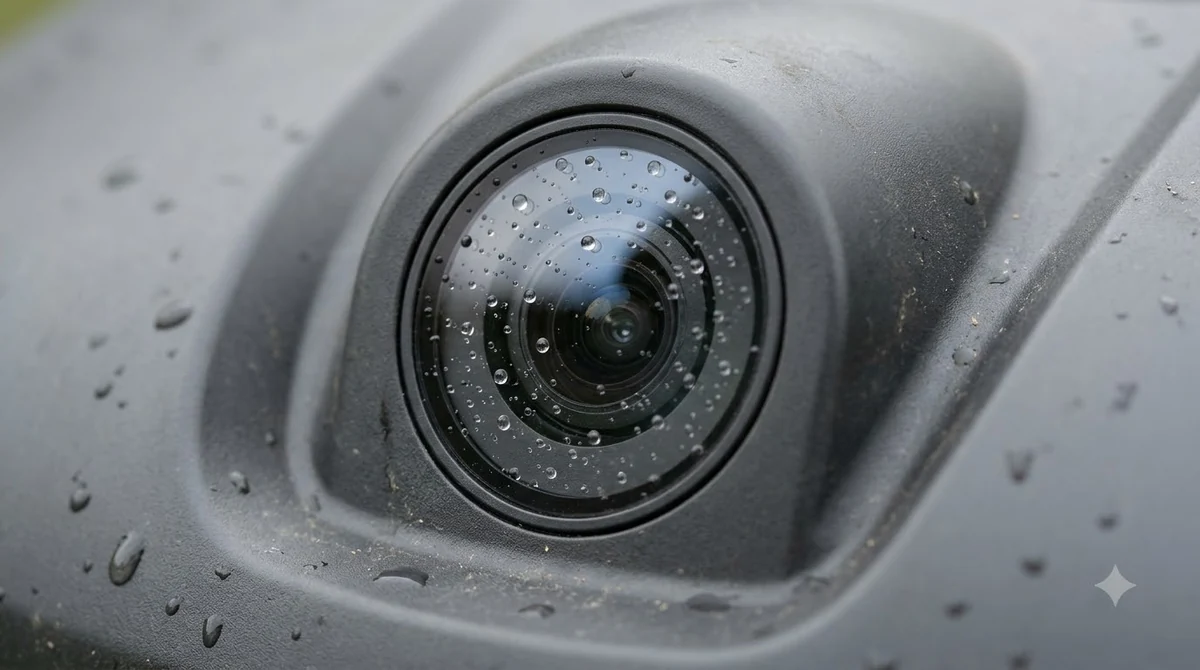
The Worx WR220 works differently. The Worx US page says “No boundary wire installation or lawn mapping required.” The mower uses a camera with a neural network to read the yard. The Worx page lists a 140-degree HDR camera and 10 m of magnetic strips for barriers, and 4 RFID tags mark zones. In practice that means less setup work before the first mow, but it also means the mower depends on what its camera can see and on the strips and tags being in place.
The two setups suit different owners. The Navimow puts more of the work into its app and positioning. The Worx puts more into the physical barrier and zone tags. Neither method is shown here to be more accurate, because the sources do not include a side-by-side test.
Segway Navimow i105N vs Worx Landroid Vision specs
The table below uses only the values the sources report. A dash means the source did not list the figure. Where two sources give different values, the table uses the one from the source that lists the spec most directly.
| Spec | Segway Navimow i105N | Worx Landroid Vision (WR220) |
|---|---|---|
| Lawn size | About 1/8 acre (0.13 acre, 506 m²) | 1/2 acre (recommended); page also says up to 1/5 acre |
| Navigation | Wire-free; RTK + vision per one source, GPS antenna per another | Camera and neural network; magnetic strip barriers; RFID zone tags; no mapping |
| Cutting height | 2 to 3.6 in (51 to 91 mm), manual | 1.5 to 3.5 in (about 38 to 89 mm), adjustable |
| Cutting width | 7.1 in (18 cm) | Not listed |
| Max slope | 30% | 17° (30%) |
| Battery | 2.55 Ah, about 60 min per charge | 4.0 Ah, 20V Max; runtime not listed |
| Charging | About 90 min | Charging current 1.5 A; time not listed |
| Weight | 24 lb (10.89 kg) | 33.32 lb |
| Noise | No dB figure published; described as very quiet | 59 dB |
| IP rating | IP66 | IPX5 |
| Warranty | 3 years | 3-year limited warranty |
The i105N’s 2 to 3.6 inch range also appears in another source as 1.2 to 2.4 inches. We did not confirm the lower range on a manufacturer page, so check the cutting height against Segway’s current listing before buying.
Cutting height, slope and drive
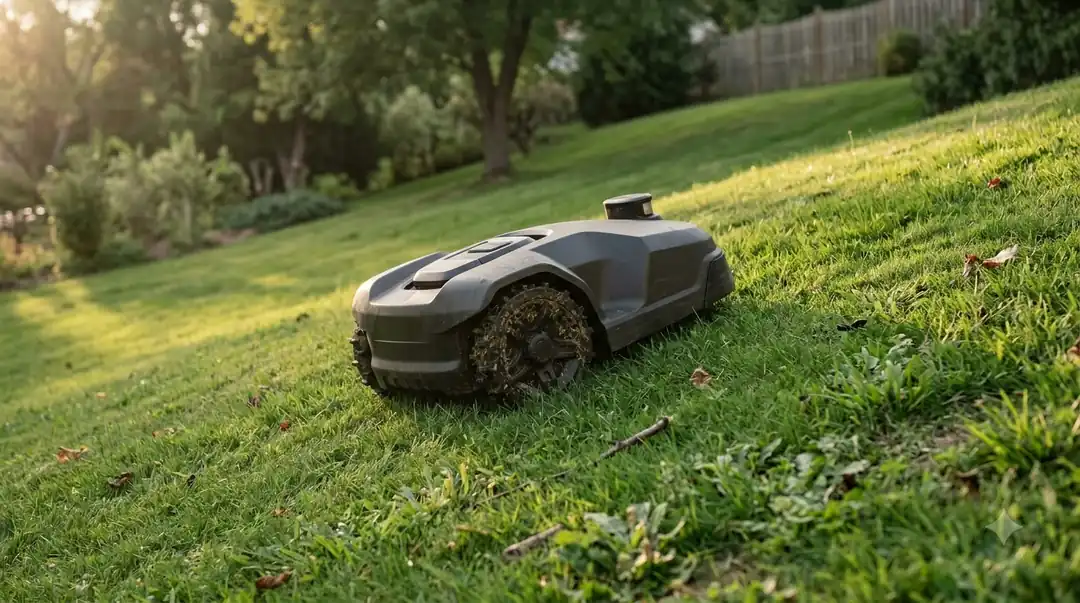
Both mowers list a maximum slope of about 30%, which is a useful common reference. The Worx lists 17 degrees, which converts to roughly 30%. Another listing gives the Navimow slope as 16 degrees, which is about 29%, so the figures are consistent, but we did not confirm either on a manufacturer page. A guide on how robot mower slope ratings work explains why the rating is a condition rather than a promise.
The Worx WR220 uses front-wheel drive, while the Navimow i105N is listed as rear-wheel drive by SmartHomeCompared. Drive layout affects how a mower handles wet grass and slopes, so it is worth checking the actual slope in your yard against the 30% rating rather than relying on the number alone.
Battery, charging and runtime
The Navimow i105N has a 2.55 Ah battery, the smallest battery figure in this comparison. SmartHomeCompared gives about 60 minutes of runtime per charge and about 90 minutes to recharge. Runtime is a rough guide, because cutting time depends on lawn size, grass height and slope. Our reading is that 60 minutes is enough for a small lawn near the 1/8 acre rating, but tight for a larger yard.
The Worx WR220 has a 4.0 Ah, 20V Max battery and a charging current of 1.5 A. Its page does not state runtime or full charge time, so the two batteries cannot be compared on runtime from these sources. Battery capacity alone does not tell you how long the mower runs.
Noise, weight and weather protection
Noise is one of the clearest differences in the Segway Navimow i105N vs Worx Landroid Vision data. The Worx WR220 is listed at 59 dB, and its page says the mower is “inaudible from just a few feet away.” The Navimow i105N has no dB figure in the sources we read. SmartHomeCompared describes it as very quiet, which is a description, not a measured value.
The Navimow is lighter at 24 lb (10.89 kg), compared with 33.32 lb for the Worx. Lighter weight makes lifting and moving the mower easier, and it is a practical point if you need to carry it over steps or around a fence. Weight does not tell you how the mower performs on a slope.
Weather protection is also listed differently. The Navimow i105N is rated IP66, and the Worx WR220 is rated IPX5 (water-resistant). The Worx rain sensor sends the mower back to its base when it detects rain, and it stays there until conditions are dry. The sources we read do not describe the Navimow’s rain behaviour in the same detail.
Setup you need to plan for
Neither mower needs a boundary wire, but both need planning before the first mow, and in Segway Navimow i105N vs Worx Landroid Vision the Worx has the better-documented setup. Worx’s installation plan says grass should be cut below 9 cm before the first run, that the path should be at least 1 m wide, and that the charging cable is 10 m long. Worx’s charging base guide recommends a flat, hard surface with a 2 m straight path in front, and at least 1.5 m of clearance behind when the base sits on the lawn side.
The Navimow’s setup is described in less detail in the sources we read, and we did not find a manufacturer installation page to compare with the Worx one. SmartHomeCompared lists its app features, including no-go zones, scheduling and weather-adaptive scheduling. GPS tracking needs an optional Navimow Access+ 4G module, which is an extra purchase.
Segway Navimow i105N vs Worx Landroid Vision: who each suits
For most buyers comparing the Segway Navimow i105N vs Worx Landroid Vision, the choice comes down to lawn size, whether they want a mapping step, and how much noise matters. Our reading is that the Navimow i105N suits a smaller lawn near its 1/8 acre rating, where a lighter mower and app-based zones are useful. The IP66 rating and the published 3-year warranty are also good to know. The main gap is the unconfirmed positioning method and the missing dB figure, so check both with Segway before you buy.
Our reading is that the Worx WR220 suits a single-zone yard where you do not want to map or install a boundary wire. Its published 59 dB noise figure and rain sensor make its behaviour easier to plan around. The two gaps to resolve are its conflicting lawn-size figures and the missing runtime.
What to check before you buy: the lawn area in square feet with a margin, the slope in your yard, whether you need GPS tracking, the noise you can accept near neighbours, and whether your Wi-Fi covers the mowing area. Confirm the lawn size, positioning method and runtime with each manufacturer’s current listing, because the sources in this article disagree on those points.
Frequently asked questions
Is the Segway Navimow i105N wire-free?
Yes. The sources we read describe it as wire-free. They differ on the positioning method, with one saying RTK plus vision and another saying a GPS antenna.
Does the Worx Landroid Vision need a boundary wire?
No. Worx says the WR220 needs no boundary wire and no lawn mapping. It uses a camera, magnetic strip barriers and RFID zone tags.
Which mower is quieter?
The sources do not allow a direct comparison. Worx publishes 59 dB for the WR220. The Navimow i105N has no published dB figure, and is only described as very quiet.
Which one is better for a 1/4 acre lawn?
Our reading is that the Navimow i105N’s 1/8 acre rating is smaller than 1/4 acre, so a 1/4 acre lawn would need a larger model. The Worx WR220’s 1/2 acre rating covers a 1/4 acre lawn on paper, but its conflicting 1/5 acre wording should be confirmed with Worx first.
Sources
- Worx Landroid lineup (Worx): WR220 listed as no-mapping; other Vision models use cloud RTK mapping.
- Landroid Vision AI 1/2 Acre (WR220) (Worx): lawn size, cutting height, slope, battery, noise, weight, IPX5, navigation.
- Segway Navimow i105N (SmartHomeCompared): lawn area, cutting height and width, slope, battery, weight, IP66, app features.
- Segway Navimow i105N review (TopTenReviews): rated lawn area of about 1/8 acre and the GPS antenna description.
- Installation plan (Worx support): grass height before first mow, path width, charging cable length.
- Installing the charging base (Worx support): flat hard surface, 2 m path in front and rear clearance.
 Up next9 min readReviews & CompareSegway Navimow i105N vs eufy E15: Which Robot Mower Fits Your LawnUpdated Nov 11, 2026
 7 min readReviews & CompareWorx Landroid vs Segway Navimow: Slope, Navigation and SpecsUpdated Nov 11, 2026
 7 min readReviews & CompareWorx Landroid Vision Review: 5 Models, Specs and Worth ItUpdated Nov 11, 2026
 8 min readReviews & CompareWorx Landroid Vision Problems and ComplaintsUpdated Nov 11, 2026
 9 min readReviews & CompareWorx Landroid Vision Pros and Cons: What Reviews ShowUpdated Nov 11, 2026
 8 min readReviews & Compareeufy E15 vs Worx Landroid Vision: Lawn Size, Slope and SpecsUpdated Nov 11, 2026