
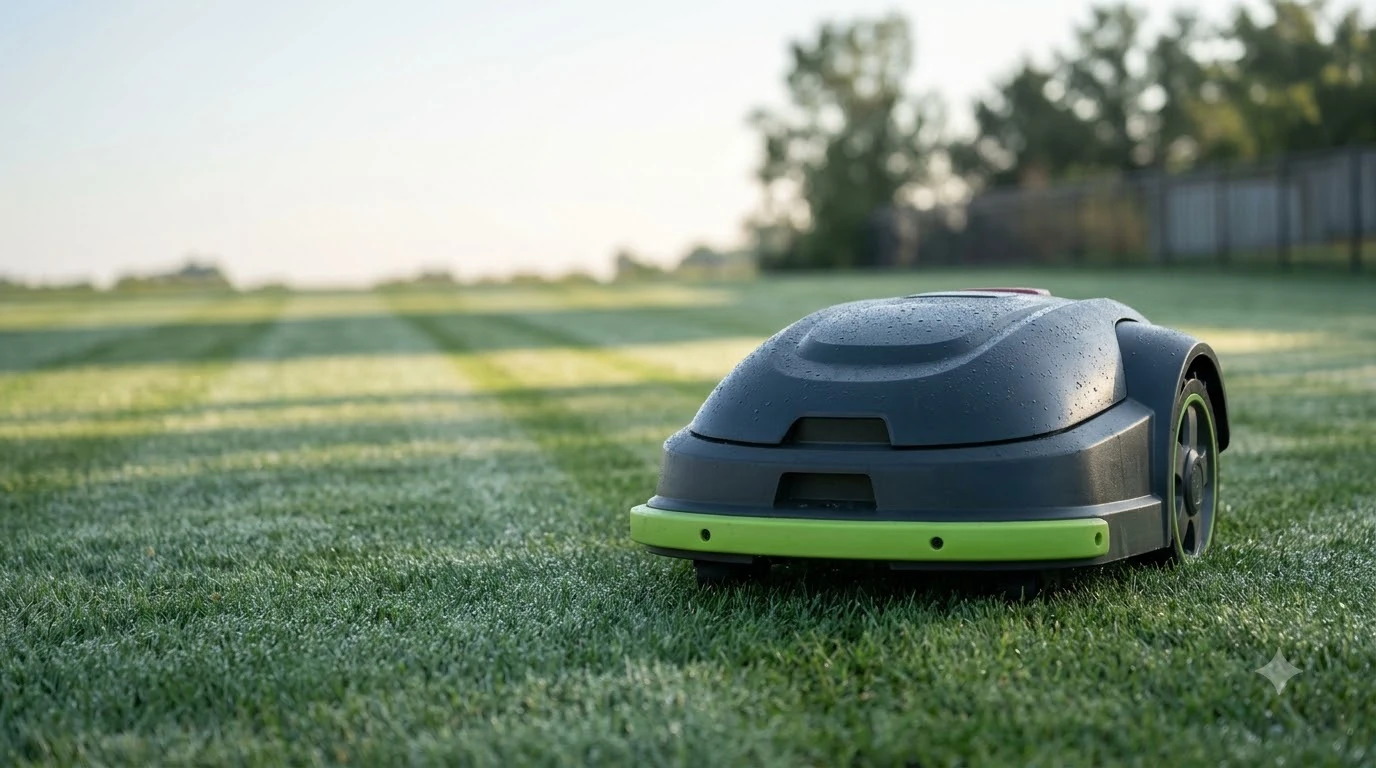

For robot mower battery 18V vs 20V vs 28V, the voltage number tells you the power class of the platform, but not how long a charge lasts. Runtime depends mainly on capacity, measured in amp-hours (Ah) or watt-hours (Wh), and on how hard your lawn makes the motors work. Compare the capacity and the rated coverage area before you compare voltages.
The short answer
- Voltage: a higher nominal voltage usually means a more powerful platform, but it does not set the runtime by itself.
- Capacity: Ah tells you how much charge a pack holds within one voltage platform. Wh combines voltage and Ah, so it is the fairer number when you compare packs of different voltages.
- Model fit: one source’s entry-level range is roughly 18V to 24V, mid-range 36V to 48V, and high-end 60V or more. Robot mowers do not always follow those tiers, so check the spec sheet.
- Our reading: pick the model by rated coverage and lawn conditions first, then use Wh to compare packs.
Robot mower battery 18V vs 20V vs 28V: what the number means
Battery voltage is a rated value on the pack, and a new lithium pack reads a little above that number when fully charged. One voltage guide gives the example of a 20V battery that “might read 21V+ when fully charged.” That tells you the number is a nominal label, not a direct measure of how much work the mower can do. For complete machines rather than packs, robot mowers compared in the field show how drive and battery work together.
The voltage is a rough indicator of the power class. A pack at a higher nominal voltage can deliver more power to the motors, which helps on thick grass or slopes. It does not tell you how much energy is stored. Two packs with the same voltage can have very different capacities, and two packs with different voltages can store similar energy.

Capacity: why Ah and Wh matter more than voltage
Amp-hours measure how much charge a pack holds at its voltage. Within one platform, a higher Ah pack usually gives a longer runtime. The same voltage guide advises choosing higher Ah, not higher voltage, when you want more runtime from a gas-style mower, and the same logic applies to battery mowers. Voltage tells only part of the story, and pack size across mower models compares capacity directly.
Watt-hours fix the problem of comparing across voltages. Wh is roughly voltage multiplied by Ah, so a 18V pack with a large Ah rating can store more energy than a 28V pack with a small one. When a spec sheet gives Wh, use it. When it gives only volts and Ah, multiply them yourself and compare the results.
| Spec line | What it tells you | Use it to |
|---|---|---|
| Voltage (V) | Power class of the platform | Group mowers by tier |
| Amp-hours (Ah) | Charge held within one voltage platform | Compare packs of the same voltage |
| Watt-hours (Wh) | Total stored energy, voltage times Ah | Compare packs across different voltages |
| Rated coverage (m2 or acres) | The area the maker expects the mower to handle | Check it fits your lawn with margin |
Wh is not always on the box. If the spec sheet gives only voltage and Ah, the result is an estimate of stored energy, not a rated runtime. A pack can store plenty of energy and still run short on a dense, steep lawn, because the motors draw more power on that terrain.
What changes runtime in a real yard
Runtime is shaped by the lawn as much as the pack. Thick grass, wet turf, slopes and frequent turns make the motors work harder, which drains the battery faster. A mower that is rated for a large area but runs on a small pack may need more charge cycles per week than you expect.
- Lawn density: thick, tall grass draws more power than a thin, short lawn.
- Slope: climbing draws more current, so a sloped yard shortens each run.
- Obstacles and turns: frequent turning and detours add motor work and time.
- Battery age: capacity declines with charge cycles, so an older pack holds less than its rating.
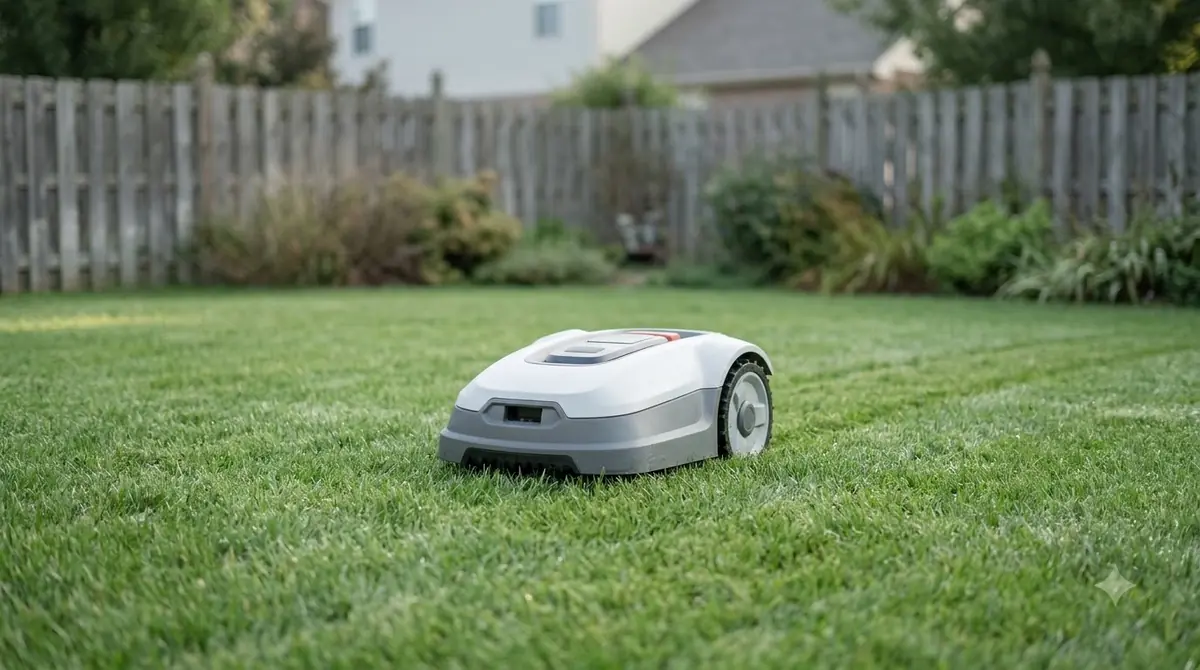
Robot mower battery 18V vs 20V vs 28V: choosing by model fit
Voltage tiers are a useful first filter, but they are not a rule for robot mowers. One voltage guide, aimed at a brand’s range, lists entry-level mowers at around 18V to 24V, mid-range at 36V to 48V, and high-end at 60V or more. Its example robot model sits at 20V to 25V. Other sources use different numbers, and one search summary described robot packs as typically 18V to 28V, but that claim did not appear in the guide we read. Chemistry matters as well as voltage, and lithium and lead-acid battery differences explain the trade-offs.
Our reading is that the platform matters less than the match between the mower’s rated area, its real runtime and your lawn size. A 20V or 28V robot mower with a clear coverage rating and a published Wh figure is easier to judge than a larger number on the box with no capacity data.
Heads up
Do not compare a battery-powered push mower’s voltage rules with a robot mower’s. Guides written for push mowers often say an 18V or 20V mower suits only very small, flat lawns. That limit does not apply directly to robots, which cut in short sessions and recharge automatically.
How to compare two packs before you buy
- Find the Wh figure. If it is missing, multiply the voltage by the Ah rating and label the result as an estimate.
- Check the rated coverage. Make sure the area is larger than your usable lawn, after you subtract beds, trees and other no-mow zones.
- Match the terrain. Note slopes, thick grass and frequent turns, and favor the larger Wh if your lawn is hard on the motors.
- Ask about replacement. Confirm the price and availability of a replacement pack for the exact model.
Related reads: To see how a specific model’s pack and features fit your yard, read the Eufy E15 pros and cons. To see how a specific model’s pack and features fit your yard, read about Navimow H2 strengths and weaknesses.
Frequently asked questions
Is a 28V robot mower better than an 18V or 20V model?
Not automatically. A higher voltage often means a more powerful platform, but runtime depends on capacity in Ah or Wh. Compare the rated coverage and the stored energy before you assume the higher voltage lasts longer.
Does voltage tell me how long a charge lasts?
No. Voltage is a power class. Runtime depends on the pack’s stored energy and on your lawn’s conditions, such as grass density, slope and the number of turns.
How do I convert Ah to Wh?
Multiply the voltage by the amp-hours. For example, a 20V pack rated at 4 Ah stores about 80 Wh by that estimate. Treat the result as stored energy, not a guaranteed runtime.
Can I upgrade a robot mower to a higher voltage battery?
Usually not. The mower’s motors, controller and charger are matched to one platform. Replace the pack with the manufacturer’s part for your exact model, and check whether a larger-capacity option is offered.
Sources
- What voltage should a new lawn mower battery have (Sunseeker): voltage tiers for entry, mid and high-end mowers, the advice to choose higher Ah for runtime, and the note that Wh is not covered. The article is from a brand and gives no robot-mower runtime figures.
- How often does the robotic lawnmower need to be charged? (Robomow): how runtime and charge time relate, and how terrain affects them. The article is from a brand.
 Up next7 min readReviews & CompareRTK vs GPS Robot Mower Accuracy: What the Difference MeansUpdated Nov 17, 2026
 6 min readReviews & CompareAnthbot M5 Slope Limit: What 45 Percent Means on Your LawnUpdated Nov 14, 2026
 7 min readReviews & CompareRobot Mower Open Box vs New: Warranty, Battery and ReturnsUpdated Nov 13, 2026
 6 min readReviews & CompareRobot Mower Battery Size Comparison: Capacity, Runtime and ChargeUpdated Nov 17, 2026
 7 min readReviews & CompareRefurbished vs New Robot Mower: Warranty, Battery and App ChecksUpdated Nov 17, 2026
 7 min readReviews & CompareLithium vs Lead Acid Robot Mower Battery: Which Lasts LongerUpdated Nov 17, 2026