
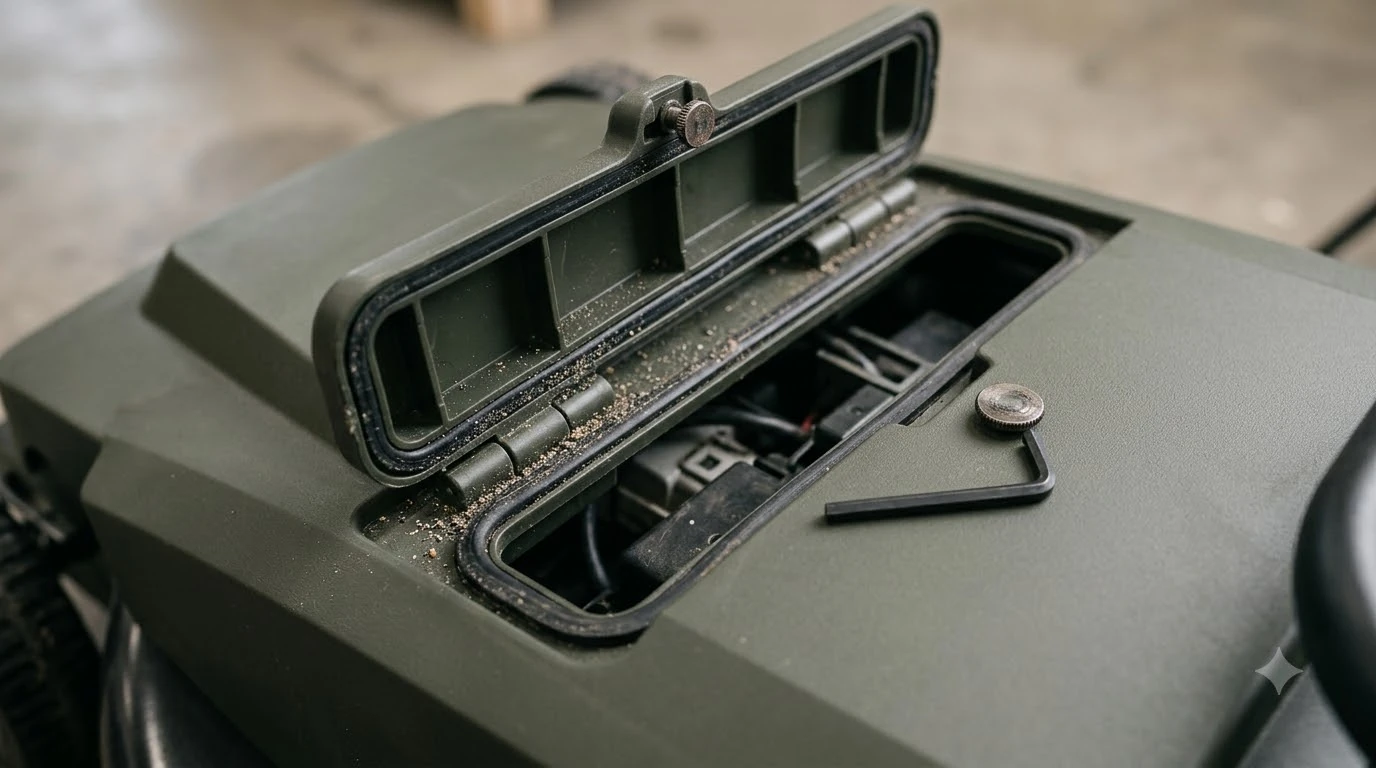

A robot mower battery size comparison is more useful when you look at capacity, runtime and charging time together, because a bigger battery is not always a longer working day. Robot mower batteries are rated in mAh, and small models may use about 1,500 mAh while robots for large lawns can exceed 4,000 mAh. Runtime per charge across residential models is commonly in the range of about 60 to 150 minutes, and the sources below agree that terrain, grass and temperature change the result a lot.
The short answer
- Small battery: around 1,500 mAh, suited to small lawns and short sessions.
- Large battery: more than 4,000 mAh for big lawns, with a longer session but a longer charge.
- Runtime is not fixed: it shrinks on slopes, in dense or tall grass and in extreme temperatures.
- Compare three numbers: capacity, runtime per charge and charge time, not capacity alone.
What a robot mower battery size comparison should measure
Battery size is usually given in mAh, which measures charge rather than energy. Robomow’s explainer makes the link to runtime directly: runtime is the battery’s capacity divided by the current the mower draws. Its worked example is an 18 V, 4,000 mAh pack drawing 3,000 mA, which runs for about 0.75 hours, or 45 minutes. A 3,500 mAh pack supplying 200 mA runs for 7.5 hours, which shows how much the load changes the result. Runtime drops on climbs, so a tested slope ranking of robot mowers is a useful companion to any battery size comparison.
Voltage also matters for the energy stored. Two packs with the same mAh rating can hold different amounts of energy if their voltages differ, so a fair comparison needs both figures, or a watt-hour rating if the maker gives one. Our reading is that a headline mAh number on its own tells you little about how long the mower will run.
Capacity, runtime and charge time side by side
Runtime is the number most owners care about, and it is the one that changes most with the job. Mowingmagic gives a typical range of about 60 to 150 minutes per charge for robotic mowers, and says a full charge takes roughly 60 to 120 minutes depending on the model and battery. Robomow’s charging formula is battery capacity in mAh divided by charging current in mA, multiplied by 1.3, and it says a modern lithium-ion pack may charge in as little as an hour. Capacity is only one spec, and pack voltage options for robot mowers decide how much power the motors can draw.
| Battery size (as given) | Typical use in the sources | What to expect |
|---|---|---|
| About 1,500 mAh | Smaller models and small lawns | Short sessions, quick charge |
| More than 4,000 mAh | Robots for large lawns | Longer sessions, longer charge |
Charge time is part of the trade-off. A larger pack can run longer per session but takes longer to fill, so the mower may spend more of the day docked. For a large lawn that a robot must cover in a set window, the time between sessions can matter as much as the length of each one.


What cuts runtime in real yards
Robomow says the maximum mowing time applies only on level ground. Slopes, frequent turns and dense or tough grass draw more power, so the mower returns to its dock sooner. Temperature also changes discharge, and it notes that it can speed up in late autumn or midsummer. Wheel slip and climbing both use energy, which is why how drive layout affects battery draw belongs in any runtime estimate. Hilly lawns cut runtime noticeably, so read steep slope limits for robot mowers before deciding how large a battery you need.
Mowingmagic adds that taller grass and larger cutting areas drain the battery faster, that dull blades strain the motor and shorten runtime, and that debris on the wheels or sensors wastes power. Keeping the grass at a consistent height and the blades sharp is a cheap way to protect the runtime you paid for.
Heads up
Mowingmagic says a lithium-ion pack generally lasts about 2 to 5 years, or roughly 500 to 1,000 charge cycles, and loses capacity over time. A battery that still works can deliver noticeably less runtime than it did when new.
Battery life and replacement
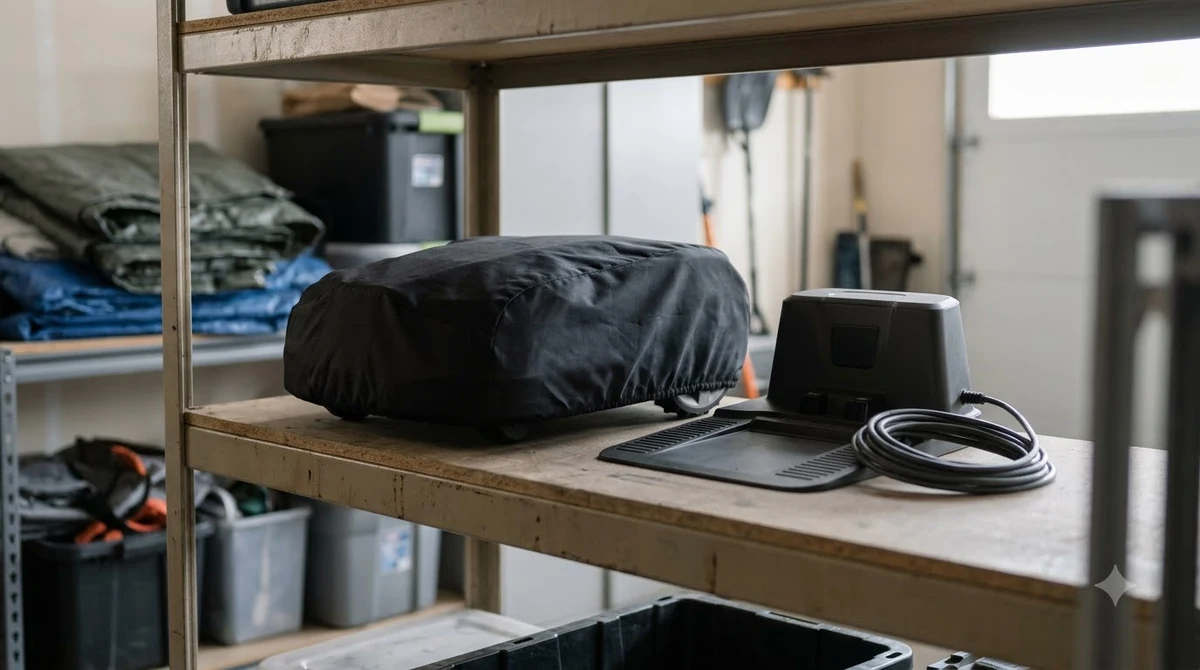
Battery age is a separate question from battery size. Mowingmagic says many models have user-replaceable batteries and suggests planning a replacement in the 2 to 5 year window. When you compare two mowers, check whether the pack is standard, whether replacements are sold for the model, and whether a larger pack is available as an upgrade. A larger original battery is not a guarantee of better long-term runtime if the replacement cost is high.
Who should look for a bigger battery
A larger battery suits a large or hilly lawn that must be cut in one or two sessions, where runtime is the limit. A smaller battery suits a compact yard that the mower covers easily in one session, where a fast charge and lower cost matter more. For most owners, the right size is the one whose runtime, after accounting for slopes and dense grass, still covers the whole lawn within the schedule they set. Battery size matters when comparing models, and Navimow i105N vs Worx Landroid Vision puts two wire-free mowers side by side. A bigger battery is only one reason to prefer a model, and Ecovacs against Dreame on robot mowers covers the rest.
Frequently asked questions
Is a bigger mAh battery always better?
Not always. A bigger pack usually runs longer, but it also takes longer to charge, and mAh alone does not show the energy stored without the voltage.
How long does a robot mower run on one charge?
Mowingmagic gives a typical range of about 60 to 150 minutes per charge for robotic mowers. Robomow’s example of a 4,000 mAh pack at a 3,000 mA draw works out to 45 minutes.
How long does a robot mower battery last?
Mowingmagic says lithium-ion packs generally last about 2 to 5 years, or roughly 500 to 1,000 charge cycles. Heat, cold and dull blades all shorten that window, according to the same guide.
How do I convert mAh into runtime?
Divide the capacity in mAh by the current the mower draws in mA, and the result is hours. Real mowing draw changes with slope and grass, so treat the result as an upper limit.
Sources
- Robomow, “How often does the robotic lawnmower need to be charged?” (vendor blog): mAh ranges, runtime formula, charging formula and terrain effects.
- Mowing Magic, “Robotic Lawn Mower Battery Life Explained” (independent guide): runtime and charge time ranges, lifespan and factors that affect runtime.
 Up next8 min readReviews & CompareRobot Mower vs Battery Push Mower: Cost, Time and Lawn SizeUpdated Nov 17, 2026
 7 min readReviews & CompareRobot Mower Subscription vs No Subscription: Which Brands ChargeUpdated Nov 14, 2026
 7 min readReviews & CompareRefurbished vs New Robot Mower: Warranty, Battery and App ChecksUpdated Nov 17, 2026
 7 min readReviews & CompareLithium vs Lead Acid Robot Mower Battery: Which Lasts LongerUpdated Nov 17, 2026
 7 min readReviews & CompareRobot Mower Open Box vs New: Warranty, Battery and ReturnsUpdated Nov 13, 2026
 7 min readReviews & CompareRobot Mower Battery 18V vs 20V vs 28V: What the Numbers MeanUpdated Nov 13, 2026