
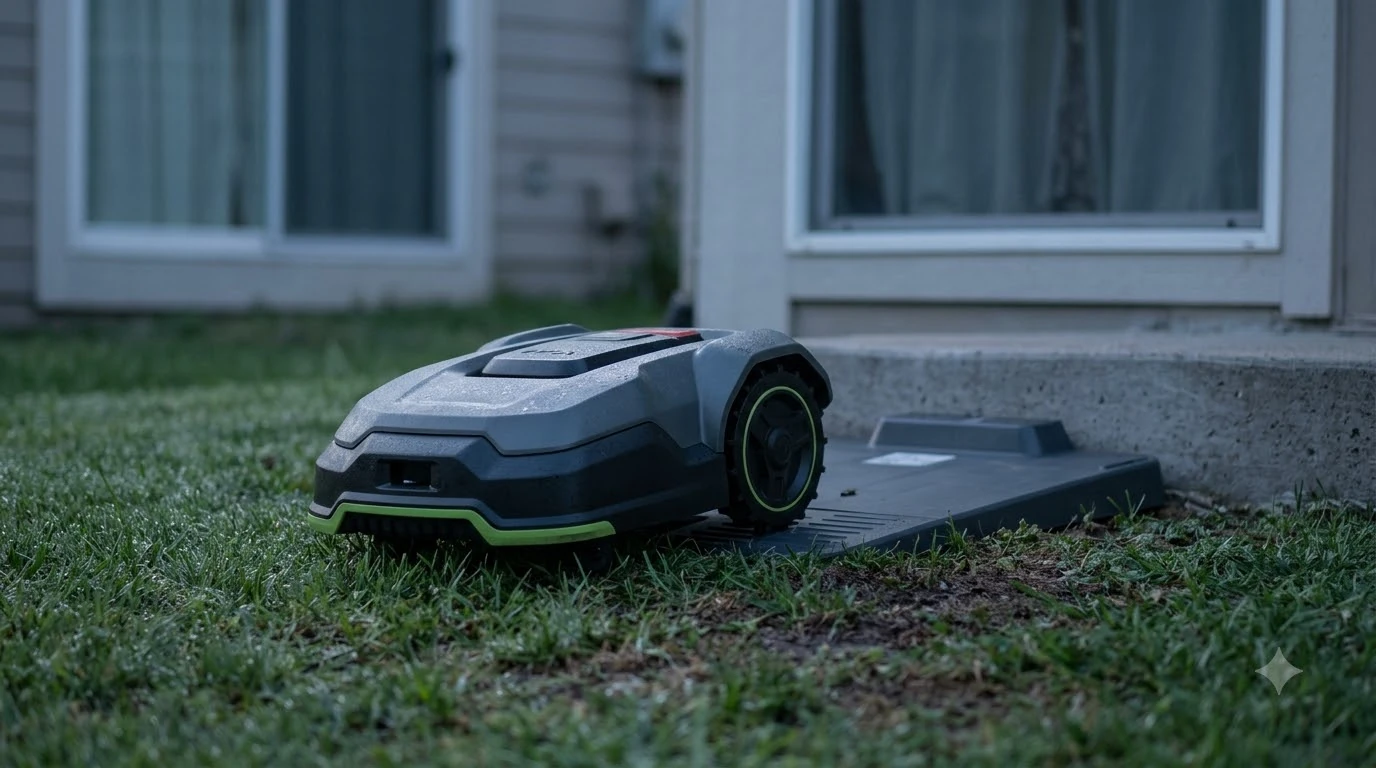

In an Ecovacs vs Dreame robot mower comparison, the main published gap is slope: the GOAT O1000 LiDAR PRO lists 45%, and the Dreame A3 AWD Pro 2500 lists 80%. Both are maker ratings, and the two companies publish their other specs in different formats, so the numbers cannot be lined up line for line. This guide shows what each side publishes, as of November 2026.
The short answer
- Slope: Dreame rates its A3 AWD Pro 2500 at 80% (about 38.7 degrees). Ecovacs rates the GOAT O1000 LiDAR PRO at 45% (about 24 degrees) for the work area.
- Coverage: Dreame publishes a 0.62-acre rating. Ecovacs publishes mowing efficiency per hour and no acre rating on its product page.
- Navigation: Both rely on LiDAR plus vision or camera systems. Neither page lists an RTK antenna for these models.
- Cutting: The width figures use different measurements, so do not read 8.66 inches against 15.8 inches as a direct gap.
- Our reading: for an Ecovacs vs Dreame robot mower decision, measure your steepest slope and your lawn area first, then compare those numbers with the ratings.
Specs side by side
The Ecovacs column comes from the GOAT O1000 LiDAR PRO product page. The Dreame column comes from a Mammotion comparison article that quotes Dreame’s own ratings. The official Dreame product page did not load during this research, so its weight, battery, noise and warranty figures are left out rather than guessed.
| Feature | GOAT O1000 LiDAR PRO (Ecovacs) | A3 AWD Pro 2500 (Dreame, as quoted) |
|---|---|---|
| Max slope | 45% (24 degrees) in the work area; 17% for the virtual boundary | 80% (38.7 degrees), a manufacturer rating |
| Rated coverage | No acre rating stated; about 120 m2 per hour (delicate) and about 180 m2 per hour (efficient) | 0.62 acre, about 2,500 m2, a manufacturer rating |
| Navigation | Multiline LiDAR, a 360-degree rotating LiDAR and a 3D ToF LiDAR, plus an AI camera | OmniSense 3.0: 3D LiDAR and AI vision, four-wheel drive |
| RTK antenna | Not listed | Not used, per the article |
| Cutting width | 8.66 inches (main deck) | 15.8 inches, dual-blade system |
| Edge trimmer | Separate trimmer, 7.09 in cutting width, 3.54 in edge mowing | EdgeMaster 2.0, to within 1.2 in of an edge |
| Cutting height | 1.18 to 3.15 inches in the spec table | Not confirmed |
| Battery and runtime | 5,200 mAh; about 90 minutes of mowing per charge; about 70 minutes to charge | Not confirmed |
| Noise | 61 dBA main body; 81 dBA trimmer | Not confirmed |
| Mower weight | 28.66 lb | Not confirmed |
| Water resistance | IPX6 (mower and station) | Not confirmed |
| Warranty | Not stated on the product page | Not confirmed |
Read this table as two separate sets of published numbers. Where one column says “not confirmed,” the figure was either not found on a page we could read or was not in the source we used, so it is not a claim that the product lacks it.
Ecovacs vs Dreame robot mower: slope ratings, 45% against 80%
On slope, the Dreame’s 80% rating is steeper on paper than the Ecovacs 45%, because 80% equals about 38.7 degrees and 45% equals about 24 degrees. The Ecovacs page also lists a 17% figure for the virtual boundary, which is a separate setting and should not be read as the mower’s general limit.
The Mammotion article that quotes the Dreame rating adds a caution for any buyer: a steep-slope rating “does not guarantee reliable traction on wet grass, loose soil, or sharp transitions.” That caveat applies to any mower, so a higher number is not a reason to skip the ground check; see how to choose a robot mower for slopes for how to measure yours. Our reading is that the 80% figure gives more margin on paper, and only your own grade measurements can show whether either mower has enough margin on your lawn.
Navigation: LiDAR and vision, with no RTK antenna listed
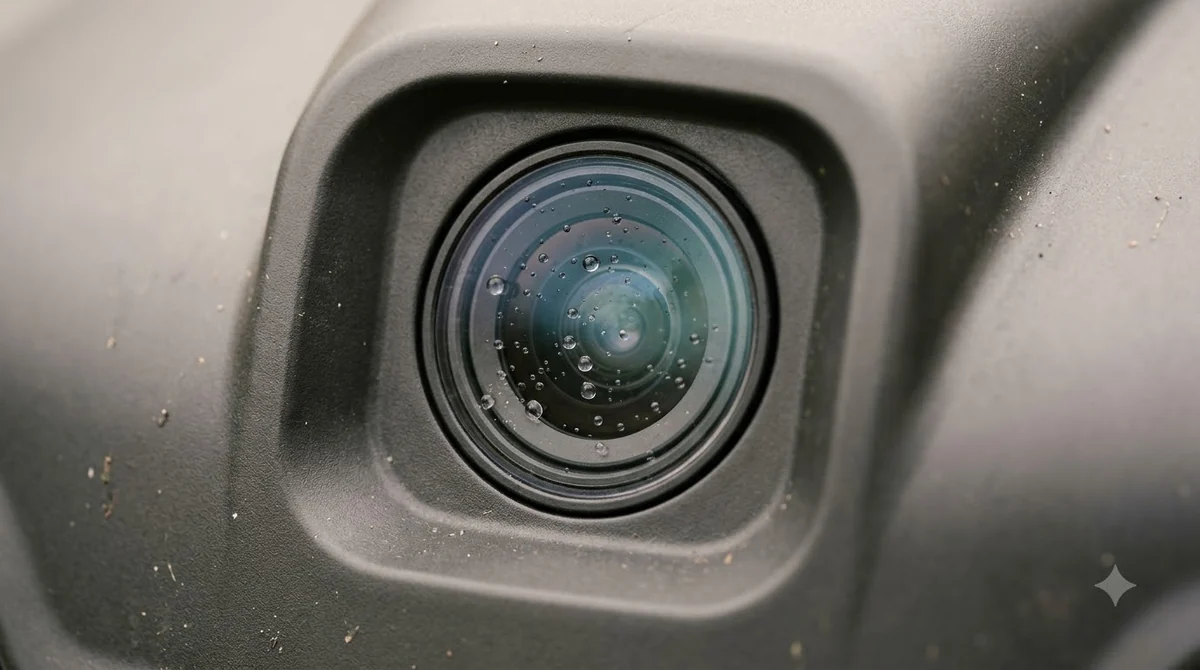
Both mowers in this comparison navigate without an RTK antenna on the models we checked, so neither depends on satellite signal the way an RTK model does. The two systems are built differently, though. The Ecovacs page describes a multiline LiDAR with a rotating 360-degree unit and a 3D ToF sensor, plus an AI camera for obstacle avoidance. The Dreame figures describe OmniSense 3.0, which pairs 3D LiDAR with AI vision.
The RTK variant of the GOAT O1000 is a different model. Its guide asks for the reference station to sit at least 6.56 feet from buildings and trees, a rule that belongs to that variant and is not listed for the LiDAR PRO. If you are comparing the RTK version instead, read its placement rules separately and see our ECOVACS GOAT O1000 RTK review. For the wider navigation trade-off, read RTK versus LiDAR.
Coverage: a rated acre figure against hourly efficiency
Dreame publishes a rated coverage of 0.62 acre for its mower, which is about 2,500 square meters. Ecovacs gives efficiency per hour, about 120 m2 in delicate mode and about 180 m2 in efficient mode, and does not turn that into an acre rating on the product page.
The Mammotion article advises treating rated coverage as a starting point, since trees, narrow passages, separate lawn sections, slopes and obstacles can reduce usable area. The Ecovacs hourly figures also depend on the mode you choose. When you weigh a coverage claim, measure your lawn in square meters and decide whether 2,500 m2 gives you room, or whether the Ecovacs per-hour rate and its 90-minute run per charge fit your schedule.
Cutting width, height and edges
Ecovacs lists 8.66 inches for the main deck, and Dreame lists 15.8 inches for its dual-blade system. The two pages do not define these measurements the same way, so the width gap is not a clean comparison of cutting performance. The Ecovacs spec table gives cutting height as 1.18 to 3.15 inches , while its feature text says 1.2 to 3.1 inches. The two ranges are close, but they are not identical, so check the range printed in your model’s manual. For how height settings affect results, see our note on edge cutting on a robot mower.
For edges, Dreame says its EdgeMaster 2.0 can cut to within 1.2 inches of an edge. The Mammotion article notes that this does not guarantee a clean finish around every corner, post or raised edge. The Ecovacs product page lists a separate trimmer with a 7.09-inch cutting width and 3.54-inch edge mowing, so edge work is handled by a different part of the machine.
Charging station and setup
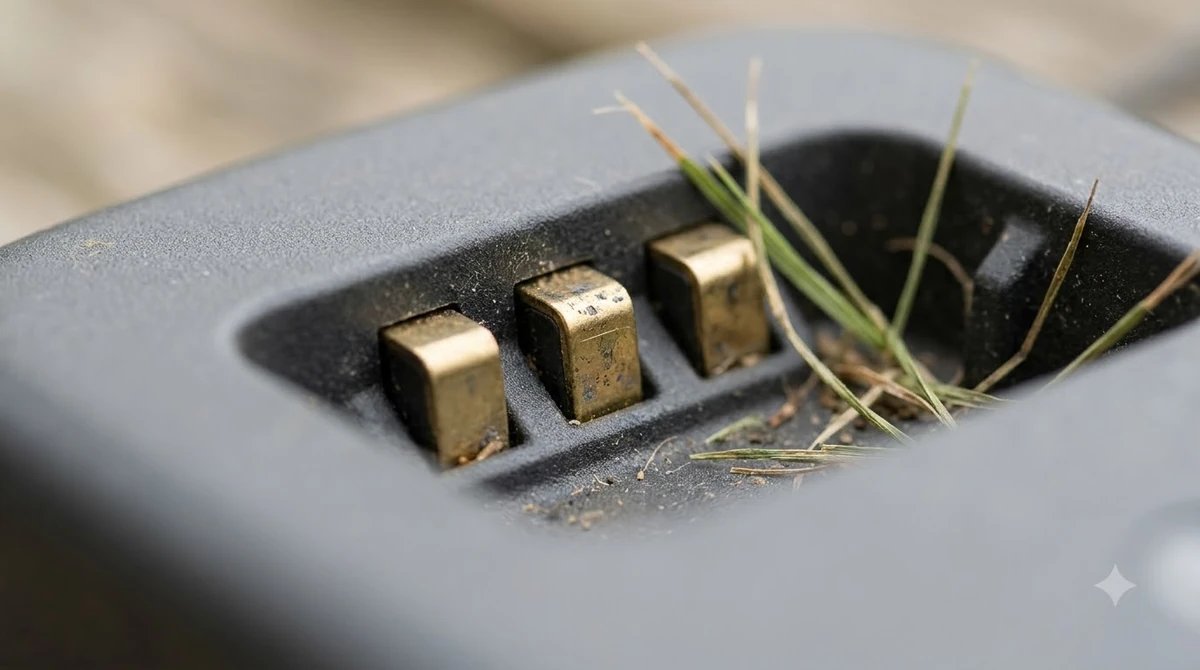
The GOAT O1000 LiDAR PRO station measures 27.80 by 16.93 by 11.22 inches. Ecovacs’ installation guide asks for a location with a strong and stable Wi-Fi signal and a power source, placed on flat turf with no slope. The guide also asks that the grass around the dock be kept trimmed to under 3.9 inches for docking.
- Clearance: the RTK model’s guide asks for 15.75 inches on each side and 6.56 feet in front. The LiDAR PRO page gives no clearance figure, so use the manual that ships with your unit; our guide to where to put a robot mower charging station covers the general rules.
- No-go zones: keep hazards such as ponds or cliffs at least 9.8 inches away, according to the same guide.
Who each option suits (our reading)
For an Ecovacs vs Dreame robot mower choice, the GOAT O1000 LiDAR PRO suits buyers whose yards stay below its 45% published slope limit and who want a spec sheet with battery, noise and station figures all listed. The Dreame suits steeper lots where the 0.62-acre and 80% ratings are the deciding numbers, provided those ratings hold on the actual grass.
- Choose the Ecovacs if your steepest section sits well under 45% and you want full published specs before you buy.
- Choose the Dreame if your yard is larger or steeper and you can confirm its weight, battery and warranty directly with Dreame first.
The Mammotion article reports “occasional sticking and turf disturbance during turns” in its own testing. We did not test either mower for this guide, so treat that as a claim from another brand, not as our finding.
What to check before you buy
Use this checklist before you settle on an Ecovacs vs Dreame robot mower pick.
- Measure your steepest section. Convert 45% to 24 degrees and 80% to 38.7 degrees, then compare each with the grade you measure.
- Measure the lawn in square meters. Compare the total with the Dreame’s 2,500 m2 rating, and check the Ecovacs hourly rates against your mowing time.
- Confirm the warranty. The Ecovacs product page does not state one, so ask the seller or check the maker’s warranty page.
- Get the missing Dreame specs. Weight, battery and noise were not confirmed here, so check them on the official Dreame page before you buy.
- Check station clearance. Compare your dock space with the manual’s clearance rules, not with a figure from a different model.
Frequently asked questions
Which robot mower has the steeper slope rating, Ecovacs or Dreame?
The Dreame A3 AWD Pro 2500 lists 80% (about 38.7 degrees), while the GOAT O1000 LiDAR PRO lists 45% (about 24 degrees) for its work area. Both are maker ratings, so compare them with the grade you measure on your own lawn.
Do these robot mowers need an RTK base station?
Neither page lists an RTK antenna for these two models. Both describe LiDAR navigation with vision or camera support. The RTK version of the GOAT O1000 is a separate model with its own station placement rules.
Is Dreame’s 0.62-acre rating reliable for my lawn?
Treat it as a starting point when you compare an Ecovacs vs Dreame robot mower coverage figure. The Mammotion article that quotes the figure says trees, narrow passages, separate lawn sections, slopes and obstacles can reduce the usable area of a rated mower.
Where should I place the Ecovacs charging station?
Put it on flat turf with no slope, near a strong Wi-Fi signal and a power source, with the grass around it trimmed under 3.9 inches. The RTK model’s guide also asks for 15.75 inches of clearance on each side and 6.56 feet in front.
Sources
- Ecovacs US, GOAT O1000 LiDAR PRO (maker): slope, cutting, navigation, efficiency, battery, noise, weight, station size and IP rating.
- Ecovacs US, robot lawn mower installation guide (maker): station placement, grass height, no-go zones and RTK model clearance.
- Mammotion US, best robot lawn mower article (competitor brand): quotes the Dreame A3 AWD Pro 2500 slope, coverage, navigation, cutting and edge figures, with the article’s caveats. These are Dreame’s ratings as quoted, not independently verified.
 Up next11 min readReviews & CompareEcovacs GOAT O1000 LiDAR PRO vs Navimow i110N: Specs ComparedUpdated Nov 16, 2026
 9 min readReviews & CompareNavimow vs Dreame: RTK vs LiDAR Robot Mowers ComparedUpdated Nov 16, 2026
 8 min readReviews & CompareECOVACS GOAT A3000 LiDAR PRO Review: Specs, Limits and What to CheckUpdated Nov 16, 2026
 9 min readReviews & CompareEcovacs GOAT A2000 LiDAR PRO Review: Specs, Mapping and LimitsUpdated Nov 16, 2026
 8 min readReviews & CompareMammotion LUBA 3 AWD 1500H vs Segway Navimow i215 LiDAR: Specs ComparedUpdated Nov 12, 2026
 7 min readReviews & CompareEcovacs GOAT A1600 RTK vs Dreame A1 Pro: Sourced Spec ComparisonUpdated Nov 11, 2026