
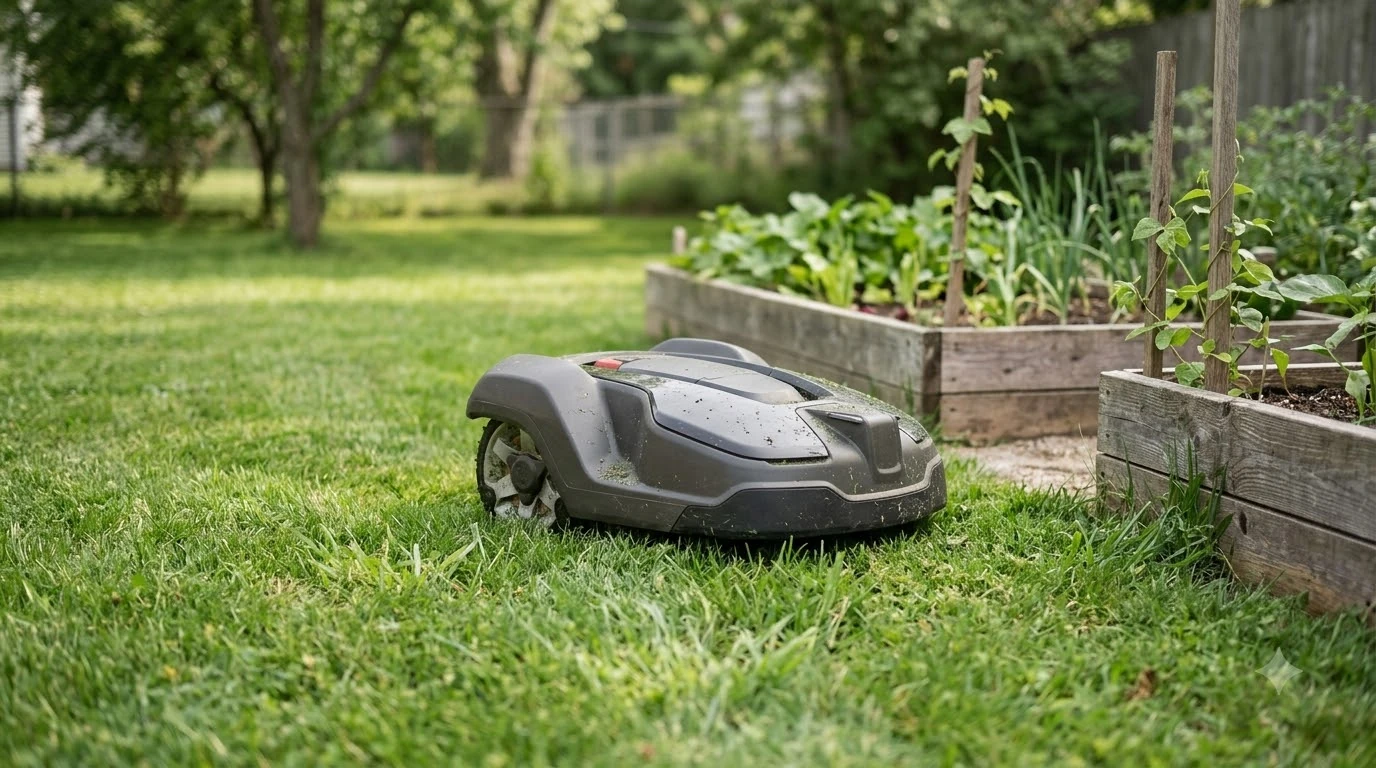

How much electricity does a robot mower use per month? Roughly 3 to 12 kWh for most home lawns, which is about $0.50 to $2 a month at the US average rate. The exact figure depends on lawn size, how often the mower runs, and the model. The numbers below come from manufacturer figures and independent guides, and the US cost assumes about 17 cents per kWh.
The short answer
- Typical use: about 5 to 12 kWh per month for a lawn of roughly 400 to 700 square meters, according to published specs.
- Small models: manufacturer figures of about 2.8 kWh per month at a small garden’s maximum area.
- Per session: roughly 0.5 to 1 kWh for one mowing run, so monthly use scales with how often it mows.
- Cost: about $0.50 to $2 a month in the US at 17 cents per kWh.
How much electricity does a robot mower use per month?
The most common published range is 5 to 12 kWh a month for a lawn of roughly 400 to 700 square meters. The Robomow support page gives a clearer breakdown by model. It assumes a garden at each model’s maximum area and six mowing months a year, and lists 2.8 kWh a month for its smaller RK1000 and RKS 800 models, 5.1 kWh for the RK2000, and 11.5 kWh for the RK4000 Pro. Those are manufacturer estimates, so treat them as a planning baseline rather than a meter reading. Electricity is only one line in the budget, and robot mower ownership costs in full puts it next to batteries, blades and servicing.
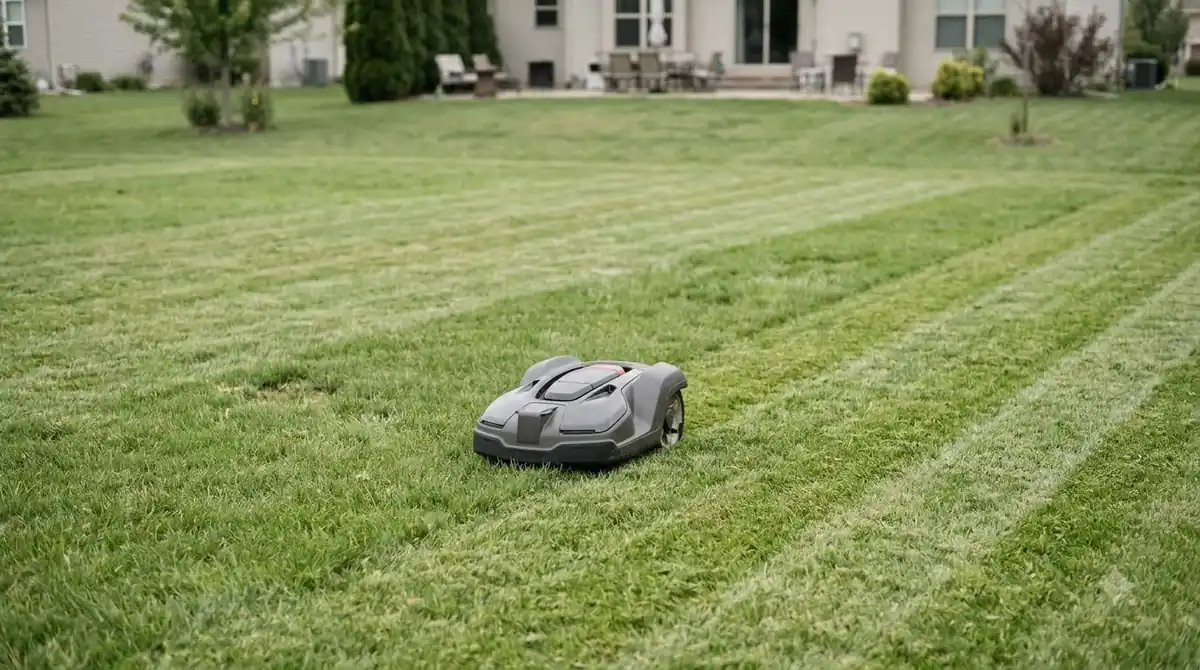
Lawn size is the main driver, because a larger area means more mowing time per cycle and more trips to the charger. A mower that covers a smaller lawn than its maximum uses less power, as the same Robomow page notes. Use the model’s maximum area as the upper limit and your own lawn size to estimate closer to the real figure.
Energy per mowing session and how to estimate your own use
A simpler way to estimate is to start from one session. MowerBot Lab’s 2026 guide puts a typical run at 0.5 to 1 kWh per session. If the mower runs about 12 sessions in a month, that gives 6 to 12 kWh, which lines up with the manufacturer range above.
To check your own number, count how many sessions the mower runs in a typical month. Multiply by 0.5 to 1 kWh for a rough estimate. If you have a smart plug or a plug-in energy meter, you can measure the charging station directly over a full month, which gives a more reliable result than any published figure.
| Estimated use per month | Cost at 17 cents per kWh (US average) | Where it fits |
|---|---|---|
| 2.8 kWh | About $0.48 | Small garden at maximum area, per Robomow |
| 5 kWh | About $0.85 | Low end of the typical range |
| 8.7 kWh | About $1.48 | Mid-size model, per Robomow |
| 12 kWh | About $2.04 | High end of the typical range |
The US rate is an average, and your utility may charge more or less. The costs in the table are our calculation from the kWh figures and the 17 cents assumption, and they exclude any standing charge, which applies to the house regardless of the mower.
Heads up
Some sources quote prices in other currencies. A UK comparison uses a rate of about 26 pence per kWh, which would roughly double the cost in the table. Always check the rate on your own bill before estimating.
Charging losses and idle power
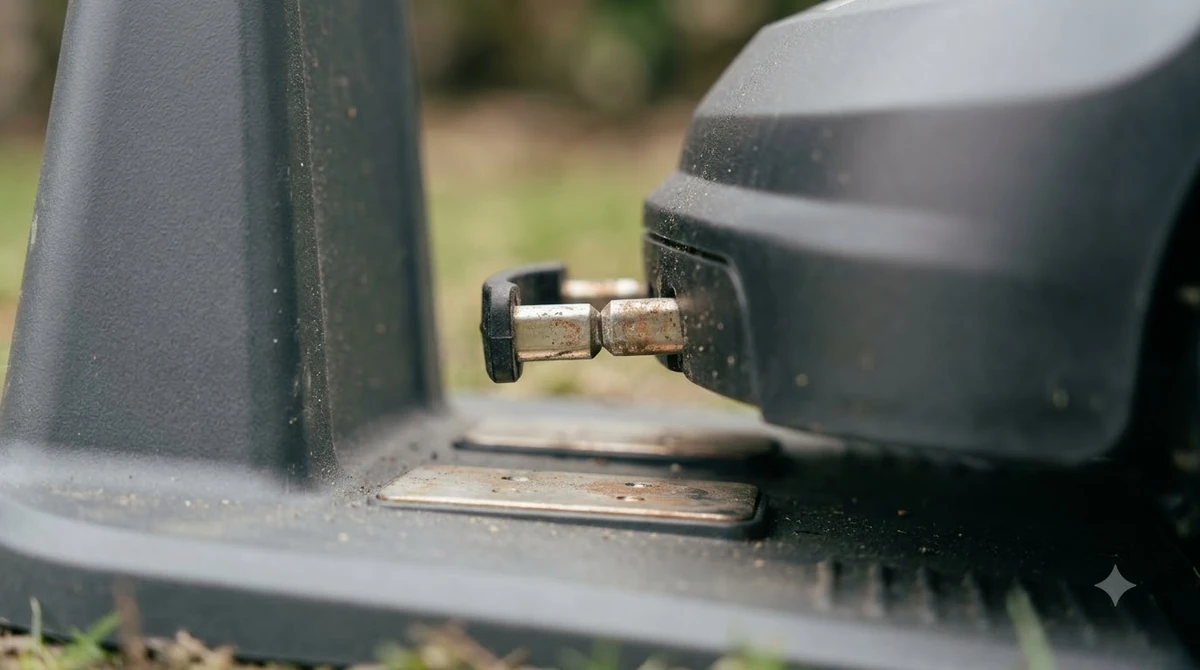
The kWh figures above are for the mower’s use, but charging is not perfectly efficient. Some energy is lost as heat when the battery charges, and the charging station may draw a small amount of power even when the mower is out. Published sources do not give a figure for either, so the table does not include them. In practice they add a little to the total, not enough to change the answer much.
What makes the monthly figure go up or down
Four things move the number most. Lawn size comes first, then how many hours the mower runs each day, then the number of mowing months, and last the model’s motor and blade size. A heavy-duty model running every day in a large yard will sit at the top of the range, and a small mower on a short season will sit at the bottom. Connected models may add a recurring charge, which is explained in subscription fees in the running cost with examples. Longer runs in thick grass draw more charge, as how tall grass affects runtime explains for a single battery.
Grass height and terrain matter too. Long or wet grass makes the motor work harder, and steep slopes can increase use. Our reading is that these effects are real but hard to quantify from published specs, so the monthly range is best treated as a reasonable band rather than a fixed figure.
Robot mower electricity cost compared with other mowers
The electricity cost of a robot mower is small compared with petrol. A gasoline rotary mower runs on fuel and needs servicing, and a battery versus gasoline study cited by EV Powered found the battery mower used a fraction of the primary energy of the gasoline model. That comparison is about total energy, not your bill, so do not read it as a direct money figure. If the running cost looks low, it is fair to ask whether the running cost saves money compared with a conventional mower. The comparison with paid mowing is set out in robot mower versus lawn service cost for typical lawn sizes. The savings are easier to judge with payback compared with a lawn service laid out for a typical yard.
For most owners, the running cost of a robot is dominated by blades and battery replacement, not electricity. MowerBot Lab puts blades and electricity together at about $30 a year, which is a useful way to frame the whole running cost.
- Count your sessions. Note how many times the mower runs in a typical month.
- Multiply. Use 0.5 to 1 kWh per session as a first estimate.
- Check the rate. Read the price per kWh on your bill.
- Measure if you can. A smart plug on the charging station gives the most accurate monthly figure.
Related reads: Some owners also wonder about resale value, which whether a robot mower adds home value discusses without overstating the effect. Landlords can read tax questions for rental property owners before assuming the running cost is deductible.
Frequently asked questions
How many kWh does a robot mower use per month?
Most home lawns fall between about 5 and 12 kWh a month. Small gardens can be lower, around 3 kWh, and the largest models can use more, depending on lawn size and how often they run.
How much does it cost to run a robot mower per month?
At the US average of about 17 cents per kWh, a typical robot mower costs roughly $0.50 to $2 a month in electricity. Your local rate may be higher or lower.
Does a robot mower use more power than a regular mower?
The electricity use of a robot mower is small, but a petrol mower needs fuel and servicing. Compared on total energy, the battery mower uses far less, according to a battery versus gasoline study cited by EV Powered.
How can I measure my robot mower’s electricity use?
Plug the charging station into a smart plug or a plug-in energy meter and record the reading over a full month. That gives a more accurate figure than any published estimate.
Sources
- Robomow support, average electricity cost (manufacturer): kWh per month by model at maximum area, six mowing months, and the 2.8 to 11.5 kWh range.
- EV Powered, How much energy does a robot lawn mower really use? (independent, published 7 October 2026): 5 to 12 kWh a month for 400 to 700 square meters, charging losses, and the battery versus gasoline energy study. The price in this article is a UK rate and is not used for the US figures.
- MowerBot Lab, Are Robot Lawn Mowers Worth It in 2026? (independent guide, updated September 7, 2026): 0.5 to 1 kWh per session, and the US average of about 17 cents per kWh (EIA).
 Up next7 min readLearnHow Much Maintenance Does a Robot Mower Need?Updated Nov 13, 2026
 7 min readLearnHow Much Does an RTK Base Station Cost?Updated Nov 14, 2026
 7 min readLearnHow Much Does a Robot Mower Charging Station Cost?Updated Nov 14, 2026
 7 min readLearnHow Much Does It Cost to Install a Robot Mower?Updated Nov 14, 2026
 7 min readLearnHow Much Does a Robot Mower Charging Station Cost to Replace?Updated Nov 12, 2026
 7 min readLearnHow Much Does a Robot Mower Weigh?Updated Nov 11, 2026