
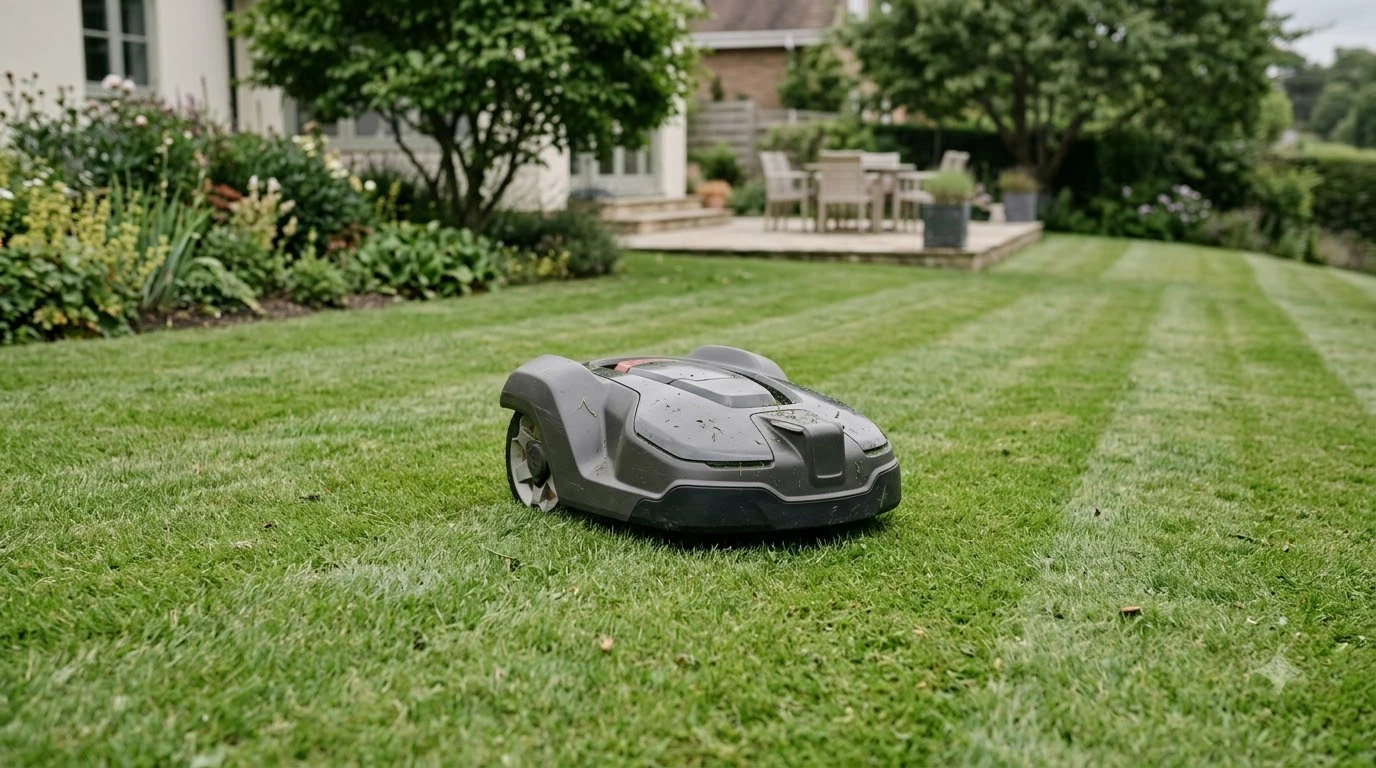

Do robot mowers increase home value? Not directly, based on the sources we read. No study we found measures a sale-price change from owning a robot mower. The better-supported link runs through curb appeal, since a well-kept lawn is what buyers see, and curb appeal has been measured against sale prices.
The answer depends on how the mower fits into a sale. The lawn it keeps neat is what buyers notice first, and the machine matters mainly when it answers a buyer’s worry about upkeep.
The short answer
- Direct effect: No study we read measures a sale-price change from a robot mower itself.
- Curb appeal: A University of Texas at Arlington study linked curb appeal to a sale premium of up to 7%.
- Upkeep worry: A 2026 National Association of Realtors article says large yards make buyers ask who will maintain them.
- Cost: Entry-level robot mowers now start under $1,000, compared with roughly $2,500 a few years ago, according to NAR.
Do robot mowers increase home value? What the evidence shows
The evidence supports a link between a neat lawn and sale price, but not a measured one for robot mowers specifically. Our search to answer do robot mowers increase home value found no peer-reviewed or government source that measures the effect. Some vendor blogs make the general argument that a robot mower can help a sale, but the pages we found did not publish sales data.
The National Association of Realtors article on robot mowers, dated September 16, 2026, does not report any change in home value or sale price. It focuses on buyer perception, product changes, and price points instead. That gap matters for owners planning a sale, because no source isolates a mower’s contribution from the house, the neighborhood, and the market at the time of sale.
Heads up
A 2021 Trees.com survey of 1,250 real estate professionals, reported by NAR, claimed property values can fall by up to 30% from poor landscaping alone. That was an opinion survey, not sales data, and the article does not explain how the figure was derived. Treat it as weak evidence.
What the curb appeal research shows
Curb appeal could account for up to 7% of a home’s value at sale, according to research from the University of Texas at Arlington. The study was led by Sriram Villupuram and published in The Journal of Real Estate Finance and Economics, and it used a scoring method rather than a survey of buyers.
The university’s February 2020 news release says researchers graded more than 400 Google Street View photos on a scale of one to four. The same release says the premium could reach 14% in cold residential markets, so local conditions clearly change the size of the effect.
| Measure | What the release reports |
|---|---|
| Method | Google Street View photos graded from one to four |
| Photos graded | More than 400 |
| Premium at sale | Up to 7% of home value |
| Premium in cold residential markets | Up to 14% |
Two limits matter here. The study measures curb appeal in general, not robot mowers, and a 2020 release cannot tell an owner how much of that premium a single lawn upgrade would carry. Our reading is that a mower helps only to the extent it keeps the visible lawn in good shape.
Why a robot mower can help a yard look better
A robot mower can help keep the lawn at the level buyers see during a showing, because it cuts on a schedule rather than whenever the owner finds time. The NAR article describes the buyer’s question directly: a half-acre backyard prompts the worry about “who is going to take care of all this.”
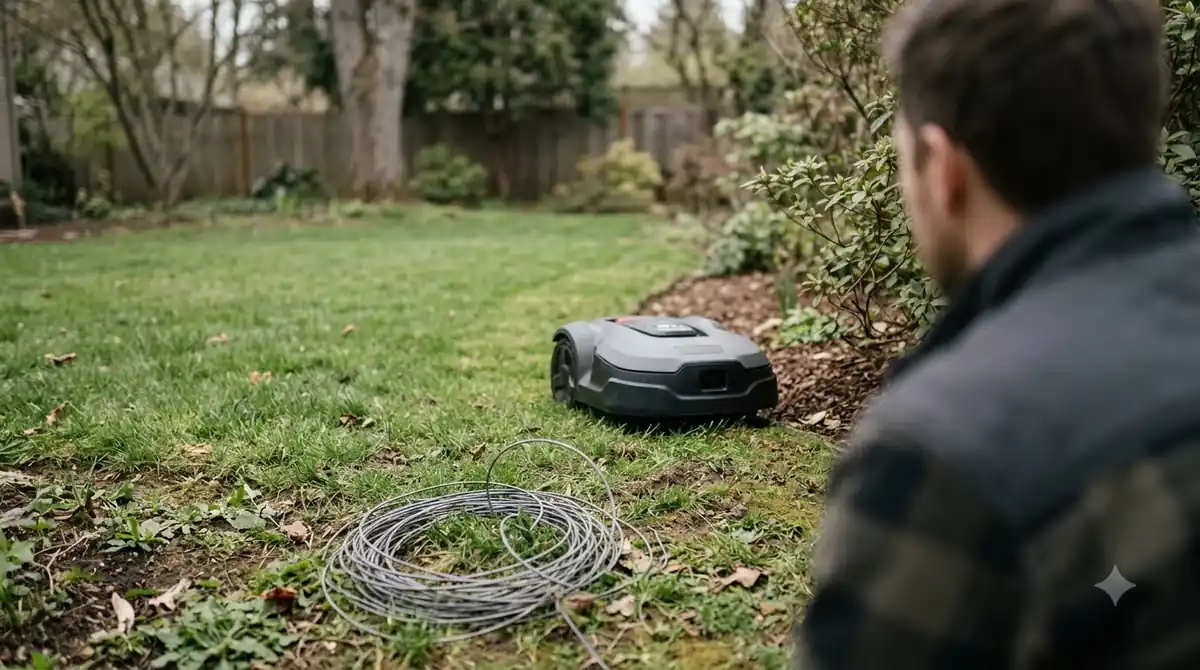
The same article says a robot mower “used to be a smart-home curiosity you’d point out on a showing,” and argues that the cost is now easier to justify for some homeowners. The article’s point concerns upkeep, not appraisal, but it links the machine to a concern many buyers already have. So do robot mowers increase home value through consistency? Our reading is that they help the lawn stay steady between listing photos, showings, and open houses, which is a curb appeal benefit rather than a measured price effect.
Cost compared with lawn service
Entry-level robot mowers now start under $1,000, compared with roughly $2,500 a few years ago, according to a September 2026 NAR article. The same article puts professional lawn service at $40 to $60 per mow, which it says can easily run past $2,000 a season.
The article does not source the lawn service figure, so treat it as the author’s estimate and compare quotes from local providers before deciding. For a wider view, see how robot lawn mower cost breaks down and how a robot mower compares with a lawn service over time.
| Option | Cost as reported | Source note |
|---|---|---|
| Entry-level robot mower | Starts under $1,000 | NAR, September 2026 |
| Robot mower a few years earlier | Roughly $2,500 floor | NAR, September 2026 |
| Professional lawn service | $40 to $60 per mow, can run past $2,000 a season | NAR, figure not sourced in the article |
Our reading is that the cost comparison matters more to the owner than to a buyer. A mower bought before listing can lower the owner’s own upkeep spending, but the sale price is still set by the lawn and the market, not by the receipt for the machine.
Limits that can reduce buyer appeal
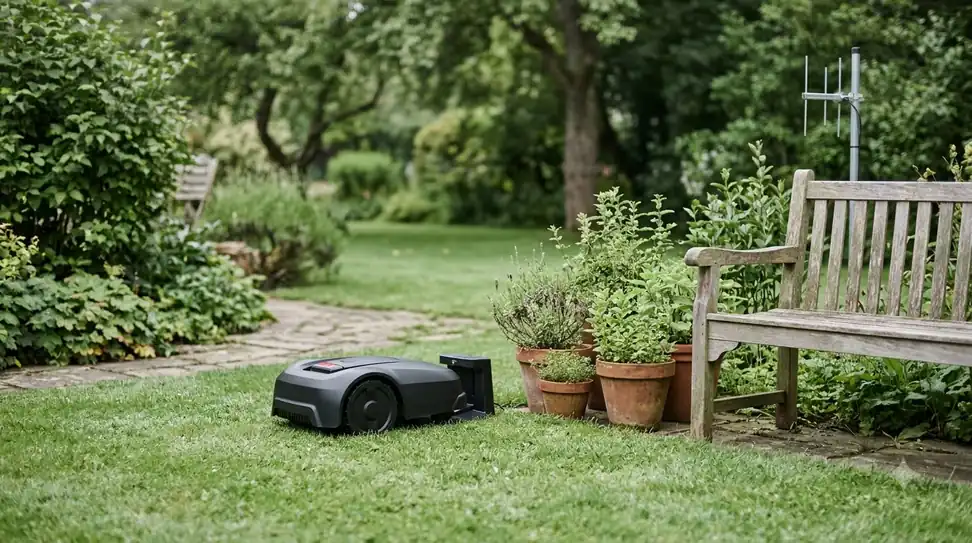
Robot mowers do not handle every lawn, and the NAR article names slope, tree cover, and navigation as the conditions to check first. Its advice is specific: unless the lawn is genuinely flat and simple, it recommends all-wheel drive, and for significant tree cover it advises against a mower that relies on RTK alone. You can test your own lawn against these conditions with our guide on whether your yard suits a robot mower.
The article notes that LiDAR uses laser mapping to help mowers navigate under tree cover, which is a different approach from satellite positioning. Our comparison of RTK, LiDAR, and vision navigation explains the trade-offs. Shopping for the right navigation type is therefore part of matching a mower to a specific yard, and it shapes how well the answer to do robot mowers increase home value holds for your lawn.
Heads up
The NAR article says even the best machines still needed hand trimming around a fence, garden beds, and tight corners, and that today’s robot mowers will not eliminate all lawn maintenance.
A buyer who sees a neat lawn beside a machine that struggles under trees may read the setup as a maintenance question. Our reading is that owners should describe the mower and its coverage honestly, rather than present it as a fix for every yard.
How to decide whether it helps your sale
Decide based on whether the lawn looks neat at listing and whether the mower matches the yard’s size, grade, and tree cover. Those two factors decide most of the outcome, and the sources we read support neither a price premium for the machine nor a guarantee that robot mowers increase home value.
- Check the curb appeal first. Lawn condition, edges, and beds are what buyers see from the street, and the curb appeal research is about exactly that.
- Match the mower to the yard. Consider grade, tree cover, and navigation type, as the NAR article advises.
- Compare with service cost. The NAR figures show the owner’s savings depend on how often the yard needs mowing in a season. Our look at whether robot lawn mowers are worth it adds the wider cost picture.
- Keep the records. Keep the maintenance schedule and manual so a buyer can see how the lawn has been cared for.
So, do robot mowers increase home value as an upgrade? Our reading is that a robot mower is a reasonable upkeep tool, but the sources do not show a measured price effect. If you plan to sell, judge it by how the lawn looks on listing day.
Frequently asked questions
Do robot mowers increase home value?
The sources we read do not measure whether robot mowers increase home value at sale. Research on curb appeal, which a well-kept lawn supports, found a premium of up to 7% of home value at sale. The mower matters mainly through how the lawn looks and how it answers a buyer’s upkeep concern.
How much does curb appeal affect sale price?
A 2020 study reported by the University of Texas at Arlington found curb appeal could account for up to 7% of a home’s value at sale. The same release says the premium could reach 14% in cold residential markets. Results vary by local market, so check recent sales with a local agent.
Are robot mowers cheaper than a lawn service?
The NAR article says entry-level robot mowers start under $1,000, while professional service is $40 to $60 per mow and can run past $2,000 a season. The article does not source the service figure, so compare quotes from local providers before deciding.
Do robot mowers work on every lawn?
No. NAR advises all-wheel drive for lawns that are not genuinely flat and simple, and it advises against RTK-only mowers under significant tree cover. Edges around fences, beds, and tight corners still need hand trimming in many yards.
Sources
- UTA News, University of Texas at Arlington (university): reported the 2020 curb appeal study, its method, and the 7% and 14% premium figures.
- NAR REALTOR Magazine, robot mower article by Brandon Doyle (trade association, September 16, 2026): buyer upkeep concern, price points, and navigation limits.
- NAR REALTOR News, Trees.com landscaping survey (trade association, 2021): a survey of 1,250 real estate professionals, not sales data.
 Up next9 min readLearnCan Someone Hack a Robot Mower? What Published Research ShowsUpdated Nov 11, 2026
 7 min readLearnDo Robot Mowers Hurt Frogs and Toads?Updated Nov 11, 2026
 8 min readLearnDo Robot Mowers Replace a Regular Mower?Updated Nov 11, 2026
 8 min readLearnCan a Robot Mower Mow in the Dark?Updated Nov 11, 2026
 10 min readLearnWhat to Look for in a Robot Lawn MowerUpdated Nov 11, 2026
 7 min readLearnDoes a Robot Mower Work With a Dog in the Yard?Updated Nov 11, 2026