
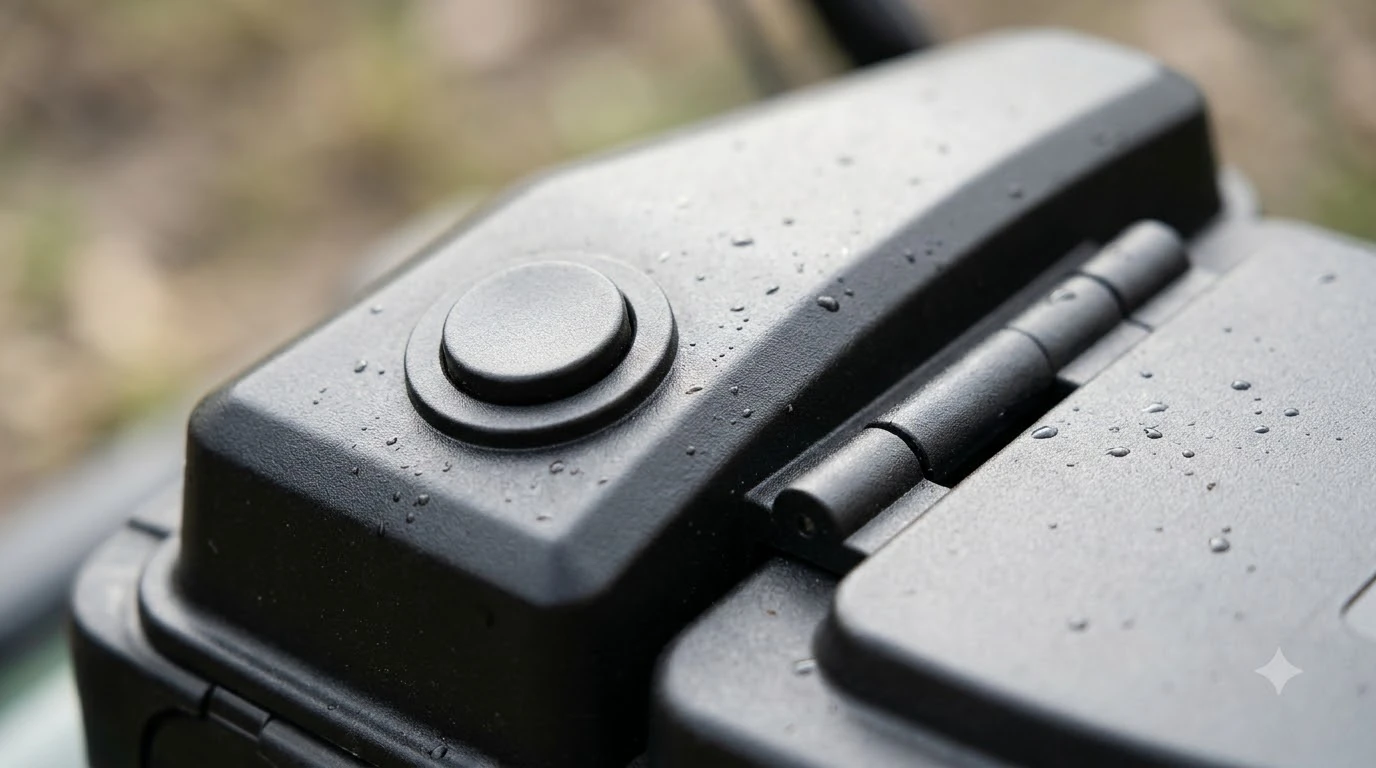

Yes, a robot mower for a yard with pop-up drainage emitters works well in dry weather because closed emitter caps sit nearly flush with the turf, though active water flow and sunken edges require specific height and scheduling adjustments. Most spring-loaded emitters only rise half an inch to one inch when water discharges, staying below standard robotic cutting decks during dry runs. However, scheduling a bot to run during heavy rain or leaving a poorly seated elbow protruding above the soil can lead to clipped plastic lids or stuck drive wheels.
The short answer
- Closed clearance: Spring-loaded caps like the NDS pop-up drain emitters retract flush when dry, letting blades pass safely overhead at standard turf heights.
- Active lift height: Hydrostatic pressure pushes typical covers up by 0.5 to 1 inch during discharge, creating a catch point if your cutting deck is set too low.
- Sensor blind spots: According to Husqvarna Automower support documentation, radar and ultrasonic sensors often miss flat objects lying close to the ground, meaning the bot will drive straight over the lid rather than steering around it.
- Rain scheduling: Parking the mower during storms prevents both blade contact with raised caps and wheel ruts in the saturated discharge zone.
- Installation depth: Setting the emitter rim level with or slightly below the soil surface prevents the front caster wheels from snagging the plastic collar.
How pop-up drainage emitters interact with robotic mower decks
Pop-up drainage emitters are low-profile relief valves designed to stay closed under spring tension until stormwater builds enough pressure to push the cap upward.
In dry conditions, a properly installed emitter presents almost no vertical profile above the soil line. Product specifications for common residential units, such as the Tempo 4-inch pop-up relief valve and the NDS 422G center-drive emitter, list a vertical lift of 0.5 inches to 1 inch when water is actively flowing. Because robotic mowers use lightweight pivoting razor blades mounted on a spinning disc under a protective skid plate, a closed cap poses minimal risk to the cutting system.
Problems arise when two factors overlap: active water discharge and low cutting heights. Cool-season grasses like Kentucky bluegrass, perennial ryegrass, and tall fescue perform best when maintained at 3.0 inches or higher, according to Purdue Extension turfgrass guidelines. At a 3-inch deck setting, the spinning blades easily clear even a fully extended 1-inch emitter cap. Conversely, if you maintain warm-season turf like zoysiagrass at 1.0 to 2.0 inches, an open emitter cap sits right inside the blade path, where repeated impacts can chip the polyolefin lid or dull the mower’s razor blades.
| Yard condition | Emitter cap state | Primary risk to robot mower | Recommended adjustment |
|---|---|---|---|
| Dry weather, level installation | Closed and flush | Minimal; blades pass cleanly overhead | Maintain normal cutting height and schedule |
| Active rainstorm or sump discharge | Raised 0.5 to 1 inch | Blade strikes on open lid; wheel spin in mud | Enable weather-based rain delay or park bot |
| Frost heave or eroded soil collar | Closed, but rim sits proud of turf | Front caster wheel hang-ups or skid plate scraping | Reseat elbow flush with soil or add a no-go zone |
| Short warm-season turf (under 2 inches) | Raised during irrigation or runoff | Direct contact between razor blades and plastic cap | Create a small virtual exclusion zone around the drain |
Why obstacle avoidance sensors rarely detect drainage emitters
Homeowners often assume a robot mower equipped with cameras, radar, or ultrasonic sensors will automatically steer around a drainage cap, yet manufacturer guidelines show these systems struggle with low-profile ground hardware.
Husqvarna notes in its technical support documentation for radar- and ultrasonic-equipped Automower models that objects lying flat or very close to the ground may not be detected at all. Even when a pop-up cap rises 1 inch during a downpour, tall grass blades surrounding the discharge point can mask its silhouette from forward-facing sensors. Furthermore, obstacle avoidance is automatically disabled near perimeter boundaries—within 60 cm (2 feet) of virtual EPOS boundaries and within 90 cm (3 feet) of physical boundary wires—which is frequently where downspout and French drain emitters terminate.
Because the mower will likely drive directly across the emitter rather than around it, mechanical clearance and ground flatness matter far more than smart sensor suites. Bump sensors will not trigger on a flush lid, and lift sensors only shut down the blades if a raised lip physically wedges under the chassis and lifts the front body upward.
Preparing the emitter zone before running your mower
Setting up a yard with drainage emitters requires checking physical grade transitions and configuring weather rules so the mower avoids the discharge area when water is flowing.
- Inspect the emitter rim height at soil level. Walk to each discharge point and press down on the outer collar to confirm frost heave or soil settling has not pushed the PVC elbow above the surrounding turf.
- Clear overgrown turf from the hinge or center stem. Trim grass runners that overlap the cap edge so the spring mechanism closes completely once water stops flowing rather than staying propped open.
- Match cutting height to grass species and cap lift. Keep cool-season lawns at 3 inches or higher so the blade disc clears the maximum 1-inch pop-up height even if unexpected runoff occurs.
- Activate automated rain parking. Turn on weather-synced parking features, such as Husqvarna’s Rain Guard routine, so the mower returns to its charging station before storm runoff opens the emitters and softens the surrounding soil.
- Map a virtual no-go zone if edges are exposed. If an emitter sits on a steep bank or has an exposed concrete splash block that catches the mower’s front wheels, draw a small exclusion island in your mower app or loop boundary wire around the perimeter.
Heads up
Do not rely on rain sensors alone if your pop-up emitters are connected to a basement sump pump or air conditioning condensate line. Those systems discharge water during sunny, dry weather, meaning the emitter cap can pop up while your robot mower is actively running its normal afternoon schedule.
Managing wet discharge zones and wheel traction
Even when blades clear the plastic lid, the saturated soil immediately downstream of a pop-up emitter can cause a two-wheel-drive robot mower to lose traction and dig ruts.
A standard 4-inch pop-up emitter is rated to release up to 40 gallons per minute during heavy flow, which concentrates water into a small fan-shaped patch of turf. When a lightweight robotic mower repeatedly turns on wet soil in that discharge zone, its rear drive wheels can tear up grass roots and create a muddy depression. Over time, that depression sinks lower than the plastic emitter collar, turning a once-flush drain into a raised lip that traps the mower’s front caster wheels.
To prevent rutting, avoid scheduling mowing cycles immediately after heavy storms, and consider installing turf reinforcement mesh flush with the grass in the water runoff path if your yard drains slowly.
Frequently asked questions
Will a robot mower cut the plastic lid off a pop-up drainage emitter?
When the emitter is closed and installed flush with the ground, the spinning blades sit well above the cap and will not touch it. Damage typically only happens if the cutting deck is set below 2 inches while the cap is pushed open by active water flow, or if soil erosion has left the entire housing sticking above the lawn.
Do I need to put boundary wire or a no-go zone around every pop-up emitter?
No, most flush-mounted emitters can be mowed straight over without creating an unmowed island around them. You only need a boundary wire loop or virtual exclusion zone if the emitter sits on an uneven slope, has an exposed collar that snags the mower’s wheels, or discharges constantly from a sump pump.
Can a robot mower drive over an emitter while water is actively coming out?
While the mower may physically pass over a flowing emitter if the deck is set high enough, doing so risks catching the raised lid and spinning the drive wheels in wet turf. Parking the mower during rainstorms protects both the emitter cap and the grass roots around the drain.
What happens if tall grass grows over my pop-up drainage emitter?
Overgrown grass runners can wedge under the spring-loaded lid and prevent it from closing flat after a storm, leaving it exposed to mower blades on the next dry run. Periodic hand-trimming around the rim keeps the cap sealing flush with the soil.
Sources
- Pop-Up Emitter for Yard Drainage & Stormwater Control (NDS): used for spring-loaded emitter operation and flush-profile design behavior.
- Object avoidance with radar or ultrasonic sensors in Automower robotic lawn mowers (Husqvarna): used for low-object detection limits and boundary-zone sensor deactivation distances.
- Park your mower during rain with Automower Smart Routines (Husqvarna): used for weather-triggered mower parking behavior during precipitation.
- Mowing, Dethatching, Aerifying (Purdue Extension): used for recommended turfgrass cutting height ranges across cool-season and warm-season lawn species.
 Up next9 min readBy YardChoosing and Setting Up a Robot Mower for a Lawn with Steep Roadside Drainage SwalesUpdated Nov 19, 2026
 9 min readBy YardChoosing and Using a Robot Mower for a Lawn With Thick Thatch and Moss PatchesUpdated Nov 19, 2026
 8 min readBy YardCan a Robot Mower Mow a Drainage Ditch?Updated Nov 11, 2026
 8 min readBy YardHow to Cut an Overgrown Lawn Before Using a Robot MowerUpdated Nov 11, 2026
 8 min readBy YardChoosing and Setting Up a Robot Mower for a Yard With a Pool Deck Coping LipUpdated Nov 19, 2026
 9 min readBy YardChoosing and Setting Up a Robot Mower for a Yard With a Split-Rail Wooden FenceUpdated Nov 19, 2026