
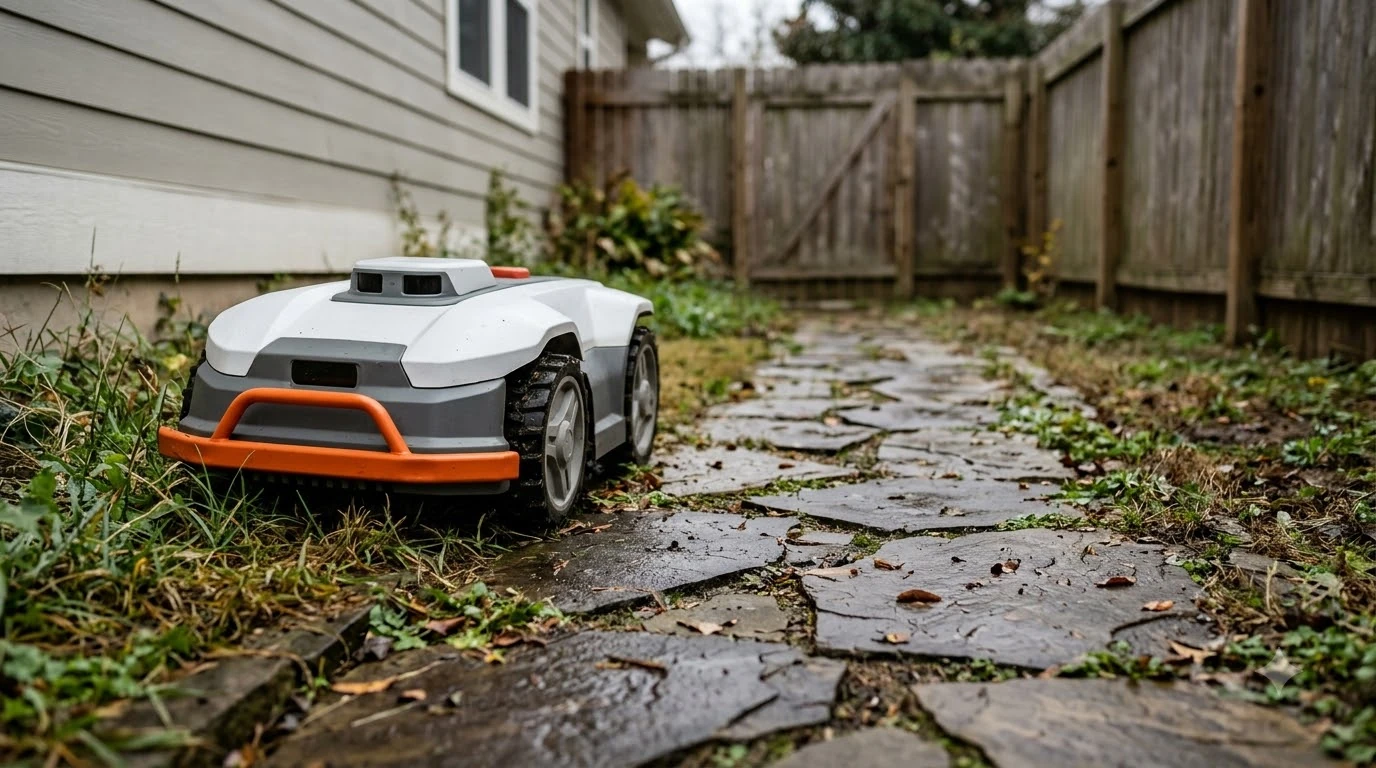

Can a robot mower run on a lawn treated with pre-emergent? Yes, provided you pause the automated schedule until the herbicide has been watered into the soil and the grass blades have dried completely. Unlike a weekly push mower that stays in the garage until you pull it out, a robotic mower follows an automated timer and will roll straight across freshly applied granules or wet liquid spray if you do not intervene. Waiting out that brief activation and drying window protects your soil barrier, keeps residue off the mower chassis, and keeps your yard safe for people and pets.
The short answer
- Pause the schedule first: Disable your robot mower’s automated timer before applying granular or liquid pre-emergent so it does not cross the yard unannounced.
- Water the product in: Most pre-emergent herbicides require irrigation or rainfall to move off the turfgrass foliage and form a weed-blocking barrier at the soil surface.
- Wait until turf is completely dry: Do not resume mowing until watering-in is finished and grass blades are dry, which prevents wet granules or spray residue from sticking to wheels and cutting discs.
- Check the EPA product label: Always follow the specific re-entry interval and watering instructions printed on your herbicide bag or bottle, as active ingredients vary.
- Skip post-treatment soil disruption: Once the pre-emergent barrier is active, avoid dethatching, aerating, or setting your robot’s deck so low that wheels scalp the soil surface.
Why automated mowing clashes with pre-emergent applications
A robot mower runs on a fixed schedule rather than waiting for human judgment, which makes timing critical whenever you apply lawn chemicals.
Pre-emergent herbicides work by creating a chemical barrier in the top layer of soil that stops germinating weed seeds—such as crabgrass—from developing roots. According to University of Minnesota Extension, pre-emergents must be watered into the soil after application; without water, the active ingredient remains sitting on the surface where it cannot intercept sprouting seeds.
If an automated mower leaves its charging station before watering-in is complete, two problems happen immediately. First, spinning blades and rubber drive wheels pick up loose granules or wet spray droplets from the grass blades, creating uneven coverage and bare gaps where weeds can break through later in the season. Second, damp chemical residue builds up under the mower deck and on wheel treads, where it can be tracked onto patios, walkways, or non-target garden beds.
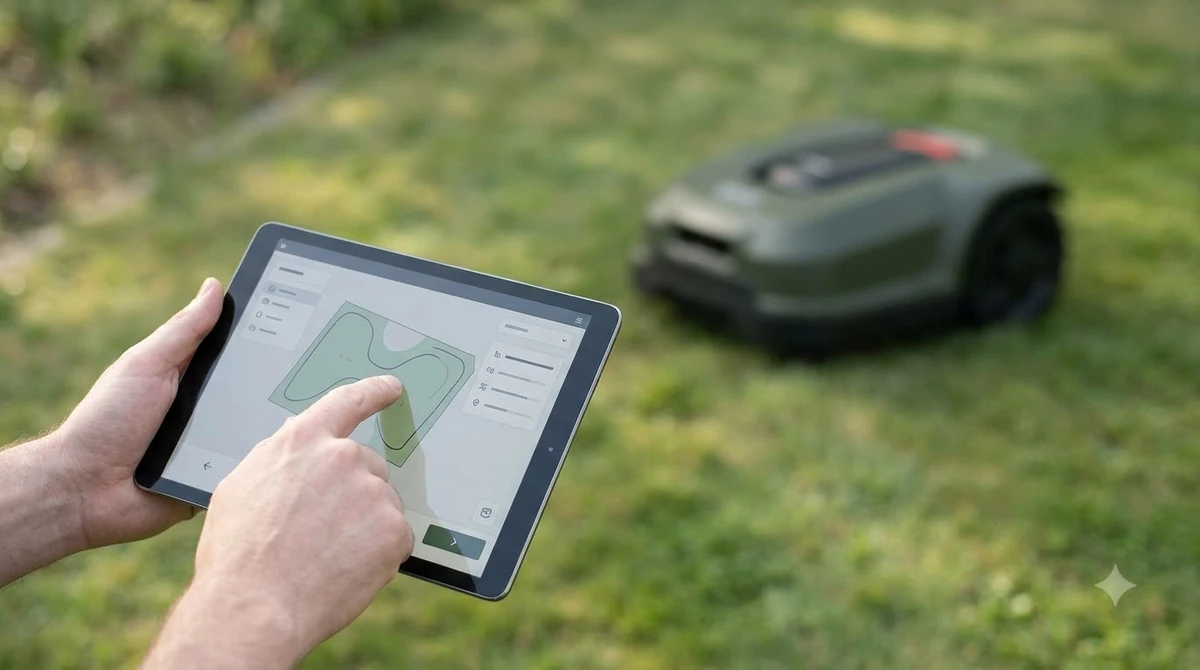
Granular vs. liquid pre-emergent timing for robot mowers
The exact pause window depends on whether you spread dry granules, spray a liquid concentrate, or use a combination weed-and-feed product.
Pure pre-emergent products target seeds in the soil rather than leaves, so their main requirement is irrigation to wash the active ingredient off the turf canopy and down to the soil line. Combination products that pair a pre-emergent with a post-emergent broadleaf killer behave differently: their post-emergent component needs dry time on weed foliage before any rain, watering, or mowing occurs. According to Mammotion’s lawn care guidance, there is no single universal waiting period across every herbicide, so the product label’s re-entry and watering directions always take priority over a generic timer.
| Formulation type | Watering-in requirement | When the robot mower can resume | Main risk of running too early |
|---|---|---|---|
| Granular pre-emergent | Water in promptly to dissolve granules into the top soil layer | After irrigation is complete and grass blades are dry | Wheels and blades fling undissolved granules onto paths and beds |
| Liquid pre-emergent | Usually watered in shortly after spraying per label directions | After spray dries or watering-in finishes and foliage dries | Wet chemical residue coats the undercarriage and wheels |
| Pre- + post-emergent combo | Requires a rain-free drying window first so foliage absorbs the post-emergent | Only after the label’s full rain-free and mowing delay window passes | Mowing removes treated weed leaves before the herbicide absorbs |
Heads up
Before resuming normal mowing, check your product’s re-entry instructions for people and pets. If the label requires keeping children and animals off the lawn until the treatment has dried or watered in, keep your robot mower parked during that same window so it does not transfer wet residue across the yard.
Step-by-step routine for treating a robot-mowed lawn
Following a simple sequence before and after application keeps both your weed barrier and your mower hardware protected.
- Mow the lawn one to two days beforehand. Let your robot complete a normal cutting cycle before treatment day so the turf canopy is even and clippings will not bury newly applied granules.
- Pause the robot mower in the app. Turn off scheduled mowing and smart weather-resume features so an unexpected run cannot trigger mid-application.
- Apply the pre-emergent evenly to dry turf. Spread granules or spray liquid according to the calibrated rate on the label, avoiding overlap strips or missed edges.
- Irrigate according to the label. Run your sprinklers (or time application before gentle rain) so the herbicide moves off the grass blades and settles into the soil surface.
- Inspect the grass and rinse mower wheels if needed. Once the turf is completely dry to the touch and any label re-entry window has passed, re-enable your mowing schedule and wipe down the wheels after the first run if any dust or residue appears.

Protecting the pre-emergent barrier once mowing resumes
After your robot mower returns to its regular schedule, keeping the soil barrier intact determines how well your lawn resists summer weeds.
As noted by University of Wisconsin-Madison Extension, cultivating or disturbing the soil after applying a pre-emergent breaks the protective chemical layer and allows weed seeds to germinate. While a robot mower does not dig into the ground like a dethatcher or core aerator, a few setup habits help keep that barrier undisturbed:
- Set a healthy cutting height: University turfgrass guidelines consistently recommend mowing cool-season lawns around 3 inches or higher. Taller grass shades the soil, cools the surface, and reduces sunlight reaching dormant weed seeds.
- Prevent wheel rutting on slopes and turns: Wet, soft soil right after heavy irrigation can rut under repeated robotic wheel turns. Let soggy turf firm up before sending a heavy all-wheel-drive model onto tight perimeter turns.
- Skip spring overseeding in treated zones: Pre-emergent herbicides block desirable turfgrass seed just as readily as crabgrass seed. Hold off on patching bare spots with seed until the label’s waiting period expires, typically in late summer or early fall.
Frequently asked questions
Will pre-emergent herbicide damage my robot mower’s plastic body or blades?
Dry, watered-in pre-emergent will not harm your robot mower once the lawn is dry. However, running the mower through wet spray or undissolved granules can coat plastic housings, sensors, and steel blades with sticky residue, which you should wipe off with a damp cloth per your manufacturer’s cleaning instructions.
How many hours should I wait after applying pre-emergent before starting my robot mower?
There is no single hour count that fits every brand, because waiting time depends on when you water the product in and how fast the grass dries. Most lawn care guides and herbicide labels require watering in pre-emergent and waiting until foliage is completely dry—often 24 to 48 hours if you rely on scheduled irrigation or rain.
Does mulching grass clippings with a robot mower ruin a pre-emergent barrier?
No, once the pre-emergent has been watered into the soil and the lawn is dry, normal daily micro-mulching will not disturb the chemical barrier. Because robot mowers trim only tiny tips of grass at a time, the fine clippings settle harmlessly without lifting soil or breaking the herbicide layer.
Should I aerate or dethatch before or after running pre-emergent with a robot mower?
Always complete core aeration or dethatching before applying pre-emergent herbicide, or wait until late summer or early fall after the weed-germination window has passed. Aerating or dethatching after application punches holes through the soil barrier and lets weed seeds sprout in the disturbed spots.
Sources
- Crabgrass (University of Minnesota Extension): Used for how pre-emergent herbicides form a soil barrier, watering-in requirements, and mowing height guidance.
- Crabgrass Management in Lawns (University of Wisconsin-Madison Division of Extension): Used for soil temperature timing, avoiding post-application soil disturbance, and overseeding restrictions.
- Best Time to Spray Weed Killer: A Complete Lawn Care Guide (Mammotion): Used for robotic mower scheduling considerations, label re-entry intervals, and pre-emergent vs. post-emergent watering rules.
 Up next9 min readLearnCan a Robot Mower Run Over a Garden Hose Without Cutting It?Updated Nov 19, 2026
 9 min readLearnCan You Run Two Different Robot Mower Brands Together?Updated Nov 19, 2026
 7 min readLearnShould a Robot Mower Run After Rain?Updated Nov 13, 2026
 6 min readLearnHow Often Should a Robot Mower Run?Updated Nov 14, 2026
 9 min readLearnShould a Robot Mower Run After Aeration?Updated Nov 12, 2026
 10 min readLearnCan a Robot Mower Charger Run on a Generator?Updated Nov 11, 2026