
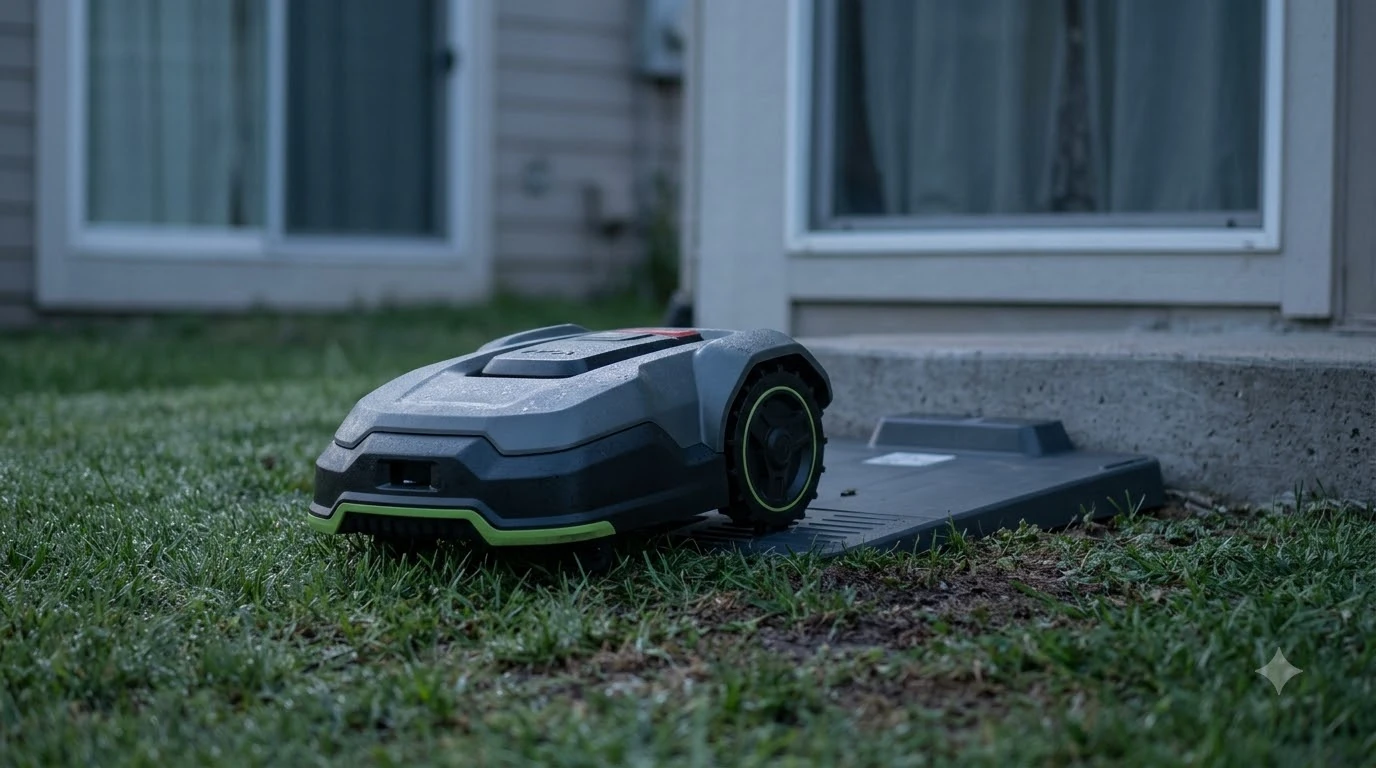

How often should a robot mower run? Most manufacturers and extension guides land between every two to three days in the active growing season and daily during fast growth. Ecovacs suggests running every 2 to 3 days, and daily during peak growing season. Robomow calls daily ideal but says experts are not united, and it suggests every other day in hot, dry weather. The right schedule depends more on how fast your grass grows than on a fixed calendar.
The short answer
- Peak growth (spring and early summer): every 1 to 2 days is common, and daily is often recommended.
- Normal season: every 2 to 3 days is a safe default for most lawns.
- Hot, dry weather: every other day, because slightly longer grass shades the soil.
- Winter: most sources recommend pausing when the grass is dormant.
- Never wait too long: Robomow advises avoiding gaps longer than about two days.
How often should a robot mower run in each season?
Seasonal guidance is the easiest way to plan a schedule. Eufy’s UK guide gives a rough pattern: 2 to 4 runs a week in early spring, 4 to 7 in late spring, 3 to 6 in summer, 2 to 4 in early autumn, and usually a winter pause. Ecovacs describes a similar pattern with slightly different numbers, and notes that autumn often needs two or three runs a week. Watering plans are covered in coordinating mowing with a sprinkler schedule, and it is worth reading before you change any settings.
These ranges are estimates, not rules. A lawn that is fertilized and watered may grow faster than a lawn that is not, and the same schedule can be too much in one yard and too little in another. Treat the seasonal table as a starting point, then adjust after a few weeks of watching how quickly the grass comes back.
Why grass height matters more than the calendar
The better question is how much grass is growing between runs. Extension guidance uses a simple rule: remove no more than about one-third of the leaf blade in any one mowing. LSU AgCenter calls this more of a general guideline than a strict law, but it is the most widely used limit for healthy turf.
Iowa State Extension shows how the interval changes with the cutting height. If the mower cuts at 2.0 inches and the grass reaches 3.0 inches, the estimate is about five days between mowings. At a 1.0-inch height the estimate drops to about 2.5 days, and at 3.0 inches it stretches to about 7.5 days. The estimates assume a growth rate of about 0.2 inch a day, so a faster lawn needs more runs.
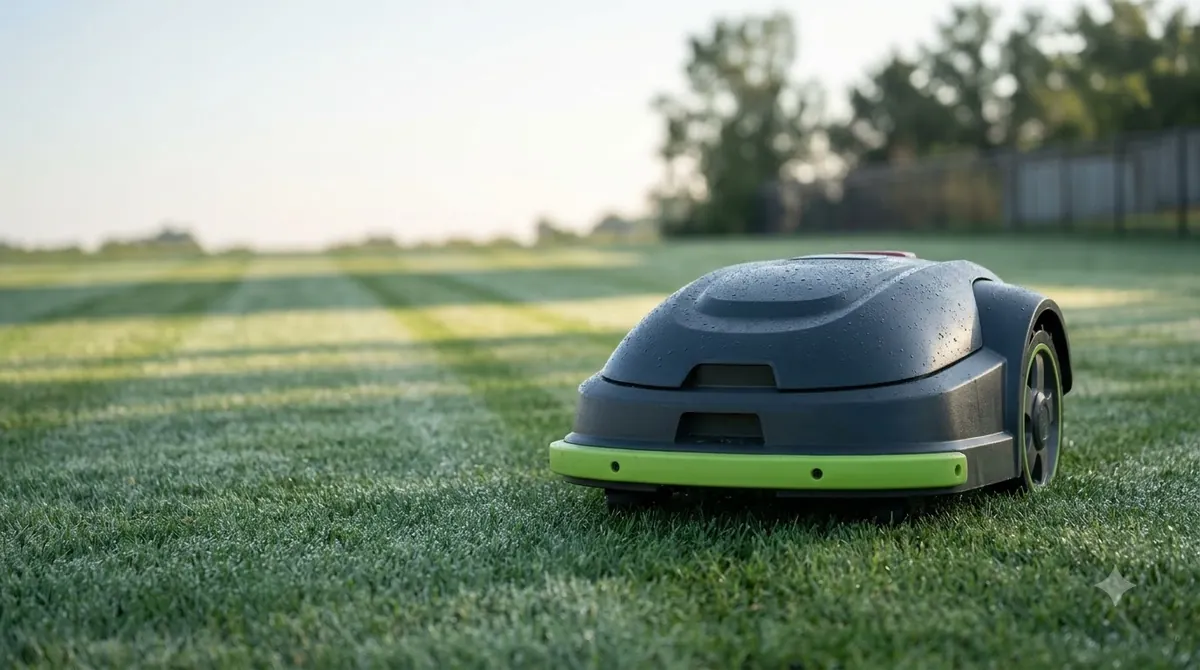
Heads up
Shorter cutting heights need more frequent mowing. If you set the robot mower low to get a tighter lawn, expect it to run more often, and check that the total mowing time still fits inside the daily window.
Why daily can be too much
Running daily feels like the safe choice, but there are reasons to hold back. Robomow says daily is ideal but “not set in stone,” and suggests an every-other-day schedule in hot, dry conditions. Ecovacs advises waiting until the grass is dry before the next run, which matters on lawns that stay damp in the morning. The logic is described in the reason mowers cut daily, which is a useful companion to this section. Wear concerns are addressed in whether daily runs are safe, and it is worth reading before you change any settings.
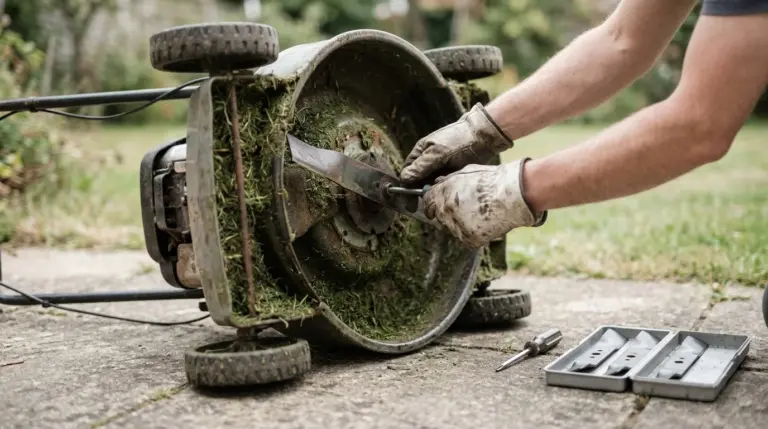
Daily running also adds wear. Husqvarna’s support material says gravel, stones or sand in the lawn wear blades much faster, and the blade life it lists is about 6 to 8 weeks for its long-life safety blades and 3 to 4 months for its endurance blades. Those intervals are a reminder that more runs means more blade replacements, even when the mower looks like it is doing well.
Check the daily limit and your mower’s settings
Many robot mowers have a daily cutting limit that you cannot simply override. Husqvarna says its daily limit cannot be set or extended by the user, and that the maximum cutting time depends on the capacity of the work area. If your schedule needs more time than the limit allows, the answer may be a larger mower or a smaller mowing zone, not a longer schedule. Long cycles are explained in slow-finishing mowing cycles, which is a useful companion to this section.
Look for the planning screen in your app. Most brands show how many hours the mower expects to need to cover the whole area, and comparing that with the time you have each day tells you whether daily running is realistic. The mower will also adjust its run based on grass growth and weather, so a schedule that looks busy on paper may still be fine in practice.
Frequently asked questions
Is it bad to run a robot mower every day?
Not necessarily. Some guides call daily running ideal during fast growth, but others say it is not needed for every lawn. Daily running adds wear and can cut the grass too often if the mower is set to a low height, so watch the blades and the lawn condition.
Should a robot mower run in the rain?
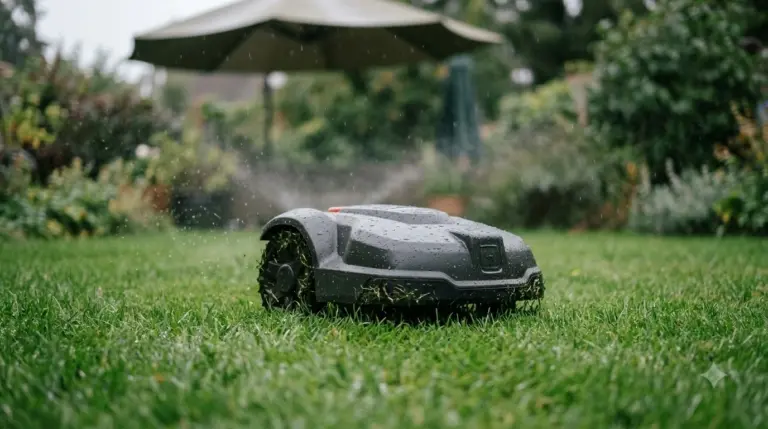
Ecovacs advises waiting until the grass is dry before running the mower again. Wet grass can clump and leave uneven cuts, so many owners pause the schedule after heavy rain and let the lawn dry first.
What if I am away for a week?
Robomow advises avoiding gaps longer than about two days, because the grass can get too long for the mower to cut cleanly. If you will be away, set the mower to a steady schedule before you leave, and check the app when you return.
Do robot mowers need to run in winter?
Most sources recommend a winter pause when the grass is dormant. Eufy’s UK guide and LSU AgCenter both say dormant turf generally needs little or no mowing, so check your grass type and your local conditions before you restart the schedule in spring.
Sources
- Ecovacs: How often to run a robot lawn mower (manufacturer blog): 2 to 3 day guideline, daily in peak season, wait for dry grass.
- Robomow: How often should a robotic lawnmower mow (manufacturer blog): daily as ideal, every other day in hot dry weather, experiment to find the interval.
- Iowa State University Extension: Can I mow less often if I cut grass really short (university extension): one-third rule and estimated frequency at different heights.
- LSU AgCenter: Mowing rule (university extension): one-third rule as a general guideline, homeowner frequency in the growing season.
 Up next9 min readLearnShould a Robot Mower Run After Aeration?Updated Nov 12, 2026
 7 min readLearnShould a Robot Mower Run After Rain?Updated Nov 13, 2026
 6 min readLearnHow Often to Change Robot Mower Blades?Updated Nov 13, 2026
 8 min readLearnHow Often Does a Robot Mower Need to Charge?Updated Nov 11, 2026
 6 min readLearnShould I Buy a Used Robot Mower? A Practical ChecklistUpdated Nov 13, 2026
 8 min readLearnWhat IP Rating Should a Robot Mower Have?Updated Nov 11, 2026