
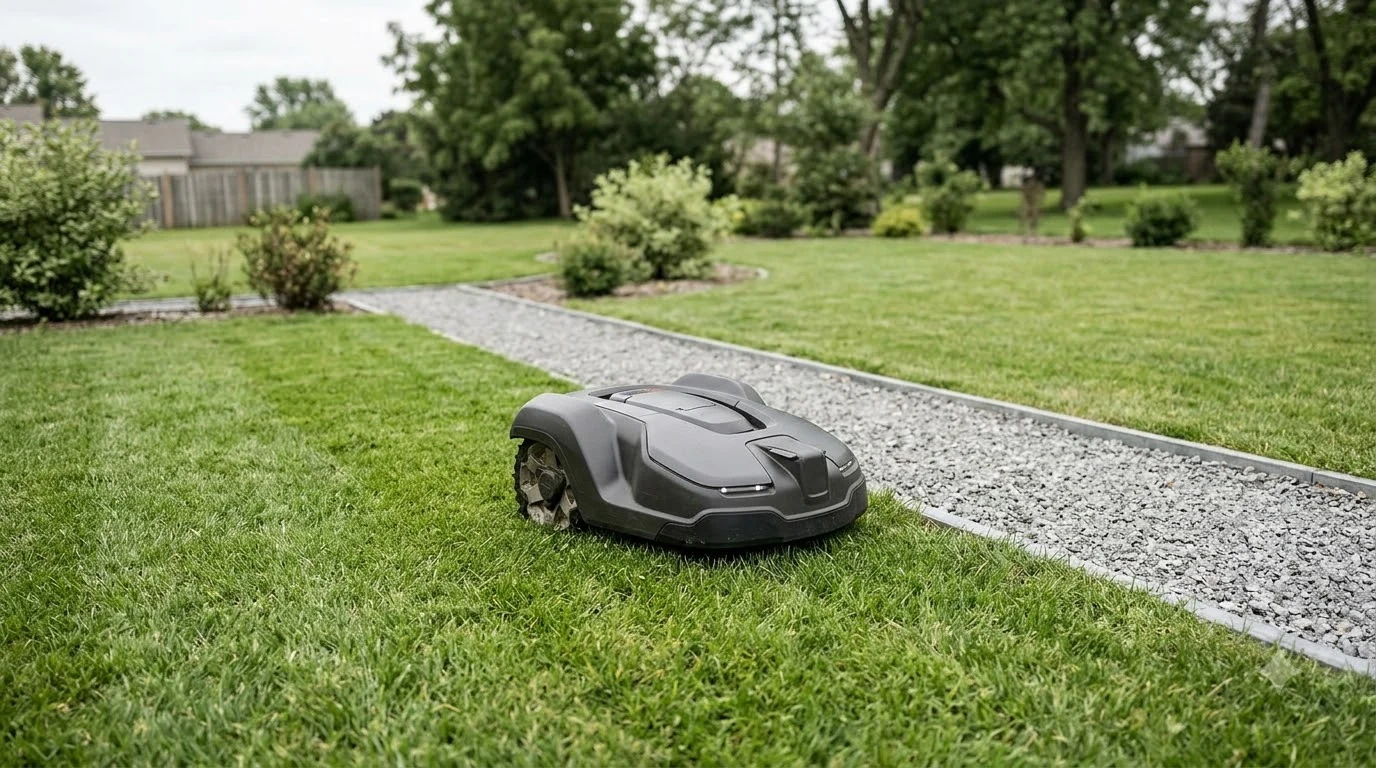

A robot mower for a lawn with thick thatch and moss patches can maintain healthy grass once the yard is prepped, but it will not strip out existing moss or dig through heavy thatch on its own. Standard residential bots use lightweight pivoting razor blades designed to snip tiny leaf tips every day rather than tear up dense organic mats. Treating the underlying soil, raking out the worst buildup, and choosing a machine with high cutting-height settings and aggressive wheel traction will keep your bot running smoothly without bogging down.
The short answer
- Blades do not dethatch: Pivoting razor discs trim grass leaves cleanly but glide over sponge-like moss and dense thatch layers without removing them.
- Prep work comes first: Scarify or core-aerate the turf before deploying the mower so the wheels do not spin out on soft, uneven mats.
- Height settings matter: Running the cutting deck near its maximum setting (around 2 to 3.5 inches depending on grass species) shades the soil and slows moss regrowth.
- Traction is critical: Moss holds surface moisture, so models with deep-tread wheels, higher ground clearance, or optional terrain kits handle slick patches far better than smooth-wheeled bots.
- Daily clippings help healthy grass: Micro-mulching returns nitrogen to the soil, which strengthens turf density and crowds out future moss once drainage and shade are addressed.
How a robot mower interacts with thick thatch and moss
Robotic mowers are built for continuous surface trimming rather than heavy turf renovation, which changes how they behave over spongy organic buildup.
Unlike a traditional rotary walk-behind mower that generates strong upward vacuum suction, a robot mower relies on a low-wattage spinning disc fitted with small, free-swinging razor blades. When that disc passes over a cushion of moss or a dense mat of undecomposed stems, the blades simply fold back or skim the surface. According to University of Alaska Fairbanks Cooperative Extension, a healthy lawn naturally maintains a thatch layer of 1/2 to 3/4 inch to cushion grass crowns, while buildup exceeding 2 inches often requires mechanical renovation.
Thick thatch and moss also create physical drag and traction headaches for lightweight autonomous machines. Spongy moss acts like a wet sponge after morning dew or rain, reducing tire grip and causing drive wheels to slip or dig ruts when the bot turns at the perimeter. Meanwhile, deep thatch creates an uneven, bouncy surface that can push a low-slung cutting deck directly into dead plant debris, dulling blades prematurely and draining the battery faster than normal.

Why moss and thatch appear and how daily mowing affects them
Moss and excess thatch are symptoms of soil and canopy conditions rather than problems caused by automated mowing.
Moss moves into thin, weak turf where grass struggles to survive—typically in areas with heavy tree shade, compacted clay, poor drainage, low fertility, or acidic soil pH. A robot mower does not spread moss spores in any meaningful way, nor does it create the damp, shaded conditions moss prefers. However, setting the cutting height too low scalps the grass blades, letting direct sunlight hit bare soil and giving moss an immediate foothold.
Thatch, on the other hand, is a tightly intermingled layer of dead and living roots, stolons, and stems between the green vegetation and the soil surface. According to University of Wisconsin-Madison Extension, grass clippings are more than 90 percent water and decompose rapidly without adding to thatch buildup when you follow the one-third mowing rule. Because a robot mower cuts every day or two, it produces microscopic clippings that filter down to the soil and return roughly the equivalent of one normal fertilizer application per year in nitrogen—helping healthy grass thicken up and crowd out moss.
Heads up
If your lawn is shaded and drains poorly, daily micro-mulching can hold extra moisture right at the crown of the grass. In soggy corners, improving drainage and pruning low branches matters far more than adjusting your mower schedule.
Hardware features to look for in a mossy or thatch-heavy yard
Choosing a robot mower for a lawn with thick thatch and moss patches requires prioritizing chassis clearance, wheel grip, and deck height over raw cutting width.
Because spongy moss and lumpy thatch create irregular micro-terrain, look closely at how the cutting deck and wheels are engineered. A floating cutting deck—which pivots independently of the main body—follows dips and mounds without scalping high spots or stalling when the grass gets thick. Pairing that deck with high-traction tires prevents the mower from getting stranded when slick moss patches stay damp well into the afternoon.
| Mower Feature | Why It Matters on Thatch and Moss | What to Look For () |
|---|---|---|
| Maximum cutting height | Taller grass shades soil, deepens roots, and suppresses moss | Decks that reach at least 2.5 to 3.5 inches for cool-season turf |
| Wheel tread and diameter | Wet moss offers almost zero friction for smooth plastic tires | Deep rubber cleats, large rear wheels, or all-wheel-drive chassis |
| Floating cutting deck | Prevents blades from digging into uneven thatch humps | Spring-loaded or articulated deck suspension |
| Chassis ground clearance | Stops the belly pan from dragging on spongy moss cushions | Open wheel arches and elevated underbody clearance |
| Blade disc protection | Reduces clogging when damp organic debris gets kicked up | Skid plate beneath the blade disc and easy tool-free cleaning |
Several manufacturers—including Husqvarna on its Automower line—also offer aftermarket terrain kits with heavy-duty rear wheels and wheel brushes designed specifically for slick, uneven yards. If your yard has steep, mossy slopes, an all-wheel-drive model or a unit with aggressive off-road tread will keep traction without tearing up weak turf roots.
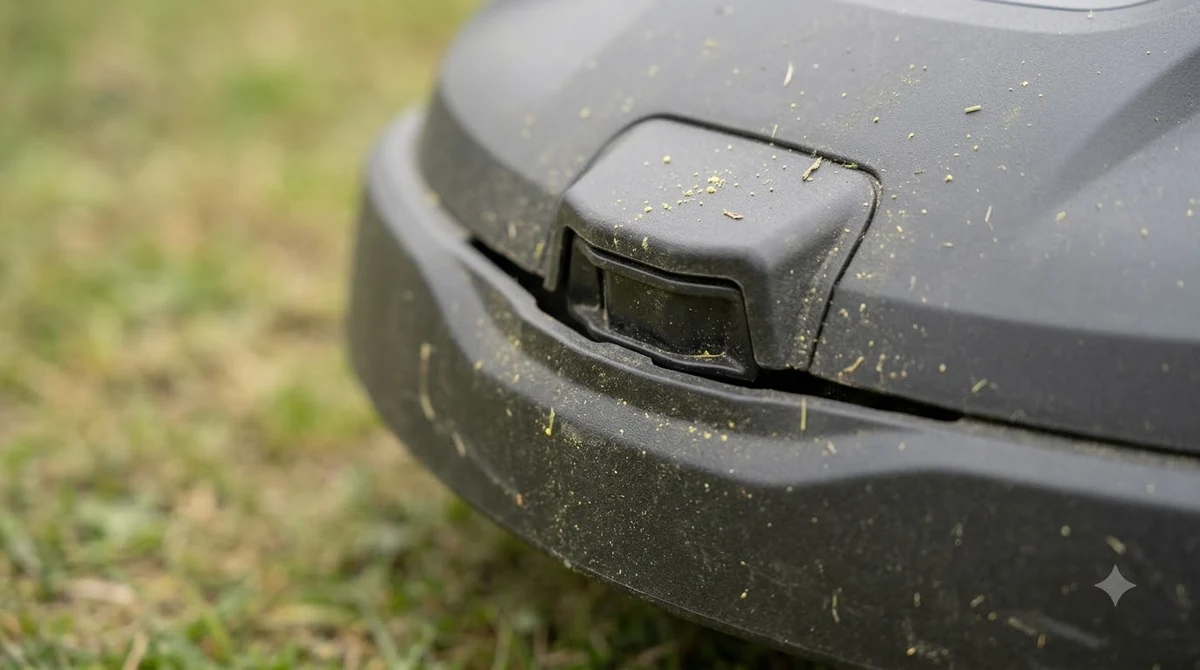
How to prepare your lawn before deploying a robot mower
Clearing heavy organic buildup and fixing soil conditions before installation ensures your bot establishes reliable navigation and clean cuts from day one.
Sending a brand-new robot mower straight onto an unprepped, moss-choked lawn usually leads to stuck wheels, fouled blade discs, and patchy results. Taking a weekend to reset the turf gives the grass a competitive advantage and protects any perimeter wire you plan to stake down.
- Test your soil and treat active moss. Run a basic soil test through your local county extension office to check pH and nutrient levels. If moss is actively growing, apply an iron sulfate product or moss control treatment and wait for the moss to turn black and die back before raking.
- Scarify or dethatch the turf. Use a manual thatch rake or a walk-behind scarifier to pull up dead moss and matted thatch whenever the layer exceeds 1/2 inch. As noted in Husqvarna’s lawn care guidance, scarifying vertically slices the turf carpet to let oxygen reach the roots and stimulates lateral grass shoots.
- Core-aerate compacted zones. Rent a core aerator to pull small soil plugs out of heavy clay or high-traffic areas. This relieves compaction, improves surface drainage so moss cannot thrive, and helps soil microbes break down remaining thatch.
- Overseed bare spots and let roots anchor. Spread shade-tolerant grass seed—such as fine fescue for cool-season yards—over thin areas left behind by removed moss. Keep the robot mower parked until the new seedlings reach roughly 2 to 2.5 inches tall and resist a gentle tug.
- Set the cutting height high for the first month. Start the robot mower near the top of its height range so it only trims the upper tips of the grass. Taller blades shade out dormant moss spores while the turf thickens.
Ongoing maintenance to keep thatch and moss from returning
Once your robot mower is running on a regular schedule, a few seasonal adjustments prevent organic buildup from creeping back under a tidy-looking surface.
Because daily mowing keeps the top of the lawn looking uniform, it is easy to miss slow thatch accumulation underneath. Check thatch depth once a year in early fall by cutting a small wedge of turf and measuring the spongy brown layer above the mineral soil. If you use a boundary wire installation, verify that the wire is pegged tight to the soil surface—or buried a couple of inches deep—before running a scarifier or aerator so you do not slice the perimeter loop.
Keep the underside of your robot mower clean, especially during damp spring and autumn weeks. Wet moss fragments and damp clippings can pack around the blade screws, preventing the small razors from pivoting freely when they strike a twig or dense tuft. Brushing off the undercarriage weekly and swapping in fresh blades every few weeks maintains a crisp cut that keeps grass healthy and disease-resistant.
Frequently asked questions
Can a robot mower remove moss from my lawn?
No. A robot mower uses lightweight pivoting razor blades that skim over moss rather than digging it out. You need to treat and rake out existing moss first, after which the mower helps prevent its return by keeping grass dense and properly trimmed.
Does daily mulching from a robot mower cause more thatch?
No, provided the mower runs frequently enough to snip only tiny tips off the grass blades. Grass clippings are mostly water and break down rapidly into nitrogen for the soil, whereas thatch comes from tough, fibrous roots and stems accumulating faster than soil microbes can decompose them.
What cutting height should I use on a mossy lawn?
Set your robot mower toward the upper end of its cutting range—typically 2.5 to 3.5 inches for common cool-season grasses like tall fescue and Kentucky bluegrass. Taller grass shades the soil surface, starves moss of light, and encourages deeper root growth.
Can I run a dethatcher or scarifier over my robot mower boundary wire?
Not if the wire is staked on the surface. Scarifier blades slice into the top layer of turf and will sever exposed perimeter wire, so you should either bury the wire several inches deep during installation or lift and re-peg it after dethatching.
Sources
- Establishing and Maintaining a Lawn in Southcentral and Interior Alaska (University of Alaska Fairbanks Cooperative Extension): used for ideal thatch thickness measurements (1/2 to 3/4 inch), the 2-inch renovation threshold, and moss-control conditions.
- Lawn Maintenance (University of Wisconsin-Madison Extension): used for grass clipping water content, nitrogen recycling rates, and the one-third mowing rule.
- Autumn lawn care tips (Husqvarna): used for scarification mechanics, iron sulfate moss treatment guidance, and mower blade maintenance.
- Mowing Your Lawn (University of Illinois Extension): used for recommended turfgrass mowing heights across common grass species.
 Up next8 min readBy YardCan a Robot Mower Handle a Lawn With Moss?Updated Nov 12, 2026
 8 min readBy YardUsing a Robot Mower for a Yard With Pop-Up Drainage EmittersUpdated Nov 19, 2026
 6 min readBy YardBest Robot Mower for Thick Southern Grass: 3 to 4 Inch CheckUpdated Nov 17, 2026
 9 min readBy YardCan a Robot Mower Cut Thick Southern Grass?Updated Nov 11, 2026
 7 min readBy YardCan a Robot Mower Work in a Yard With Multiple Small Patches?Updated Nov 10, 2026
 9 min readBy YardRobot Mower Wheel Ruts and Brown Patches: Causes and FixesUpdated Nov 11, 2026