


The best stainless steel anti-theft ground anchor for mower docks depends on what sits beneath your baseplate, pairing Type 316 stainless steel with masonry sleeve anchors on concrete slabs or deep-set helical ground anchors in compacted turf. Factory plastic pegs hold a charging station steady during normal docking, yet a thief can pry them out of damp soil in seconds. Upgrading to marine-grade stainless hardware stops opportunistic grab-and-run thefts while resisting fertilizer salts, irrigation runoff, and years of outdoor moisture.
The short answer
- Alloy grade matters most: Type 316 stainless steel contains 2 to 3 percent molybdenum, resisting pitting from lawn fertilizers and coastal air far better than standard Type 304.
- Match anchor style to substrate: Use mechanical expansion or wedge anchors on concrete patios, and deep auger or barbed earth anchors on soil.
- Protect the dock baseplate: Add wide stainless fender washers and rubber isolation pads so tightening torque does not crack plastic mounting tabs.
- Combine dock anchoring with tethering: Securing the charging base prevents thieves from stealing the whole station, while a hardened chain through a shackle ring locks down the mower itself.
- Keep maintenance simple: Rinse fertilizer residue off exposed bolt heads each season and check torque after spring freeze-thaw cycles.
Why standard dock stakes fall short on security
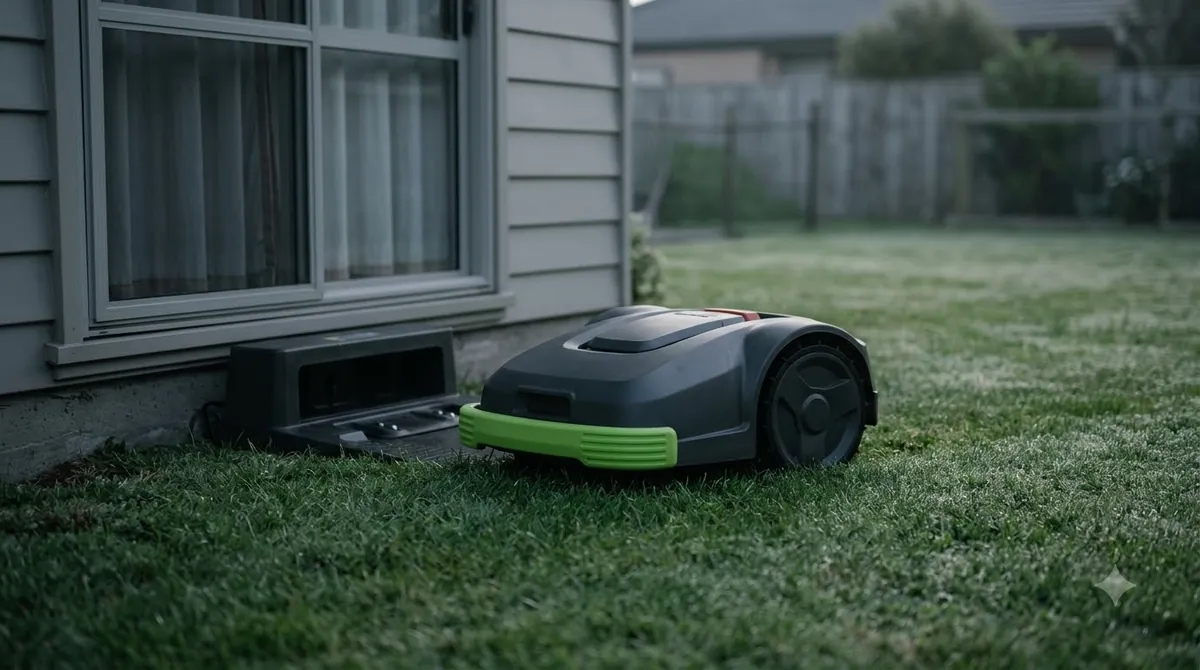
Most robotic lawn mower manufacturers ship charging stations with lightweight plastic screw stakes designed purely to prevent shifting when the mower docks, not to resist forced removal.
In Husqvarna Automower charging station guidelines, baseplates require a flat, undistorted mounting surface with clear approach space so docking contacts align reliably. When owners install a station directly on turf using standard polymer pegs, wet soil softens around the threads. Anyone walking into a yard can pull the entire charging base out of the ground, unplug the low-voltage power lead, and carry off both the dock and the robot.
Replacing or supplementing those stakes with stainless steel ground anchors changes the theft equation. Thieves targeting residential yards look for quick, quiet removals rather than prolonged prying or sawing. A properly seated stainless anchor turns a five-second snatch into a noisy, tool-heavy struggle—especially when paired with PIN locks, geofencing, and discreet station placement out of street view.
Types of stainless steel ground anchors for mower docks
Choosing the right anchor geometry comes down to whether your charging station rests on poured concrete, patio pavers, or natural lawn soil.
Every mower dock setup faces different pull-out forces and substrate limits. On hardscapes, expansion hardware grips the walls of a drilled hole, whereas soil installations rely on soil compaction above wide auger blades or toggle barbs. You can also choose between low-profile fasteners that bolt straight through the dock’s factory mounting holes and standalone D-ring ground anchors mounted beside the baseplate for chaining a mower garage or locking tether.
| Anchor type | Best surface | How it locks in place | Key limitation |
|---|---|---|---|
| Stainless wedge or sleeve expansion anchor | Poured concrete slab or thick patio | Tightening the nut pulls a tapered cone into a sleeve, wedging tightly against drilled concrete walls | Permanent once set; cannot be repositioned easily |
| Helical spiral earth anchor | Compacted lawn soil and clay | Wide steel auger disc screws deep below root level, using undisturbed soil weight against pull-out | Can twist out in loose sandy soil or rocky subsoil |
| Driven percussion earth anchor | Deep turf and gravel bases | Hammered into the ground with a drive rod, then tensioned upward so a bottom barb rotates horizontal | Requires cutting or digging to remove if relocating the dock |
| Heavy-duty stainless D-ring plate anchor | Concrete or timber border sleepers | Two or four tamper-resistant security bolts fasten a folding steel shackle ring beside the station | Secures a cable or chain rather than pinning the dock plate itself |
If your dock sits inside a wooden or composite mower house, look for low-profile carriage bolts or security-head lag screws that anchor the shelter frame directly into timber sleepers or concrete footings. That approach hides the fasteners underneath the roof structure while keeping the charging plate accessible for winter storage.
What to look for in an outdoor stainless dock anchor
Not every “stainless” fastener sold at hardware stores survives direct contact with damp soil, lawn chemicals, and dissimilar metals.
When evaluating hardware for the best stainless steel anti-theft ground anchor for mower docks, check four technical details before buying:
- Type 316 vs. Type 304 alloy: Both grades resist everyday rain, but Type 316 adds 2 to 3 percent molybdenum. According to 2026 metallurgical comparisons of 304 and 316 stainless steel, that molybdenum content raises the Pitting Resistance Equivalent (PRE) from roughly 18–22 up to 23–30, protecting buried metal against chloride pitting from lawn fertilizers, de-icing runoff, and coastal air.
- Tamper-resistant drive heads: Standard hex bolts can be spun off in seconds with a pocket wrench. Look for pin-in-Torx, one-way clutch heads, or breakaway shear nuts that require specialized bits to unfasten.
- Galvanic isolation: Federal facility construction guidelines from the National Park Service emphasize preventing direct contact between dissimilar metals and keeping moisture from pooling in crevices. Always pair stainless anchors with matching stainless washers and nuts—never zinc-plated carbon steel, which corrodes rapidly when coupled to stainless steel in wet soil.
- Flush or low-clearance profile: Any bolt head or shackle loop protruding above the baseplate must clear the mower’s undercarriage, bumper sensors, and cutting disc shroud as the robot reverses or drives onto the charging contacts.
Heads up
Never embed rebar or heavy steel plates directly beneath a charging station baseplate. Large ferrous metal masses under the dock can distort the low-frequency magnetic loop signals that guide boundary-wire mowers onto the charging contacts.
How to fit and maintain your dock ground anchors
Installing anti-theft anchors properly protects both your charging station’s plastic baseplate and your underground boundary or power cables.
Before drilling or driving any metal into the yard, unplug the low-voltage power supply and temporarily move boundary and guide wires aside so a drill bit or auger tip cannot nick insulation. Keep the charging plate completely flat—bending the baseplate during tightening can misalign the charging pins.
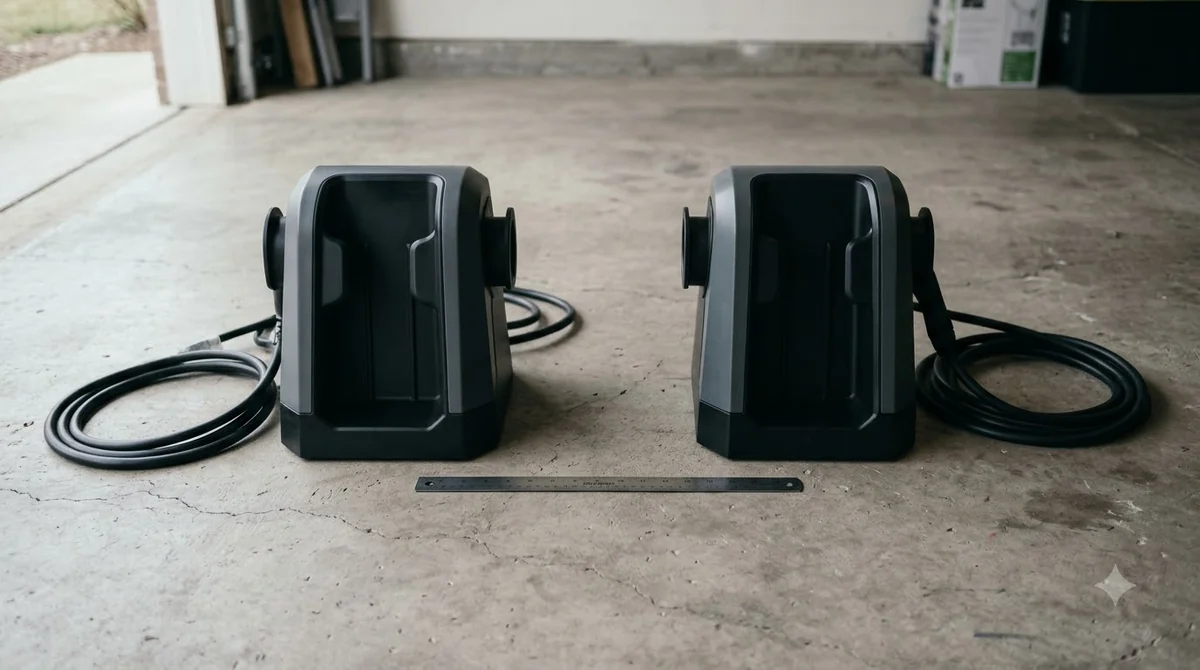
- Confirm final dock alignment. Run the mower through several automated docking cycles before anchoring so you know the approach path and satellite sky view (for RTK/EPOS models) work reliably.
- Mark anchor points and clear wires. Trace the factory mounting holes or external D-ring bracket onto the surface, then verify no low-voltage cables or irrigation lines lie underneath.
- Drill or drive to full embedment depth. On concrete, bore holes with a carbide masonry bit matching the sleeve diameter, blow out concrete dust, and tap the Type 316 anchor flush. On turf, twist helical anchors until the eye sits tight against the mounting tab.
- Install fender washers and rubber cushions. Place an EPDM rubber washer under a wide stainless fender washer before tightening so clamping pressure spreads evenly without cracking ABS plastic tabs.
- Test mower clearance and torque. Drive the robot onto the dock manually to verify zero undercarriage contact, then snug security fasteners to firm resistance without warping the baseplate.
Maintenance takes only a few minutes twice a year. After spring turf fertilization and again before winter storage, hose off soil and chemical buildup around the anchor heads, inspect for crevice rust where damp grass clippings collect, and verify that freeze-thaw ground heave has not loosened the fasteners.
Frequently asked questions
Can I use standard 304 stainless steel anchors instead of marine-grade 316?
Type 304 stainless works adequately in dry inland yards with minimal fertilizer contact, as both 304 and 316 share similar mechanical tensile strength. However, damp soil, nitrogen-potassium fertilizers, and coastal air introduce chlorides that can pit 304 fasteners over several seasons, making Type 316 the safer long-term pick for ground contact.
Will metal ground anchors interfere with my robot mower’s docking signal?
Small stainless steel bolts or corner ground anchors used around the perimeter of a dock rarely affect docking signals, especially since austenitic 304 and 316 stainless alloys are nominally non-magnetic. Avoid placing large steel plates directly under the center coil of the baseplate, and always test docking before permanently locking down the hardware.
How do I secure the robot mower itself if the dock is bolted down?
Anchoring the charging station stops thieves from taking the base, while adding a stainless D-ring ground anchor beside the dock lets you loop a hardened chain through a lockable mower garage or chassis tether point overnight. Keeping the mower’s PIN lock and GPS geofencing active adds an electronic deterrent when the robot is out mowing.
What if I need to bring my charging station indoors for winter?
Choose removable female drop-in concrete anchors or threaded helical ground anchors with security bolts rather than permanent one-way rivets or driven percussion stakes. That way, you can unbolt the baseplate with your security driver bit each autumn and thread the bolts back into the flush inserts until spring.
Sources
- Automower charging station and mower house guide (Husqvarna): Used for charging station baseplate flatness requirements, clearance distances, and shelter ventilation guidelines.
- 304 vs 316 Stainless: Corrosion & CNC Guide (2026) (MakerStage): Used for molybdenum composition, Pitting Resistance Equivalent (PRE) values, and chloride corrosion behavior of 304 versus 316 stainless steel.
- Design-Build Part 4 Technical Requirements (National Park Service): Used for outdoor corrosion-resistant metal standards, galvanic isolation, and underground metal protection rules.
- The Complete Guide to Robot Mowers Theft Prevention (Segway Navimow UK): Used for layered robotic mower security practices including dock anchoring, tethering, PIN codes, and placement.
 Up next8 min readGearStainless Steel Robot Mower Blades: What the Sources ShowUpdated Nov 12, 2026
 9 min readGearBest Anti-Theft Lock for Robot Mower: What Actually Protects ItUpdated Nov 12, 2026
 7 min readGearBest Ground Stakes for Robot Mower Charging Station: 4 PicksUpdated Nov 14, 2026
 7 min readGearRobot Mower Charging Station Anchor Screws: What to UseUpdated Nov 19, 2026
 9 min readGearChoosing the Best Heavy-Duty Plastic Shed Ramp for Robot Mower EntryUpdated Nov 19, 2026
 8 min readGearChoosing the Best Outdoor PoE Injector for Roof-Mounted RTK StationsUpdated Nov 19, 2026