


The best heavy-duty plastic shed ramp for robot mower entry is a wide, high-density polyethylene (HDPE) or recycled polymer threshold wedge with a gentle 1:6 to 1:8 slope and integrated under-deck wire channels. Unlike steep metal loading ramps or warping wood planks, a molded polymer ramp bridges a shed lip cleanly without trapping water, triggering mower lift sensors, or blocking perimeter cables. Choosing the right slope angle, tread texture, and width keeps your robotic mower docking reliably through wet grass and summer heat.
The short answer
- Material choice: High-density polyethylene (HDPE) and recycled plastic polymers resist rot, rust, and UV cracking while keeping weight manageable for seasonal removal.
- Slope geometry: Aim for a gentle 1:6 to 1:8 rise-to-run ratio so low-slung cutting decks do not high-center at the shed threshold crest.
- Signal and cable safety: Plastic does not interfere with RTK-GPS, Wi-Fi, or boundary wire signals, and molded underside channels protect low-voltage charging cables.
- Width and approach: Select a ramp wider than your mower’s outer wheel track plus navigation buffer, keeping a straight approach path in front of the entrance.
- Surface traction: Look for molded raised ribs, diamond grids, or quartz-coated grip patterns that hold wet tires when morning dew coats the wheels.
Why plastic threshold ramps outperform wood and metal
Molded polymer ramps solve the moisture, signal interference, and underside scraping issues that commonly ruin wood or aluminum shed entries.
Wooden shed ramps sit directly on damp turf and soil, which causes swelling, cupping, and rot within a couple of mowing seasons. Once damp algae builds up on wood boards, lightweight robotic mowers spin their drive wheels and trigger wheel-slip error codes instead of climbing into their charging dock. Heavy-duty plastic polymers, such as HDPE and recycled structural poly, shed rainwater and resist fungal decay without sealing or painting.
Metal ramps bring a different set of problems to an automated lawn setup. Aluminum and steel plates conduct heat in direct summer sun, create noisy clattering under hard plastic mower wheels, and can reflect or distort low-frequency boundary wire signals and RTK satellite positioning. As noted in the Mammotion robot lawn mower garage guide, minimizing nearby reflective surfaces and keeping clear sky visibility around a dock prevents navigation errors during docking.
Plastic threshold wedges also feature beveled side edges and tapered leading lips. Because robotic mowers approach their base stations from slight angles—or vary their entry tracks to avoid lawn ruts—beveled edges prevent a front caster wheel from catching on a sharp square corner.

Types of heavy-duty plastic shed ramps
Plastic entry ramps fall into four structural designs, each suited to a different shed lip height and docking layout.
Solid beveled threshold wedges are single-piece, molded polymer blocks designed for rises between one and three inches. They have a flat bottom face that sits flush on concrete aprons, pavers, or compacted gravel. Because they have no hollow cavities underneath, solid wedges support heavy foot traffic and garden tractors if you also walk through the same shed doorway.
Modular interlocking grid ramps use honeycomb-reinforced plastic sections that snap together horizontally or stack vertically to match variable threshold heights. According to Tractor Supply product specifications for multi-height plastic threshold ramps, modified honeycomb designs keep the ramp lightweight while providing pass-through tread patterns that let grass clippings and moisture drop away.
Channel-bottom curb ramps incorporate one to three molded tunnels running lengthwise or crosswise along the base. Those channels allow you to route a low-voltage transformer cord, boundary wire loop, or guide wire directly beneath the ramp without pinching the insulation under the mower’s weight.
Dual-track runner ramps consist of two narrow plastic strips spaced to match a mower’s wheel track. While compact, dual runners are rarely ideal for robotic mowers because even a minor steering correction can drop one wheel off the inner edge, beaching the chassis.
| Ramp style | Best threshold rise | Wire routing | Key trade-off |
|---|---|---|---|
| Solid polymer wedge | Up to 2.5 inches | Requires separate edge notch or under-sill path | Heavier to lift when closing tight swing doors |
| Modular honeycomb ramp | 1 to 4 inches (adjustable) | Built-in underside cable channels | Open grid slots can collect dry pine needles |
| Channel curb ramp | 2.5 to 4 inches | Deep molded channels for power and guide wires | Steeper angle requires longer run for low decks |
| Dual-track runners | 3 to 6 inches | Open center space between tracks | High risk of wheel drop-off during navigation |
Key specifications to check before selecting a ramp
Matching ramp geometry to your mower’s ground clearance, slope limit, and wheel width prevents docking failures before installation.
Slope ratio and breakover angle: A robot mower has a short wheelbase and a low-hanging cutting deck. Even if your mower is rated to climb steep lawn hills, a sharp angle at the top of a shed ramp causes the cutting blade disc or belly pan to scrape the threshold crest. Our reading of shed building standards shows that a 1:8 slope ratio—eight inches of horizontal ramp length for every one inch of vertical threshold rise—provides a smooth transition that keeps both front and rear wheels supporting the chassis.
Maximum incline rating: Check your mower’s boundary-edge slope limit rather than its mid-lawn slope rating. For example, Husqvarna Automower slope installation guidelines show that while many standard models handle 25 to 40 percent inclines inside the main lawn, maximum allowable slopes near boundaries and docking transitions drop to 10 to 15 percent. A long, gradual plastic ramp keeps the incline well within those conservative boundary limits.
Width and lateral margin: Measure the widest point of your mower’s outer wheels or protective bumper, then add at least four to six inches on each side. Boundary-wire mowers often offset their return path slightly to the left or right of the guide wire to avoid wearing wheel ruts in the grass, so a narrow ramp forces the mower into repetitive corrections.
Traction tread and drainage: Smooth molded plastic turns slick when wet grass clippings stick to tire treads. Look for deep cross-grooves, raised diamond cleats, or quartz-grit top coatings that maintain grip when damp.
Heads up
Check how your shed doors swing before anchoring any threshold ramp. If outward-swinging doors close flush against the bottom sill lip, a permanently bolted ramp will block the door from latching unless you trim the bottom door edge or choose a portable polymer wedge that lifts out when closing up for winter.
How to measure, fit, and anchor a plastic shed ramp
Proper ground preparation and straight approach alignment ensure your mower climbs the ramp smoothly without shifting the base.
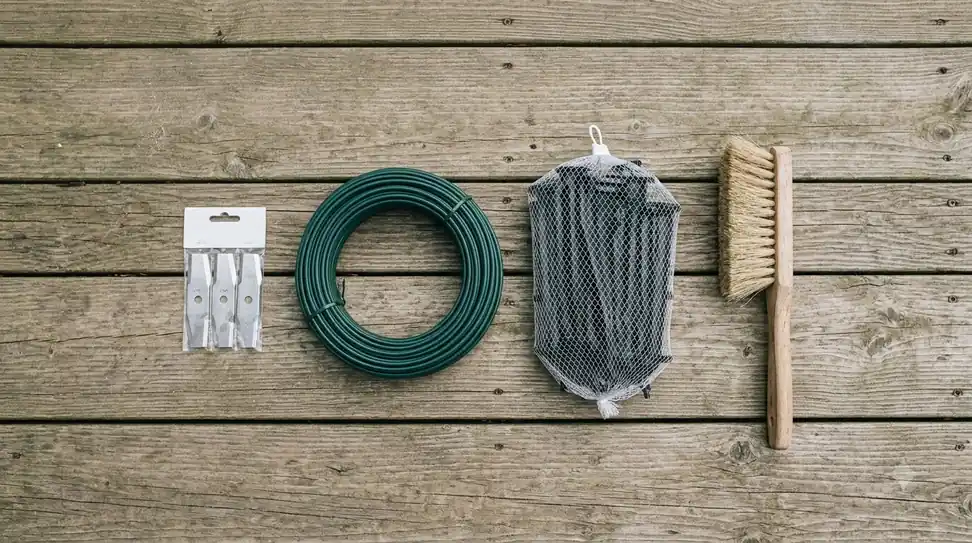
- Measure vertical rise and door clearance. Close the shed door or mower hatch and measure from the ground outside to the top edge of the interior floor lip. Multiply that rise by six to eight to find your target horizontal ramp length.
- Level and compact the landing pad. Scrape away soft turf and spongy thatch where the ramp sits. Compact a thin base of crushed stone, paver sand, or patio pavers so the leading edge of the plastic ramp sits flush with the lawn without creating a vertical lip.
- Route perimeter and power cables through channels. Lay your guide wire or boundary wire in a straight line perpendicular to the shed entrance for at least two meters in front of the ramp. Tuck low-voltage charging cables into the ramp’s underside channels so tires never roll directly over bare insulation.
- Secure the ramp against drive-wheel torque. When a mower accelerates up an incline, rear drive wheels push backward against the ramp. Use recessed stainless-steel screws into a wooden shed apron, masonry anchors into concrete, or heavy-duty outdoor butyl adhesive strips so the polymer base cannot slide away from the sill.
- Test docking and deck clearance at lowest cut height. Lower the mower’s cutting height to its minimum setting and run three consecutive test docks. Watch the midpoint of the chassis as the front wheels cross the top crest to confirm the blade guard clears the sill cleanly.
Routine maintenance for plastic shed entry ramps
Seasonal cleaning and hardware checks keep polymer ramps grippy, level, and free of debris that could trip obstacle sensors.
Grass clippings and damp soil naturally shed from mower tires onto the textured tread of a plastic ramp. Once a month during peak growing season, brush off dried clippings with a stiff nylon broom or rinse the grooves with a garden hose. Leaving packed grass in the tread pattern flattens the grip profile and creates a slick film during early morning dew cycles.
Check the leading bottom edge of the ramp every spring after freeze-thaw cycles. Frost heave in soil or gravel can lift the ground slightly or cause the ramp lip to settle, creating a small step that triggers a mower’s front bumper collision sensor. Re-leveling the paver or gravel base underneath restores a smooth roll-on transition.
Inspect underside wire channels and mounting fasteners twice a year. Ants, slugs, and small rodents occasionally nest inside hollow honeycomb cavities, and shifting soil can pull adhesive strips loose. Clearing out debris and tightening loose screws keeps both the ramp and your charging cables protected.
Frequently asked questions
How steep can a shed ramp be for a robot lawn mower?
Keep the ramp slope around a 1:6 to 1:8 rise-to-run ratio, which equals roughly 12 to 17 percent incline. Even if your mower handles steeper hills out in the yard, a gentle ramp prevents the low-slung cutting deck from scraping at the top threshold crest.
Will a plastic ramp block my robot mower’s GPS or boundary wire signal?
No, high-density polyethylene and recycled polymer plastics are radio-transparent and non-magnetic. Unlike steel or aluminum ramps, plastic will not interfere with boundary wire loops, guide wires, Wi-Fi, or RTK satellite positioning.
Should I bolt a plastic threshold ramp down or leave it loose?
Anchoring the ramp with recessed screws, masonry bolts, or exterior-grade adhesive tape is best for daily automated docking. Without fasteners, the rear drive wheels of a climbing mower can gradually push a lightweight plastic ramp backward away from the shed sill.
How do I keep my shed door closing properly with a ramp installed?
If your shed door swings outward over the threshold lip, either trim half an inch to an inch off the bottom of the door or use an unbolted solid polymer wedge that you lift aside when locking the shed. For dedicated small mower hatches, mount the ramp flush below the swinging flap clearance.
Sources
- Optimising an Automower installation for steep slopes (Husqvarna Support): boundary slope percentages, transition zone recommendations, and wheel traction maintenance.
- Robot Lawn Mower Garage: DIY Build Guide & Placement Tips (2026) (Mammotion): entrance width clearances, straight approach paths, and avoiding reflective surface interference.
- Silver Spring Plastic Multi-Height Threshold Ramp Specifications (Tractor Supply): honeycomb polymer construction, pass-through drainage treads, and integrated cable channels.
 Up next8 min readGearBest Heavy-Duty Turf Staples for Securing Dock Mats on Robot Mower LawnsUpdated Nov 19, 2026
 9 min readGearBest Non-Conductive Plastic Scraper for Cleaning Mower Decks: Materials & GuideUpdated Nov 19, 2026
 8 min readGearChoosing the Best Outdoor PoE Injector for Roof-Mounted RTK StationsUpdated Nov 19, 2026
 8 min readGearChoosing the Best Stainless Steel Anti-Theft Ground Anchor for Mower DocksUpdated Nov 19, 2026
 8 min readGearBest Rubber Threshold Ramp for Sliding Glass Door Tracks: Buyer and Fit GuideUpdated Nov 19, 2026
 9 min readGearRobot Mower Ramp: What to Check Before You BuyUpdated Nov 18, 2026