
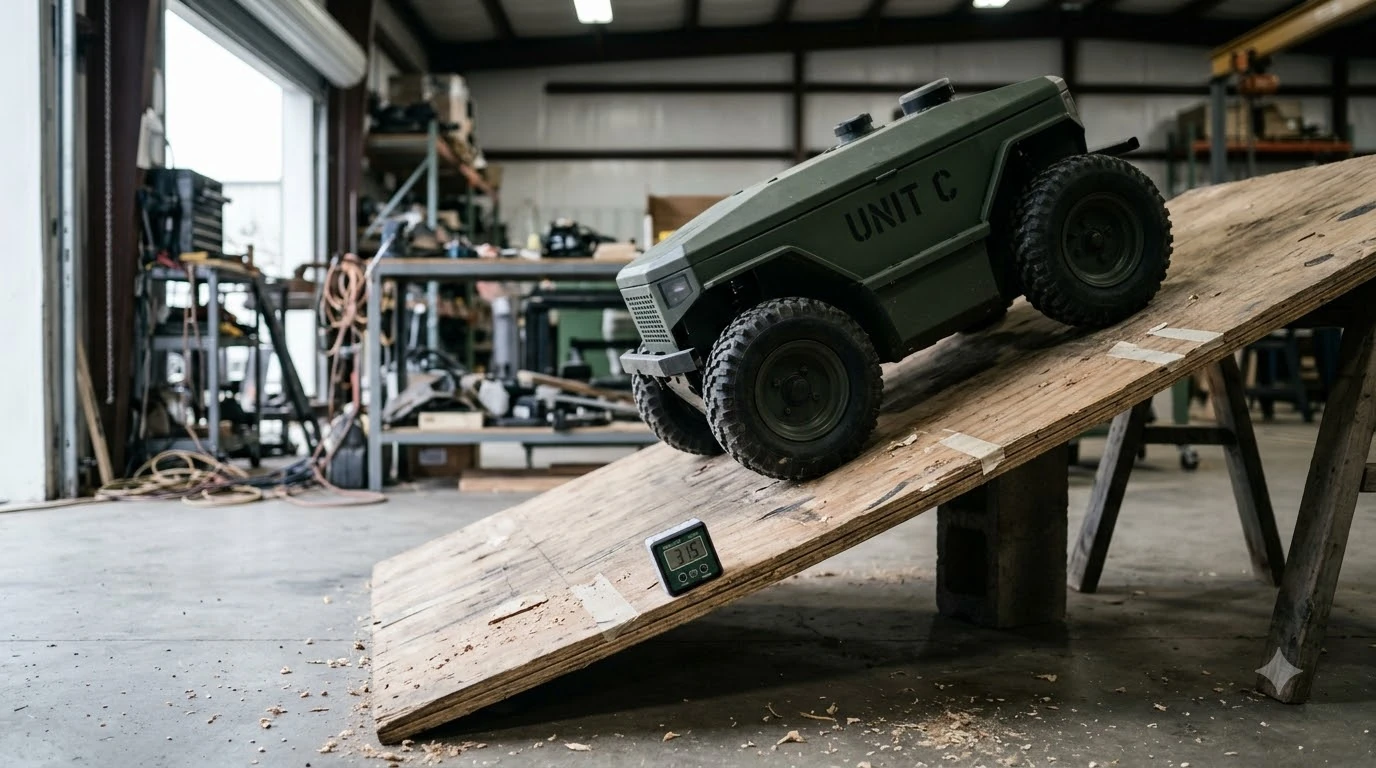

A robot mower ramp is a loading ramp for moving the mower into a truck bed, a trailer, or over a curb or step, not a driving ramp for the lawn. Before you buy one, check that its rated weight covers your mower, that its width matches the mower’s wheel track, and that its length gives a gentle enough climb for your vehicle height. The points below come from ramp-maker specifications and a loading guide we read, and they are current as of Nov 2026.
The short answer
- Rated weight: the ramp rating should be above your mower’s weight from the manufacturer’s spec sheet.
- Width: match the ramp to the wheel track. A wide mower may need two ramps side by side.
- Length and height: a longer ramp gives a gentler climb, but it must still fit your truck bed or trailer height.
- Surface: closely spaced rungs or a grip surface help small caster wheels stay on track.
- Securing: a ramp only gets the mower up. Straps anchored to tie-down points keep it still during the drive.
Why a robot mower needs a ramp only for moving it
A robot mower drives itself between its charging dock and the lawn, so a ramp is not part of normal operation. People reach for one when they move the mower to a new yard, take it to a repair shop, load it into a truck for winter storage, or roll it over a raised curb or step during setup. Each of those jobs has a different load path, and the load path decides the length, width, and rating you need. Decide how you will move the mower first, then buy the ramp that fits that job. For the next step after this section, continue with our truck bed ramp guide for robot mowers. For a closely related angle, see our lift and carry handle for robot mowers as well.
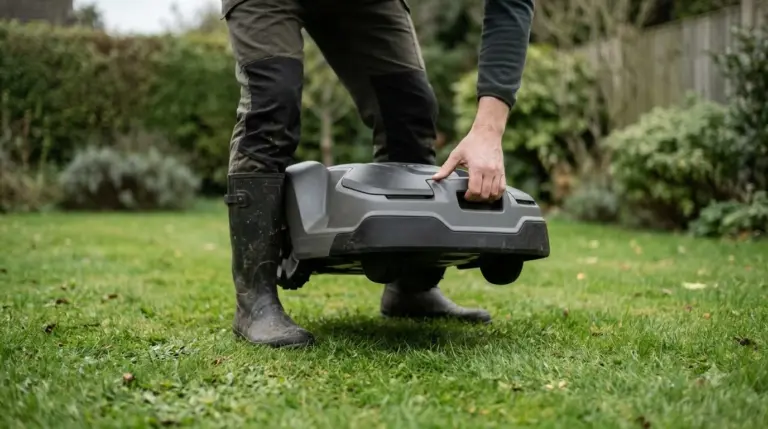
A robot mower is usually lighter than a riding mower, but it is still a heavy, awkward object with a low deck and small wheels. Loading it alone on a short, steep ramp is the most common way to scrape the deck or lose control on the way up. A ramp that matches the mower’s weight and width makes the job easier and safer.
Robot mower ramp weight rating and your mower’s real weight
Ramp makers publish a rated load for each ramp, and that number is the one to compare with your mower. The Super Lawn Trucks manual loading ramp, for example, is rated at 750 lb per ramp. Rated loads are often shown for a single ramp, so if you plan to use two, check whether the rating applies to each one.
Use the mower maker’s spec sheet for the weight, not a number you remember or a retailer listing. A listing can show the weight of a different model or leave out the battery and accessories. Our reading is that a margin above the mower’s weight is worth having, because a ramp rated close to the mower’s weight leaves no room for a heavier load, a wet lawn that adds mud to the deck, or a dropped load.
Robot mower ramp length, width, and climb angle
Length and width control two things: how steep the climb feels, and whether the wheels stay on the ramp. A longer ramp spreads the height over more distance. The same ramp maker lists its 750 lb model at 10 ft long, with widths from 39.5 to 48 inches, and recommends two ramps for wide mowers. That is one example, not a universal rule, so measure your own setup before you buy.
Measure in this order: the height from the ground to the bed or trailer floor, the distance you have behind the vehicle for the ramp, the wheel track of the mower, and the overall width of the deck. The ramp needs to clear the wheel track on both sides, and it should not sit so close to the vehicle that the mower’s deck hits the tailgate or bumper.
| What to check | What to look for | Why it matters |
|---|---|---|
| Rated load | Above the mower’s weight from the spec sheet | Leaves room for extra load and avoids a bent or failed ramp |
| Length | Long enough for a gentle climb at your bed height | A short, steep ramp is harder to climb and easier to slip on |
| Width | Matches the wheel track, or two ramps for a wide mower | Keeps the wheels from running off the edge |
| Bed height limit | States the maximum height the ramp can reach | A ramp that is too short for your bed is a safety problem |
| Surface | Closely spaced rungs or a textured grip surface | Small caster wheels can catch in wide gaps |
Not every ramp is built the same. Some are folding aluminum ramps, others are fixed steel, and curb ramps are a different product entirely. Pick the type that matches the job, not the one with the most features.


Surface, rungs, and traction
Robot mowers have smaller wheels than many riding mowers, so the surface of the ramp matters more than it does for a tractor. A wide gap between rungs or a smooth, slick surface can catch a caster wheel and stop the mower halfway up. Look for rungs spaced closely enough that a small wheel cannot drop between them, and a surface that stays grippy when it is wet. When you are ready for the next step, read our ramp for crossing a curb or step for more detail. The follow-up question most readers have is answered in our drainage ditch bridge for robot mowers.
Keep the ramp angle separate from the mower’s own climbing limit. The Ecovacs installation guide lists a 27 degree climbing limit for the GOAT A3000 LiDAR mower, which describes what the mower can climb on the lawn. A loading ramp is a different test: it is about getting the mower up and into a vehicle. A ramp that sits within the mower’s climbing limit is still not safe if it is slick, short, or unevenly supported.
Heads up
Do not load a mower onto a ramp that is not firmly supported at both ends. A wobbling ramp can shift as the mower climbs, and the mower may tip or slide off the side.
Securing the mower during transport
A ramp gets the mower up, and straps keep it still while you drive. ThePoolAndLawn’s guide on moving a mower in a truck bed recommends tie-downs anchored to D-rings or cleats, padding in the bed, and avoiding sudden stops. The guide does not give ramp angles or widths, so use the ramp maker’s numbers for those. For the next step after this section, continue with our dolly options for moving a robot mower. If this point matters for your setup, read our robot mower carrying bag overview for more detail on it.
Our reading is that a robot mower needs the same care. Lift the mower carefully, keep your hands clear of the blades, and set it down on the bed or trailer with the weight centered. Then strap the front and rear so the mower cannot slide forward when you brake.
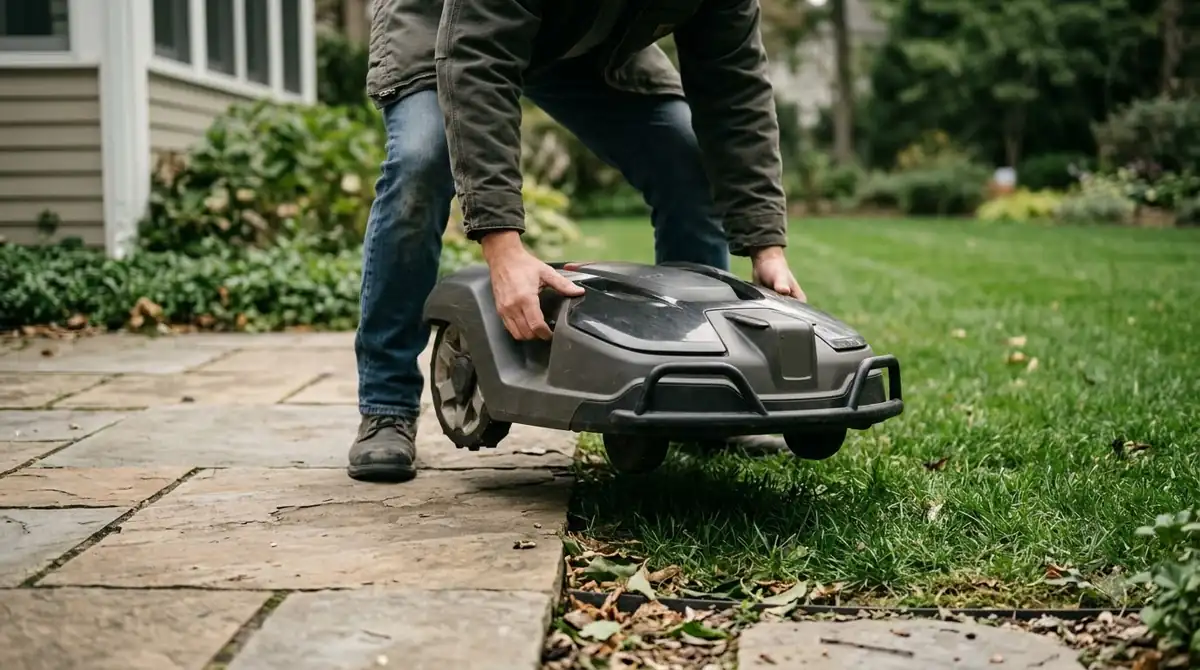
- Confirm the weight. Read the mower’s weight from the maker’s spec sheet and compare it with the ramp’s rated load.
- Measure the wheel track. Check that the ramp width covers both wheels, or plan two ramps for a wide mower.
- Park on firm, level ground. Set the parking brake and stop the mower before loading.
- Align and climb. Line the mower up square with the ramp and let it roll up at a steady pace.
- Strap it down. Anchor straps to tie-down points and check them again after the first mile.
What to check before you buy
Start with the job. If you move the mower only once a year, a simple folding ramp with a clear rated load may be enough. If you move it often, a wider, longer ramp with a grippy surface will save effort and reduce the chance of a slip. Either way, the checklist stays the same: the rated load, the length for your height, the width for your wheels, the surface, and the way it is secured.
Keep records of the mower’s weight and the ramp’s rating in one note on your phone. When you change mowers, or move to a new vehicle, you will have the numbers ready and will not need to rely on memory or a listing.
Frequently asked questions
Does a robot mower need a ramp to drive on the lawn?
No. A robot mower works from its charging dock and drives itself across the lawn. A loading ramp is only for moving the mower into a vehicle or over a raised edge.
How long should a robot mower ramp be?
Length depends on the height you need to climb. A longer ramp gives a gentler angle. One ramp maker’s 750 lb model is 10 ft long, but your truck bed height and the space behind the vehicle decide what fits.
Can one ramp work for a robot mower and a walk-behind mower?
Possibly, if the rated load covers the heavier machine and the width matches the wheel track of both. Check both specifications before you rely on one ramp for both jobs.
Do I need two ramps for a wide mower?
Often, yes. When the mower is wider than a single ramp, two ramps placed side by side keep both wheels supported. Check whether the rated load applies to each ramp or to the pair.
Sources
- Super Lawn Trucks (ramp maker): 750 lb rating per ramp, 10 ft length, widths of 39.5 to 48 inches, two ramps for wide mowers, and a bed height limit of about 40 inches.
- ThePoolAndLawn (guide): tie-downs anchored to D-rings or cleats, bed padding, and avoiding sudden stops. The guide gives no ramp angle or width.
- Ecovacs (manufacturer blog): the 27 degree climbing limit listed for the GOAT A3000 LiDAR mower.
 Up next7 min readGearLymow Cover: What to Check Before You BuyUpdated Nov 20, 2026
 7 min readGearRobot Mower Carrying Bag: What to Check Before You BuyUpdated Nov 13, 2026
 8 min readGearRobot Mower RTK Antenna Mount: What to Check Before You BuyUpdated Nov 20, 2026
 7 min readGearBest Dolly for Moving a Robot Mower: What to Check Before You BuyUpdated Nov 12, 2026
 8 min readGearMammotion YUKA Replacement Blades: What to Check Before You BuyUpdated Nov 20, 2026
 8 min readGearAnthbot Replacement Battery: What to Check Before You BuyUpdated Nov 20, 2026