
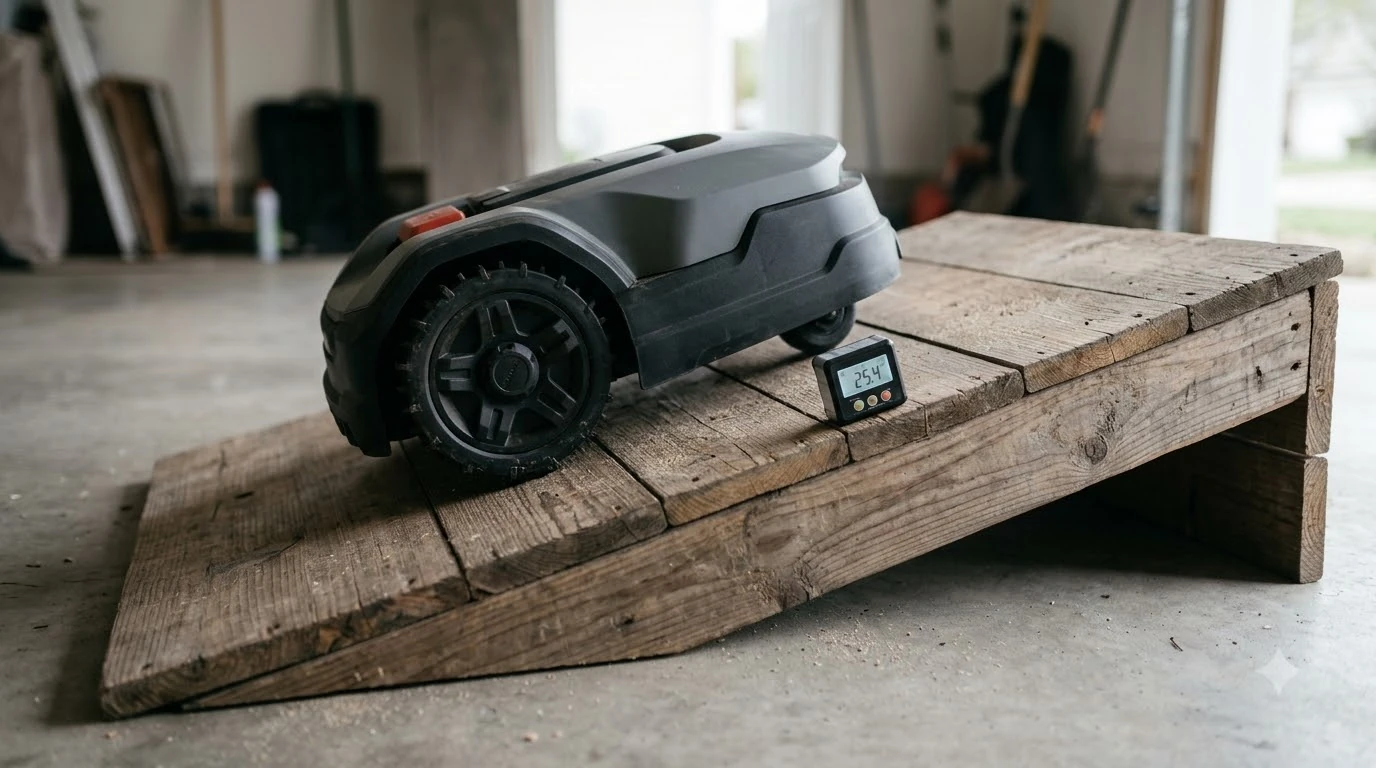

A robot mower ramp for truck bed should be rated well above the mower’s weight, sit securely on the bed, and be strapped down once the mower is aboard. The sources we read were written for riding mowers and general equipment, not robot mowers, so check your model’s manual for weight and loading instructions. This guide covers what to look for in a ramp and how to load and secure the mower safely.
The short answer
- Check the rating first: a ramp with a 750 lb rating is one example from a manual loading ramp we read, and two ramps side by side were recommended for wide-wheeled mowers.
- Keep the bed height in mind: the same manufacturer says the box bed should not exceed about 40 inches for its ramp.
- Secure the mower: use tie-downs or straps anchored to the bed and the mower frame, not to loose parts.
- Use a tailgate when you can: the guide we read calls a tailgate the safer choice whenever possible.
Why a robot mower is different from a riding mower
A robot mower is much lighter than a riding mower, and many owners lift or roll it up a ramp by hand. That makes the ramp’s rating less of a concern on paper, but the loading risk is still real. The mower can roll sideways if the ramp is too narrow, and it can tip if the ramp is too steep. If you want the wider context first, start with our robot mower ramp guide before returning to this page.
Check your mower’s weight in the owner’s manual before you pick a ramp. The ramp only needs to carry that weight plus your own, with a margin.
Choose a robot mower ramp for truck bed with a clear rating
The manual ramp we read is rated at 750 lb per ramp and is 10 feet long. The maker recommends two ramps side by side for wide-wheeled mowers, and it is sold in several widths, from 39.5 inches to 48 inches. Width matters because the wheels must stay on the ramp surface the whole way up.
Because the robot mower is lighter, a narrower ramp may be enough, as long as its rating and width suit your mower’s wheel track.
Set the ramp on a secure bed
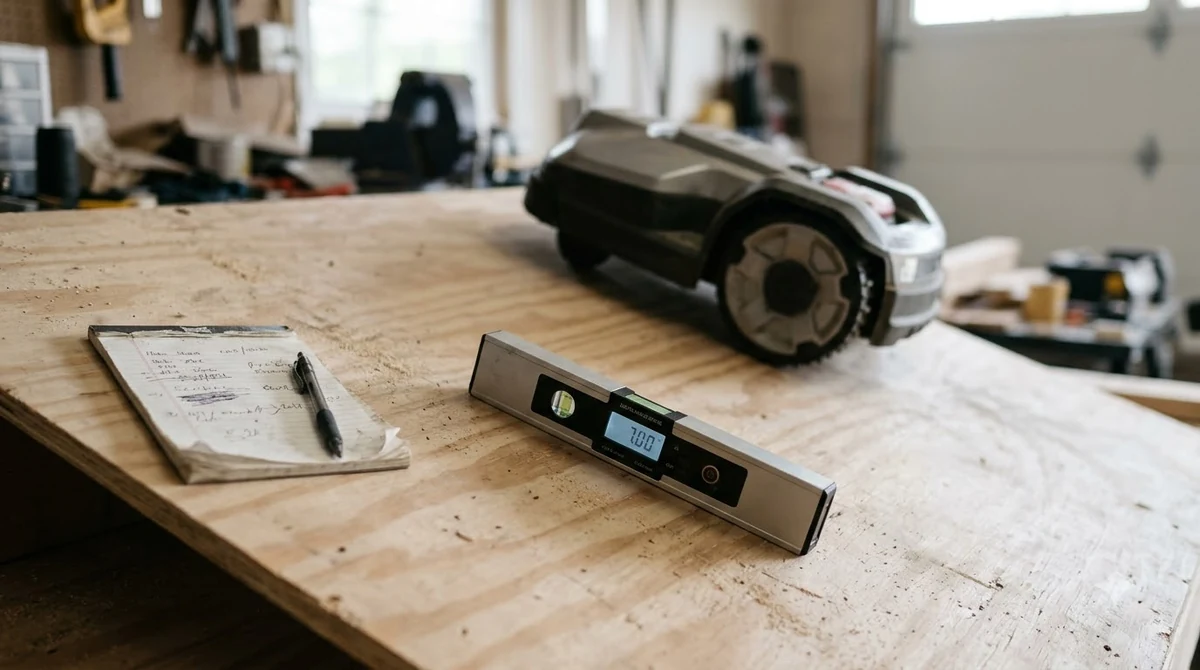
The ramp should be fixed to the truck, not simply leaned against the tailgate. The manual we read describes a bolt-on mounting kit with all hardware included, and it says the bed height should not exceed about 40 inches for that ramp. If your bed is higher, the ramp will be too steep, and you should look for a different setup. For a closely related angle, see our curb and step ramp guide as well.
Keep the ramp clean and dry before each use. Wet metal or wet grass on the ramp makes the wheels slip.
Load the mower and secure it
Turn the truck off, put it in gear or set the parking brake, and keep everyone away from the ramp while the mower goes up. Follow your model’s manual on whether the mower should be powered on, off or in a transport mode during the move. If this point matters for your setup, read our dolly for moving a robot mower for more detail on it. You can find more background and practical detail on this point in our lift and carry handle guide.
Once the mower is on the bed, tie it down. The guide we read recommends high-quality tie-downs or straps anchored to D-rings or cleats, and it suggests padding the bed to prevent scratches. Avoid sudden stops and sharp turns, which can shift a mower that is only strapped at one point.

When a tailgate and ramp are not enough
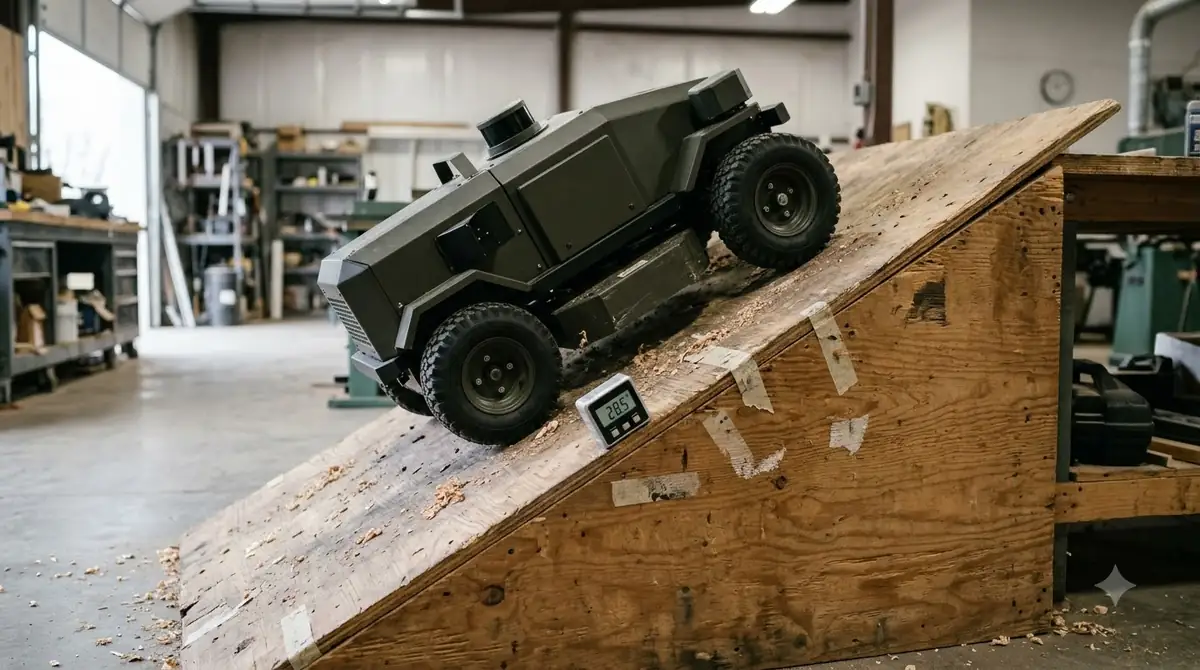
Hauling without a tailgate is harder, because the mower has nothing to rest against at the back. The guide we read says to tie the mower to the bed rails and to avoid sudden stops or sharp turns. A bed liner or mat helps with traction and protects the bed. See our bridge for crossing a drainage ditch for further detail on a connected question.
If the ramp will not fit your truck or your mower is heavier than the ramp rating, a trailer or a lower loading surface is a better choice than forcing the setup.
Check the truck before you load
The ramp is only half of the setup. The truck also has a payload limit, and the mower plus the ramp count against it. The ThePoolAndLawn guide we read tells owners to check the truck’s payload capacity and keep the load within the recommended limit, although it does not give a number. Look in your truck’s door-jamb sticker or owner’s manual for that figure.
The same guide notes that a lower payload floor can make loading easier, and that a bed liner or mat adds traction and protects the bed. A tailgate helps keep the mower from sliding back, so use it whenever you can, and close it after the mower is secured.
Before each trip, walk around the mower and check the straps. A strap that has stretched or frayed should be replaced, not retied.
Related reads: Another connected page that readers often open next is our carrying bag guide for robot mowers.
Frequently asked questions
Can I load a robot mower by myself?
Many owners do, but a ramp with a clear rating and a steady bed makes it much safer. If the mower is heavy or the bed is high, ask someone to spot it.
How wide should a ramp be for a robot mower?
The ramp should be wider than the mower’s wheel track so the wheels stay on the surface. The manufacturer we read sells ramps from 39.5 to 48 inches wide, and recommends two ramps side by side for wide-wheeled mowers.
How do I secure the mower in the bed?
Use straps or tie-downs anchored to the bed and to the mower frame, and pad the bed to prevent scratches. Do not tie the strap to a loose part of the mower.
What is a safe bed height for a loading ramp?
The manufacturer we read says the box bed should not exceed about 40 inches for its ramp. Check the rating and height limit of the ramp you buy.
Sources
- Super Lawn Trucks (ramp maker): 750 lb rating per ramp, 10 ft length, widths of 39.5 to 48 inches, two ramps for wide mowers, bed height limit of about 40 inches.
- ThePoolAndLawn (guide): tie-downs or straps anchored to D-rings or cleats, bed padding, and avoiding sudden stops; the guide gives no ramp angle or width.
 Up next9 min readGearRobot Mower Ramp: What to Check Before You BuyUpdated Nov 18, 2026
 10 min readGearSmart Sprinkler Controllers and Robot Mowers: What to Check Before You Sync ThemUpdated Nov 13, 2026
 9 min readGearBest Rubber Edging for Flower Beds with Robot Mower: What the Rules SayUpdated Nov 14, 2026
 6 min readGearRobot Mower Winter Storage Bag: 3 ChecksUpdated Nov 14, 2026
 6 min readGearRobot Mower Blade Storage Case: 4 Smart Storage TipsUpdated Nov 14, 2026
 9 min readGearBest Outdoor Smart Plug with Energy Monitoring for Mower Docks: Buyer’s GuideUpdated Nov 19, 2026