
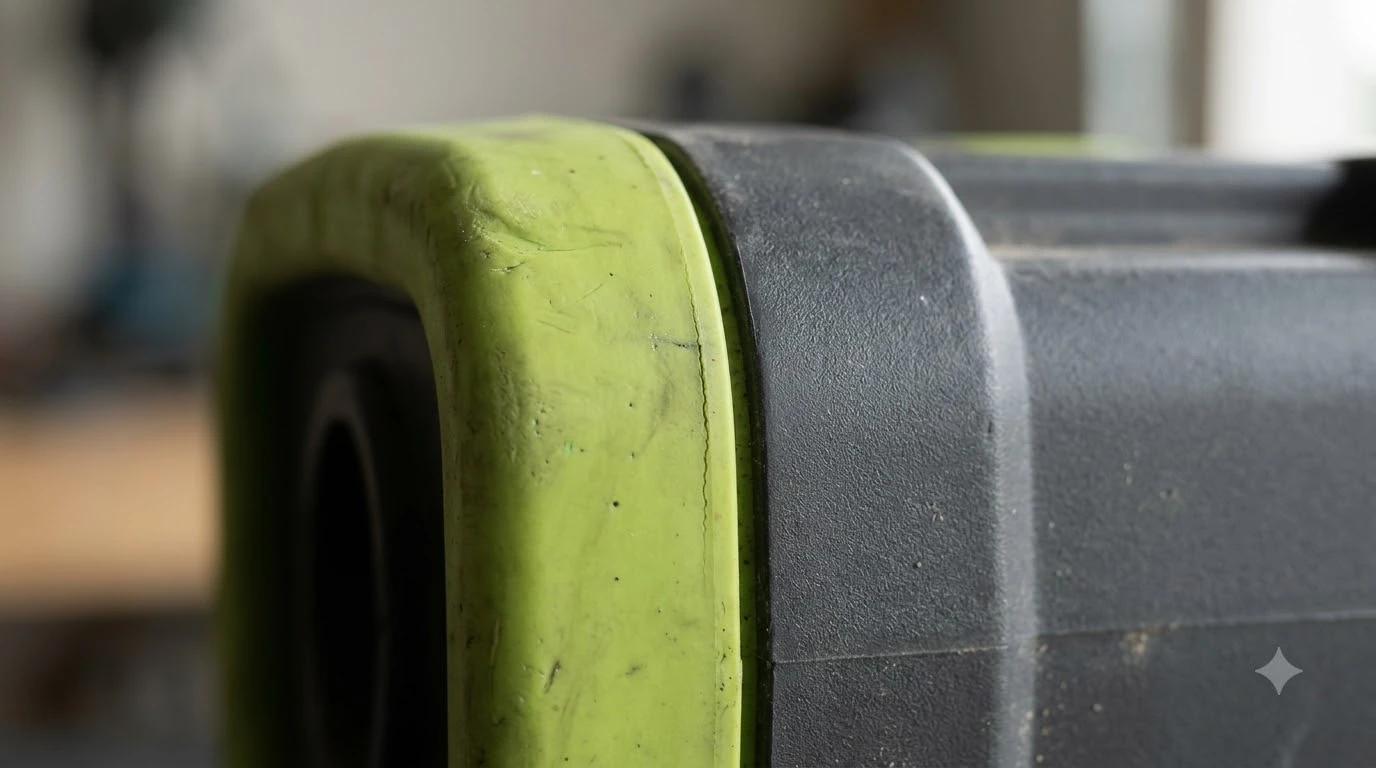

The best rubber threshold ramp for sliding glass door tracks is a modular, heavy-duty recycled rubber bridge ramp that spans both sides of the raised rail with a gentle incline under 15 degrees. Without a solid, beveled crossing, a robot lawn mower parked in a garage or sunroom will either bottom out its cutting deck on the metal sill or drop its small front caster wheels directly into the recessed track channel. Selecting the right profile keeps the mower moving smoothly between indoor charging zones and outdoor turf without damaging weatherstripping or aluminum rails.
The short answer
- Bridge-style geometry: Choose a dual-sided threshold bridge rather than a single wedge so the mower climbs up, clears the sliding track cleanly, and descends the patio side without high-centering.
- Gentle slope ratio: Aim for an incline between 8 and 15 degrees (roughly a 1:8 to 1:12 rise-to-run ratio) to prevent cutting deck scrapes and meet manufacturer slope limits.
- Wide wheel clearance: Pick a ramp at least 32 to 36 inches wide so LiDAR, RTK, or wire-guided mowers have ample margin for minor navigation drift.
- Traction and drainage: Look for grooved, slip-resistant solid rubber with underside drainage channels so rain does not pool against your door frame.
- Tool-free removability: Opt for heavy, friction-grip rubber that stays put under mower torque without permanent bolts or adhesives that void patio door warranties.
Why sliding glass door tracks trip up robot lawn mowers
Sliding patio doors combine a vertical step with a narrow recessed groove, creating a two-part mechanical obstacle that standard outdoor mower wheels are not built to cross.
Many homeowners store their robotic mowers inside a sunroom, enclosed porch, or walkout basement to protect the battery from extreme heat, freezing temperatures, and theft. Getting the mower out to the lawn through a sliding glass door introduces a tricky transition. Most residential sliding door sills sit between one and two inches above the interior floor and exterior patio, with an exposed aluminum or vinyl track rail running down the center.
According to our reading of robotic mower chassis designs, two failures happen at an unbridged track. First, small front swivel casters drop into the narrow track channel, wedging the wheel sideways and triggering a tilt or lift error. Second, even if large rear drive wheels climb the lip, the low-slung cutting disc underneath can catch on the raised metal rail as the wheelbase crests the threshold.

A single-sided wedge ramp solves only half of that problem because it leaves a sudden drop-off on the opposite side of the sill. A true threshold bridge or paired two-piece rubber ramp supports the mower’s wheelbase across the entire transition, keeping the cutting deck parallel to the ground.
Types of rubber threshold ramps for patio door tracks
Rubber threshold accessories generally fall into four structural designs, each suited to different door sill heights and storage habits.
Before selecting a ramp style, check whether your sliding door track sits flush with the exterior patio or rises sharply on both sides. As Discount Ramps’ threshold ramp guide notes, threshold ramps are specifically engineered for small doorway rises—typically between one and six inches—where standard step ramps would be too bulky.
| Ramp Style | Best Track Setup | Deck Clearance | Door Operation |
|---|---|---|---|
| Single-piece beveled wedge | Flush exterior patio with an interior step-down only | Moderate; requires matching exact sill height | Allows door to close if placed outside the glass plane |
| Dual-sided threshold bridge | Raised sill protruding on both interior and exterior sides | High; spans over the rail without resting weight on it | Must be lifted or slid back to close and lock the door |
| Modular interlocking rubber tiles | Wide double-slider openings or uneven concrete patios | High; customizable depth reduces approach angle | Sections can be detached quickly when closing up |
| Notched channel-fit rubber ramp | Deeply recessed multi-track sliding doors | Very high; underside groove hugs the raised rail | Snug fit requires manual removal before sliding door shut |
Solid recycled crumb rubber outperforms hollow plastic or lightweight foam alternatives for outdoor mower transit. Heavy rubber absorbs vibration, resists UV degradation from direct sunlight, and stays planted when high-torque all-wheel-drive mowers accelerate up the incline.
Key specifications to look for before buying
Matching ramp dimensions to your mower’s climbing rating and wheelbase prevents traction loss, navigation errors, and sill damage.
Slope steepness is the most critical measurement. While residential mower makers like Husqvarna rate standard models for 25 to 50 percent inclines inside open lawns, Husqvarna Automower steep-slope support documentation emphasizes that boundary areas and tight transitions require much gentler grades and level approach zones. Even if a mower can climb a steep hill on grass, a short, steep ramp causes the front bumper to hit the slope before the front wheels start climbing.
- Rise-to-run ratio: Follow a gentle incline close to the 1:12 accessibility benchmark (roughly 4.8 degrees) or no steeper than 1:6 (about 9.5 degrees). A 1.5-inch sill height pairs best with a ramp length of at least 12 to 18 inches per side.
- Usable width: Wireless RTK and vision-guided mowers rely on satellite or camera localization that can drift by a few inches near house walls. Choose a ramp at least 32 to 36 inches wide so a wheel never slips off the edge.
- Beveled side edges: Tapered side wings prevent the mower’s front bumper from catching if it approaches the doorway at a slight angle.
- Surface tread pattern: Deep horizontal ribs or diamond-plate rubber textures give knobby mower tires mechanical grip even when morning dew or rain wets the patio.
- Weight and durometer: Dense, solid rubber resists curling at the thin leading edge, ensuring the mower’s low front lip glides smoothly onto the ramp rather than pushing it forward.
Heads up
Never place heavy weight directly on top of a hollow aluminum or vinyl sliding door track. Choose a ramp with a recessed underside channel or bridge support that transfers the mower’s weight onto the solid subfloor and concrete patio rather than bending the rail.
How to measure, fit, and maintain your threshold ramp
A clean fit requires measuring from the flat floor surfaces on both sides of the door frame rather than from the top of the sliding track.
- Measure the true vertical rise. Place a straightedge across the top of the sliding door track and measure down to the interior floor and exterior patio separately, as patios often slope away from the house for drainage.
- Check your mower’s approach clearance. Verify that your mower’s front bumper overhang clears the ramp’s starting angle without triggering collision sensors.
- Dry-fit and trim the width. Set the rubber ramp in place and confirm it clears the vertical door jambs; if needed, score and trim solid rubber cleanly using a sharp utility knife and a metal straightedge.
- Test transit in manual mode. Drive the mower across the bridge using your app’s manual remote control at slow speed while watching the cutting deck height and front caster wheels.
- Configure your mapping path. Set a narrow transit corridor or channel through the doorway in your mower app, keeping at least 18 inches of straight, level run-up on both sides of the ramp.
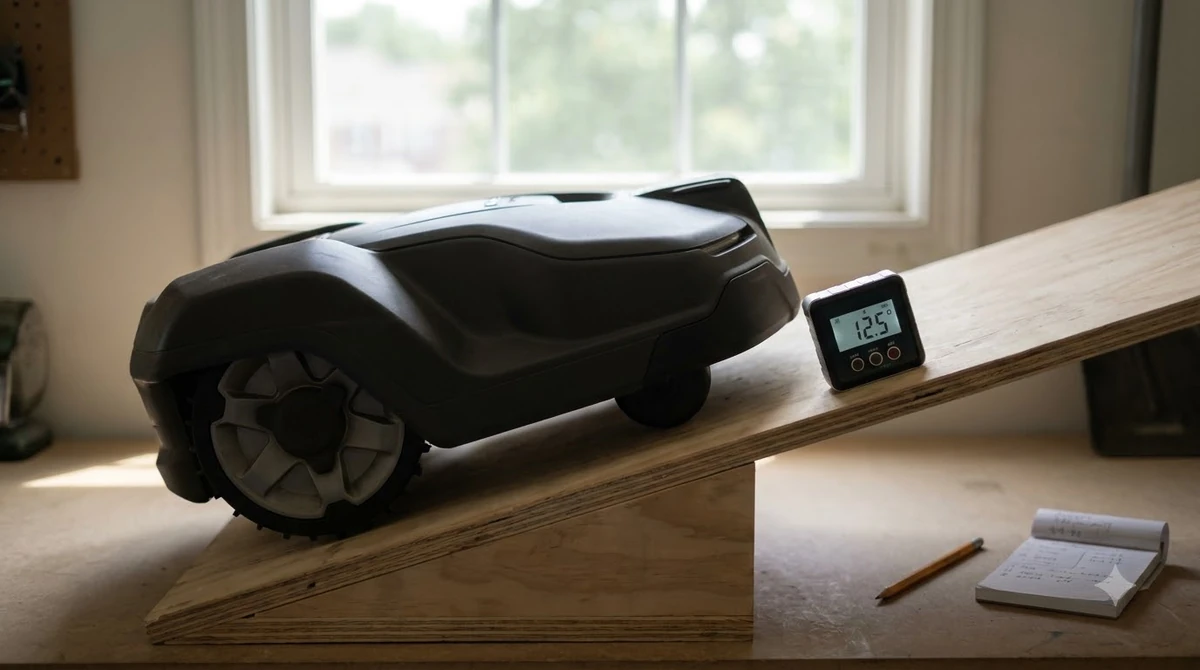
Ongoing maintenance takes very little effort though seasonal checks keep the crossing reliable. Sweep grit, dried grass clippings, and small pebbles out of the sliding track and off the rubber surface once a week so debris does not get pressed into the weatherstripping. Twice a year, hose off the rubber ramp with mild dish soap to remove pollen and algae buildup that can make outdoor rubber slick during wet weather.

Frequently asked questions
Can I leave a rubber threshold ramp in place and still close my sliding glass door?
Only if you use a single-sided exterior wedge placed entirely outside the sliding glass panel’s path. Dual-sided bridge ramps that span over the track rail sit directly in the door’s closing plane and must be lifted aside before you slide and lock the door.
Will a rubber ramp damage my sliding door’s aluminum track or weatherstripping?
Not if the ramp is properly sized with an underside relief groove that straddles the raised rail. Avoid forcing a flat-bottomed ramp over a tall track, as concentrated wheel weight can bend thin metal rails or crush bottom brush seals.
Why does my robot mower stop or reverse right at the bottom of the threshold ramp?
A sudden angle change at the base of a steep ramp can trigger the mower’s front bumper collision sensor or trick ultrasonic obstacle avoidance into seeing a wall. Switching to a longer, gentler incline under 10 degrees usually eliminates false obstacle stops.
Do robot mowers need GPS signal inside the doorway to cross a threshold ramp?
RTK-GPS mowers often experience signal reflection near glass doors and house eaves, which can cause slight path wobble. Using a wide ramp of at least 32 inches and setting a straight entry corridor in your mower’s mapping app helps the robot cross reliably even when satellite accuracy dips.
Sources
- Optimising an Automower installation for steep slopes (Husqvarna): Referenced for robotic mower slope percentage calculations, boundary incline limits, and level transition zone guidelines.
- How to Choose a Threshold Ramp for Safe and Easy Doorway Access (Discount Ramps): Referenced for threshold ramp rise-to-run slope ratios, degree equivalents, and standard doorway height ranges.
- ADA Ramp Slope Requirements: 1:12 Rule, Landings & Width (Express Ramps): Referenced for 1:12 slope geometry benchmarks, width standards, and slip-resistant outdoor surface criteria.
 Up next10 min readGearBest Replacement Rubber Bumper Strip for Brick Walls: Materials, Fit, and CareUpdated Nov 19, 2026
 6 min readGearRobot Mower Rubber Wheel Covers: Fit, Grip and Trade-offsUpdated Nov 20, 2026
 9 min readGearBest Rubber Edging for Flower Beds with Robot Mower: What the Rules SayUpdated Nov 14, 2026
 10 min readGearBest Waterproof GPS Tracker Tag for Non-Cellular Robot Mowers: Buyer’s GuideUpdated Nov 19, 2026
 9 min readGearChoosing the Best Heavy-Duty Plastic Shed Ramp for Robot Mower EntryUpdated Nov 19, 2026
 9 min readGearBest Outdoor Smart Plug with Energy Monitoring for Mower Docks: Buyer’s GuideUpdated Nov 19, 2026