
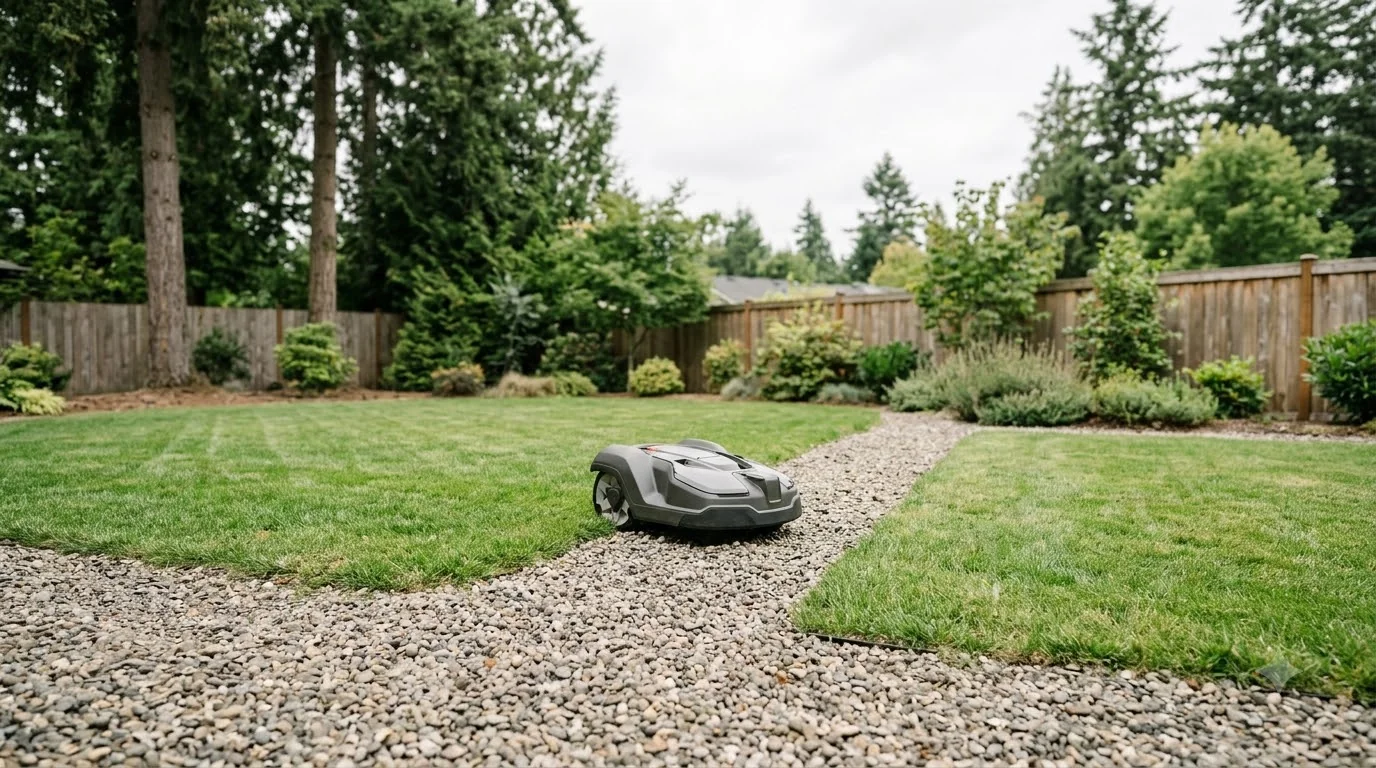

The best robot lawn mower for 5 acres is the one whose rated coverage, slope limit and navigation match your lawn. Few models list a rating that large. Husqvarna’s CEORA page gives a 6-acre lawn size, and Yarbo’s blog also claims up to 6 acres. Both are manufacturer claims, so check how each rating is defined before you buy.
The short answer
- Coverage: look for an official rating of at least 5 acres, and ask what the rating assumes.
- Slope: measure your steepest section and compare it with the stated limit, such as the 70 percent Husqvarna lists for the 435 iQ AWD.
- Navigation: choose between a boundary wire and RTK, based on install effort and sky view.
- Grass: confirm the cutting height range fits your grass type before you compare acreage.
What a 5-acre rating has to cover
A 5-acre lawn is 217,800 square feet, since one acre is 43,560 square feet. For the best robot lawn mower for 5 acres, start by writing down the exact area you need to mow, and plan around that exact figure rather than the rounded “5 acres” on a box. Lawn size is only part of the job.
Beds, borders and edges change how much grass the mower can reach. UF/IFAS notes that raised beds or borders often block access, which leaves grass along the edge that needs string trimming. Our reading is that a rated size is a starting point, and real reach depends on how much of the yard is open lawn. The explainer on robot mower coverage ratings covers how to read these figures.
Which listings reach 5 acres
Of the official listings we read, only the Husqvarna CEORA, which Husqvarna lists in its commercial range, and Yarbo’s claims reach 6 acres. Husqvarna’s other robotic lines list between 0.9 and 2 acres as lawn size.
| Model | Rated lawn size | Where it is stated |
|---|---|---|
| Husqvarna CEORA (commercial range) | 6 acres (Lawn Size +/-20%) | Husqvarna US product page |
| Yarbo (model not named on the blog) | Up to 6 acres | Yarbo blog |
| Husqvarna Automower 580 EPOS | 2 acres | Husqvarna US listing |
| Husqvarna Automower 580L EPOS | 2 acres | Husqvarna US listing |
| Husqvarna Automower 560 EPOS | 1.5 acres | Husqvarna US listing |
| Husqvarna Automower 535 AWD EPOS | 1 acre | Husqvarna US listing |
The Husqvarna CEORA is described on its official product page as able to “cover up to 6 acres with a pro sports quality cut”. The same brand’s FAQ on that page gives up to 18 acres for regular quality turf and up to 12 acres for Pro Quality, which does not match the 6-acre figure. Our reading is to plan with the 6-acre spec and get the lower-quality figures confirmed in writing before relying on them.
The “+/-20%” label on the listing means the stated size is not an exact limit. Ask the dealer what tolerance applies to a yard with beds, trees and a 5-acre total, and whether that tolerance counts the areas you will subtract.
Slope ratings and what they mean
The steepest rating we found is 70 percent, which is about 35 degrees. Husqvarna’s listing for the Automower 435 iQ AWD states that it “Navigates slopes up to 70%”. Yarbo’s blog also gives a 70 percent gradient for its model, and says that standard models typically handle inclines up to 25 to 30 percent, as its uphill guide explains. These are brand claims from different pages, so compare them only on the same measure.
Slope is a separate test from lawn size. A 5-acre lawn that is mostly flat may need less slope capacity than a half-acre lawn on a hill. A slope check matters just as much when you look for the best robot lawn mower for 5 acres. Our reading is to measure your steepest section with a level or a phone app, then compare that figure with the stated limit, and ask the maker how the rating was tested. For a longer explanation, read how steep a hill a robot mower can handle.
Navigation: boundary wire or RTK
UF/IFAS lists two ways to define the mowing area: a boundary wire or GPS/RTK, along with a charging station where the mower docks. Husqvarna’s CEORA listing describes satellite based RTK-GNSS technology with a “virtual wire” boundary, and the cutting width is 26.8 inches. Our reading is that a boundary wire on a 5-acre lot means laying wire around the full perimeter and every island of beds or trees, so install effort grows with the edge length. An RTK setup removes that wire, but it depends on clear sky view, so ask the maker how it performs under tree cover before you buy. How an RTK robot mower works explains the sky-view requirement.
Cutting height and grass type
Most autonomous mowers were designed for cool-season grasses that are cut below 2.5 inches, according to UF/IFAS. Common Florida grasses such as St. Augustinegrass need 2.5 to 4 inches, which may exceed the height limits of some models. The same publication says there is limited research on bahiagrass, centipedegrass and bermudagrass lawns.
Check the cutting height range on the spec sheet for your grass before you compare the acreage numbers. A mower with a high rated size but a low maximum height is a poor fit for warm-season turf, whatever its coverage claim says.
Mowing pattern on a large lawn
UF/IFAS describes two mowing approaches. A random trajectory moves in random directions, works well around obstacles, and may overlap and lose efficiency. A systematic trajectory uses straight lines or grid patterns, is more efficient on open lawns, and reduces repeated passes. If your 5-acre yard is mostly open, the systematic pattern matters more, while a yard broken up by beds and trees favors the random pattern around obstacles. The publication does not say which mower models use each approach, so when you compare each option for the best robot lawn mower for 5 acres, ask the maker directly.
Maintenance, blades and site risks
UF/IFAS advises replacing blades every six to eight weeks during the growing season, because blade sharpness declines with use and a dull blade reduces cut quality. Ask the seller for blade pricing and availability before you buy, since blades are a recurring cost for the life of the mower. The guide to robot mower blade replacement lists what the job involves.

The publication also lists operational risks for these mowers: irrigation heads that can make the mower unstable, lightning risk to docking stations, fire ant activity near electrical parts, and potential theft. Our reading is that these risks matter more on a large yard, where the mower runs for longer hours and the charging station is part of a bigger setup. Check where the dock sits relative to the lawn and whether a sprinkler zone runs across the route.
Best robot lawn mower for 5 acres: what to check
UF/IFAS describes robot mowers as best suited to small to medium lawns with simple layouts and few obstacles. It calls them less suitable for very large or complex properties, lawns that need higher mowing heights, and areas with frequent debris or uneven terrain. Many 5-acre properties match at least one of those conditions, so the sources point to a careful check rather than an automatic yes. A property with separate lawn areas may also call for a multi-zone robot mower setup.
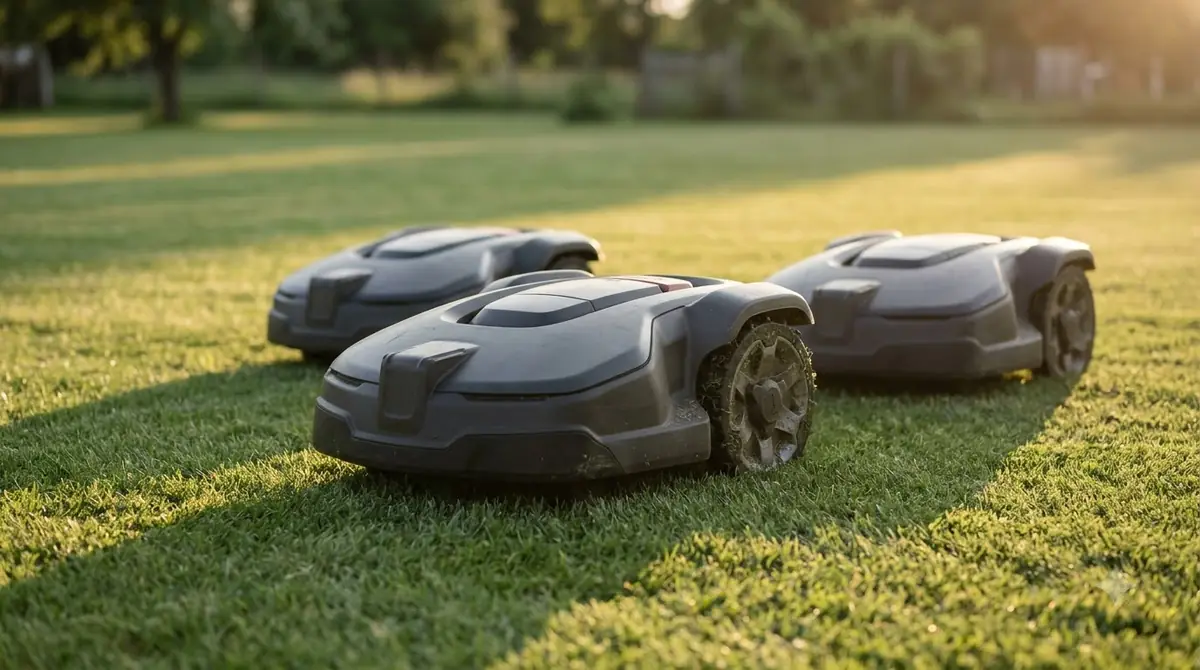
Before you compare brands, check these items on each spec sheet and in writing from the seller:
- A rated lawn size of at least 5 acres, with the maker’s definition of that rating.
- A slope limit above your steepest measured section.
- A navigation system that fits your yard, with the install effort understood.
- A cutting height range that includes your grass type.
- Local service support, blade supply and the warranty terms.
Frequently asked questions
Is there a robot lawn mower rated for 5 acres?
Yes on paper, so the best robot lawn mower for 5 acres still depends on the written spec. Husqvarna’s CEORA page lists a 6-acre lawn size, and Yarbo’s blog says its model covers up to 6 acres. Both are manufacturer ratings, and the CEORA FAQ gives lower figures for some turf quality levels, so confirm the figure in writing before you buy.
Can a robot mower handle a hill on a 5-acre lot?
It depends on the slope rating and your steepest section. Husqvarna lists the Automower 435 iQ AWD for slopes up to 70 percent, and Yarbo’s blog gives the same 70 percent figure for its model. Measure the steepest section first, then compare it with the stated limit.
Do I need RTK for a 5-acre lawn?
Not always. UF/IFAS lists a boundary wire and GPS/RTK as two navigation options. RTK removes the perimeter wire, but it depends on sky view, so the right choice depends on your lot layout and how much install work you want to do.
How often should robot mower blades be replaced?
UF/IFAS recommends replacing blades every six to eight weeks during the growing season. Blade sharpness declines with use, and a dull blade reduces cut quality and can stress the turf.
Sources
- Autonomous or Robotic Mower Use on Florida Lawns (ENH1402) (UF/IFAS Extension, March 2026): navigation options, mowing patterns, blade interval, cutting height and suitability.
- Husqvarna CEORA product page (Husqvarna): 6-acre lawn size, RTK-GNSS virtual wire, cutting width and FAQ figures.
- Husqvarna US robotic lawn mowers listing (Husqvarna): rated lawn sizes for the 435 iQ AWD, 580 EPOS, 580L EPOS, 560 EPOS and 535 AWD EPOS models, and the 70 percent slope on the 435 iQ AWD.
- Can a robot lawn mower go uphill? (Yarbo blog): 6-acre claim, 35 degree and 70 percent slope, and the 25 to 30 percent figure for standard models.
 Up next8 min readBest Robot MowersBest Robot Mower With Ultrasonic Sensors: 5 Checks Before You BuyUpdated Nov 11, 2026
 9 min readBest Robot MowersBest Robot Lawn Mower for 2 Acres: What to Check Before You BuyUpdated Nov 11, 2026
 8 min readBest Robot MowersBest Robot Mower With No Subscription Fee: What to Check Before You BuyUpdated Nov 11, 2026
 8 min readBest Robot MowersBest Robot Mower for Beginners: What to Check Before You BuyUpdated Nov 11, 2026
 10 min readBest Robot MowersBest Robot Lawn Mower for Busy Families: What to Check Before You BuyUpdated Nov 11, 2026
 8 min readBest Robot MowersBest Robot Mower That Works in the Rain: What to Check Before You BuyUpdated Nov 11, 2026