
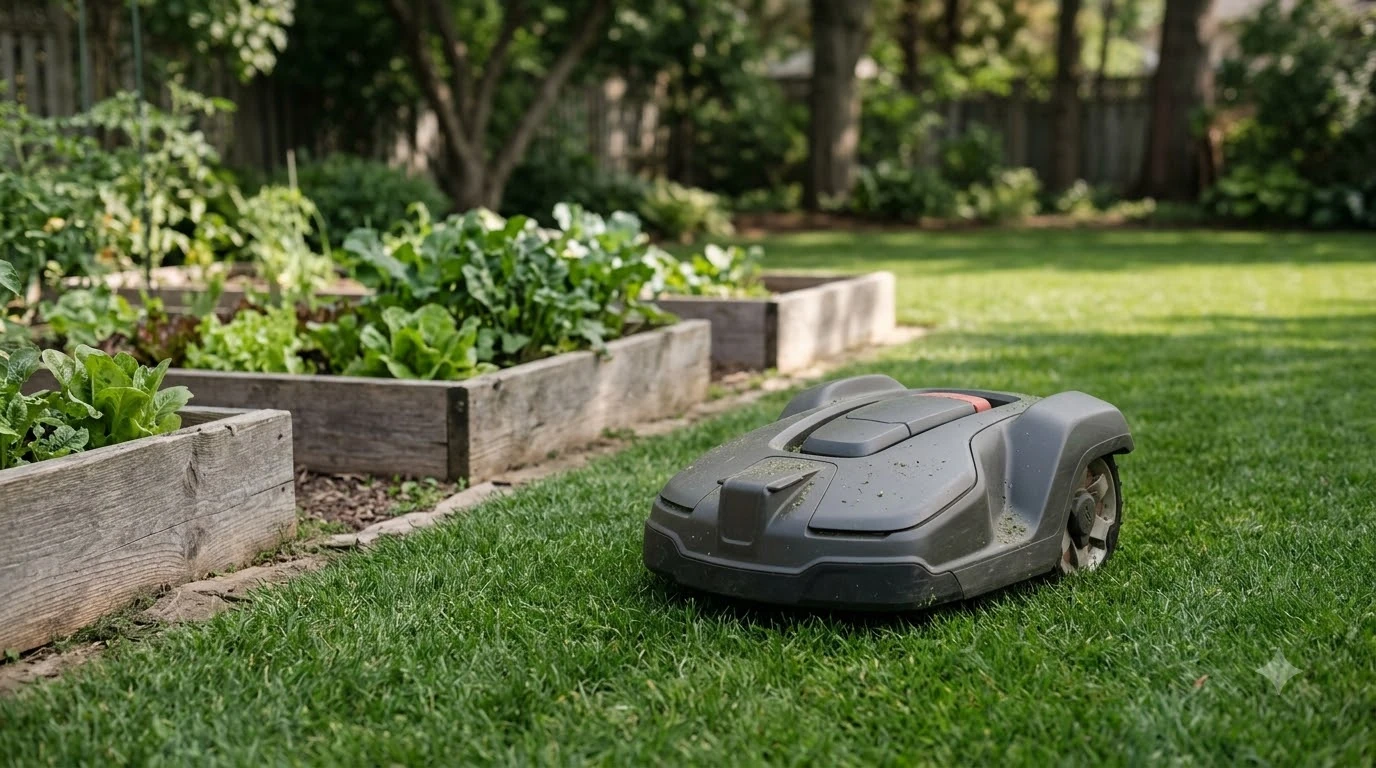

Choosing the best RTK robot lawn mower for suburban yards starts with sky view, not the brand name. RTK mowers need a clear line to satellites, and houses, fences and tall trees can block that line. Vendors quote RTK accuracy of 1 to 2 centimeters, but the result in your own yard depends on the conditions where the mower works, as of 2026-11-10.
The short answer
- Check sky view first. Buildings, tall trees and other obstacles can block the satellite signals that RTK depends on.
- Pick a correction source. A local base station needs a steady line of sight to the mower, while network RTK needs a reliable internet connection and coverage at your address.
- Match the lawn size. Manufacturers rate models by lawn area, so compare the rated acreage with your own measurement.
- Confirm the exact model. Positioning method can differ within one product line, so check the model page rather than the series name.
How RTK positioning works on a robot mower
RTK combines the mower’s own satellite signal with correction data from a reference receiver at a known position. Mammotion describes this as narrowing position error to 1 to 2 centimeters, compared with roughly 2 to 5 meters for standard GPS, according to its network RTK explainer.
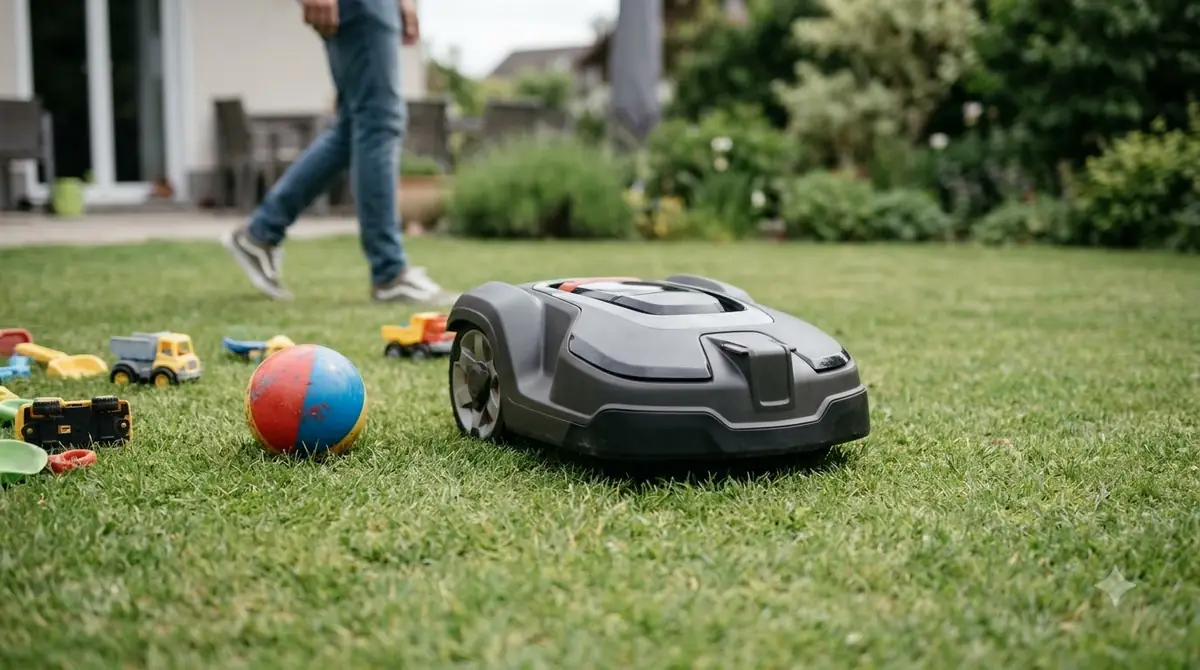
The reference receiver knows its exact position, so it can calculate the difference between that position and what the satellites report, and then send that correction to the mower. Those figures come from a manufacturer, so treat them as a best case rather than a guarantee for every yard.
Weather also matters. The same Mammotion page lists heavy rain, snow, dense fog and electromagnetic interference as factors that can degrade GNSS signal quality, which is one reason a single accuracy number never tells the whole story.
Why sky view matters more in a suburban yard
Satellite signals are the weak point of RTK in a suburban yard, because a mature tree or a two-story house can block part of the sky over the lawn. Mammotion states that traditional RTK needs a direct line of sight between the mower and its base station, and that buildings and tall trees can block satellite signals.
A consumer guide from Which? makes the same point from a different angle, noting that RTK and GPS systems can lose signal under heavy tree canopy, deep shadow or tall walls. Neither source gives a numeric clearance figure, so you have to judge the spot yourself.
Our reading: the usual trouble spots are the back corner under a large tree, the narrow strip between the house and a fence, and the lawn beside a tall wall. Stand in each of these spots, look up, and note how much open sky you can see before you choose a model.
Base station or network RTK for a suburban lot
A local base station and network RTK solve the same positioning problem in different ways. For the best RTK robot lawn mower for suburban yards, the right choice depends on your signal strength, your internet access and the coverage available at your address.
| Factor | Local base station | Network RTK |
|---|---|---|
| Correction source | One private reference unit at your home | A regional network of reference stations, described by Mammotion as three or more professional stations |
| Stated coverage | 20 to 30 km, per Mammotion’s comparison table | Listed as theoretically unlimited by Mammotion; availability depends on location |
| Setup | Install and position a base antenna | No local antenna, according to Navimow, which connects through its app |
| Connectivity | Needs a clear link between base and mower | Needs internet access, and Mammotion says a stable network signal is essential |
| Ongoing cost | Not stated in the sources we read | Navimow says network RTK access is included at no extra cost, and Mammotion says its 4G data is free for the product lifespan (vendor claims, as of 2026-11-10) |
Navimow says you can check whether network RTK is available by entering your postcode. Our reading: run that check before paying for a base-station model you may not need, and confirm the status again on the day you buy, because coverage pages change.
How distance from the base affects accuracy
Positioning accuracy tends to drop as the distance between the reference point and the mower grows, and a 2023 study found that effect with GNSS base stations. The study compared eBee drone positioning across base-station distances from 2.4 km to 42.0 km, and reported that distances under 16.2 km were significantly more accurate than distances up to 42.0 km.
That study, published in the International Journal of Aviation, Aeronautics, and Aerospace, used aerial mapping drones, not lawn mowers, so the exact numbers do not transfer to a yard. The direction still matters: the farther the rover works from its reference point, the more positioning error can build up.
Our reading: on a single suburban lot, the base is usually close to every part of the lawn, so obstruction and signal quality are normally bigger concerns than distance when you shortlist the best RTK robot lawn mower for suburban yards.
Matching lawn size and layout to the model
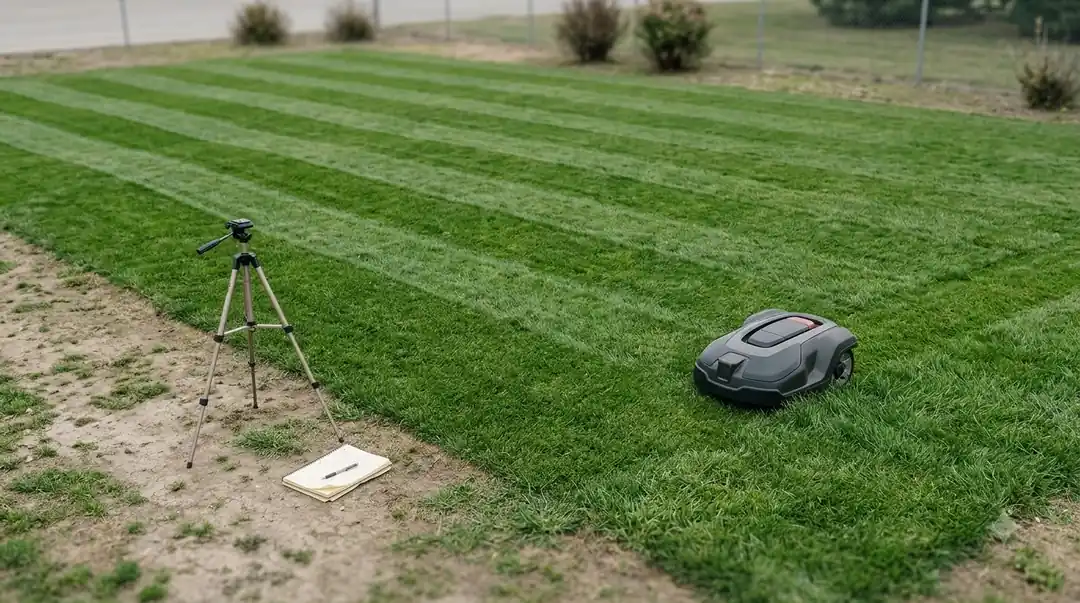
Husqvarna rates its robotic mowers by lawn size, with the 410 iQ listed for 0.5 acre and the 440 iQ for 2 acres, within a plus or minus 20 percent range, as of 2026-11-10. Use these ratings as a starting point when you narrow down the best RTK robot lawn mower for suburban yards, and compare them with your measured lawn area.
| Model | Stated lawn size | Boundary options |
|---|---|---|
| Automower 410 iQ | 0.5 acre | Physical wire, virtual wire |
| Automower 420 iQ | 1 acre | Physical wire, virtual wire |
| Automower 435X AWD | 0.9 acre | Physical wire only |
| Automower 440 iQ | 2 acres | Virtual wire, physical wire |
| Automower 580 EPOS | 2 acres | Virtual wire |
The Husqvarna page does not name RTK for these models, so this table tells you about size and boundary type, not about the positioning method. A model that fits your lawn size may still not be the best RTK robot lawn mower for suburban yards if its positioning does not suit your sky view.
Husqvarna also says the 435 iQ AWD navigates slopes up to 70 percent, but slope rating is a separate question from RTK, so confirm it on the model page.
Choosing the best RTK robot lawn mower for suburban yards: what to check before you buy
Use this checklist to narrow the field before you compare prices, because the best RTK robot lawn mower for suburban yards is the one that works in your specific yard.
- Map the sky. Stand where the mower will work, look up at the tree canopy and roof lines, and note the open sky over each corner.
- Confirm the positioning method. Read the exact model page, since Navimow lists no RTK for any of its i-series models, which shows that series names alone do not settle the question.
- Check network coverage. If the brand offers network RTK, enter your postcode before you rely on it.
- Ask about ongoing data costs. Find out whether 4G or cellular data is included, and whether a Wi-Fi connection is needed for updates.
- Measure the lawn. Compare your measured area with the rated size, and leave a margin for beds and irregular edges.
- Choose the boundary type. Physical wire needs installation along the edge, while virtual wire depends on mapping through the app.

Frequently asked questions
Does RTK work under tall trees?
It can lose signal. Mammotion says tall trees and other obstacles can block satellite signals, and Which? notes that RTK and GPS can lose signal under heavy tree canopy. Check the open sky in the exact spot where the mower will work before you buy.
Do I need a base station if I have Wi-Fi?
Not always. Network RTK uses an internet connection instead of a local base, and Mammotion says a stable network signal is essential. A base station needs a clear link to the mower. Compare both options for your address before deciding.
How accurate is RTK on a robot mower?
Vendors state accuracy of 1 to 2 centimeters, which are manufacturer figures. Accuracy depends on sky view, distance from the reference point and signal quality, so the result in your yard may differ from the published number.
Is RTK the only way a robot mower can find its boundary?
No. Husqvarna lists physical wire and virtual wire options across its robotic mowers, so RTK is one method among several. Choose the boundary type that matches your yard layout, your tolerance for installation work and the model you can actually get.
Sources
- What is network RTK? (Mammotion): accuracy figures, base versus network coverage, obstruction and connectivity statements.
- RTK technology, the core of accurate positioning for robot mowers (Navimow): network RTK cost and postcode coverage check.
- Robotic lawn mowers (Husqvarna US): lawn size ratings, boundary options and slope range.
- What is a robot lawn mower? (Which?): signal loss under tree canopy, deep shadow and tall walls.
- Accuracy Assessment of the eBee Using RTK and PPK Corrections Methods as a Function of Distance to a GNSS Base Station (Cerreta et al., 2023, International Journal of Aviation, Aeronautics, and Aerospace).
 Up next8 min readBest Robot MowersBest Robot Lawn Mower for Suburban Homes: What to Check FirstUpdated Nov 11, 2026
 8 min readBest Robot MowersRTK vs LiDAR vs Vision: Which Robot Mower Navigation Fits Your YardUpdated Nov 11, 2026
 7 min readBest Robot MowersBest Robot Mower With Rain Sensor: What to Check Before You BuyUpdated Nov 10, 2026
 8 min readBest Robot MowersBest Robot Mower with PIN Code Lock: What to Check Before You BuyUpdated Nov 11, 2026
 10 min readBest Robot MowersBest Robot Lawn Mower for First-Time Homeowners: What to Check Before You BuyUpdated Nov 10, 2026
 10 min readBest Robot MowersBest Robot Lawn Mower for Elderly Parents: What to Check Before You BuyUpdated Nov 11, 2026