
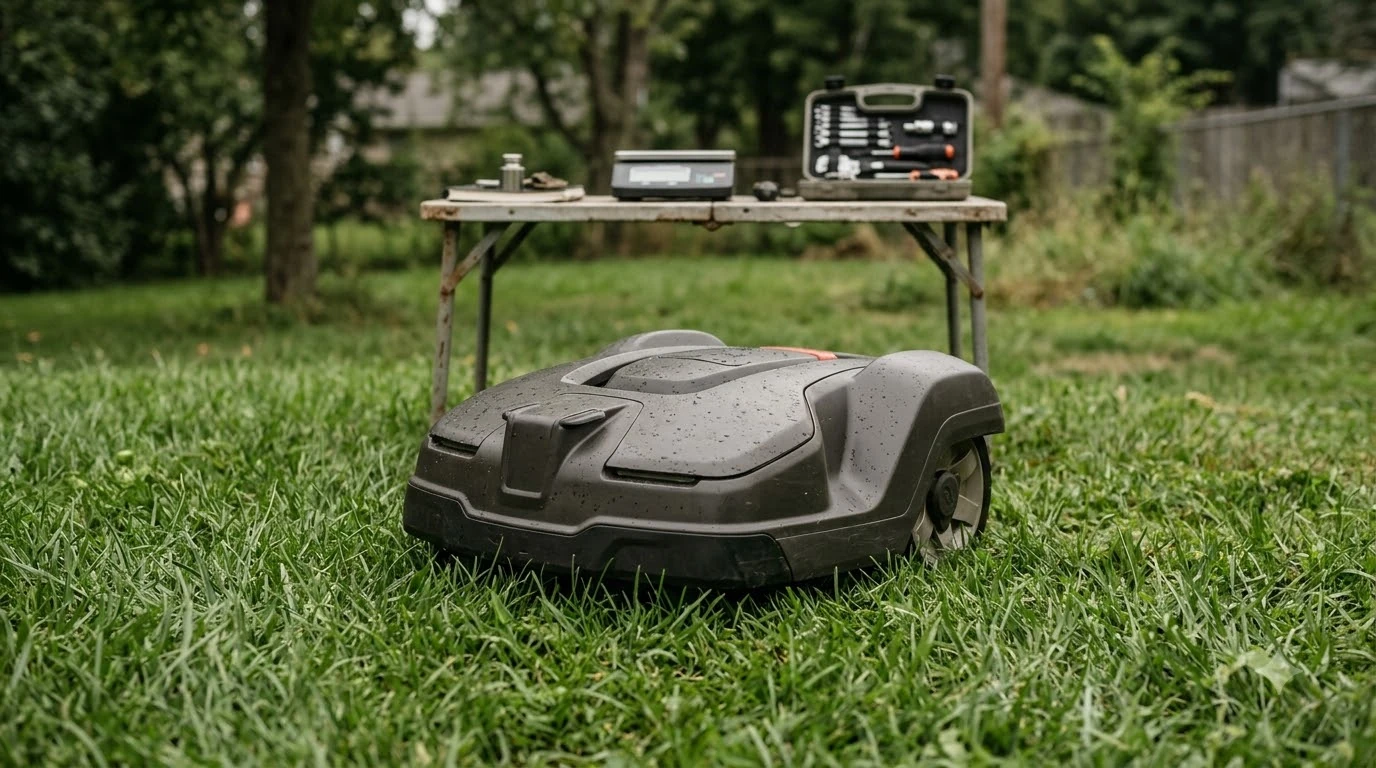

A robot mower for lawn with low spots that flood can run well, but only after the wet spots dry and the deep dips are filled. Husqvarna advises waiting at least 24 hours after rain, and wet low ground is where wheels slip, cut ruts and sometimes get stuck. Standing water is a drainage problem first, so the mower works best when you prepare those spots before the first run. This guide explains what to check, when to hold the mower back, and what to compare when buying for a wet yard.
The short answer
- Wait after rain: at least 24 hours, and longer after heavy rain or on overcast days, according to Husqvarna.
- Fill deep dips first: deeper holes and ruts can make a mower tilt, lose grip or get stuck, so fill them with topsoil before the first run.
- Use the rain delay: the Worx default rain delay is 180 minutes and starts once the sensor is dry.
- Buy for grip: wet grass cuts traction, so compare wheel size, tread and all-wheel drive.
Why low spots that flood cause trouble for a robot mower
A low spot that floods is a place where water collects after rain because the soil drains poorly. Extension guidance describes soil that drains less than one inch per hour as poorly drained, and water ponds in those areas for longer. Soil there stays soft, and the surface can be easy to damage.
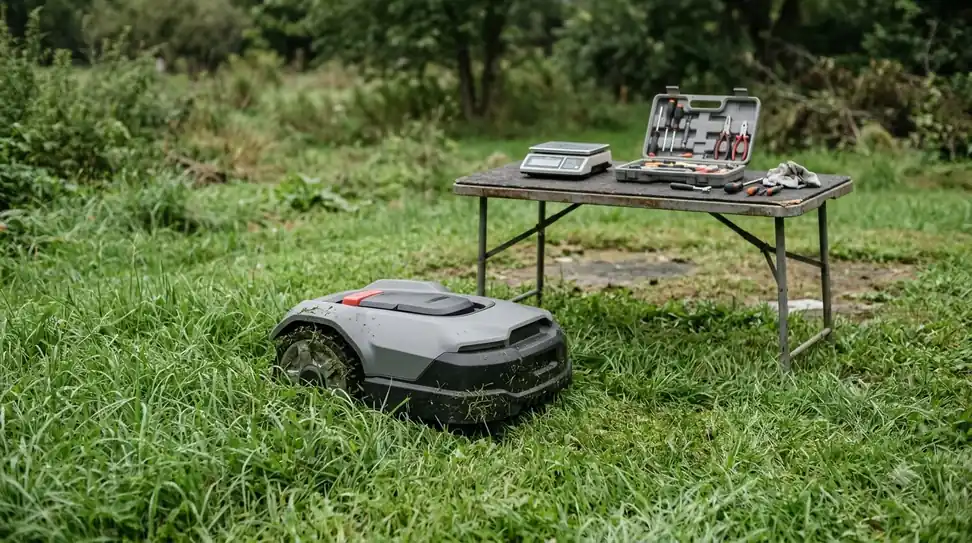
For a robot mower for lawn with low spots that flood, the trouble shows up in three ways:
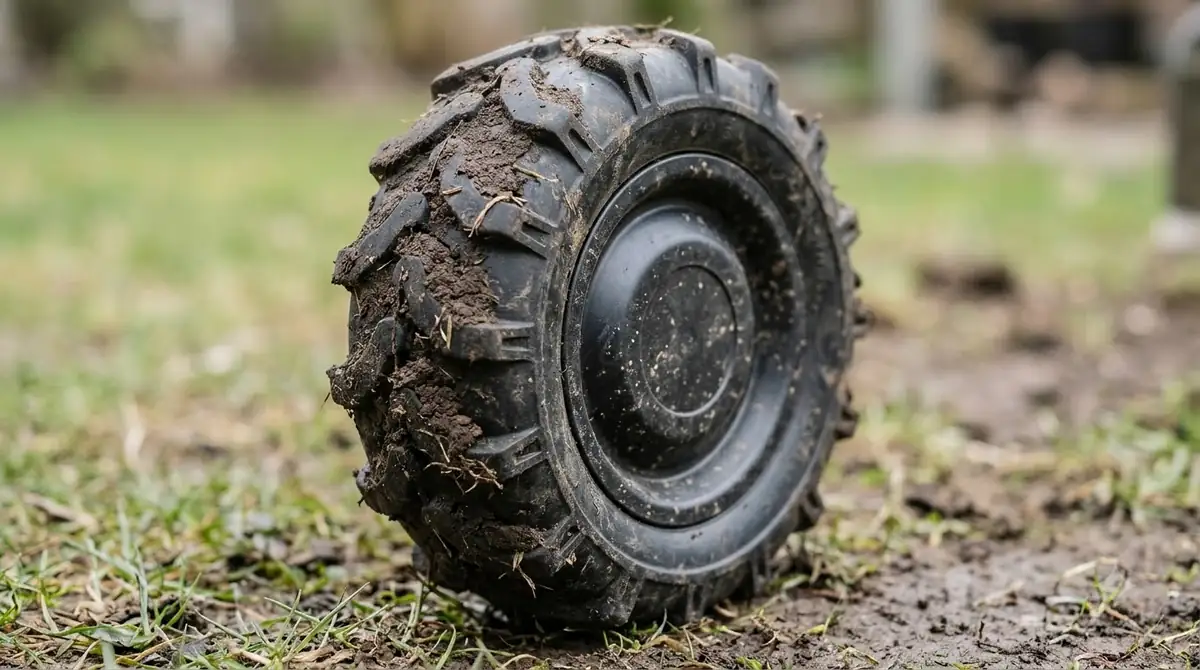
- Ruts: Husqvarna notes that mowing after heavy rain can create wheel ruts in soft, wet soil, which leads to deep grooves and depressions that make later mowing harder.
- Tilt and stuck wheels: Anker, which publishes the Eufy robot mower guides, says deeper holes and ruts can cause the mower to tilt, lose grip or get stuck, while small bumps are usually fine.
- Traction loss: Anker also states that wet grass significantly reduces traction, so a mower can slip at the exact spot where water sits.
The depth of the dip matters more than its size. A shallow bump on a wet lawn is rarely the issue, but a dip that collects water and softens the soil is.
Robot mower for lawn with low spots that flood: check the dips first
Walk the lawn before setup and look for the spots that will cause problems later. Anker recommends checking for deep dips, sunken patches, muddy low spots and ruts from pets or footpaths before the mower is installed.
- Mark the wet dips. Note any spot that stays muddy or holds water after a rain, since those are the places where wheels will dig in.
- Fill the deep ones. Anker advises filling deep potholes, sudden drop-offs and severe ruts with topsoil or a soil-and-sand mix before the first run.
- Let the fill settle. Wait until the filled area is firm and dry, so the new soil does not turn into the next wet patch.
Shallow dips can often be left alone. The goal is to remove the holes and drop-offs that will tilt the mower, not to make the lawn perfectly flat.
When to hold the mower back after rain
The simplest rule is a time gap. Husqvarna advises waiting at least 24 hours after rain before mowing, and a longer wait after heavy rain or on overcast days. Our reading is that a low spot can stay soft after the open lawn looks dry, so check it separately rather than trusting the general rule.
Two field checks help before you let the mower run:
- Bounce test: reach down and check the grass. If it feels damp or clumpy, it is still too wet.
- Footprint test: if your footsteps leave visible marks in the soil, wait longer.
The mower’s own rain sensor adds a second layer. On Worx Landroid models, the default rain delay is 180 minutes and starts once the sensor is no longer wet. You can adjust the delay in the app, but a short delay does not make soggy low spots safe to cut.
Setup choices around wet low spots
Setup decides whether a robot mower for lawn with low spots that flood stays out of the worst ground. Anker suggests setting no-go zones in the app for risky areas, which keeps the mower off a flooding dip while it works the rest of the lawn. Keeping a low spot outside the working area is often simpler than trying to make it cut well.
Our reading is that a no-go zone is the safer first choice for a dip that stays wet all season. Once the spot has been filled and drains properly, it can be added back to the working area. This is a judgment from the manufacturer advice, not a test we ran.
What to look for in a mower for a wet or uneven yard
When the lawn has wet low spots, grip matters more than cutting width. Anker names three features that improve grip on wet ground: larger wheels, deeper tread and all-wheel drive. Husqvarna adds that many robot mowers are certified to operate in rain and are lightweight enough not to cause soil compaction.
| Feature to check | Why it matters on a wet, low lawn | Where to confirm |
|---|---|---|
| Wheel size and tread | Larger wheels and deeper tread improve grip on soft ground | Product spec sheet |
| All-wheel drive | Helps the mower climb out of a soft dip | Product spec sheet |
| Rain certification | Shows the maker has tested operation in rain | Owner’s manual |
| Slope rating | Shows how steep a slope the model handles, which matters at a dip edge | Owner’s manual |
| Rain sensor and delay | Holds the mower back until the ground dries | Setting in the app |
Slope ratings vary between sources, so use the number in your model’s manual and do not rely on a general blog range. Prices change often, so this guide does not list them.
Heads up
A robot mower does not fix a drainage problem. If water stays in the same spot for days, the cause is usually soil or grading, and the mower will keep working on damaged ground until that is addressed.
Lawn fixes that help low spots drain and keep their shape
Mower settings only reduce damage. The lawn itself decides how much water stays put. Illinois Extension notes that compaction compresses soil pores and limits the oxygen and water space in the soil, and that poorly drained soil can be improved by adding organic matter such as compost. The same extension guidance warns that tilling when soil is too wet can harm it.
UC IPM advises avoiding mowing when lawns are wet to prevent compaction, and notes that high traffic or high clay content often causes compaction. That means the best time to cut a low spot is after it dries, not while it is still soft.
If standing water lasts for days after normal rain, treat it as a soil and drainage problem. Extension offices can test the soil and recommend local fixes for drainage that a mower cannot solve.
Frequently asked questions
Is a robot mower for lawn with low spots that flood safe to run after rain?
Usually only after the spots dry and deep ruts are filled. Husqvarna advises waiting at least 24 hours after rain, and longer after heavy rain.
Should I fill low spots before the first run?
Yes for deep holes, sudden drop-offs and severe ruts. Anker suggests filling them with topsoil or a soil-and-sand mix before the first run. Shallow dips can usually be left alone.
Does a robot mower fix drainage problems?
No. Drainage and compaction are soil problems. A mower can avoid the worst spots through no-go zones and rain delays, but it cannot remove standing water.
What should I check before buying a mower for a wet yard?
Check traction features such as wheel size, tread and all-wheel drive, the rain certification in the owner’s manual, and the slope rating listed for the model.
Sources
- Can you mow wet grass? (Husqvarna): 24-hour wait, bounce and footprint tests, wheel ruts, rain certification.
- Do robot mowers work on uneven lawns? (Anker, Eufy brand): dips, filling with topsoil, traction on wet grass, no-go zones.
- Rain delay and sensor (Worx Landroid manual): 180-minute default delay, sensor returns mower to base.
- Abiotic lawn problems: compaction (UC IPM): avoid mowing wet lawns, causes of compaction.
- Improving soil drainage (University of Illinois Extension): poor drainage threshold, compaction, compost.
 Up next7 min readBy YardWill a Robot Mower Get Stuck on a Lawn With Low Spots That Flood?Updated Nov 13, 2026
 8 min readBy YardBest Robot Mower for a Yard with Bare SpotsUpdated Nov 12, 2026
 6 min readBy YardBest Robot Mower for Fine Fescue: 1.5 Inch Low Cut GuideUpdated Nov 17, 2026
 7 min readBy YardChoosing a Robot Mower for a Yard With Low-Hanging Weeping Willow BranchesUpdated Nov 19, 2026
 8 min readBy YardWill a Robot Mower Get Stuck on a Clay Soil Lawn That Stays Wet?Updated Nov 11, 2026
 8 min readBy YardRobot Mower That Works Under Trees Without RTK: What to Look ForUpdated Nov 11, 2026