
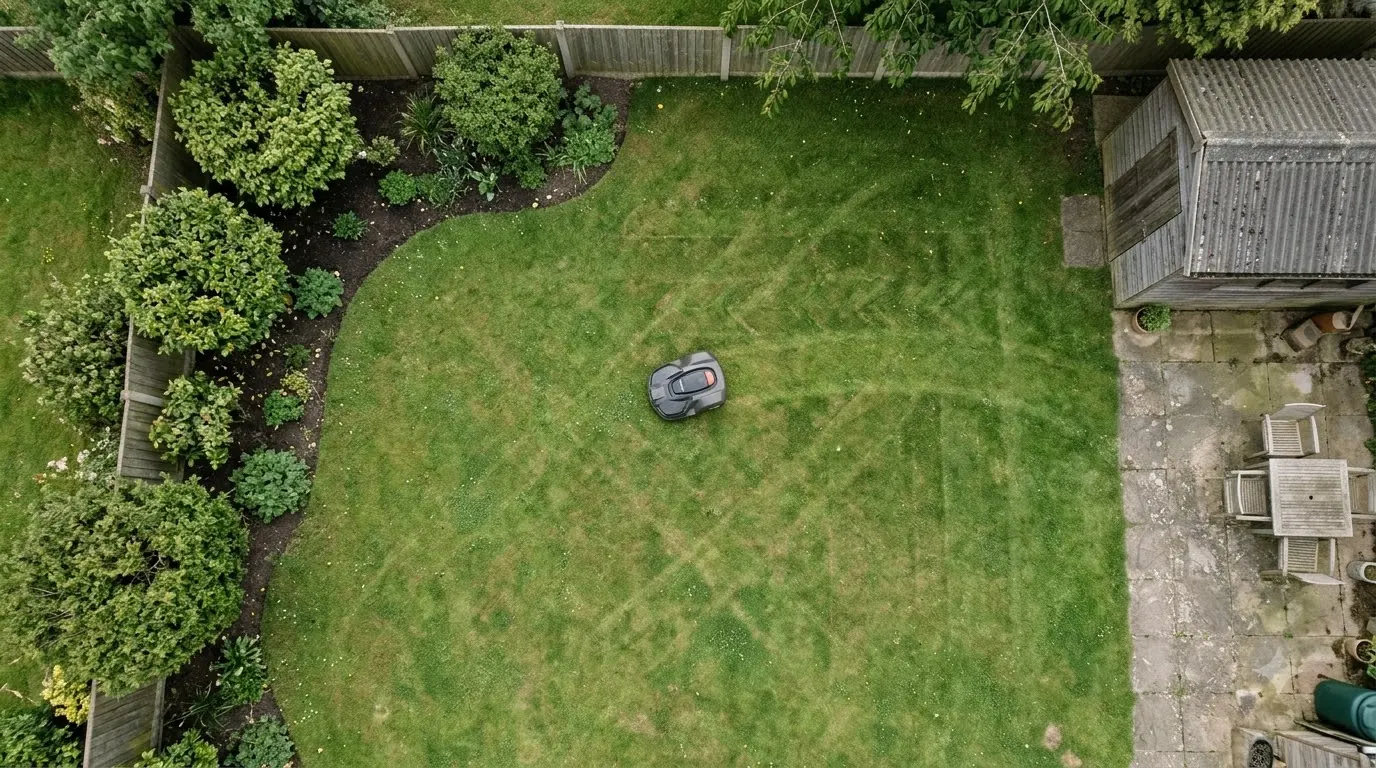

A robot mower does not fill bare spots, so the best robot mower for a yard with bare spots is the one that avoids wearing the same patches down further. Bare spots usually come from disease, foot traffic, compaction, pet urine, or shovel and plow damage, and the mower only trims what is already growing. As of 2026-11-12, extension guidance says to fix the cause first and reseed second.
A bare patch is a symptom, so the mower choice matters less than the reason the grass is gone. This guide covers the causes, the features that help a patchy yard, the repair order extension sources recommend, and what to check before you buy.
The short answer
- Fix the cause first: a robot mower will keep cutting thin grass that is still under the same pressure.
- Small spots: a spot smaller than a fist often fills in by itself in a few weeks, per University of Wisconsin guidance.
- Larger spots: rake out the dead grass, mix seed with topsoil, and keep it moist until it germinates.
- Wait for height: University of Kentucky extension advises not mowing new grass until it is at least 4 inches tall.
- Buy for the yard: our reading is that slope, wet soil, narrow passages, and cutting height matter more than brand when bare spots already exist.
What causes bare spots in a lawn
Bare spots come from several sources, and the mower is rarely the first one. The University of Maryland Extension lists pest or disease outbreaks, foot traffic, smothering, and digging among the causes, with foot traffic and compaction as key factors. The same page notes that algae outbreaks show a lawn is staying too wet, often from soil compaction, over-watering, or poor drainage.
University of Wisconsin extension adds two common triggers for winter damage: dog urine, which delivers concentrated nitrogen and leaves “dog spots,” and shovels or plows that scrape turf along walks and driveways. Grass left exposed when insulating snow is removed can cause similar patches. If pets are the cause, our look at the best robot lawn mower for dog owners covers the yard side of that.
A robot mower works on a schedule, so it can pass over the same ground many times a week. That is not a cause of bare spots by itself, but it means a thin patch gets no recovery time if the cause is still present. For a yard with bare spots, the best robot mower is one you can pause, zone, or set to a higher cut while the lawn recovers. Our reading is that the mower is a poor first suspect and a useful second one: check the list above before you change the mower.
| Likely cause | What it looks like | What extension sources suggest |
|---|---|---|
| Foot traffic or compaction | Worn paths and patches with hard soil | Core-aerate compacted soil and check drainage before reseeding |
| Pet urine | Dead patches on the lawn | Rake out the dead grass and reseed; Wisconsin links “dog spots” to concentrated nitrogen |
| Shovels or plows | Strips along walks and driveways | Reseed larger strips; small ones often fill in |
| Pest or disease | Patches that spread or come back | Check for disease or insects and get a soil test through the county extension office |
The table is a summary of the causes named in the sources above, not a diagnosis. If a patch keeps returning after reseeding, the cause is still there, and a soil test is the next step.
Best robot mower features for a yard with bare spots
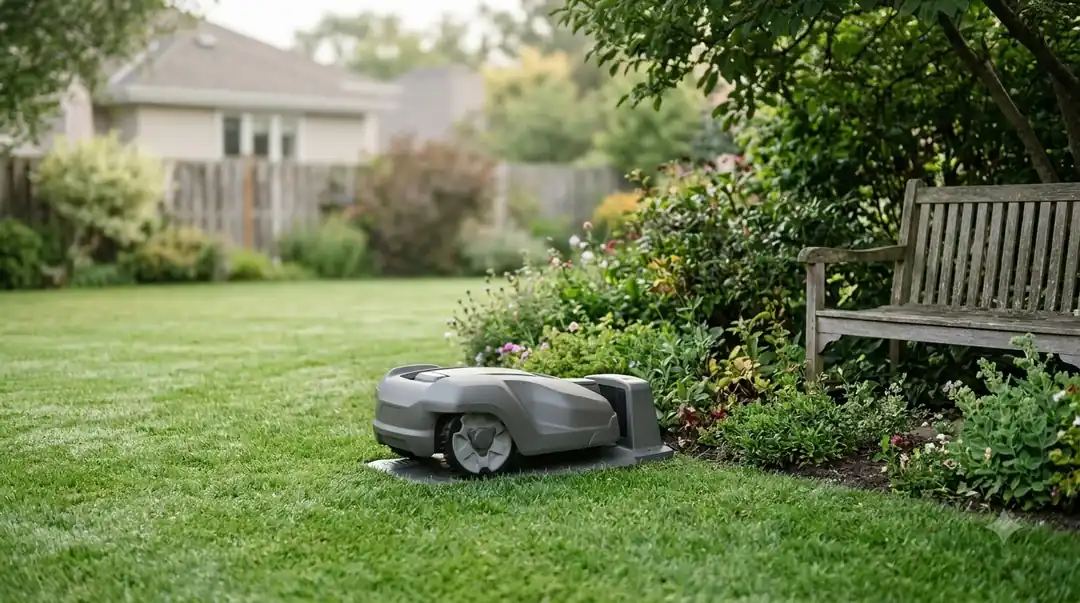
The best robot mower for a yard with bare spots is the one whose features spread wear out and handle uneven ground. Our reading is that these matter more than a longer runtime or a larger cutting area when bare spots already exist.
- Varied paths: a mower that changes its route instead of tracking one fixed line puts less repeated wear on the same ground.
- Cutting height control: a higher setting leaves more leaf area, which helps thin turf recover between mowings.
- Traction on wet ground: wheels that spin in wet soil dig ruts, so check whether the model offers traction aids or wheel options.
- Scheduling: the ability to limit mowing days or pause a zone lets a repair area rest.
Manufacturer pages vary in what they say about paths and scheduling. Check the model’s own manual before you assume a feature exists, because a route description on a sales page is not the same as a tested behavior in your yard.
Heads up
Not every robot mower has a scheduling or zone setting, and the manual is the only reliable source for those features. Confirm them before purchase.
Fix the cause before you reseed
Fix the cause first, because reseeding a spot that keeps getting stepped on or peed on will only lose the new grass. The order below follows extension advice.
- Check for disease and pests. Look for insects or turf disease before adding seed, since the seed will fail if the cause stays.
- Get a soil test. The University of Kentucky advises a soil test through the county extension office, which shows pH and nutrient problems.
- Flush spills. For fertilizer or pet urine problems, watering the area thoroughly is one fix that extension sources mention.
- Choose the season. For cool-season grass, Kentucky Extension says fall is the best time to repair bare spots, because the soil is still warm and the evenings are cool.
Our reading is that a yard with a repeated cause, such as a dog run or a shortcut path, needs a physical change, like a path or fence, not only a better mower. Changing the route is often cheaper than reseeding the same patch every season.
How to reseed a bare spot before the robot mows it
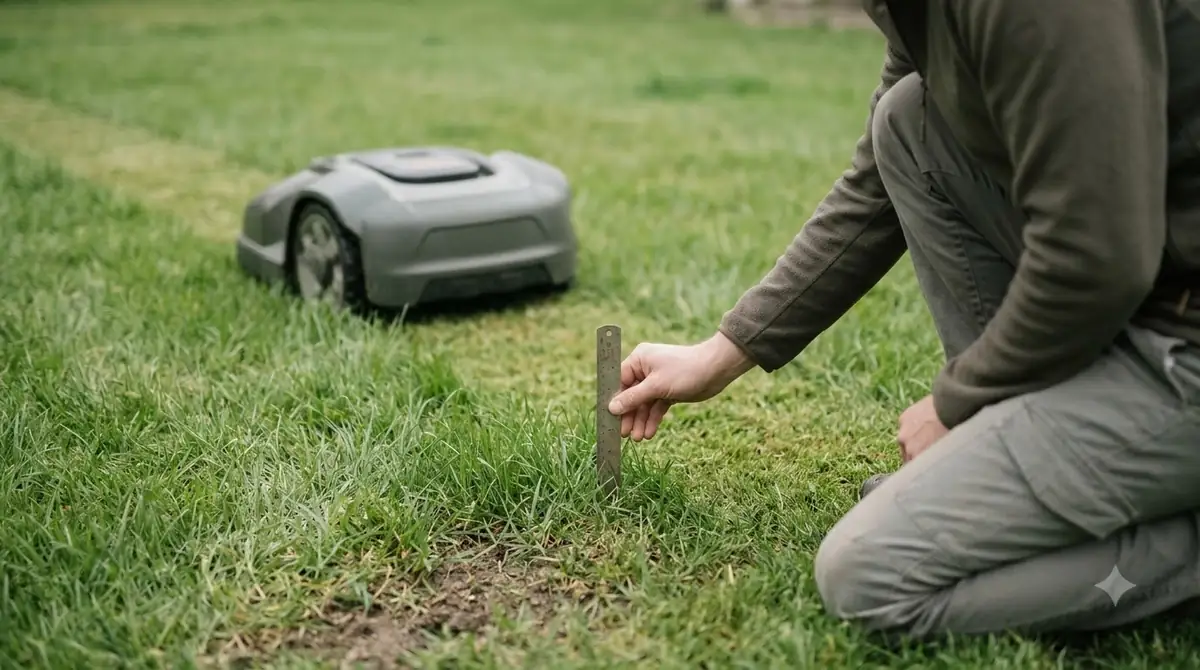
Reseeding is simple, but the timing around the first mow is where most people go wrong. Wisconsin’s steps are a good base: loosen the soil, mix seed with a little soil or potting mix, sprinkle it over the spot, and water gently until it germinates.
- Loosen the spot: rake or pull off enough dead grass to see soil.
- Match the seed: Kentucky Extension advises matching the seed to the grass already in the lawn.
- Mix and spread: blend the seed with topsoil or peat so it does not clump, then broadcast it over the area.
- Firm and water: tamp the area for seed-to-soil contact, then water slowly and thoroughly.
Keep the robot mower away from the repair until the new grass is at least 4 inches tall, as Kentucky Extension recommends. A boundary or no-go zone helps here, if the model supports one. Wisconsin notes that reseeded spots should start to green up within a few weeks, though full blending can take longer. Our guide on when to first mow new grass seed explains why height, not the calendar, sets the first cut.
What to check before you buy the best robot mower for a yard with bare spots
Before you buy, check the yard, not only the box. The mower can only do so much on a patch that is still thin or rutted, so measure the problem first.
- Slope and wet spots: low, soggy areas invite ruts, so note where water sits after rain, and see how a robot mower on an uneven lawn behaves.
- Passages: narrow gaps can leave strips uncut, which looks like a bare patch. Measure the narrowest passage before you buy.
- Cutting height: a height set too low scalps grass. Keep the setting high while repairs are growing in.
- Blade and wheel wear: dull blades and worn wheels both leave uneven marks, so check replacement parts before buying.
Our reading is that the best robot mower for a yard with bare spots is the model whose settings and parts you can actually change for your yard, not the one with the most features on paper. If a lawn already looks patchy after mowing, robot mower cutting unevenly lists four causes to rule out.
Frequently asked questions
Will a robot mower fix bare spots in my lawn?
No. Even the best robot mower for a yard with bare spots only trims grass that is already growing and does not add seed or soil. Fix the cause and reseed the spot first, then let the mower cut the new grass once it reaches about 4 inches.
Can a robot mower cause bare spots?
It can contribute when it passes over the same thin ground often, but the sources here name foot traffic, compaction, pests, pet urine, and snow damage as the main causes. Check those first.
When should I reseed a bare spot?
For cool-season grass, University of Kentucky extension calls fall the best time, when the soil is warm and the evenings are cool. Keep the seed moist until it germinates.
How big a bare spot can grass fill in on its own?
University of Wisconsin extension says a spot smaller than your fist usually fills in from the surrounding grass within a few weeks. Larger spots need reseeding.
Sources
- Improving a struggling lawn and repairing damage (University of Maryland Extension): causes, compaction, and raking before reseeding.
- Fixing dead spots in lawns (University of Wisconsin Extension): dog urine, snow damage, small-spot rule, and reseeding steps.
- Repairing bare spots in your lawn (University of Kentucky Extension): fix the cause first, fall timing, and the 4 inch first-mow rule.
 Up next7 min readBy YardRobot Mower for a Lawn With Low Spots That FloodUpdated Nov 10, 2026
 7 min readBy YardWill a Robot Mower Get Stuck on a Lawn With Low Spots That Flood?Updated Nov 13, 2026
 9 min readBy YardBest Robot Mower for a Yard With Solar LightsUpdated Nov 12, 2026
 7 min readBy YardBest Robot Mower for a Yard With Fallen Branches: What to CheckUpdated Nov 12, 2026
 8 min readBy YardBest Robot Mower for a Yard With a Dry Creek Bed: What to CheckUpdated Nov 12, 2026
 9 min readBy YardBest Robot Mower for a Yard With Garden FurnitureUpdated Nov 12, 2026