
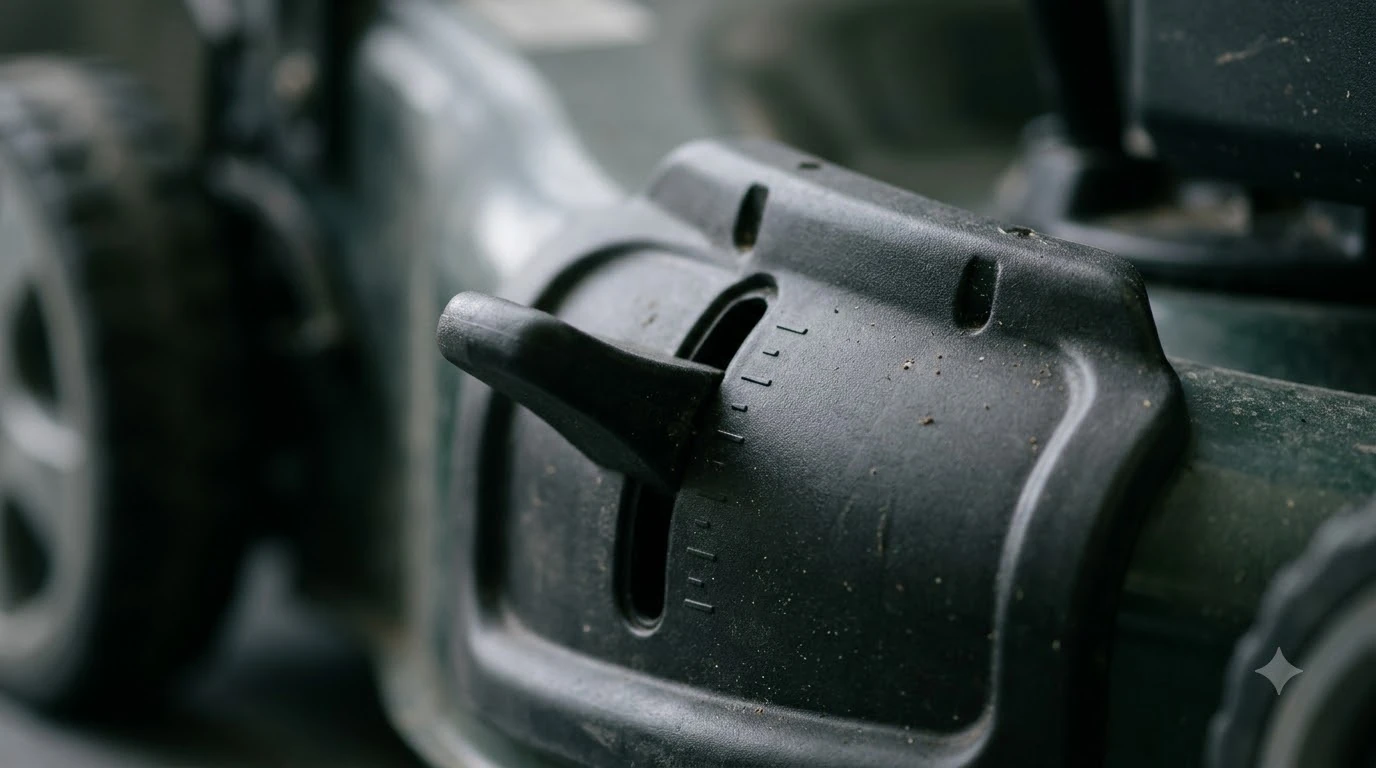

For most robot-mowed lawns, the answer is about 30 to 40 mm, or 1.2 to 1.6 inches. That is the practical range Robomow recommends for robot-mowed lawns, because a robot cuts so often that small, regular cuts keep the turf healthy. The right height still depends on your grass type, the season and how much shade the lawn gets, so this guide shows how to adjust the number for your yard.
The short answer
- What height should a robot mower cut grass? Start at 30 to 40 mm (about 1.2 to 1.6 inches) for most robot-mowed lawns.
- Cool-season grass: tall fescue and Kentucky bluegrass are usually cut at about 2 to 3.5 inches.
- Warm-season grass: bermudagrass and zoysiagrass sit lower, around 1 to 2 inches.
- Remove no more than one-third of the blade length in a single cut.
- Cut higher in shade, during heat or drought, and on a newly seeded lawn.
What the 30 to 40 mm guideline means
Robomow’s guide calls 30 to 40 mm the cutting length recommended in practice, and it gives a reason: frequent mowing by a robot can slightly weaken a lawn, so a little more height helps the grass recover between cuts. The same guide says many robot mowers only adjust between 20 and 60 mm, while other models reach 20 to 100 mm. No robot on the market cuts shorter than 15 mm.
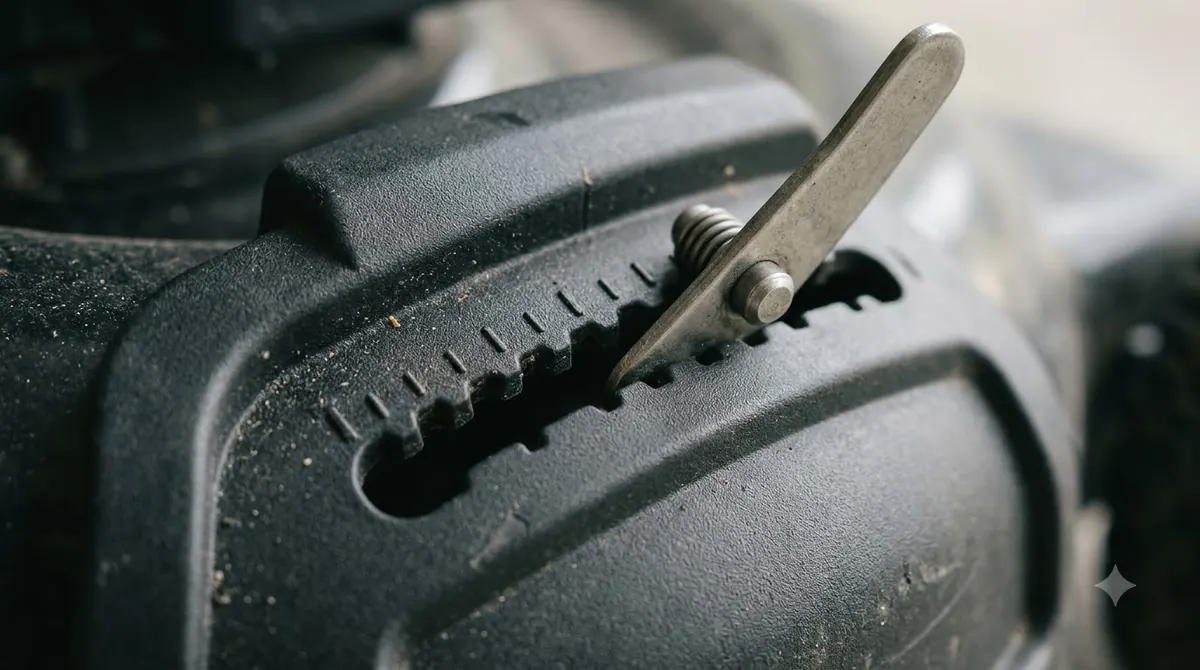
The adjustable range matters as much as the target. A mower can only be set inside its own limits, so if your grass needs 3 inches and your mower’s top setting is 60 mm (about 2.4 inches), that mower cannot cut at the height your lawn needs. Check the spec sheet before you buy. Robomow’s other figures, converted to inches, are:
- Play or commercial lawns: 35 to 55 mm (about 1.4 to 2.2 inches).
- Shade lawns: around 60 to 70 mm (about 2.4 to 2.8 inches).
- Ornamental lawns: as low as 20 mm (about 0.8 inches).
What height should a robot mower cut grass on your lawn?
Cool-season grasses are usually cut higher than warm-season grasses, and the extension ranges differ by species, so the answer to what height should a robot mower cut grass depends on what you planted. The table below puts the two university sources side by side. Clemson gives winter and summer heights where it separates them, and Illinois gives one range per grass.
| Grass | Clemson HGIC (winter / summer) | University of Illinois Extension |
|---|---|---|
| Tall fescue | 2 to 3 in / 3 to 3.5 in | 2.5 to 3.5 in |
| Kentucky bluegrass | Not listed | 2 to 3 in |
| Perennial ryegrass | 1 to 2.5 in / not listed | 2 to 3 in |
| Fine fescues | 1.5 to 2.5 in / 2.5 to 3 in | Creeping red fescue: 1.5 to 2 in |
| Buffalograss | Not listed | 1.5 to 3 in |
| Common bermudagrass | 1 to 2 in | 1 to 2 in |
| Hybrid bermudagrass | 0.5 to 1.5 in | Not listed |
| Zoysiagrass | 1 to 2 in | 1 to 3 in |
| Centipedegrass | 1.5 to 2 in | Not listed |
| St. Augustinegrass | 2.5 to 4 in | Not listed |
Illinois Extension gives a simple default for mixed home lawns: “For most lawns, a mowing height between 2½ to three inches is suggested.” That is about 64 to 76 mm, which is higher than the 30 to 40 mm robot guideline. Our reading is that the 30 to 40 mm figure is a starting point for many lawns, not a rule for every grass. If your turf is tall fescue or St. Augustinegrass, set the mower by the species range.
Why the one-third rule matters more with a robot
The one-third rule is the most useful check on any cutting height, and it answers what height should a robot mower cut grass without guesswork. Clemson states it as a rule of thumb: “remove no more than one-third of the grass height at any one mowing.” Robomow gives the same limit for robot mowers, at no more than one-third of the blade length per mowing.
A robot mower follows this rule almost by accident. It runs often, so each pass removes only a small slice of leaf. A push mower used once a week can easily take off half the blade, which is why the rule is harder to keep with occasional mowing.
Cutting too low causes its own problems. Robomow notes that cutting too deep lets more sunlight reach the soil, which dries it faster and encourages weeds. Our reading is that if your lawn has grown well past the setting, raise the blade first and lower it over several days rather than taking it down in one pass.
Adjust the height for season, shade and stress
The number in the table is a baseline. Clemson’s advice is to raise the cut when turf is under pressure, so mow turfgrass under stress such as heat, drought or shade at a higher level of cut. Taller blades capture more sunlight, which helps stressed grass keep growing.
- Spring start: Robomow advises waiting until temperatures are permanently around 10 °C (50 °F), then cutting no more than one-third of the blade.
- Drought: choose a longer cutting length during dry periods.
- Last cut of autumn: Robomow suggests about 40 to 50 mm (about 1.6 to 2 inches).
- Newly seeded lawn: let the seedlings grow to about 80 to 100 mm first, then cut down to about 50 mm.
- Before dethatching: the guide allows a lower cut, down to about 20 mm, for that one job.
Set the height, then leave it
For most home lawns, Illinois Extension says the easiest strategy to “set your mowing height and leave it at that.” A robot mower makes that simple, because it cuts on its own schedule. The main work is choosing the right setting once and checking it after the first few weeks.
- Check the mower’s range first. Compare its minimum and maximum setting with your grass species in the table above.
- Start near the middle of your grass’s range. For tall fescue, that is about 3 inches. For bermudagrass, about 1.5 inches.
- Look at the lawn after two to three weeks. If the grass is thin or scalped, raise the setting one step. If it keeps getting long between runs, the schedule may need to change instead.
- Adjust with the season. Move up in summer heat, drought or shade, and lower the setting only when growth is strong again.
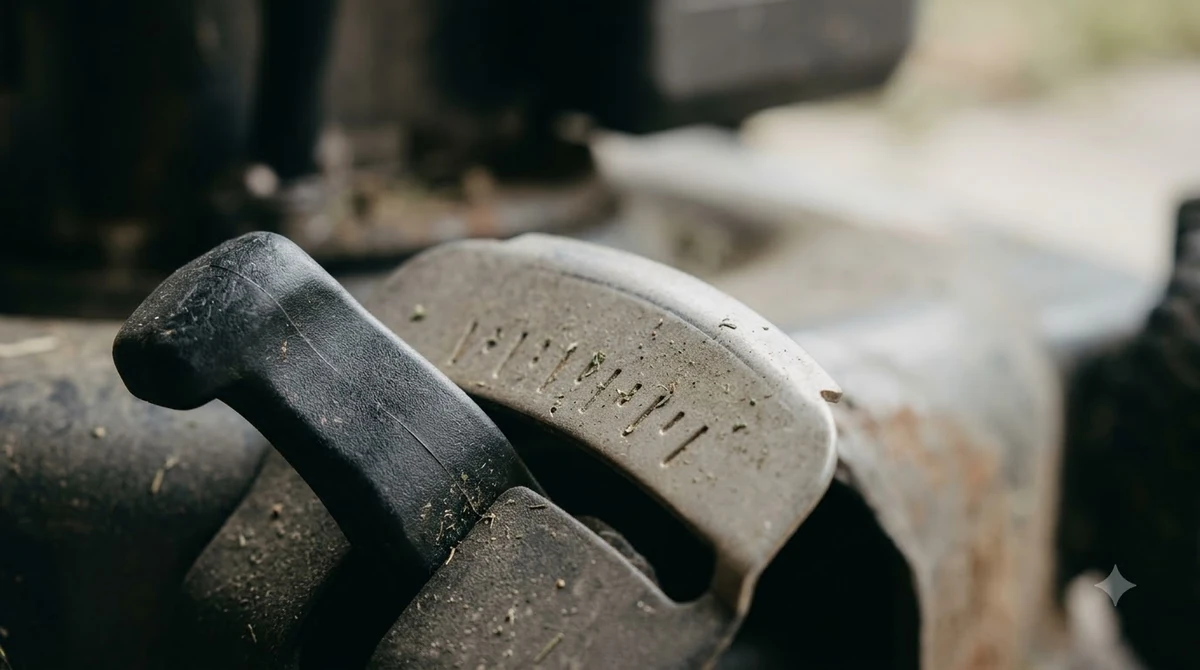
Keep in mind that the setting is only part of the result. Dull blades tear grass and leave ragged tips that brown faster, so check the blades on a regular schedule as well.
Frequently asked questions
What height should a robot mower cut grass if it runs often?
No. Robomow says frequent robot mowing can slightly weaken a lawn, and it recommends 30 to 40 mm in practice for that reason. Cutting shorter does not make a robot’s lawn healthier, and it raises the risk of scalping and sun-dried soil.
What height should a robot mower cut Kentucky bluegrass?
The University of Illinois Extension gives 2 to 3 inches for Kentucky bluegrass, which is about 51 to 76 mm. That is above the 30 to 40 mm practical guideline, so set the mower to the species range rather than the general figure.
Is 1 inch too low for a robot mower?
It depends on the grass. Clemson lists 1 to 2 inches for common bermudagrass and zoysiagrass, so 1 inch is within range for those. For tall fescue or St. Augustinegrass it is too low, and Clemson’s ranges for those grasses are 2.5 inches or more.
Should I raise the mowing height in summer?
Yes, if the lawn is under heat, drought or shade stress. Clemson advises mowing stressed turf at a higher level of cut. For tall fescue, Clemson lists 3 to 3.5 inches in summer, compared with 2 to 3 inches in winter.
Sources
- Robomow, ideal cutting height for a robotic lawnmower (manufacturer): 30 to 40 mm guideline, robot height ranges, seasonal and new-seed advice, and the one-third rule.
- Clemson Home and Garden Information Center, Mowing Lawns (HGIC 1205) (university extension): mowing height ranges by grass species, the one-third rule, and mowing stressed turf higher.
- University of Illinois Extension, Mowing your lawn (university extension): height table by grass type, the 2½ to 3 inch default, and the set-and-leave advice.
 Up next7 min readLearnHow Short Can a Robot Mower Cut Grass?Updated Nov 11, 2026
 9 min readLearnCan a Robot Mower Cut Long Grass? What the Sources SayUpdated Nov 11, 2026
 6 min readLearnCan a Robot Mower Cut Grass That Has Gone to Seed?Updated Nov 14, 2026
 7 min readLearnBest Mowing Height for a Robot Mowed LawnUpdated Nov 11, 2026
 8 min readLearnCrabgrass Control With a Robot Mower: What Mowing Height DoesUpdated Nov 12, 2026
 8 min readLearnHow to Adjust Cutting Height After Overseeding With a Robot MowerUpdated Nov 19, 2026