
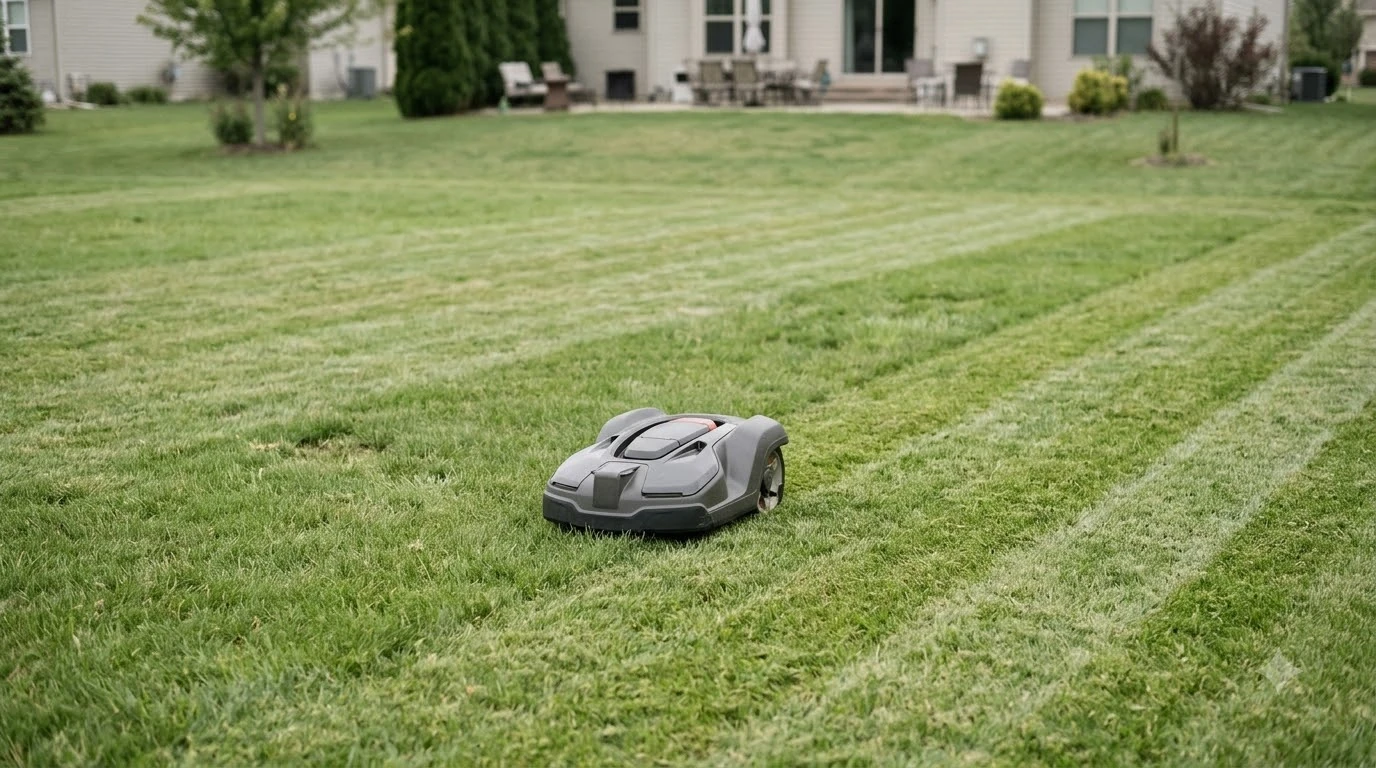

Crabgrass control with a robot mower mostly comes down to cutting height. Crabgrass seed needs light to sprout, and a thick lawn cut high shades the soil. Trials from university extension programs show crabgrass cover falling as mowing height rises from 1 inch to 4 inches. A robot mower can support that plan, but only if its height setting and cutting habits keep the turf dense.
The short answer
- Cut high. Wisconsin Extension recommends mowing at about three inches for most lawns.
- Height changes the outcome. In a North Carolina State trial on tall fescue, crabgrass cover in mid-September was 95 percent at 1 inch and 13 percent at 3 inches.
- Keep the one-third rule. Remove no more than one-third of the leaf blade in a single mowing.
- Pair height with timing and watering. Pre-emergent herbicides and watering habits also affect crabgrass, so crabgrass control with a robot mower works best as a plan.
- Check your model first. Confirm the minimum and maximum cut height for your robot in its manual before you change the setting.
Why crabgrass gets a foothold in short, thin turf
Crabgrass invades thin lawns and bare soil, and it sprouts after soil warms into the upper 50s or low 60s Fahrenheit for several days. Wisconsin Extension describes the trigger as soil that stays in the “upper 50 to low 60 degrees Fahrenheit range for several consecutive days.” In Wisconsin lawns, that typically does not happen until May or June. Seeds keep germinating through early and mid summer and stop by August. The Wisconsin Extension crabgrass guide also explains that thick turf that shades the soil is the main defense. If a lawn is already full of weeds, see can a robot mower handle a lawn full of weeds.
Timing changes by region, and crabgrass control with a robot mower should follow local dates. Rutgers Cooperative Extension’s fact sheet FS1308 puts crabgrass germination in mid to late April in central and northern New Jersey. It uses forsythia bloom as the practical clue. Our reading is that the seeding window runs for months, so mowing height matters from spring into late summer, not only on one date. That also means a height setting should be checked in spring and again in late summer.
Wisconsin Extension is blunt about the cause. It calls mowing too short “a primary reason leading to crabgrass infestations,” and it advises mowing as high as site factors allow. Your region may differ from these two states, so check your local extension office for germination timing where you live.
What the NC State mowing height trial found
Crabgrass cover fell steadily as the cut rose in a trial run by NC State Extension. The TurfFiles article “Mowing Height Impacts Weed Populations” by Mike Vysocka tested cuts of 1, 2, 3 and 4 inches on tall fescue at a field lab in Raleigh. How robot mowers cope with that grass is covered in robot mowers on tall fescue lawns. Trials started once soil reached a temperature that favors crabgrass emergence. Incidence was checked monthly through September.
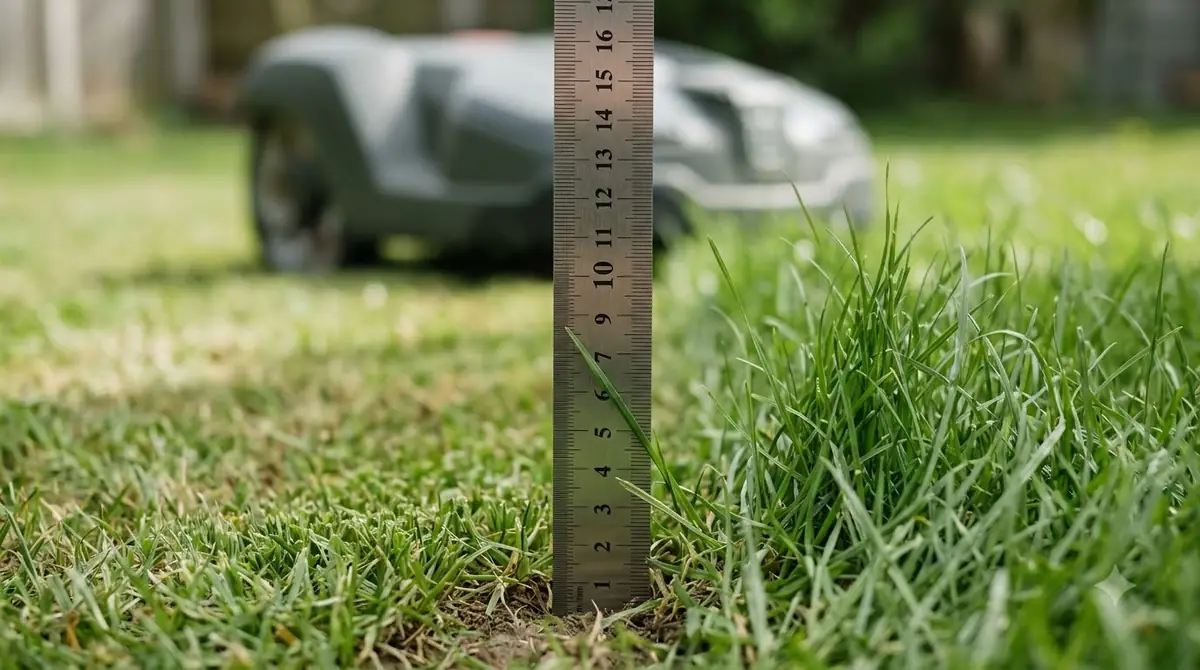
| Mowing height | Crabgrass cover, mid-September |
|---|---|
| 1 inch | 95 percent |
| 2 inches | 48 percent |
| 3 inches | 13 percent |
| 4 inches | 0 percent |
The author says the data “indicate” that maintaining tall fescue at the appropriate height “may” culturally suppress crabgrass. That hedged wording is important for crabgrass control with a robot mower, because the study does not prove a cause on its own. The article does not report the number of replications, the number of seasons, or any statistical analysis, and it describes a single site.
Heads up
The trial gives direction, not an exact setting. Results from one site on one grass type do not transfer directly to every lawn.
The article also notes that close mowing can scalp turf and stress it, which is one reason crabgrass control with a robot mower depends on height. Stress weakens the grass’s ability to compete with weeds. The author adds that many homeowners mow lower than the recommended height.
How often to cut for crabgrass control with a robot mower
Robomow, a robot mower maker, says frequent cutting is well suited to robotic mowers. Its guide also says no more than one-third of the blade length should come off in one mowing. Wisconsin Extension gives the same one-third rule for mowing grass and advises returning clippings to the lawn.
Robomow says cutting intervals should follow the growth rate, because spring growth runs faster than growth in a dry summer. It also advises against mowing from about early to mid November. Our reading is that a fixed schedule rarely fits the whole season.
- Check the current height setting in the app or on the mower before changing anything.
- Watch how fast the lawn grows in spring and shorten or lengthen the interval to match.
- Leave clippings on the lawn, as the Wisconsin guidance recommends. Most units mulch them, as whether robot mowers mulch grass explains.
Frequency does not replace height. For crabgrass control with a robot mower, a robot that cuts often at 1 inch still leaves the lawn short, and the trial above linked short cuts with higher crabgrass cover.
Where manufacturer and extension advice diverge
Robomow recommends a regular cut of about 30 to 40 millimeters, roughly 1.2 to 1.6 inches. Wisconsin Extension advises about three inches for most lawns. That gap is large, and it needs explaining before you set the mower.
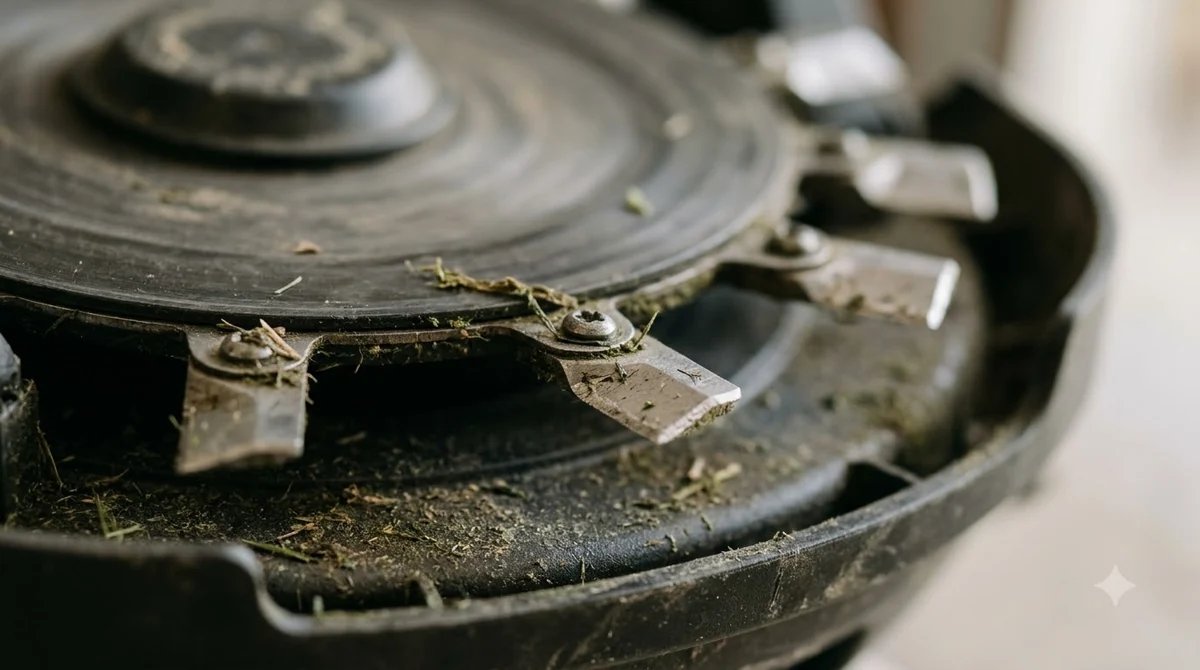
Robomow’s cutting height guide gives ranges by lawn type. It lists 35 to 55 millimeters for commercial or play lawns and 60 to 70 millimeters for shade lawns. It warns that cutting too high “leaves more room for weeds and moss,” and that cutting too deep lets sunlight reach the soil and encourages weeds.
Robomow’s page does not mention crabgrass control at all. The extension trials test crabgrass directly, but they use tall fescue and heights from 1 to 4 inches. Robomow’s regular range sits near the low end of that trial. We did not find an independent trial that compares robot mower heights with crabgrass cover. Our reading is that extension data is the stronger guide for crabgrass control with a robot mower, while the manufacturer range shows what your mower can actually reach. The page on the best mowing height for a robot mowed lawn covers the general case.
Rutgers sets a clear target in the same fact sheet. Research shows that “mowing at the highest height recommended for your particular turfgrass species” can significantly reduce crabgrass infestations. For crabgrass control with a robot mower, that means:
- Confirm the minimum and maximum cut height for your model in its manual.
- Find the highest recommended height for your grass species in a local extension guide.
- Set the mower to that height, and avoid cutting far below it.
- Recheck after a few weeks and look for thin patches where the blades cut too low.
Pre-emergent timing and watering still matter
For crabgrass control with a robot mower, the spring window matters most. Wisconsin Extension says pre-emergent herbicides typically give 90 to 95 percent control under normal conditions. That control works only when the product goes down before crabgrass germinates. Its timing rule is to wait until forsythia is past full bloom and dropping petals, and until soil reaches about 55 degrees Fahrenheit for several consecutive days. Rain or irrigation then has to work the product into the soil. In early drought, wait for adequate soil moisture.
Rutgers adds that most pre-emergent products do not control crabgrass after it germinates. The exception it notes is dithiopyr, which can control crabgrass applied up to four weeks after germination. The Rutgers fact sheet FS1308 also covers timing for northern lawns.
Watering matters too. Wisconsin’s page warns, “Avoid frequent, light irrigation as it favors crabgrass,” and advises watering thoroughly to the depth of the root system. Rutgers makes a related point: grasses mowed above 2.5 inches rarely need supplemental irrigation in spring, and frequent irrigation helps weed seedlings survive.
Frequently asked questions
Will crabgrass control with a robot mower work on its own?
No source we read says mowing alone removes crabgrass. Mowing height is one cultural control. Wisconsin Extension pairs its height advice with pre-emergent timing and watering habits, and the sources describe a dense, well-watered lawn cut at a higher setting as the goal.
What mowing height should I set for crabgrass?
Wisconsin Extension recommends about three inches for most lawns. Rutgers advises the highest height recommended for your turfgrass species. The NC State trial on tall fescue showed 13 percent crabgrass cover at 3 inches and none at 4 inches, though that single trial has limits.
How often should a robot mower run for crabgrass control?
The sources do not give a fixed number of runs for crabgrass control with a robot mower. Robomow says intervals should follow the growth rate, with spring growth faster than growth in a dry summer. The one-third rule still applies: remove no more than one-third of the leaf blade in one mowing.
Does mowing high encourage weeds?
Robomow says cutting too high leaves more room for weeds and moss. Wisconsin Extension and Rutgers say a high, dense canopy shades the soil and discourages crabgrass. The sources differ in emphasis, so check your grass type and local extension advice before choosing a height.
Sources
- Crabgrass management in lawns (UW-Madison Extension, Wisconsin Horticulture, April 2026): germination trigger, mowing height, clippings, pre-emergence timing, watering.
- Mowing Height Impacts Weed Populations (NC State Extension TurfFiles, 2015, updated October 2025): mowing height trial on tall fescue.
- Crabgrass Control in Lawns for Homeowners in the Northern US, FS1308 (Rutgers Cooperative Extension, 2019): highest recommended height, pre-emergent limits, irrigation.
- What is the ideal cutting height for a robotic lawnmower? (Robomow, manufacturer, 2021): robot cutting ranges, one-third rule, weeds and moss.
 Up next7 min readLearnBest Mowing Height for a Robot Mowed LawnUpdated Nov 11, 2026
 7 min readLearnWhy Does My Robot Mower Start Mowing at the Wrong Time?Updated Nov 13, 2026
 7 min readLearnWhat Is Spot Mowing on a Robot Mower and How Does It Work?Updated Nov 13, 2026
 9 min readLearnCan You Control a Robot Mower From Your Phone?Updated Nov 11, 2026
 8 min readLearnHow to Adjust Cutting Height After Overseeding With a Robot MowerUpdated Nov 19, 2026
 7 min readLearnWhat Height Should a Robot Mower Cut Grass?Updated Nov 10, 2026