
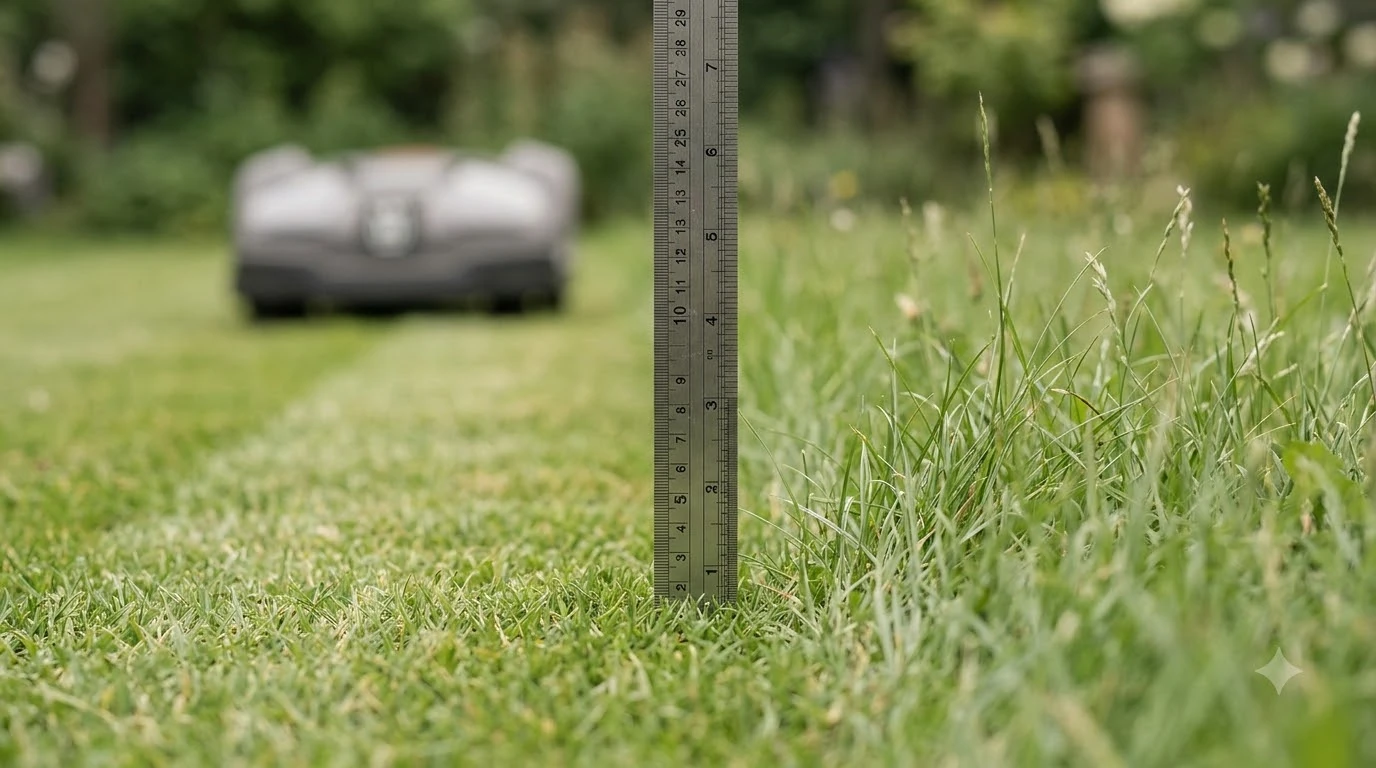

Can a robot mower handle a lawn full of weeds? Partly. It cuts weeds that grow at about the same height as the grass, but it does not kill them or remove their roots. Tall or dense patches should be cut back by hand before the mower starts. University of Florida extension research and manufacturer guidance both point to the same limit: the mower keeps growth short, while the lawn’s own health decides how well weeds stay down.
The short answer
- Weeds at mowing height: they are cut along with the grass, so a few scattered weeds are not a problem.
- Weed control: the sources we read do not say a robot mower kills weeds. It cuts the top growth and leaves the roots in place.
- Tall or dense patches: cut them down in stages first, then let the robot take over the regular trim.
- Clover and creeping weeds: UF/IFAS reports these may increase under frequent mowing, even though overall weed coverage can fall compared with rotary mowers.
Can a robot mower handle a lawn full of weeds, or only cut them?
A robot mower cuts with small blades on a spinning disk, so a weed that stands at or below the set cutting height is trimmed down with the surrounding grass. The University of Florida’s Autonomous Mower guide describes those blades as under 1.5 inches long, compared with about 20 inches on a traditional mower, and says this produces clean cuts. The same guide does not describe any weed removal, and the cut does not reach the root, so a cut weed can regrow between runs.
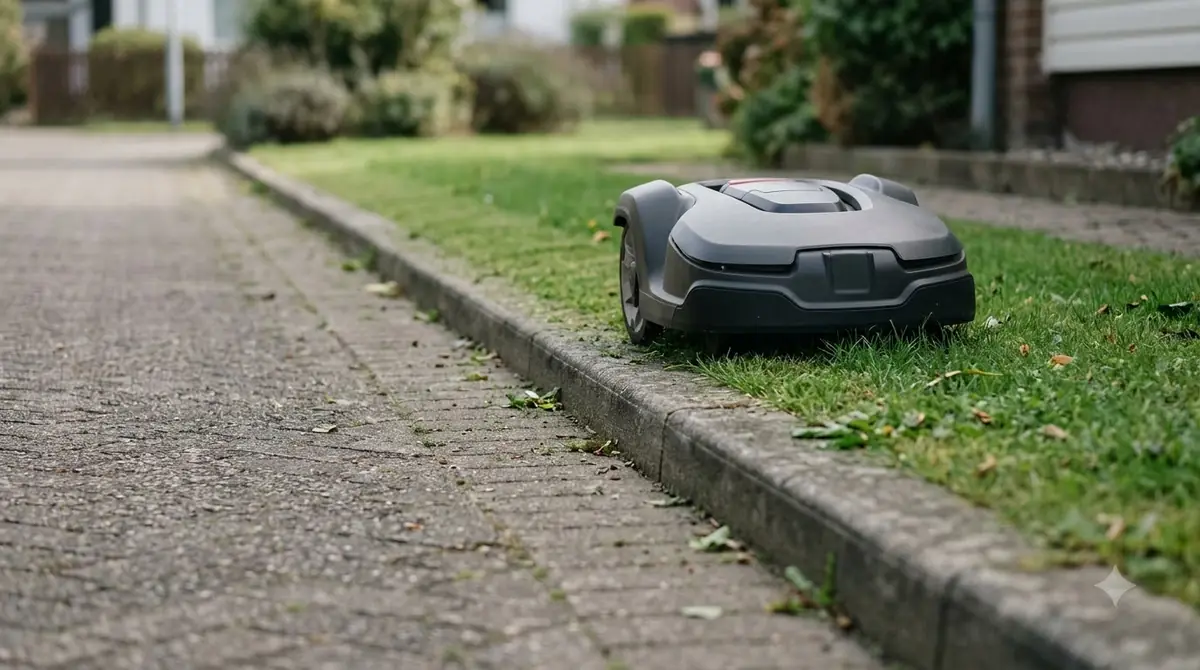
So can a robot mower handle a lawn full of weeds? Our reading is that it is a maintenance tool for weeds that are already in the lawn, not a removal tool. If you want fewer weeds over time, the mower’s cutting pattern matters less than the grass height, density and the weed control you choose separately.
Why tall and dense weed patches need extra work
A robot mower works best on turf that already sits near its normal cutting height, which is why a lawn full of weeds with tall patches needs prep first. Consumer NZ, which tests robot mowers, lets the grass grow to about 100 mm before a test to represent a lawn after a summer holiday or other break from mowing. Its test then starts cutting at 50 mm and reduces the height by 10 mm each week, and it also checks how mowers handle uneven terrain. That method is a testing choice, not a rule for your lawn, but it shows a stepwise approach to overgrown grass.
The sources we read do not give a height limit for weeds specifically. Some retailer material cites a 6-inch cutoff for dense patches, but we could not confirm that figure from a page we read, so treat it as unverified. Our reading is that a patch that has grown far above the cutting height should be reduced in steps (see cutting an overgrown lawn before the robot mower starts), so the mower does not have to take off more than the blades can cut cleanly.
Clover and other creeping weeds
Creeping weeds such as clover behave differently from upright weeds. The UF/IFAS publication says creeping-type weeds, such as clover, may increase under frequent mowing, and it notes that this could be positive if a mixed-species lawn is the goal. It also cites research showing that autonomous mowers can reduce overall weed coverage compared with rotary mowers.
Our reading is that a robot mower can shift the balance of a weedy lawn without clearing it. Before you decide whether that helps, identify which weeds you have, because an upright weed and a creeping one call for different responses. For a closer look at one common creeping weed, see how a robot mower copes with a clover lawn.
Cutting height and weed pressure
Cutting height is the main setting you control, and it affects how much room weeds get. For a general recommendation, see the best mowing height for a robot-mowed lawn. Robomow’s guidance recommends a cutting length of 30 to 40 mm in practice, and says no robot on the market mows a lawn shorter than 15 mm. It warns that blades which grow too high and are cut infrequently leave more room for weeds and moss, which can spread particularly quickly.
| Source | Height guidance | What it means for weeds |
|---|---|---|
| Robomow (manufacturer blog) | 30 to 40 mm recommended in practice | Too high and cut infrequently gives weeds and moss more room |
| UF/IFAS (extension) | Most autonomous mowers are designed for cool-season grass, typically mowed below 2.5 in | Remove no more than one-third of the leaf blade per cut |
| UF/IFAS (St. Augustinegrass) | Common Florida grass is 2.5 to 4 in, which may exceed some models | Check the mower’s maximum height before you assume it fits your grass |
Robomow also advises adjusting the cutting interval to the growth rate of the lawn, so a fast-growing weedy lawn may need more frequent runs. The UF/IFAS guide notes that limited research exists for bahiagrass, centipedegrass and bermudagrass, so the advice above for warm-season lawns is less certain. Check your mower’s own height range in its manual before changing the setting.
Blades, maintenance and a weedy lawn
Blades wear with use, and the UF/IFAS guide says sharpness declines over time, so blades should be replaced every six to eight weeks during the growing season to keep cut quality good. It also lists regular maintenance, including blade replacement and battery checks, among the limitations of autonomous mowers.
Our reading is that a lawn with tough or tall weeds puts more load on the blades than a clean lawn, so checking them more often than the six-to-eight-week guideline is a sensible precaution. Look for ragged or browned grass tips after a run, which can signal a dull blade. For background on blade wear, see robot mower blade replacement.
What to do before the mower goes out
Can a robot mower handle a lawn full of weeds without stalling? Preparing the lawn first makes the difference. These steps follow the logic of the sources above.
- Survey the weeds. Note which are tall, which are creeping, and where the dense patches sit.
- Cut the tall patches by hand. Use a string trimmer or push mower to bring them down near the grass height, in more than one pass if needed.
- Raise the cutting height for a few runs. Then lower it step by step to the setting you want, as the stepwise method in the Consumer NZ test suggests.
- Check the blades and clear debris. Replace blades that look ragged, and remove clippings, sticks and stones that could damage them.
- Watch the first runs. Look for stalls near weed clumps or repeated corrections, and adjust the boundary or schedule if they repeat.
Frequently asked questions
Will a robot mower kill weeds?
The sources we read do not say a robot mower kills weeds. It cuts the top growth to the height it is set at, and the roots stay in the soil. Weed control is a separate task, and the mower only trims what is already there. So can a robot mower handle a lawn full of weeds? Yes for trimming, no for removal.
Can a robot mower cut tall weeds?
The sources we read do not give a height limit for weeds. Robomow’s 30 to 40 mm recommendation applies to regular lawn cutting. For overgrown patches, cut them down by hand in stages first, since the mower works best on turf near its normal height.
Does a robot mower make clover spread?
UF/IFAS says creeping-type weeds such as clover may increase under frequent mowing. The same publication cites research showing that autonomous mowers can reduce overall weed coverage compared with rotary mowers.
How often should I replace blades on a weedy lawn?
UF/IFAS advises replacing blades every six to eight weeks during the growing season. Our reading is that a weedy lawn may justify checking them more often, especially if the grass tips look ragged after a run.
Sources
- What is the ideal cutting height for a robotic lawnmower? (Robomow, manufacturer blog): recommended cutting length, weeds and moss, and side shoots.
- Autonomous or Robotic Mower Use on Florida Lawns (UF/IFAS, ENH1402 / EDIS EP667, Singh, Boeri, Unruh and Lindsey): weed coverage, creeping weeds, one-third rule, blade replacement and grass height limits.
- How we test robot lawn mowers (Consumer NZ): test grass height, stepwise cutting and uneven terrain.
 Up next9 min readBy YardHow Does a Robot Mower Handle a Playset?Updated Nov 11, 2026
 9 min readBy YardHow Does a Robot Mower Handle Sprinkler Heads?Updated Nov 11, 2026
 8 min readBy YardHow Does a Robot Mower Handle a Pond?Updated Nov 11, 2026
 8 min readBy YardHow Does a Robot Mower Handle a Trampoline?Updated Nov 11, 2026
 9 min readBy YardHow Does a Robot Mower Handle Garden Furniture?Updated Nov 11, 2026
 7 min readBy YardHow Does a Robot Mower Handle Fallen Branches?Updated Nov 11, 2026